
How to Choose Materials That Age Beautifully: A Guide to Timeless Interior Design
The materials you choose define not only how a space looks, but how it feels over time. While trends often focus on immediate impact, truly considered interiors are shaped by materials that age gracefully and develop character with use. In this guide, I explain how to select materials that stand the test of time, based on residential projects across Cambridge and London.
A designer’s guide for Cambridge, South Cambridgeshire villages, Welwyn Garden City, Hertfordshire, and London
Choosing materials for a home should feel exciting — but for many homeowners, it quickly becomes overwhelming. One of my clients said it perfectly during a recent call:
“There is so much choice… sometimes too much. What if I choose the wrong material?”
This is the quiet fear behind almost every renovation.
Not the colour, not the style — but the risk of choosing something that won’t last, won’t feel right, or won’t suit the architecture of the home.
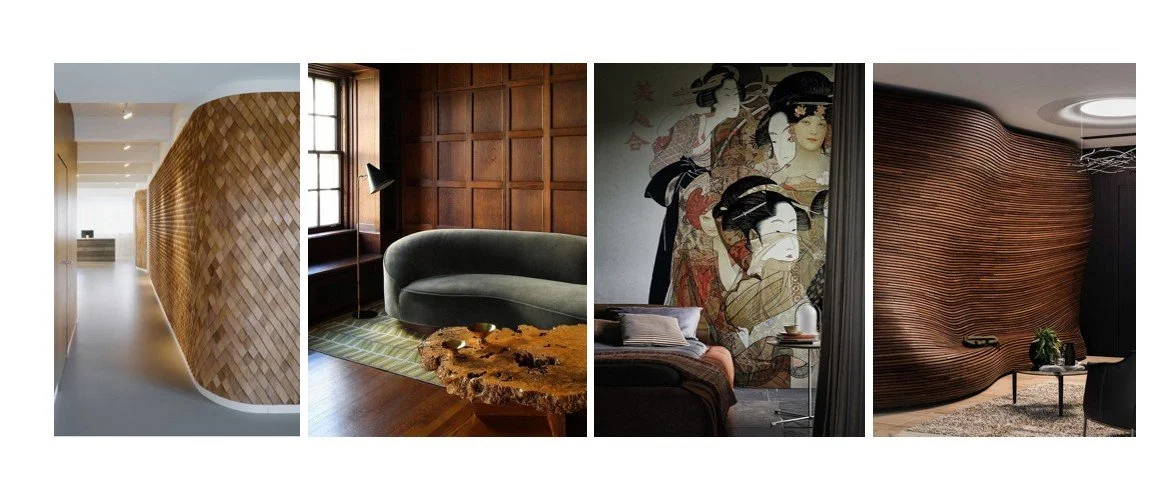
Collage of images showcasing diverse material expressions in interior design — from wooden textures and sculptural wall slats to cultural murals and warm panelling. This visual anchors our guide to choosing materials that age beautifully, reflecting the emotional, architectural, and cultural layers that shape homes in Cambridge, South Cambridgeshire, Welwyn Garden City, Hertfordshire, and London.
This article is your calm, grounded guide through that decision-making process.
It’s written for homeowners across Cambridge, South Cambridgeshire villages, Welwyn Garden City, Hertfordshire, and London, where architecture, lifestyle, and heritage vary dramatically — and where material choices matter more than most people realise.
1. Material choice begins with function and location
Every room has a purpose, and every purpose shapes the materials it can hold.
A kitchen in Welwyn Garden City needs surfaces that handle heat, moisture, and daily rituals — but still feel warm and calm within the Garden City’s architectural rhythm.
A hallway in Cambridge must withstand footfall, prams, school bags, muddy boots, and bicycles — all while setting the tone for the entire home.
A bedroom in a South Cambridgeshire Grade II listed cottage requires breathable, sympathetic materials that respect the building’s history and construction.
Function and location are the foundation.
A beautiful material that fails in its environment is not a beautiful material.
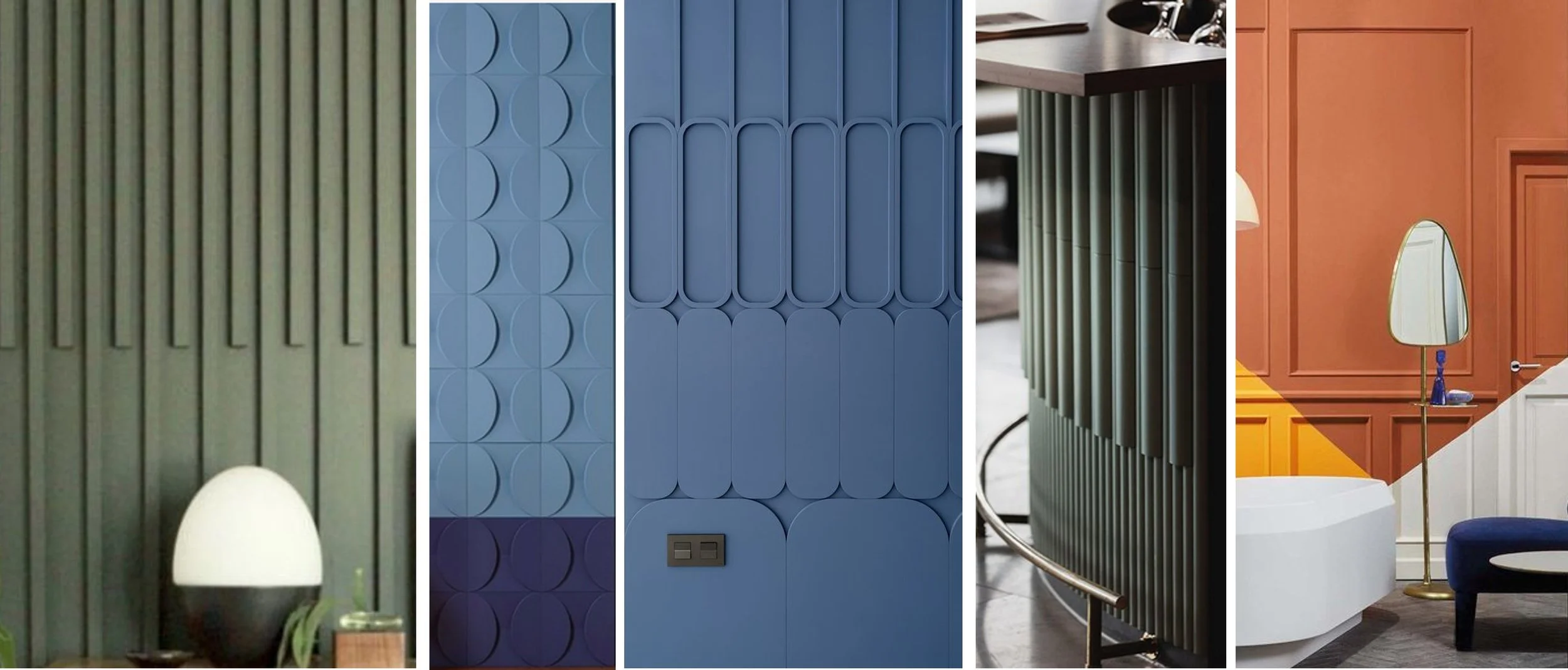
A curated collage of contemporary wall panelling designs, highlighting sculptural surfaces, geometric rhythm, and tonal depth. From minimalist ridges to artistic murals and classic mouldings, this visual supports our guide to materials that age beautifully — offering inspiration for homeowners in Cambridge, South Cambridgeshire, Welwyn Garden City, and London seeking texture, character, and architectural clarity.
2. Choosing materials by function, risk, comfort, and longevity
This is where real design expertise becomes essential.
Every material must be evaluated through four lenses:
Function
What does the room need to cope with — moisture, heat, footfall, cleaning, or quietness?
Risk
Is there plumbing? Appliances? Potential leaks?
This is where many homeowners underestimate the consequences.
Comfort
How does the material feel underfoot, in sound, in temperature, in daily life?
Longevity
Will it age beautifully, or will it deteriorate quickly?
This framework protects clients from costly mistakes — especially in kitchens, bathrooms, and utility rooms.
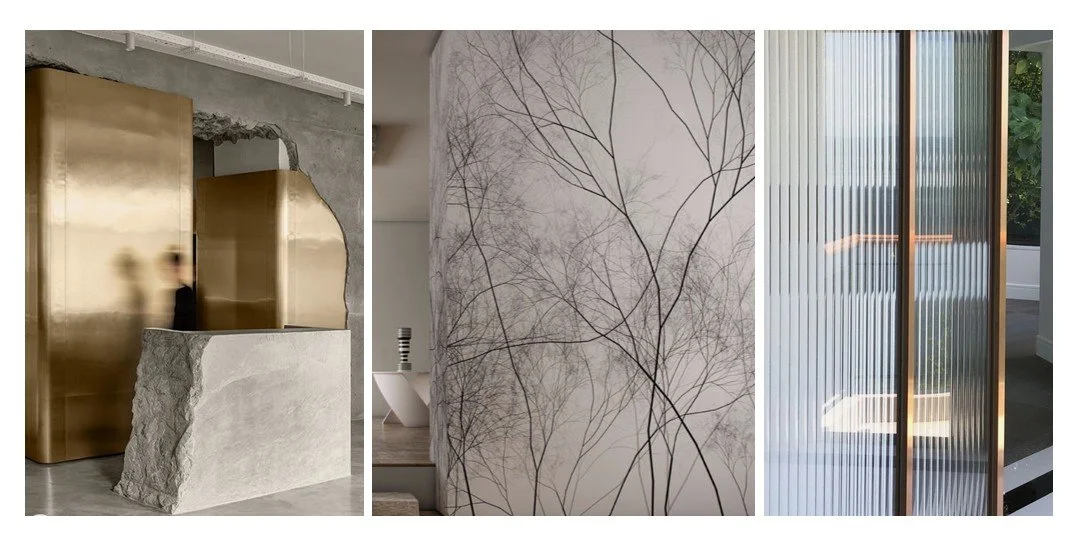
A visual collage exploring the emotional and architectural language of materials — from rough-cut stone and metallic surfaces to nature-inspired wall art and translucent ribbed glass. This image supports our guide to choosing materials that age beautifully, highlighting the interplay between texture, light, and privacy in homes across Cambridge, South Cambridgeshire, Welwyn Garden City, Hertfordshire, and London. (223) Pinterest
3. The wooden floor dilemma: laminate, engineered, or solid?
Wooden flooring is one of the most common homeowner dilemmas.
And it’s where misinformation spreads the fastest.
Laminate
Affordable
Not real wood
Swells when exposed to moisture
Impossible to repair
Not suitable for kitchens, bathrooms, or anywhere with plumbing
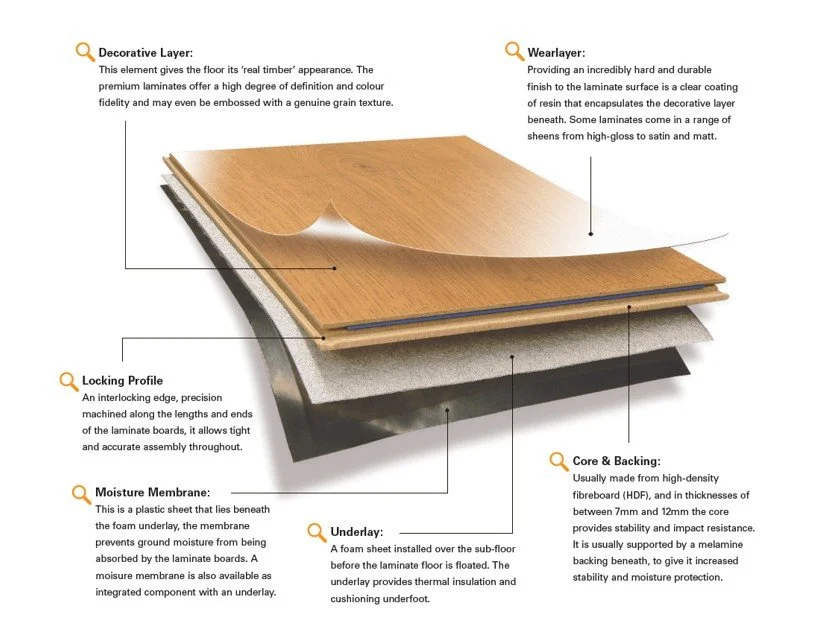
A visual detailing the layered structure of laminate flooring, including the decorative top, wear layer, locking profile, moisture membrane, underlay, and HDF core. This image supports our guide to choosing materials by function, risk, and longevity — helping homeowners in Cambridge, South Cambridgeshire, Welwyn Garden City, and London understand the performance and limitations of laminate flooring in real-world settings.
Engineered Wood
Real wood top layer
More stable than solid wood
Can tolerate mild humidity changes
Still vulnerable to leaks
Can be refinished (depending on thickness)
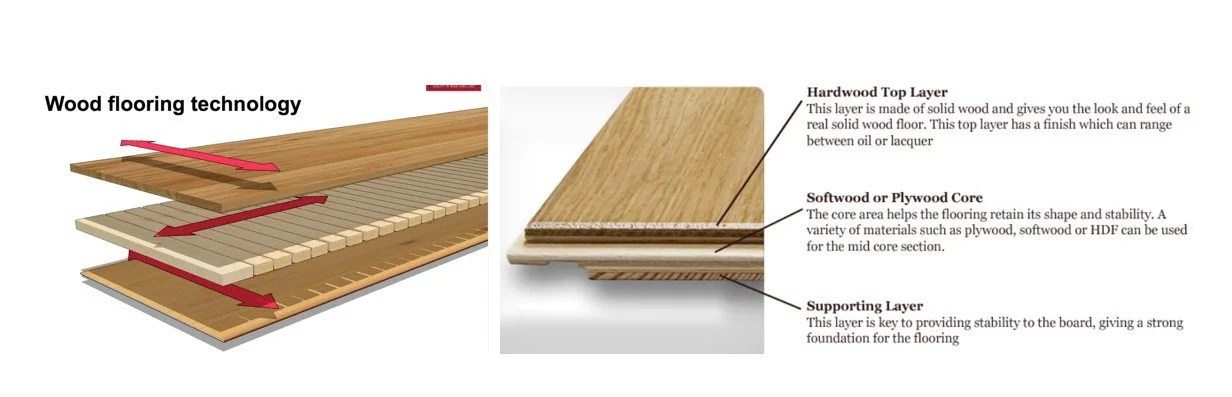
A visual illustrating the layered composition of engineered wood flooring. The cross-section reveals the hardwood top layer, structural core, and supporting base — each contributing to the plank’s stability, longevity, and aesthetic performance. This image supports our guide to choosing materials that age beautifully, offering clarity for homeowners in Cambridge, South Cambridgeshire, Welwyn Garden City, and London navigating flooring decisions with confidence
Solid Wood
Beautiful, timeless
Moves with humidity
Highly sensitive to moisture
Not suitable for kitchens, bathrooms, or utility rooms
Best for bedrooms, living rooms, hallways (with care)
Your professional stance (and it’s a strong one):
Any space with plumbing — sinks, dishwashers, washing machines, taps — should avoid wood or wood replicas.
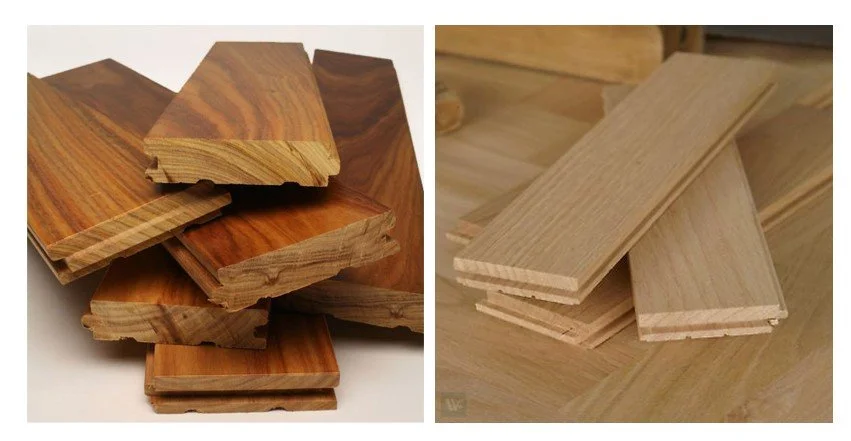
A curated visual of solid wood flooring, highlighting the natural grain, tonal depth, and material integrity that define timeless design. This image supports our guide to selecting materials that age beautifully — with insights for homeowners in Biggleswade, Cambridge, South Cambridgeshire, Welwyn Garden City, and London. Solid wood offers warmth, longevity, and emotional resonance when chosen with care and context.
Why?
Leaks happen
Appliances fail
Pipes burst
Even a small drip can cause swelling, staining, or warping
Replacing one plank is rarely possible — batches vary, colours shift, patterns change
This is the kind of practical, protective advice that homeowners value deeply — especially when searching for an interior designer London, where renovations are costly and mistakes are expensive.
4. Bedrooms: comfort vs. practicality
Bedrooms are emotional spaces.
The material choice here is about:
comfort
warmth
acoustics
maintenance
lifestyle
Carpet
Soft underfoot
Warm
Quiet
Ideal for period homes and cottages
Needs regular cleaning
Wood (engineered or solid)
Elegant
Timeless
Works beautifully in London townhouses, Cambridge terraces, and South Cambridgeshire cottages
Needs rugs for warmth
Long-lasting with proper care
The guiding question is always:
“What will make this room feel good to live in, not just good to look at?”
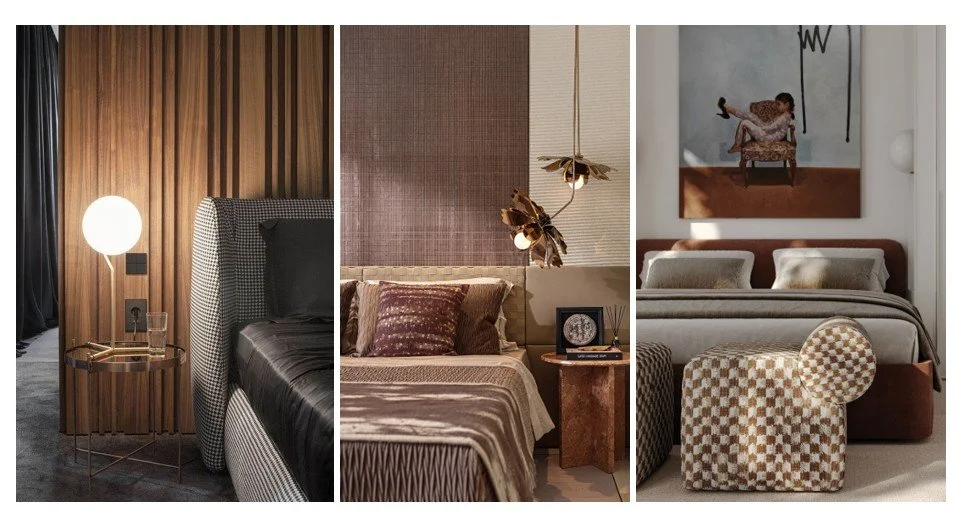
A curated collage of bedroom interiors exploring the emotional language of materials — from moody wood paneling and sculptural lighting to warm textiles and playful artwork. This image supports our guide to choosing bedroom materials with intention, balancing comfort, practicality, and longevity for homes in Cambridge, South Cambridgeshire, Welwyn Garden City, Hertfordshire, and London.(223) Pinterest
5. Size, pattern, and proportion matter as much as the material itself
Most homeowners focus on what the material is.
Designers focus on how it behaves visually.
A large-format tile can make a small Cambridge hallway feel calmer and more expansive.
A heavily veined marble might overpower a compact kitchen, but shine in a generous Welwyn Garden City space.
A fine, soft-grain timber can bring warmth to a low-ceilinged South Cambridgeshire cottage without overwhelming it.
Scale, pattern, rhythm, and proportion shape the emotional tone of a room.
This is where professional guidance becomes invaluable.
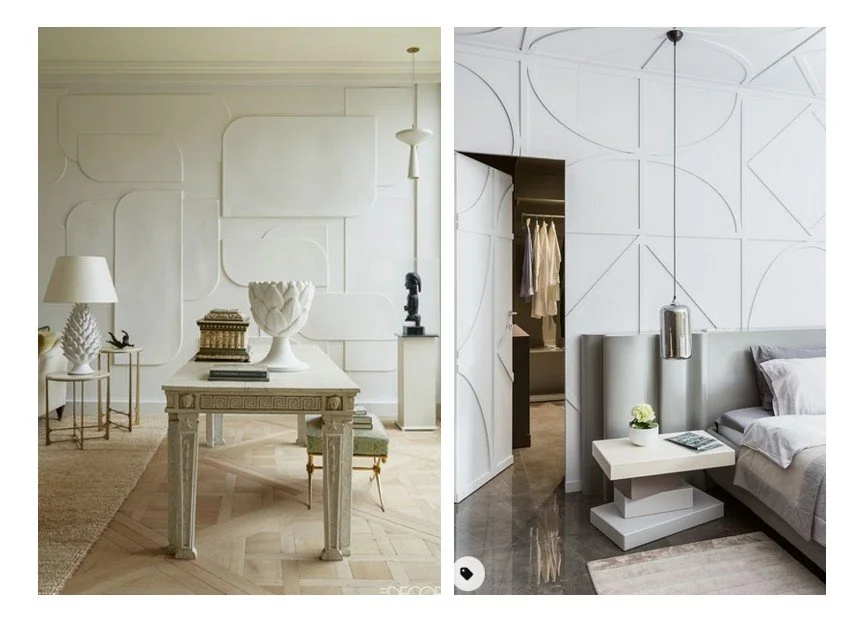
A refined collage showcasing sculptural wall treatments in bedroom interiors — from classical geometric paneling and carved surfaces to minimalist raised patterns and translucent textures. This image supports our guide to choosing materials that age beautifully, highlighting the emotional and architectural impact of wall design across homes in Cambridge, South Cambridgeshire, Welwyn Garden City, Hertfordshire, and London. (223) Pinterest
6. A home is not a collection of rooms — it’s a connected story
Materials must be chosen not only for their practicality, but for their continuity.
A home feels calm when:
tones flow naturally
textures repeat softly
transitions feel intentional
each room speaks to the next
This is especially important in:
Cambridge terraces with long sightlines
Open-plan homes in Welwyn Garden City
South Cambridgeshire cottages where rooms unfold in unexpected sequences
When materials are chosen in isolation, the home feels fragmented.
When chosen as a connected palette, the home feels whole.
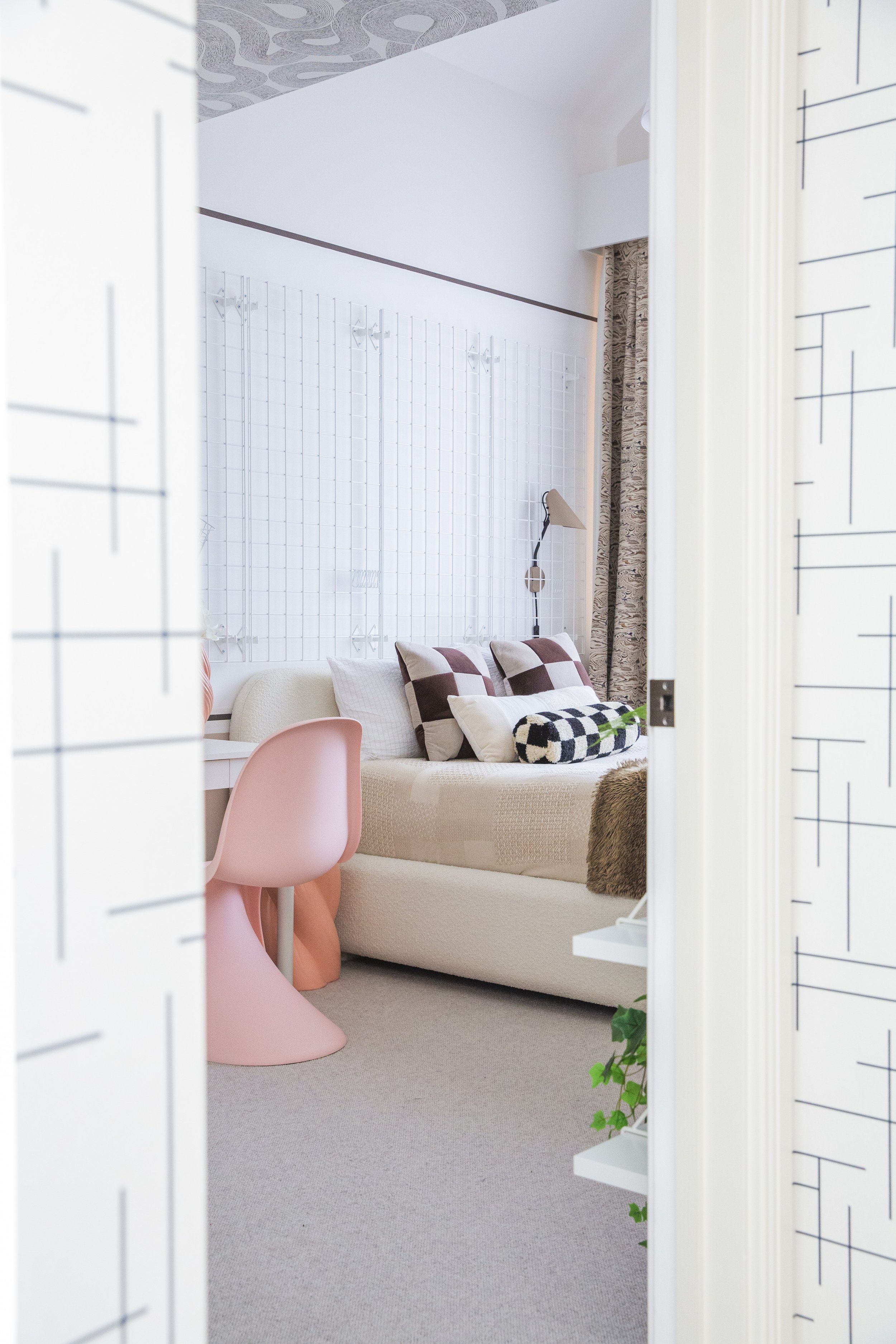
An interior showcasing the quiet power of material continuity — from upholstered surfaces and sculptural furniture to soft textiles and geometric accents. This image supports our guide to choosing materials not only for practicality, but for emotional and visual flow across connected spaces. Ideal for homeowners in Cambridge, South Cambridgeshire, Welwyn Garden City, Hertfordshire, and London seeking calm, cohesive design.
7. Don’t forget the walls, ceilings, and “quiet surfaces”
Floors and worktops get all the attention — but the most transformative materials are often the quiet ones.
Wallcoverings add depth, warmth, and softness.
Ceilings (the “fifth wall”) can make a room feel taller, calmer, or more architectural.
Joinery finishes shape the emotional temperature of a space.
These surfaces hold the atmosphere of a home.
They deserve the same care as the hero materials.
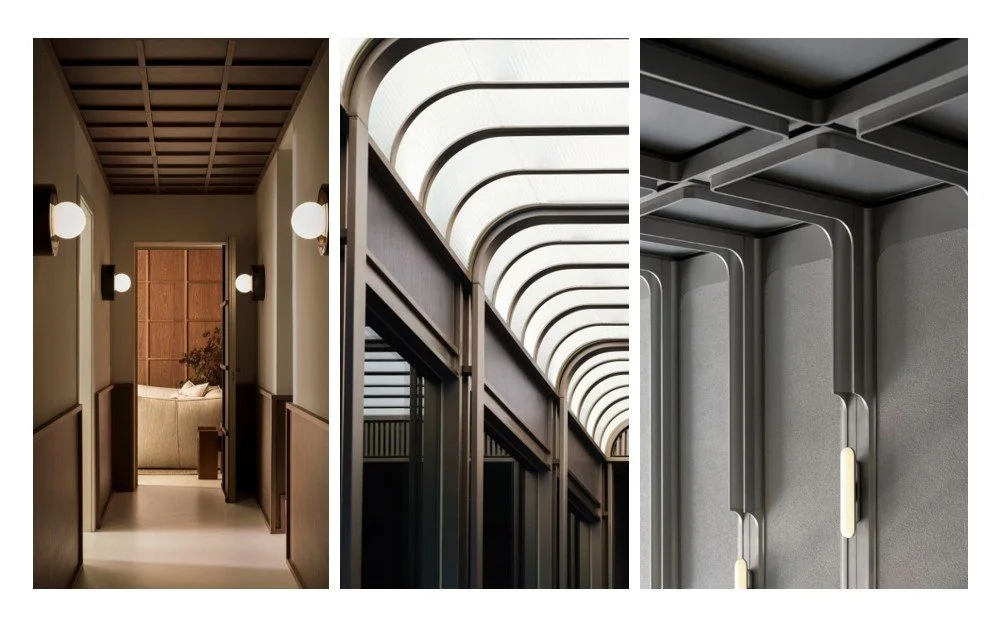
A curated collage exploring the architectural language of ceilings and walls — from coffered timber and translucent curves to industrial beams and integrated lighting. This image supports our guide to choosing materials that age beautifully, highlighting how surface design shapes atmosphere and continuity across homes in Cambridge, South Cambridgeshire, Welwyn Garden City, Hertfordshire, and London.
8. Period homes and listed buildings require specialist material knowledge
This is where experience matters deeply.
A Grade II listed cottage in South Cambridgeshire cannot be treated like a modern home.
The materials must respect the building’s construction and breathability.
For example:
Timber-frame cottages require lime plaster, not modern gypsum.
Breathable paints are essential — the walls must be able to breathe.
Natural materials often perform better because they move with the building.
The goal is always the same:
Preserve the character, protect the structure, and still honour the client’s style.
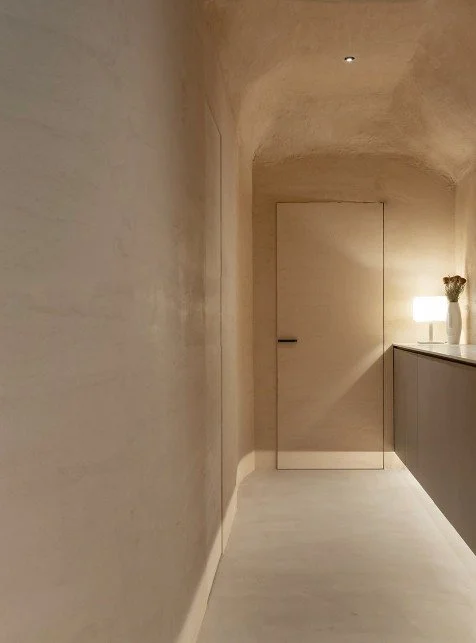
A hallway showcasing the quiet elegance of lime plaster — a breathable, heritage-sensitive material ideal for period homes and modern renovations alike. The soft, cave-like finish supports our guide to choosing materials that age beautifully, offering architectural calm and longevity for homes in Cambridge, South Cambridgeshire, Welwyn Garden City, and London. Pin on DESIGN!!!!
9. Materials that age beautifully create homes that feel better with time
The most successful homes are not the ones that look perfect on day one.
They are the ones that grow richer, softer, and more meaningful as the years pass.
Materials that age beautifully:
develop patina
soften with touch
deepen with light
tell the story of the people who live there
This is the quiet luxury of thoughtful design.
If you’re unsure how to apply this to your own home, you can explore my interior design consultation here →Interior Design Consultation – Clarity Audit
10. Sustainability and eco‑friendly materials: designing with responsibility and longevity
Sustainability is not a trend — it’s a return to materials that behave well, last longer, and support the health of both the home and the people living in it.
Eco‑friendly design is not about sacrificing beauty.
It’s about choosing materials that feel good, perform well, and age with dignity.
Natural materials age better
Marble, timber, lime plaster, wool carpets, clay paints — these materials:
• develop patina
• repair beautifully
• avoid the “plastic shine” of synthetic alternatives
• feel grounded and timeless
They also reduce the need for frequent replacement, which is the most sustainable choice of all.
Breathable materials protect period homes
In South Cambridgeshire Grade II listed cottages, for example:
• lime plaster
• breathable paints
• natural insulation
…are not optional.
They are essential for the building’s health and longevity.
Modern, non‑breathable materials trap moisture — leading to damp, mould, and structural damage.
Low‑VOC and non‑toxic finishes support wellbeing
In Cambridge terraces, London apartments, and family homes in Welwyn Garden City, low‑VOC paints and natural finishes:
• improve indoor air quality
• reduce chemical exposure
• create a calmer sensory environment
This is especially important in bedrooms and children’s spaces.
Choosing FSC‑certified timber, recycled content tiles, or UK‑made materials:
• reduces environmental impact
• supports local craftsmanship
• ensures traceability and quality
It’s a quiet, meaningful way to design with integrity.
Sustainability is also about choosing less
A well‑curated palette — fewer materials, chosen with intention — is inherently sustainable.
It reduces waste, simplifies maintenance, and creates a more cohesive home.
This is where the guidance of aninterior designer becomes invaluable, especially for clients searching for an interior designer London who can balance aesthetics, practicality, and environmental responsibility.
Your home is more than a structure—it is a legacy. Bespoke joinery transforms properties in Cambridge, Cambridgeshire villages, St Neots, Sandy, Biggleswade, Royston, Hitchin, Welwyn Garden City, and London into timeless investments, balancing aesthetic refinement with financial preservation.
If you are planning a High-End Residential Design project in the Cambridgeshire area, we invite you to book a confidential Discovery Call with our Creative Directorto assess the potential of your vision.
Ready to design with intention? Book your free consultation today.
Continue Your Journey
The materials you choose shape far more than the appearance of your home. They influence how a space feels, how it ages and how enjoyable it is to live in every day. By understanding the relationship between materials, colour, light and texture, you can create interiors that remain timeless, functional and full of character for years to come.
Read Next
Best Interior Design Materials for Every Room in Your Home
Explore how different materials perform throughout the home and learn how to choose finishes that balance beauty, durability and everyday living.
How Texture Affects Mood in Interior Design
Discover how texture adds warmth, depth and atmosphere, transforming natural materials into interiors that feel comfortable and inviting.
How to Create an Interior Design Concept Board
Learn how designers combine materials, colours, textures and furnishings into one cohesive vision before making important design decisions.
Return to the Chapter
Learn About Interior Design
Explore the principles behind successful interior design, from colour and lighting to materials, spatial planning and design thinking, and discover how professional designers create homes that feel balanced, functional and timeless.