
How to Create an Interior Design Concept Board
An interior design concept board helps shape the visual and material direction of a project before detailed design begins. By combining colours, textures, furniture, materials, and spatial ideas into one cohesive reference, concept boards create clarity, improve decision-making, and help contemporary interiors feel more balanced, connected, and thoughtfully designed from the start.
A concept board is where a home begins — long before furniture is chosen or walls are painted. It’s the moment where atmosphere becomes visible, where emotion turns into material, and where the direction of a space is quietly set. In my practice, concept boards are not decorative collages; they are visual blueprints of intention, shaped with care for the people and places they belong to.
This article explores how a concept board is shaped, why it matters, and how it guides every decision that follows.
1. Begin with Atmosphere, Not Objects
Every concept starts with a feeling — the emotional tone a home should hold.
Is it calm? Grounded? Light? Expressive? Scholarly? Warm?
For the Greenwich Apartment, the atmosphere was masculine warmth and visual calm.
For the Cambridgeshire Bedroom, it was light, tactile serenity.
Atmosphere becomes the compass.
Everything else follows.
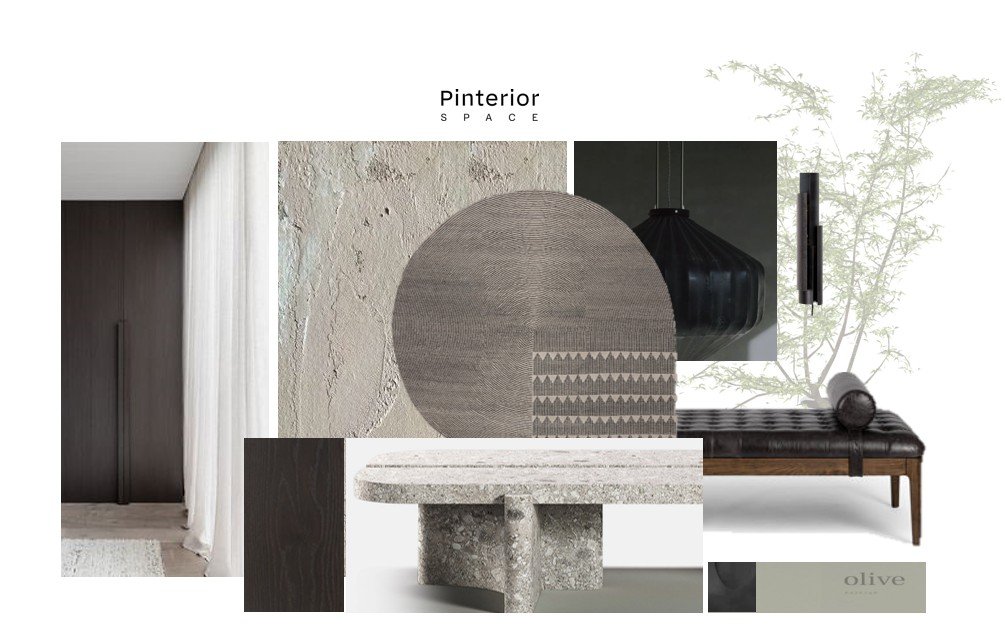
Greenwich Apartment — Concept Board
A tactile composition of concrete, dark wood, olive accents, and sculptural forms. This board distills the emotional tone of the Greenwich Apartment concept — masculine warmth, visual calm, and a quiet rhythm shaped for small-space living in London.
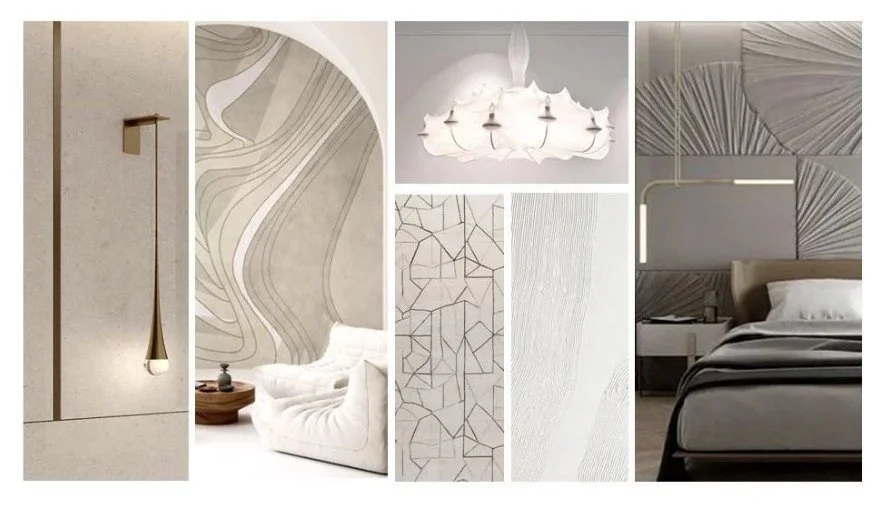
Cambridgeshire Bedroom — Detail Study
A layered glimpse into the Cambridgeshire concept: sculptural lighting, abstract wall art, and textured finishes converge to shape a bedroom that feels quietly expressive, tactile, and light. Each fragment holds emotional clarity and poetic calm.
2. Study the Light and the Location
Homes in Cambridge, Sandy, Wyboston, or Welwyn Garden City each hold light differently.
Some rooms receive soft northern light; others glow with warm evening sun.
Some villages have textured, rural quiet; others carry suburban geometry or London’s sharper rhythm.
A concept board must honour this. It must belong to its place.
This is why my Interior Design Concept Hub is rooted in real locations — Greenwich, Cambridgeshire, and the surrounding villages.
Place the shapes palette. Place shapes texture. Place shapes mood.
You can see this in the Biggleswade Kitchen & Dining concept, where deep green tones and grounded materials respond to the character of the village.
3. Explore Materials That Hold Emotion
Once the atmosphere is clear, I begin gathering materials that express it:
Concrete for clarity
Dark wood for grounded warmth
Muted olive for calm
Sculptural lighting for softness
Layered wall finishes for depth
Textiles that invite touch
These materials are not chosen for trend; they’re chosen for feeling.
A concept board is a tactile poem — each element a line in the story of the home.
4. Shape the Visual Language
This is where the board becomes a cohesive whole.
Textures, colours, lighting, and forms are arranged to speak the same emotional language.
For Greenwich, the language was quiet geometry and Japanese–Nordic restraint.
For Cambridgeshire, it was sculptural softness and contemporary calm.
The board becomes a visual anchor — something the client can feel, not just see.
Explore the Interior Design Concept Hub
5. Translate the Concept Into Space
A concept board is not the final room. It is the direction.
Once the emotional and material language is set, it guides:
Furniture choices
Lighting design
Wall finishes
Spatial rhythm
Colour palette
Styling details
This is why each concept in the hub includes a “Concept in Context” visual — a glimpse of how the board becomes atmosphere in a real room.
6. Why Concept Boards Matter Before Renovation
Renovations and redesigns are full of decisions.
A concept board simplifies them.It becomes the reference point that keeps the project aligned — emotionally, visually, and practically.
It prevents overwhelm.
It creates clarity.
It ensures the home feels intentional, not accidental.A concept board is the quiet beginning that shapes everything that follows.
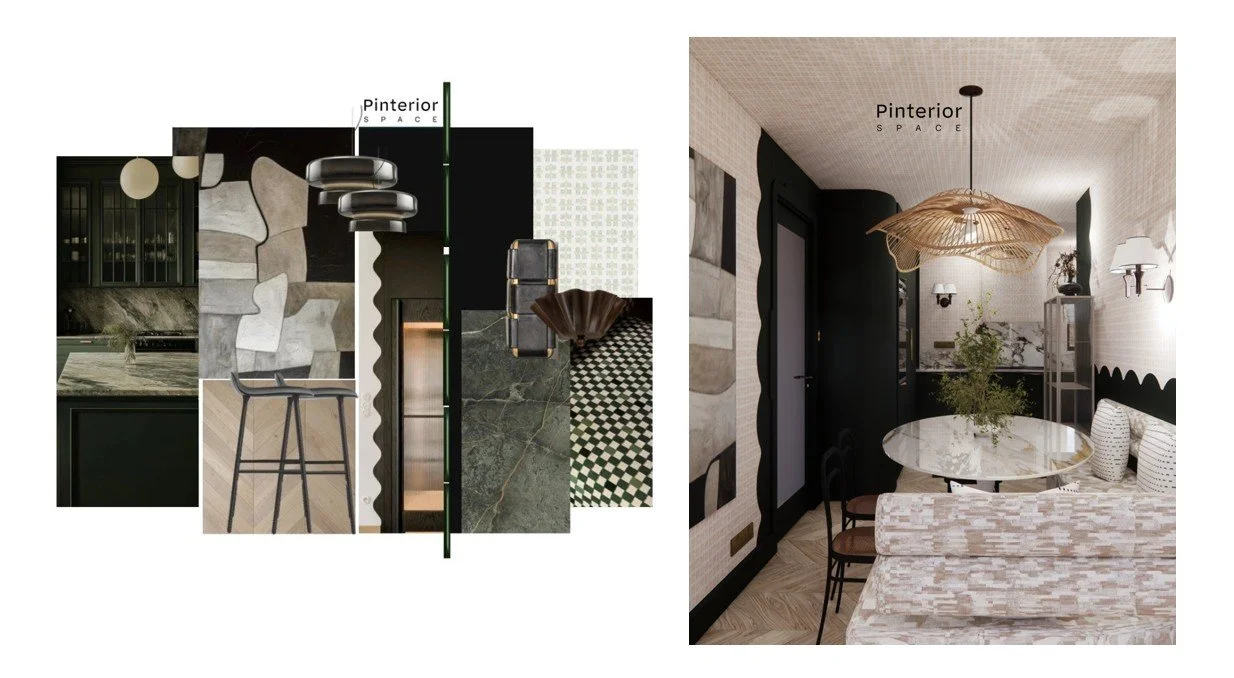
This image pairs a concept board with a completed interior visualization for a green-drenched kitchen and dining space in Biggleswade. The board features dark green cabinetry, marble surfaces, sculptural lighting, and geometric accents — while the interior reflects these elements in a softly layered dining area with woven pendants, scalloped trim, and subtle wallpaper. Together, they illustrate how atmosphere and material choices translate from concept to space.
7. Explore the Concept Hub
If you’d like to see how concept boards come to life, explore the Interior Design Concept Hub — the root system of my design process, where ideas take shape before they become rooms.
And if you’d like a concept shaped for your own home — in Cambridge, London, or beyond — I’d love to begin that conversation with you.
Contact Pinterior.space to begin your own narrative of place, purpose, and poetic living along Grange Road—or wherever your Cambridge journey may lead.
If you’re searching for a Cambridgeshire Interior Designer who blends practical solutions with poetic detail, this is where the journey begins.
Ready to design with intention? Book your consultation today.
You can explore more here:
• my [Bathroom Concept Boards → /concept-boards]
• my [Recent Articles → /articles]
• my [Home page ]
Continue Your Journey
A concept board is much more than a collection of inspirational images. It is the first stage of translating ideas into a coherent design direction, bringing together colour, materials, texture and atmosphere before detailed decisions are made. By developing a clear vision from the beginning, every choice that follows becomes more intentional and connected.
Read Next
How Interior Design Concept Boards Shape a Project
Explore how professional concept boards guide design decisions throughout a project, creating clarity, consistency and confidence from concept to completion.
How to Choose Colours for Your Home (Without Getting It Wrong): A Calm, Practical Guide
Learn how confident colour choices form the foundation of a cohesive interior and support every stage of the design process.
How to Choose Materials That Age Beautifully: A Guide to Timeless Interior Design
Discover how thoughtful material selection helps create interiors that remain beautiful, functional and timeless for years to come.
Return to the Chapter
Learn About Interior Design
Explore the principles behind successful interior design, from colour and lighting to materials, design thinking and creative process. Discover how professional designers develop ideas that become thoughtful, functional and timeless homes.