
🖤Art Deco: Geometry, Craft and the Birth of Modern Interior Design
Art Deco arrived like a new rhythm across Europe — bold, geometric, confident.
Where Art Nouveau flowed with organic softness, Art Deco stepped forward with structure, clarity and a belief that modern life could be both functional and exquisitely crafted. It was the moment design embraced the future: the machine age, new materials, new technologies, new ways of living.
For me, as a modern interior designer working across Cambridge, Cambridgeshire and London, Art Deco is more than a historical period. It is the bridge between early modernism and the contemporary interiors we create today — a reminder that geometry, craftsmanship and proportion are timeless.
This was not just a style.
It was the beginning of modern interior design.
You can learn more about how I work on my [services page → /services].
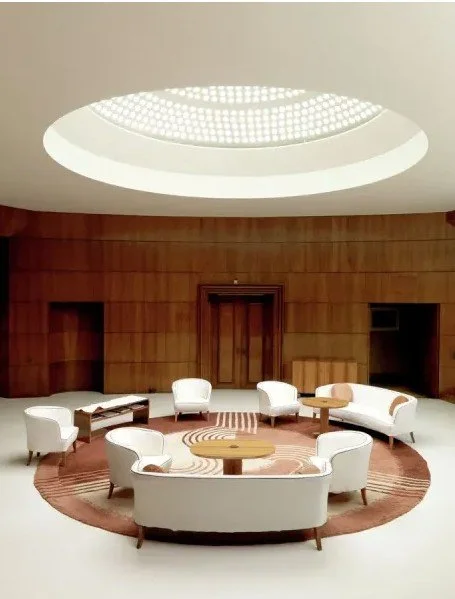
A striking Art Deco interior from Eltham Palace, showcasing a circular seating arrangement beneath a patterned skylight. The space features geometric flooring, warm timber panelling and sculptural symmetry, reflecting the palace’s status as one of the finest Art Deco interiors in the UK. Things to see and do at Eltham Palace and Gardens | English Heritage
A European Movement Built on Modernity and Craft
Art Deco emerged in the 1920s and 1930s, shaped by optimism, technology and a desire for a new visual language. Europe was rebuilding, reimagining, redefining itself — and design followed.
In Paris, designers like Ruhlmann and Leleu elevated craftsmanship to extraordinary heights.
In Vienna, the Wiener Werkstätte refined geometry into an art form.
In Berlin, modernism became streamlined and architectural.
In London, the 1930s brought a wave of Deco stations, cinemas and civic buildings — confident, elegant, unmistakably modern.
This was a Europe looking forward, not back.
And at the heart of it all was craftsmanship — bespoke joinery, hand‑finished surfaces, made‑to‑measure furnishings, and materials chosen for their depth, richness and integrity.
You can explore how I approach bespoke, crafted interiors in my [design process → /process].
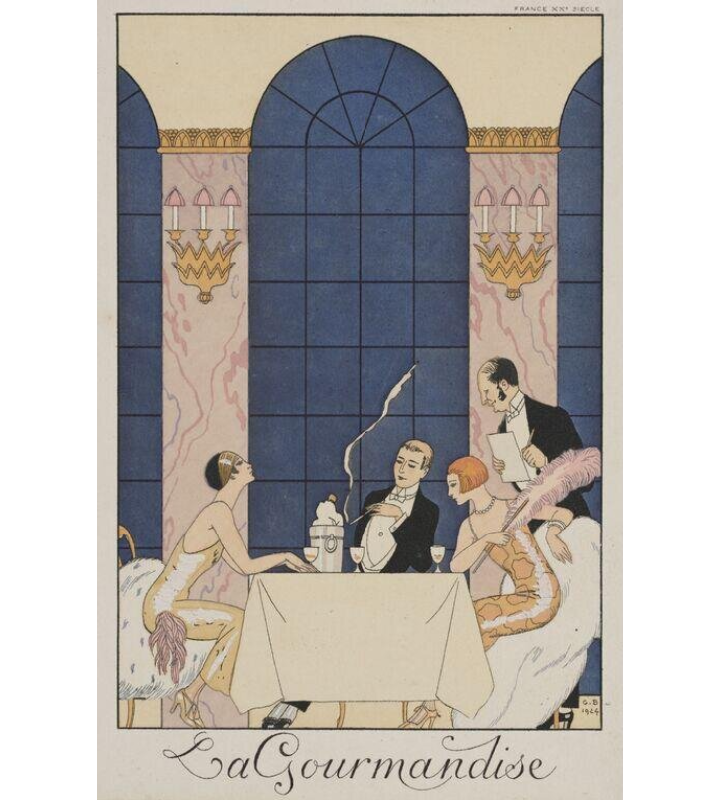
“La Gourmandise” (1925) by George Barbier is a pochoir stencil print depicting an elegant Art Deco dining scene. Three figures sit at a lavishly dressed table beneath tall arched windows and ornate wall sconces, capturing the luxury, refinement and theatrical glamour of 1920s French design. Victoria and Albert Museum, London.
Why Art Deco Still Shapes Contemporary Interiors
Art Deco matters today because it introduced the principles that define modern interior design:
Geometry as structure
Symmetry as calm
Craftsmanship as philosophy
Material richness without excess
Proportion as the quiet architecture of a room
A belief that design should elevate everyday life
These are the same principles I use as a bespoke interior designer in Cambridge and London, especially when creating modern, crafted, made‑to‑measure spaces.
Art Deco taught us that modernism doesn’t have to be cold.
It can be warm, sculptural, refined — and deeply human.
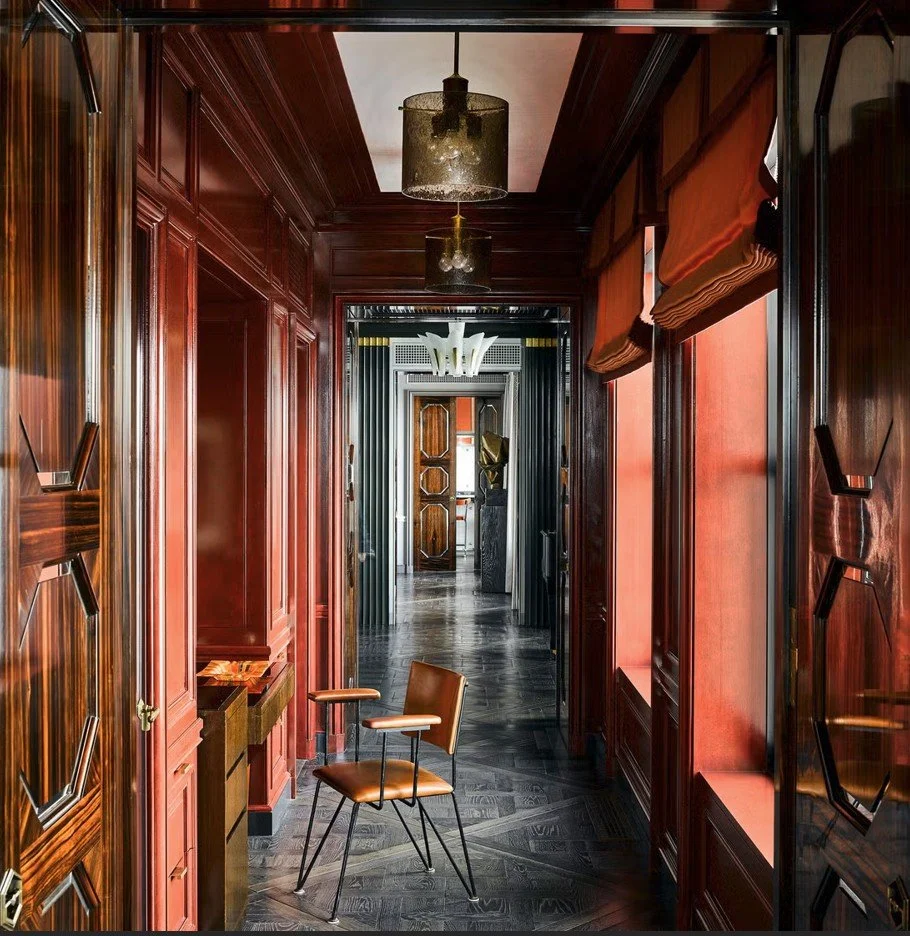
A contemporary interior photographed by Douglas Friedman, showcasing a modern interpretation of Art Deco design. The space features glossy red wall panelling, geometric dark‑wood flooring, sculptural lighting and a refined mix of wood, metal and leather. The composition highlights how Art Deco principles translate into today’s luxury interiors through material richness, symmetry and crafted detailing. Art Deco Is Back and It’s Louder Than Ever
The Bauhaus Connection — When Craft Meets Modernism
Art Deco and the Bauhaus are often seen as opposites — one glamorous, one austere.
But the truth is more interesting.
Both movements believed in:
craftsmanship
clarity
honest materials
functional beauty
design as a cultural force
Art Deco expressed this through lacquer, chrome, glass and exotic woods.
The Bauhaus expressed it through steel, geometry and industrial clarity.
Together, they shaped the foundations of contemporary interior design — the world we work in today.
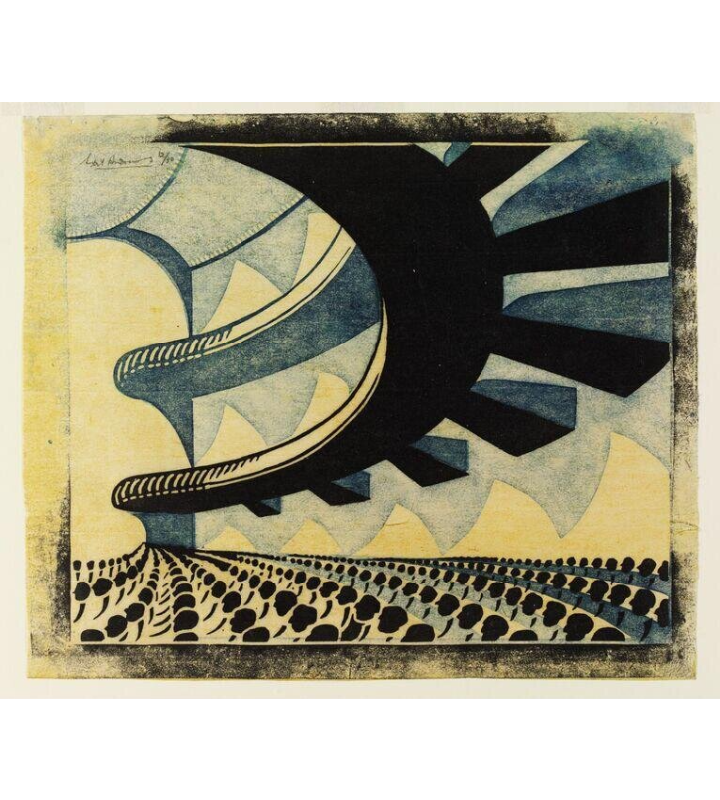
“Au Theatre” (c.1929) by Sybil Andrews is a striking modernist linocut featuring sweeping architectural curves, geometric lighting and stylised audience silhouettes. The print reflects the energy and abstraction of the Art Deco era, capturing the movement’s fascination with rhythm, architecture and collective experience. Victoria and Albert Museum, London.
Key Characteristics of Art Deco — A Designer’s Perspective
Art Deco is instantly recognisable, not because of ornament, but because of its discipline:
Bold geometry — stepped forms, zigzags, sunbursts
Symmetry and rhythm — a sense of order and calm
Fluted detailing — cabinetry, columns, panelling
Rich materials — walnut, macassar ebony, marble, chrome, glass
Sculptural lighting — opaline glass, tiered forms, geometric silhouettes
Crafted joinery — bespoke, made‑to‑measure, beautifully proportioned
These elements still appear in modern interiors — not as replicas, but as echoes.
A fluted vanity. A geometric light. A richly grained timber. A structured layout.
You can see how these principles appear in my own work through my [interior projects → /interiors].
Art Deco in Cambridge, Cambridgeshire and London
Art Deco left a quieter but meaningful imprint across the UK — especially in London and the surrounding counties.
In London, the movement shaped:
Underground stations
1930s residential architecture
Civic buildings
Cinemas and theatres
In Cambridge and Cambridgeshire, you can still find:
Deco‑influenced civic buildings
Streamlined 1930s homes
Geometric ironwork and stone detailing
Early modernist interiors with Deco proportions
Whether you’re searching for a modern interior designer in Cambridge, a contemporary interior designer in London, or a local designer near me, the influence of Art Deco is woven into the architectural fabric of the region.
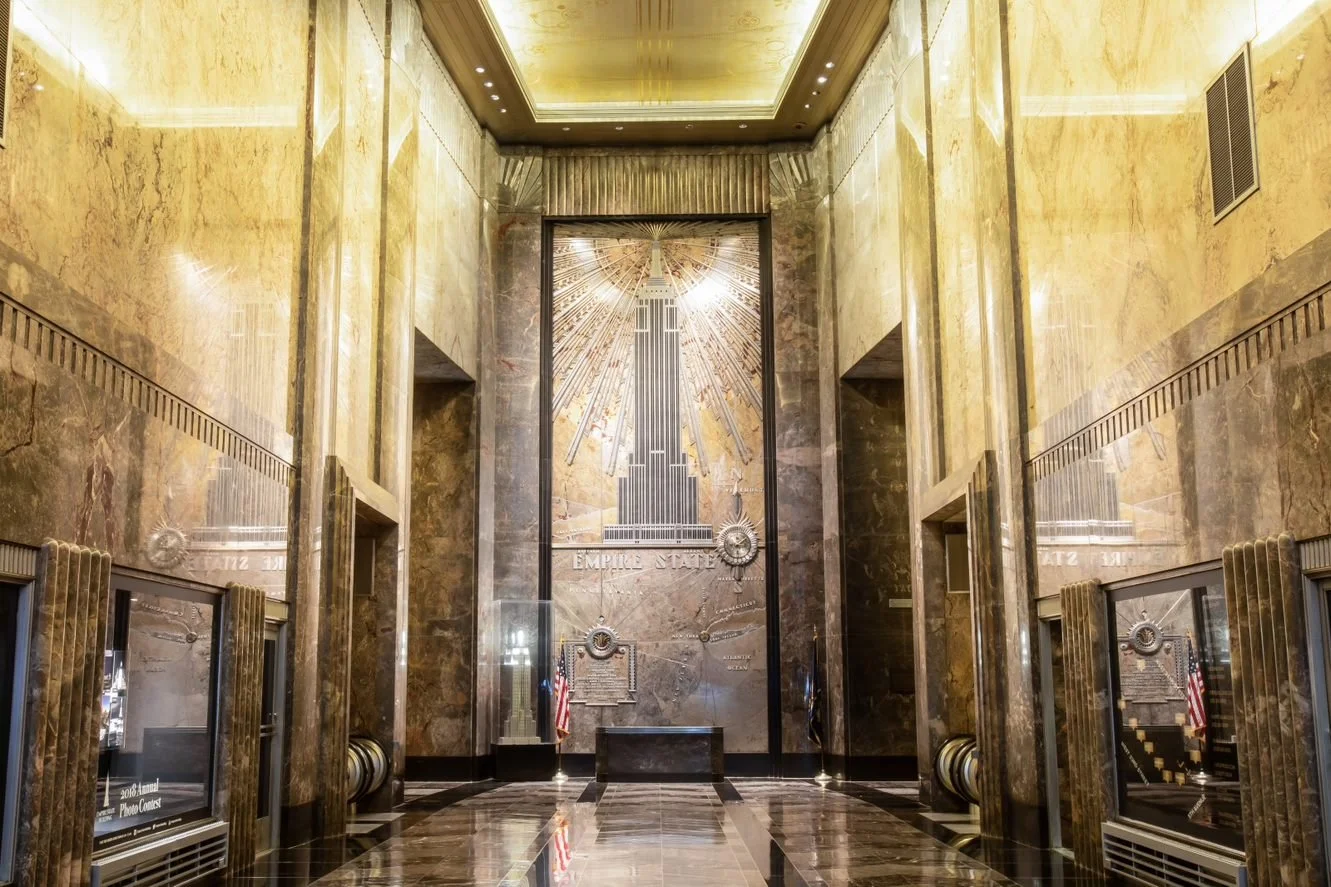
A view of the Empire State Building’s Art Deco lobby, featuring a large stylised metal panel depicting the skyscraper with radiating geometric lines. The space is framed by polished stone walls, reflective surfaces and intricate metal detailing, showcasing one of the most celebrated examples of American Art Deco design. Architecture & Design of the NYC Skyline Icon | Empire State Building
How Art Deco Shapes the Interiors I Create Today
Art Deco is not something I replicate — it’s something I translate.
In my work as a bespoke interior designer in Cambridgeshire and London, I draw from the movement’s:
love of proportion
respect for materials
commitment to craftsmanship
belief in made‑to‑measure design
architectural clarity
sculptural geometry
This might appear as:
fluted cabinetry
geometric lighting
richly grained timber
structured layouts
crafted joinery
calm, modern symmetry
These are not trends.
They are design principles with a century of relevance behind them.
If you enjoy design history, you may also like my article on [Architectural Calm → /architectural-calm].
A Poetic Closing — Modernism with a Human Heart
Art Deco was Europe’s declaration that modern life could be beautiful.
That geometry could be emotional.
That craftsmanship could coexist with progress.
That design could shape not just homes, but the way we live within them.
A century later, its influence remains — in every fluted panel, every geometric light, every carefully proportioned room.
If you’re exploring how to bring this kind of clarity, proportion, and modern design philosophy into your own home — whether you’re in Cambridge, Cambridgeshire, the surrounding shire villages, London, Letchworth, Hitchin, St Neots, or nearby — I’d love to help you shape a space that feels calm, intentional, and deeply supportive.
You can explore more here:
Continue Your Journey
Understanding Art Deco reveals how design movements continue to influence the homes we live in today. Continue exploring these articles to discover the ideas, designers and philosophies that have shaped contemporary interior design.
Read Next
Art Nouveau: Europe's First Breath of Modernism
Discover how Art Nouveau challenged tradition and laid the foundations for the modern design principles that continue to influence interiors today.
Bauhaus: The School That Shaped Modern Society
Explore how Bauhaus transformed architecture, furniture and interior design through simplicity, function and craftsmanship.
Modern vs Contemporary Interior Design Explained
Understand the difference between modern and contemporary design, and discover how both continue to influence today's homes.
Return to the Chapter
Design History & Icons
Explore more articles about influential design movements, iconic designers and the timeless ideas that continue to inspire contemporary interior design.