
How Natural Light Shapes Interior Design in Cambridge and London
Natural light plays a fundamental role in shaping interior design, influencing colour, materials, atmosphere, and the way a home feels throughout the day. Homes in Cambridge, Cambridgeshire villages, and London each hold light differently, and understanding these subtle variations can help create interiors that feel calmer, more balanced, and better connected to their surroundings and everyday living.
Light is the quiet architect of every home.
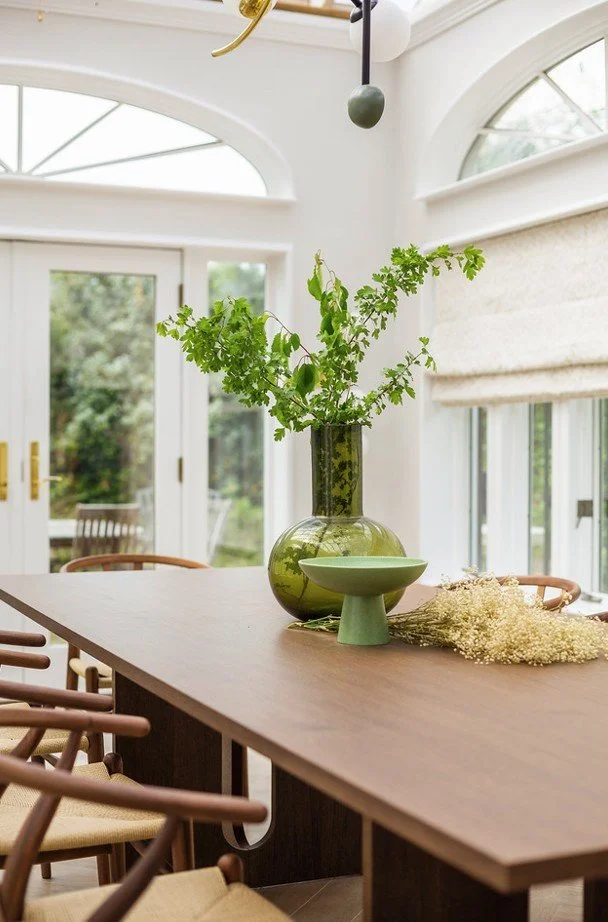
A serene dining space where natural light meets sculptural form — reflecting the quiet elegance of homes in Cambridgeshire villages and London. This image anchors the article’s exploration of how place shapes light, mood, and design.
It shapes the atmosphere long before furniture arrives, and it determines whether a room feels grounded, expansive, calm, or alive. Yet most homeowners — and many designers — overlook how profoundly location influences light.
A home in Cambridge does not hold light the same way as a home in Sandy, Wyboston, Welwyn Garden City, or London.
Each place carries its own rhythm, its own sky, its own emotional temperature.
This article explores how light behaves across these regions — and how to design with it, not against it.
1. Cambridge: Soft Academic Light and Quiet Geometry
Cambridge homes often receive a gentle, diffused light — softened by historic streets, mature trees, and the city’s scholarly calm.
How does Cambridge light behave
• Soft, cool northern light in terraced streets
• Warm, filtered light in Victorian and Edwardian homes
• Gentle reflections from pale stone and water
• Subtle shifts throughout the day
How to design for it
• Use muted neutrals that hold softness rather than fight it
• Add sculptural lighting to create depth in the evenings
• Choose textured materials (linen, limewash, oak) to catch the light
• Avoid overly glossy finishes — they flatten Cambridge’s gentle atmosphere
See this in practice
The Cambridgeshire Light Contemporary Bedroom concept shows how sculptural lighting and soft materials amplify the region’s natural calm.
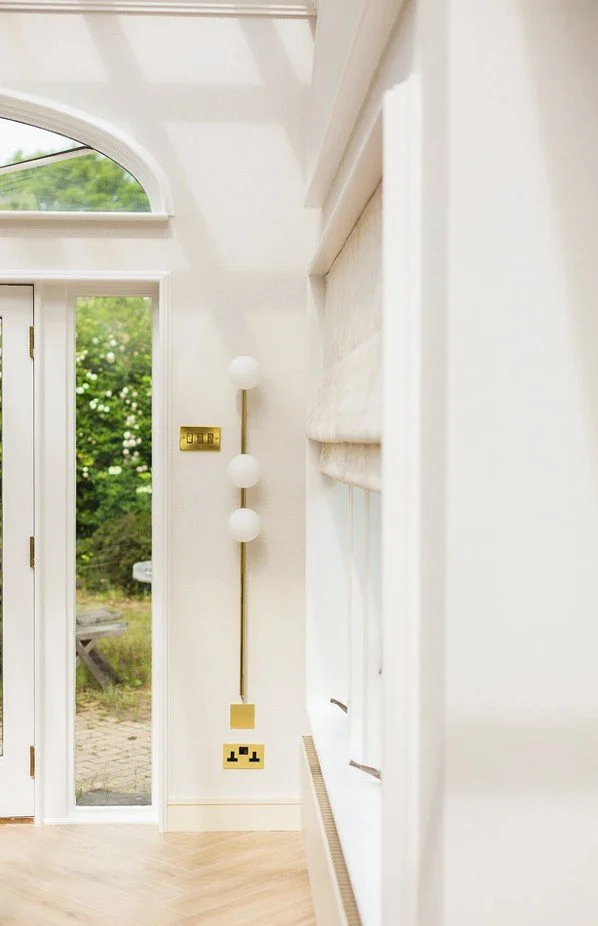
A sculptural brass fixture catches the soft northern light in a Cambridge home — restrained, elegant, and quietly geometric.
2. Cambridgeshire Villages: Rural Quiet and Textured Light
Villages like Sandy, Wyboston, Caldecote, Comberton, and St Neots hold a different kind of light — more open, more textured, shaped by fields, hedgerows, and wider skies.
How does village light behave
• Stronger contrasts between morning and evening
• Warmer tones from natural surroundings
• More directional light through larger windows
• Seasonal shifts that are more pronounced
How to design for it
• Use earthy palettes that echo the landscape
• Introduce layered lighting to balance bright days and darker evenings
• Choose natural materials (oak, clay, wool) that feel rooted in place
• Consider window treatments that soften but don’t block the view
See this in practice
The Biggleswade Kitchen & Dining concept uses deep greens and grounded materials to reflect the character of the village.
3. London: Sharper Rhythm, Stronger Contrast
London homes — especially in areas like Greenwich — hold light that is more directional, more architectural, and often more dramatic.
How does London light behave
• Stronger shadows from taller buildings
• More contrast between bright and shaded areas
• Cooler tones in north‑facing rooms
• Warmer, more intense light in south‑facing spaces
How to design for it
• Use clean lines and structured forms to complement the sharper light
• Introduce warm woods to soften the urban coolness
• Choose matte finishes to reduce glare
• Add accent lighting to create balance in deeper shadows
See this in practice
The Greenwich Apartment concept blends masculine warmth with visual calm — a response to London’s sharper, more directional light.
4. How to Read the Light in Your Own Home
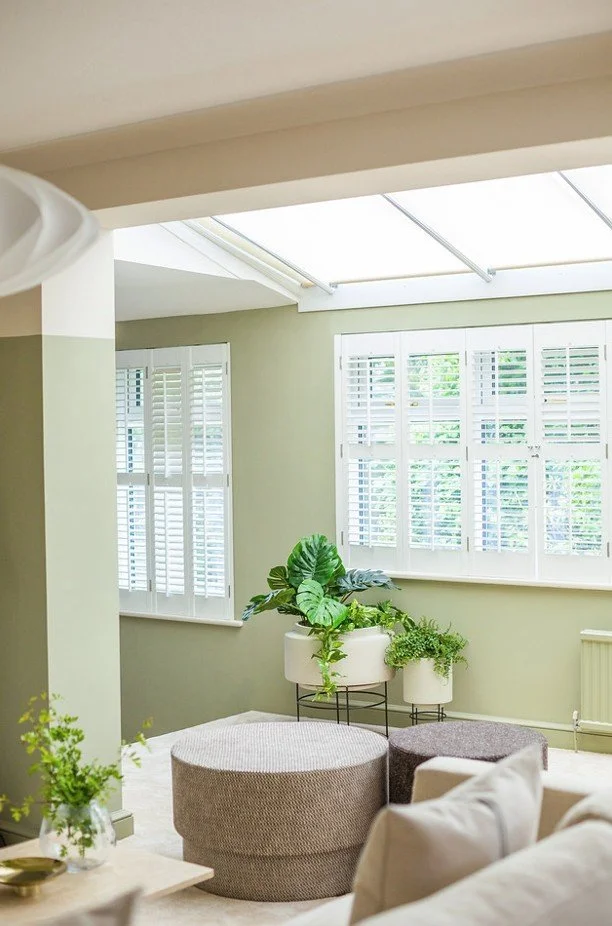
In a Cambridgeshire village home, soft green walls and a skylight invite the rhythm of open skies indoors.
Here’s the educational, practical part — the part that helps your reader do something.
Step 1: Track the light for one full day
Note where it lands, where it fades, and where it feels strongest.
Step 2: Identify the emotional tone of the light
Is it warm? Cool? Sharp? Soft?
This determines your palette.
Step 3: Match materials to the light
• Soft light → textured materials
• Strong light → matte finishes
• Cool light → warm woods
• Warm light → muted neutrals
Step 4: Layer your lighting
Every home needs:
• ambient light
• task lighting
• accent lighting
Most homes only have one.
Step 5: Let location guide your choices
Your home’s place is not a backdrop — it’s a design partner.
5. Why Light Matters Before You Choose Anything Else
Light shapes:
• colour
• texture
• atmosphere
• mood
• spatial perception
This is why every concept in my Interior Design Concept Hub begins with light — not furniture, not trend, not style.
Light is the first material.
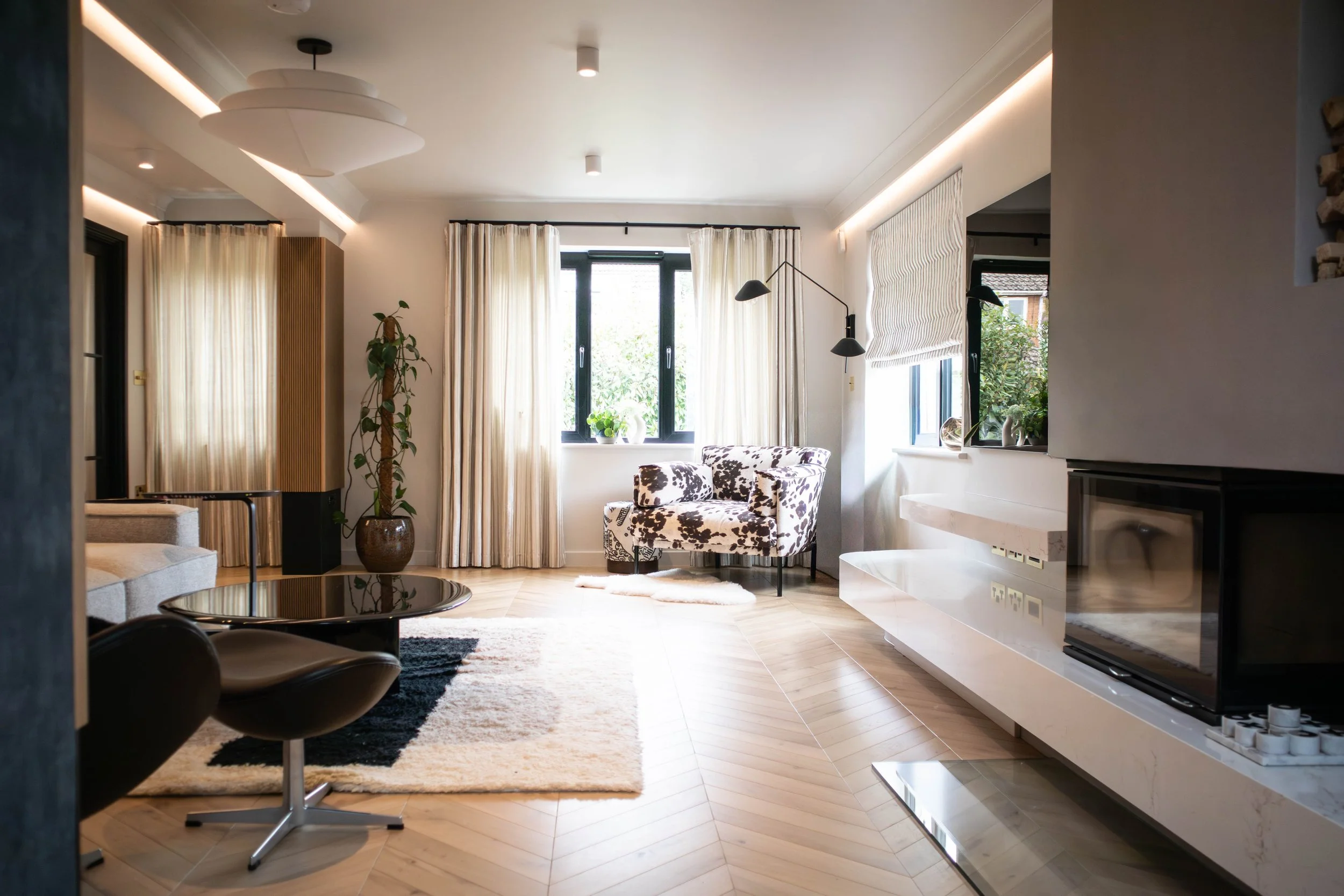
In the Shelford project, a Cambridge living room balances geometric calm with soft light and sculptural restraint.
6. Explore the Concept Hub
If you’d like to see how light, place, and atmosphere come together, explore the Interior Design Concept Hub — a growing archive of concepts shaped for Cambridge, Cambridgeshire villages, and London.
If you’d like help shaping the atmosphere of your home, explore my interior design services.
Contact Pinterior.space to begin your own narrative of place, purpose, and poetic living along Grange Road—or wherever your Cambridge journey may lead.
If you’re searching for a Cambridgeshire Interior Designer who blends practical solutions with poetic detail, this is where the journey begins.
Ready to design with intention? Book your free consultation today.
You can explore more here:
• my [Bathroom Concept Boards → /concept-boards]
• my [Recent Articles → /articles]
• my [Home page ]
Continue Your Journey
Natural light is one of the most influential elements in interior design. It changes the way colours appear, reveals the beauty of materials and shapes the atmosphere of every room throughout the day. By understanding how light interacts with your home, you can make more confident design decisions that feel timeless, balanced and deeply connected to the way you live.
Read Next
How Light and Shadow Shape Interior Design
Explore how light and shadow work together to create depth, contrast and atmosphere, adding character and emotion to contemporary interiors.
How Lighting Affects Mood in Interior Design
Discover how layered lighting influences comfort, wellbeing and the emotional experience of a home from morning through to evening.
Understanding Colour Theory in Interior Design
Learn how natural light influences colour perception and discover why understanding colour theory leads to more confident interior design decisions.
Return to the Chapter
Learn About Interior Design
Explore the principles behind successful interior design, from colour and lighting to materials, spatial planning and design thinking, and discover how professional designers create homes that feel balanced, functional and timeless.