
🖤Art Nouveau: Europe’s First Breath of Modernism
Art Nouveau was Europe’s great turning point — the moment design stepped out of Victorian heaviness and into a new, fluid, modern world. In the history of Art Nouveau, this was the beginning of modernism: a continental movement that believed beauty, craftsmanship and nature could reshape everyday life.
As a bespoke interior designer in Cambridge and across Cambridgeshire, I often return to this period as a reminder of how deeply design can be rooted in material honesty and artistic intention. You can learn more about how I work as a designer on my [services page → /services].
Across Brussels, Paris, Vienna, Barcelona, Prague and Glasgow, a new design language emerged — one that celebrated the hand, honoured materials and imagined a future where architecture, interiors and objects spoke the same gentle, organic dialect.
This was the beginning of modernism. And it deserves to be remembered.
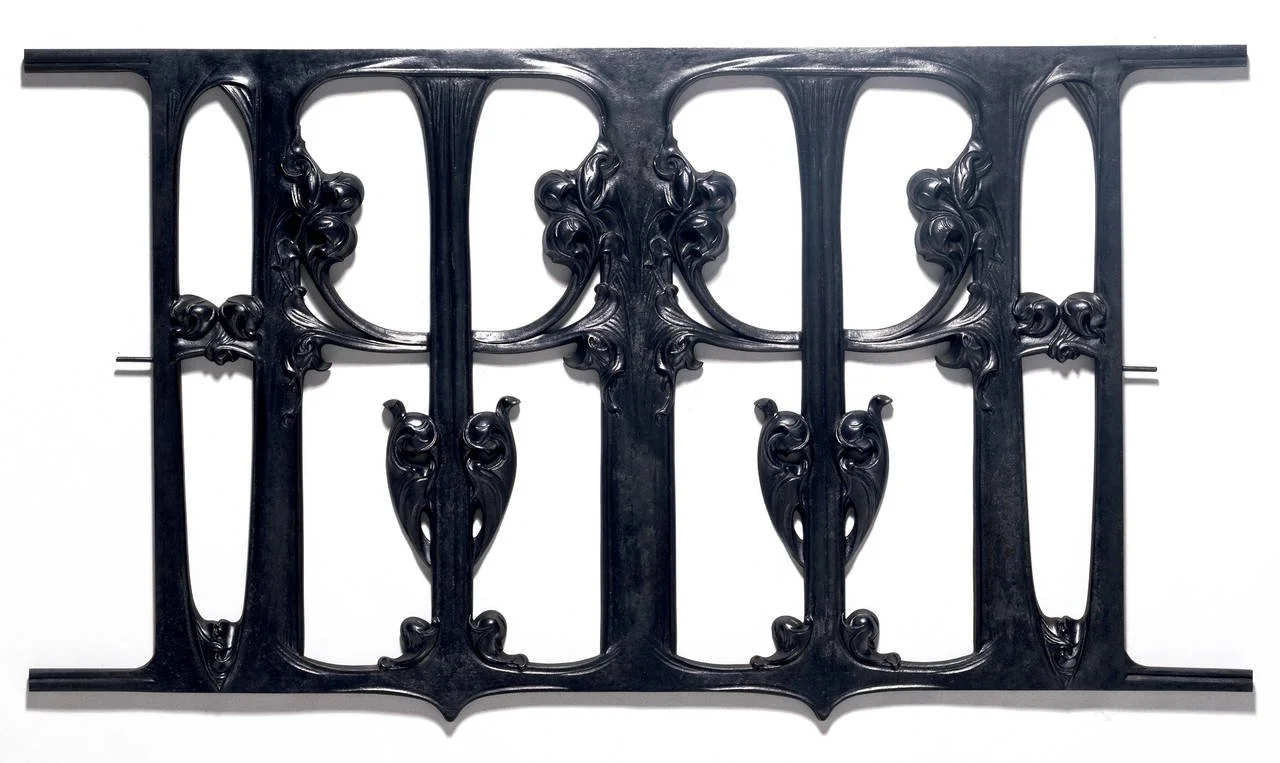
This Art Nouveau balcony front, designed by Hector Guimard and made by Bayard et Saint Didier around 1900, features the signature whiplash curves and botanical ironwork that defined the movement across Europe. The ornate panel showcases hand‑crafted metalwork and organic lines typical of Guimard’s architectural language. Museum no. M.120‑1984. © Victoria and Albert Museum, London.Balcony front, designed by Hector Guimard, made by Bayard et Saint Didier, about 1900, France. Museum no. M.120-1984. © Victoria and Albert Museum, London The Whiplash · V&A
A European Movement Rooted in Craftsmanship
Art Nouveau was born from frustration — a rejection of industrial mass‑production and a return to craftsmanship in design. Designers, architects and makers across Europe wanted something different: a world shaped by bespoke pieces, made‑to‑measure furnishings, and materials that felt alive. You can explore how I approach bespoke, crafted interiors in my [design process → /process].
In Brussels, Victor Horta curved iron like growing vines.
In Paris, Hector Guimard shaped the Métro entrances like botanical gateways.
In Vienna, the Secessionists refined ornament into geometry.
In Barcelona, Gaudí let stone ripple like water.
In Prague and Budapest, facades blossomed with colour and movement.
This was not a local trend.
It was a continental awakening — a shared European design heritage.
What Made Art Nouveau So Radical
Art Nouveau was the first movement to insist that design should be:
organic rather than rigid
hand‑crafted rather than mass‑produced
inspired by nature rather than history
fluid rather than symmetrical
material‑led rather than decorative
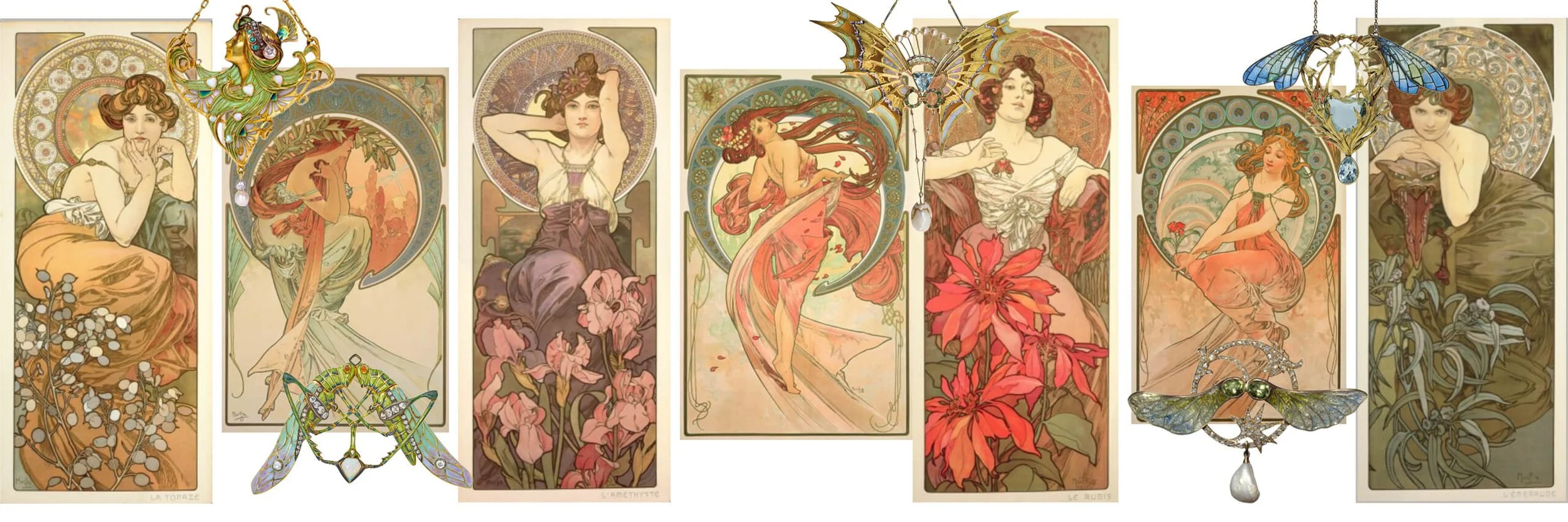
A collection of Art Nouveau illustrations by Alphonse Mucha, each depicting a stylised female figure framed by intricate floral motifs and circular decorative patterns. The panels represent elemental and celestial themes and are accompanied by jewellery designs inspired by natural forms. The composition highlights the elegance, symbolism and craftsmanship that define Mucha’s contribution to the Art Nouveau movement. A Guide to Art Nouveau Jewellery | The Antique Jewellery Company
Iron, glass, timber, stone and ceramic were not hidden — they were celebrated.
Light became a material.
Curves became structure.
Craftsmanship became philosophy.
It was the first time Europe saw organic architecture expressed through every scale of design — from facades to furniture to typography.
Art Nouveau Across Europe — A Shared Cultural Heritage
One of the most beautiful truths about Art Nouveau is that it belongs to all of us.
It is a European story.
Belgium — The birthplace
Horta’s Hôtel Tassel is often considered the first true Art Nouveau building — a masterpiece of iron, glass and organic geometry.
France — The poetic expansion
Paris embraced Art Nouveau with elegance: Guimard’s Métro entrances, the École de Nancy, and the glasswork of Émile Gallé.
Austria — The intellectual refinement
The Vienna Secession, led by Gustav Klimt and Josef Hoffmann, gave Art Nouveau its geometric, architectural clarity.
Spain — The expressive transformation
Gaudí’s Barcelona remains one of the most extraordinary expressions of the movement — fluid, colourful, sculptural.
Central & Eastern Europe — The decorative richness
Prague, Budapest, Riga and Ljubljana hold some of the most intact Art Nouveau districts in the world.
The UK — The poetic northern voice
Charles Rennie Mackintosh brought a quieter, more architectural interpretation — a bridge between Art Nouveau and early modernism.
Whether you’re searching for a London interior designer or a local designer near me in Cambridgeshire, the influence of European Art Nouveau remains a powerful foundation for contemporary, crafted interiors. You can see how these principles appear in my own work through my [interior projects → /interiors].
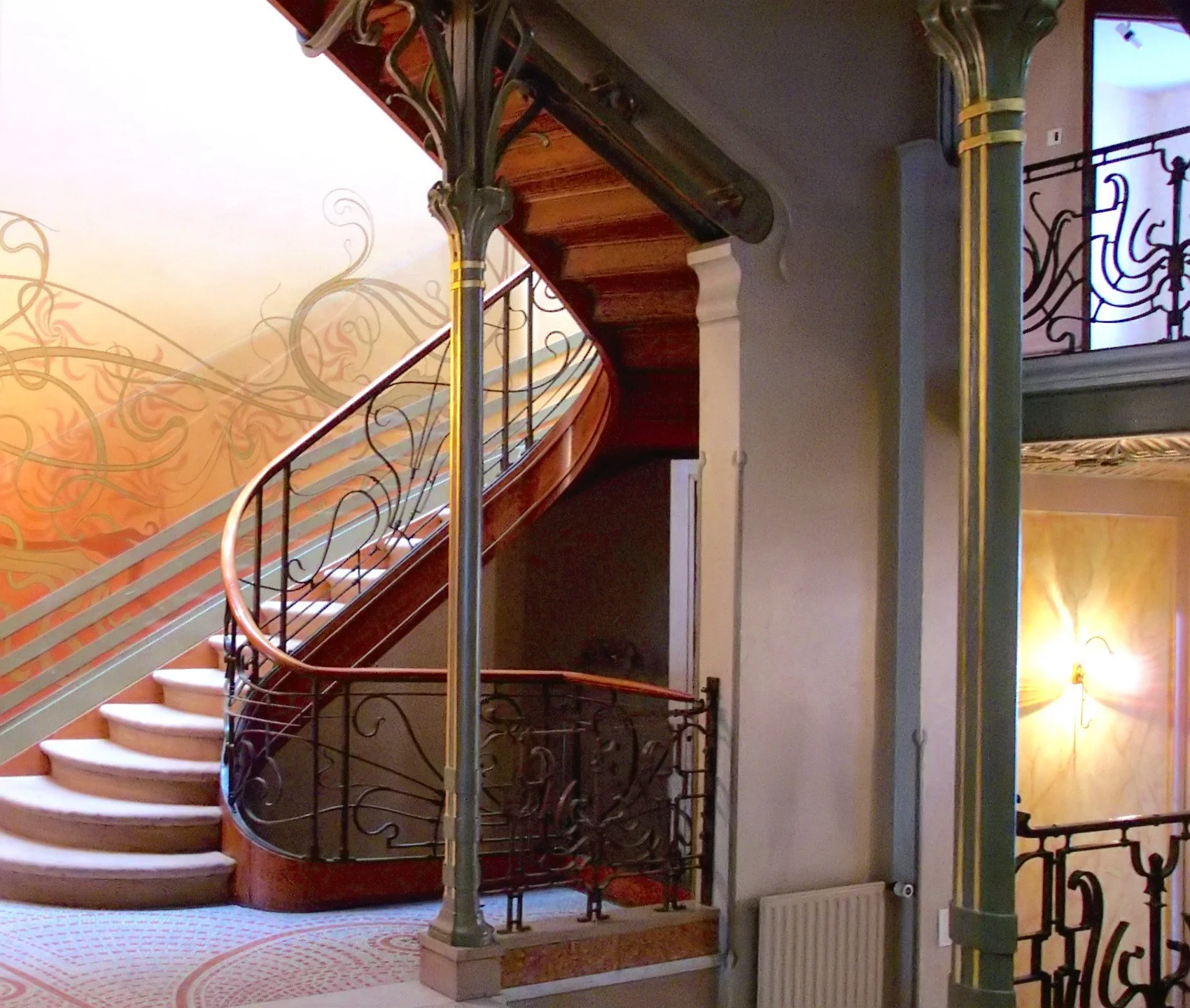
An iconic Art Nouveau staircase from Victor Horta’s Hôtel Tassel, featuring curved wooden steps, flowing wrought‑iron railings and decorative organic wall motifs. The space exemplifies early Art Nouveau architecture through its craftsmanship, structural elegance and nature‑inspired detailing. Art Nouveau - Wikipedia
Why Art Nouveau Should Be Celebrated Today
Because it reminds us of something essential:
That craftsmanship matters
Those materials have soul
That nature is a teacher
That design can be both modern and deeply human
That beauty is not a luxury — it is a cultural value
Understanding how Art Nouveau shaped modern design helps us appreciate its place in Europe’s design heritage.
It imagined a modernism with warmth, softness and life — something we still need today. If you enjoy design history, you may also like my article on [Architectural Calm → /architectural-calm].
How Art Nouveau Influences Contemporary Interiors
Even in today’s minimalist homes, Art Nouveau interiors continue to offer modern interior design inspiration:
curved joinery
botanical metalwork
soft geometry
natural materials
fluid lines
integrated architecture + interiors
craftsmanship as philosophy
Many of the principles I use as a bespoke interior designer in Cambridge and London — crafted details, natural materials, gentle curves — echo the Art Nouveau belief that design should feel alive and made for the individual. If you’re considering a renovation or redesign, you can learn more about my approach on the [services page → /services].
A Poetic Closing — Europe’s First Modern Dream
Art Nouveau was Europe’s first modern dream — a design philosophy rooted in nature, craftsmanship and imagination. It was a movement shaped by hands, not machines; by creativity, not imitation. And perhaps that is why it still feels so alive today.
If you’d like to explore how this design philosophy could shape your own home, you can reach me through my [contact page → /contact]. Whether you’re looking for a bespoke interior designer in Cambridgeshire or a London‑based designer, I’d love to help.
If you’re exploring how to bring this kind of clarity, proportion, and modern design philosophy into your own home — whether you’re in Cambridge, Cambridgeshire, the surrounding shire villages, London, Letchworth, Hitchin, St Neots, or nearby — I’d love to help you shape a space that feels calm, intentional, and deeply supportive.
You can explore more here:
Continue Your Journey
Art Nouveau marked the beginning of a new chapter in design history. Continue exploring the movements, designers and ideas that have shaped contemporary interiors.
Read Next
Bauhaus: The School That Shaped Modern Society
Discover how Bauhaus redefined modern design through simplicity, function and craftsmanship.
Modern vs Contemporary Interior Design Explained
Understand how modern design evolved and why these styles continue to influence contemporary interiors.
Scandinavian and Nordic Interior Design Ideas for Cambridge Homes
Explore how Scandinavian design developed from modernist principles to create calm, beautifully balanced homes.
Return to the Chapter
Design History & Icons
Explore more articles about influential design movements, iconic designers and timeless ideas that continue to inspire contemporary interiors.