
Bathroom Lighting Guide (UK): Safe, Modern Lighting Design and IP Ratings Explained
Bathroom lighting is often approached as a technical requirement, but it plays a crucial role in how a space feels and functions. In the UK, lighting must also meet specific safety regulations, including IP ratings. In this guide, I explain how to design bathroom lighting that is both safe and considered, drawing on my experience working on residential projects across Cambridge and London.
Bathroom lighting is one of the most misunderstood areas of interior design — and one of the most important. It influences how we begin our day, how we relax in the evening, and how comfortable and functional a space feels. It is also one of the few areas of the home where design decisions must work alongside strict UK electrical regulations.
Many homeowners assume bathroom lighting is simply a matter of choosing attractive fittings. In reality, creating a successful scheme requires careful planning, an understanding of safety requirements, and a considered approach to layering light for different activities and moods.
This guide is designed to bring clarity to a topic that deserves more attention, whether you are renovating a period property, updating a family bathroom, or planning a contemporary new-build home. It also builds on themes explored in my article, Why Curves Matter: The Rise of Soft Architecture in Modern Interiors, where I discuss how thoughtful design decisions influence the way we experience a space.
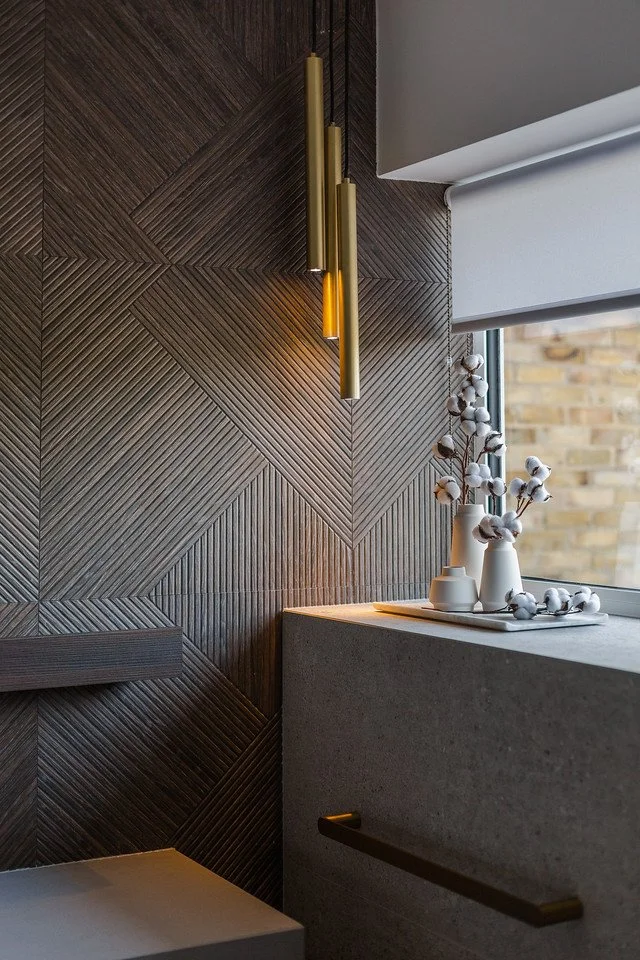
Hero image showing a modern family bathroom in Gamlingay, featuring warm brass pendant lights casting a soft accent glow against a textured geometric wall. Minimalist ceramic vases and natural cotton stems sit on the windowsill, adding calm, organic detail. This visual introduces the article’s focus on bathroom lighting, demonstrating how mood lighting and material texture work together to create a contemporary, soothing atmosphere
Why Bathroom Lighting Matters More Than You Think
Bathrooms are wet, steamy, electrically sensitive spaces. Light fittings must withstand moisture, prevent electrical hazards, and still create a calm, modern atmosphere. Good lighting transforms the room; poor lighting compromises both safety and experience.
And unlike kitchens or living rooms, bathrooms are governed by UK‑specific regulations. Europe, the US, and other regions follow different standards, so advice online can be misleading. What’s safe in one country may be illegal in another.
This is why working with the right professionals matters — the same principle I emphasised in my Cambridge Wealthiest Streets series [LINK], where thoughtful, compliant design underpins every project.
Understanding UK Bathroom Zones (Made Simple)
UK bathrooms are divided into electrical “zones” that determine what type of lighting can be safely installed.
Zone 0: Inside the bath or shower. Only low‑voltage, fully waterproof fittings allowed.
Zone 1: Above the bath or shower up to 2.25m. Requires high IP ratings.
Zone 2: The area around the bath, shower, or basin. Moderate IP protection required.
Outside Zones: Still require careful selection, but more flexibility.
These zones exist to protect you. They’re not optional, and they’re not aesthetic — they’re law.
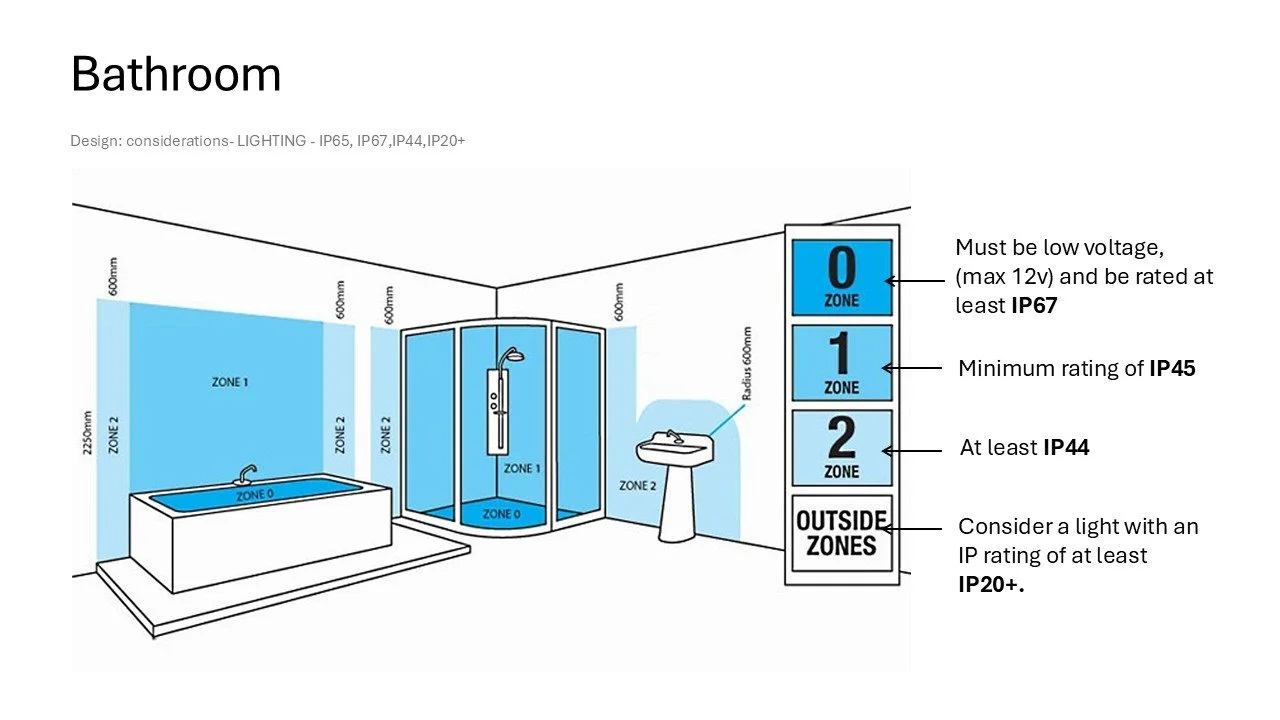
“A clear diagram illustrating the UK bathroom lighting zones and the minimum IP ratings required for each area. The layout shows Zone 0 inside the bath or shower, Zone 1 above it, Zone 2 around the perimeter, and the outside zones beyond. Each zone is labelled with the appropriate IP rating — from IP67 in Zone 0 to IP44 and above in Zones 1 and 2 — helping homeowners understand how moisture proximity affects lighting safety. This visual supports the article’s explanation of why compliant, well‑planned bathroom lighting is essential in UK homes.”
IP Ratings Explained (Without the Jargon)
Every bathroom light must have an IP rating, which tells you how protected it is against water.
IP44: Safe for most Zone 2 areas
IP65: Suitable for Zone 1
IP67: Required for Zone 0
If a fitting doesn’t meet the correct rating, it simply cannot be installed safely.
This is where many homeowners — and even some designers — get it wrong.
A Real Example: Why I Didn’t Include Sockets or Switches
Recently, a client asked why I hadn’t included any sockets or switches in their bathroom design. The answer was simple:
Because placing them incorrectly is unsafe and non‑compliant.
In the UK, sockets and switches cannot be placed freely in bathrooms. They must follow strict electrical zones and safety regulations designed to prevent shock in wet environments. A designer who understands these rules will never compromise your safety for convenience.
The only socket legally permitted inside a UK bathroom is a shaver socket — a low‑voltage, isolated outlet designed specifically for electric shavers and toothbrushes. It must be positioned outside Zones 0, 1, and 2, and cannot be replaced with a standard plug socket or USB outlet.
Similarly, standard wall switches are not allowed inside bathrooms. The safe alternatives are:
• a ceiling‑mounted pull‑cord switch,
• a wall switch located outside the bathroom, or
• a smart lighting system controlled externally.
These rules aren’t aesthetic preferences — they are legal requirements that protect you and your family.
This is the difference between hiring someone who “decorates” and someone who truly designs — the same distinction I highlight in my article about lighting [LINK], where thoughtful detailing and technical literacy define the outcome.
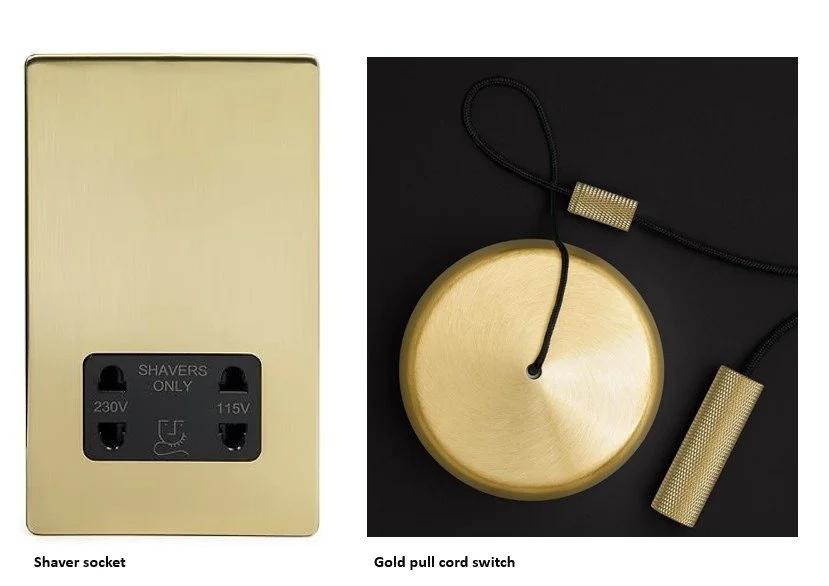
Close‑up image showing a brushed‑gold shaver socket and a matching gold pull‑cord switch — the two safe, compliant electrical fixtures permitted inside a UK bathroom. The shaver socket features dual voltage options, while the pull‑cord switch offers a safe alternative to standard wall switches. This visual supports the article’s explanation of UK bathroom regulations, highlighting the importance of choosing the correct fittings for moisture‑sensitive spaces
Why UK Regulations Differ From Europe and the Rest of the World
Bathroom safety standards vary internationally.
A fitting approved in Italy or the US may not be legal in the UK.
This is why global Pinterest inspiration must be interpreted through a UK lens.
Your home deserves design that is both beautiful and safe — not copied blindly from another regulatory system.
If you’re unsure how to apply this to your own home, you can explore my interior design consultation here →Interior Design Consultation – Clarity Audit
The Role of a Lighting‑Literate Interior Designer
When you work with alighting interior designer in Cambridge or Cambridgeshire, you’re not just choosing colours and tiles. You’re choosing someone who:
understands UK building regulations
collaborates with qualified electricians
designs for real‑life routines
balances task, ambient, and accent lighting
ensures every fitting is compliant and safe
creates a modern, calm, human‑centred bathroom
If you’re searching for a modern interior designer near meor a contemporary interior designer in London, this technical literacy is what sets true professionals apart.
And if you’re exploring how form and flow influence wellbeing, you may enjoy my article on soft architecture and curves[LINK], which pairs beautifully with the principles of bathroom lighting.
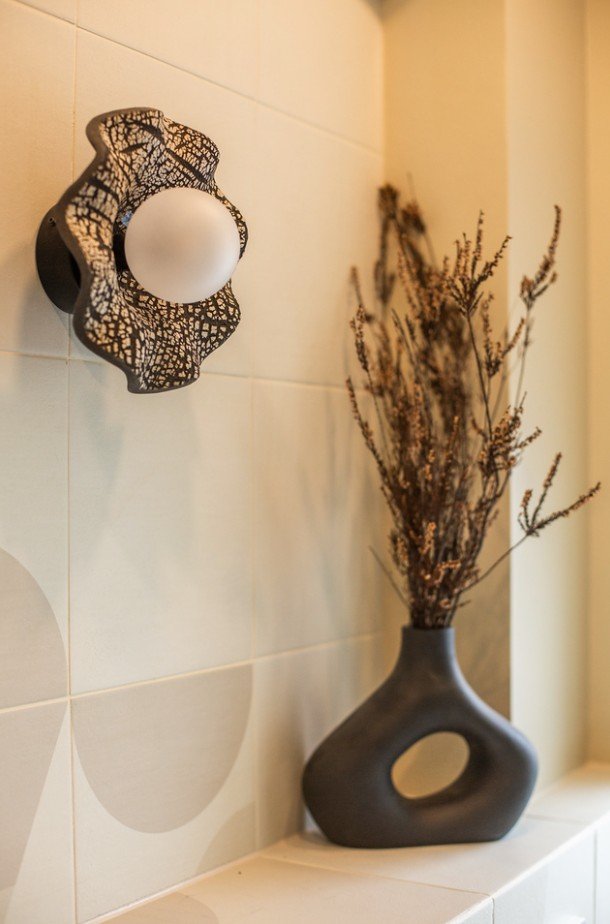
A modern wall light from the Shelford bathroom project, featuring a sculptural, textured frame surrounding a warm spherical bulb. The light sits above a contemporary matte‑black vase filled with dried branches, creating a calm, minimalist composition. This image highlights how accent lighting and thoughtful detailing elevate a bathroom’s atmosphere, supporting the article’s focus on safe, modern, design‑led lighting choices
Layering Light: How to Create a Modern, Spa‑Like Bathroom
A well‑designed bathroom uses three layers of light:
1. Task Lighting
For shaving, makeup, and mirror clarity.
Soft, even, shadow‑free.
2. Ambient Lighting
The overall glow of the room.
Warm, diffused, calming.
3. Accent Lighting
Niches, under‑vanity lighting, architectural curves.
The emotional layer — the spa moment.
This layered approach echoes the same design philosophy explored in my Wyboston spa concept board [LINK], where light and curvature work together to create a restorative atmosphere.
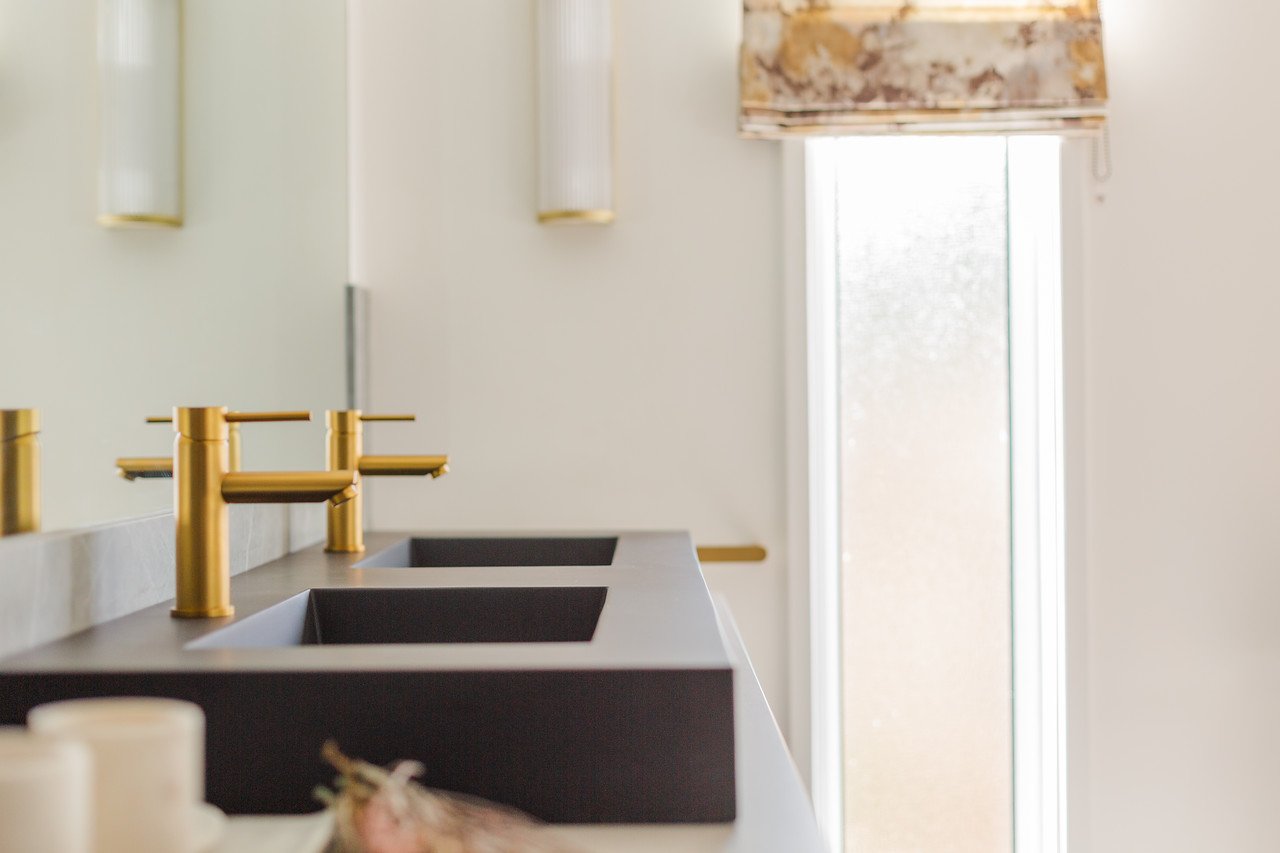
A modern wall‑mounted light in the Gamlingay ensuite bathroom, positioned beside a large mirror above a double‑sink vanity with matte‑black basins and gold taps. Vertical gold‑accented lights frame the space, while a tall frosted window with a soft Roman shade brings in natural light. This image highlights how layered lighting and material contrast create a calm, contemporary bathroom atmosphere
Common Mistakes to Avoid
Using non‑IP‑rated fittings
Installing lights too close to water
Relying on a single ceiling light
Choosing fittings that cast harsh shadows
Ignoring the natural light
Forgetting night‑time lighting needs
Not consulting a qualified electrician
These mistakes are avoidable — with the right guidance.
Choosing Beautiful, Compliant Fixtures
Safety doesn’t mean compromising on style.
Modern bathroom lighting can be sculptural, warm, minimal, or dramatic — as long as it meets the correct rating.
A good designer will help you choose fittings that are:
compliant
durable
energy‑efficient
visually aligned with your home
appropriate for UK zones
This is where design and regulation meet.
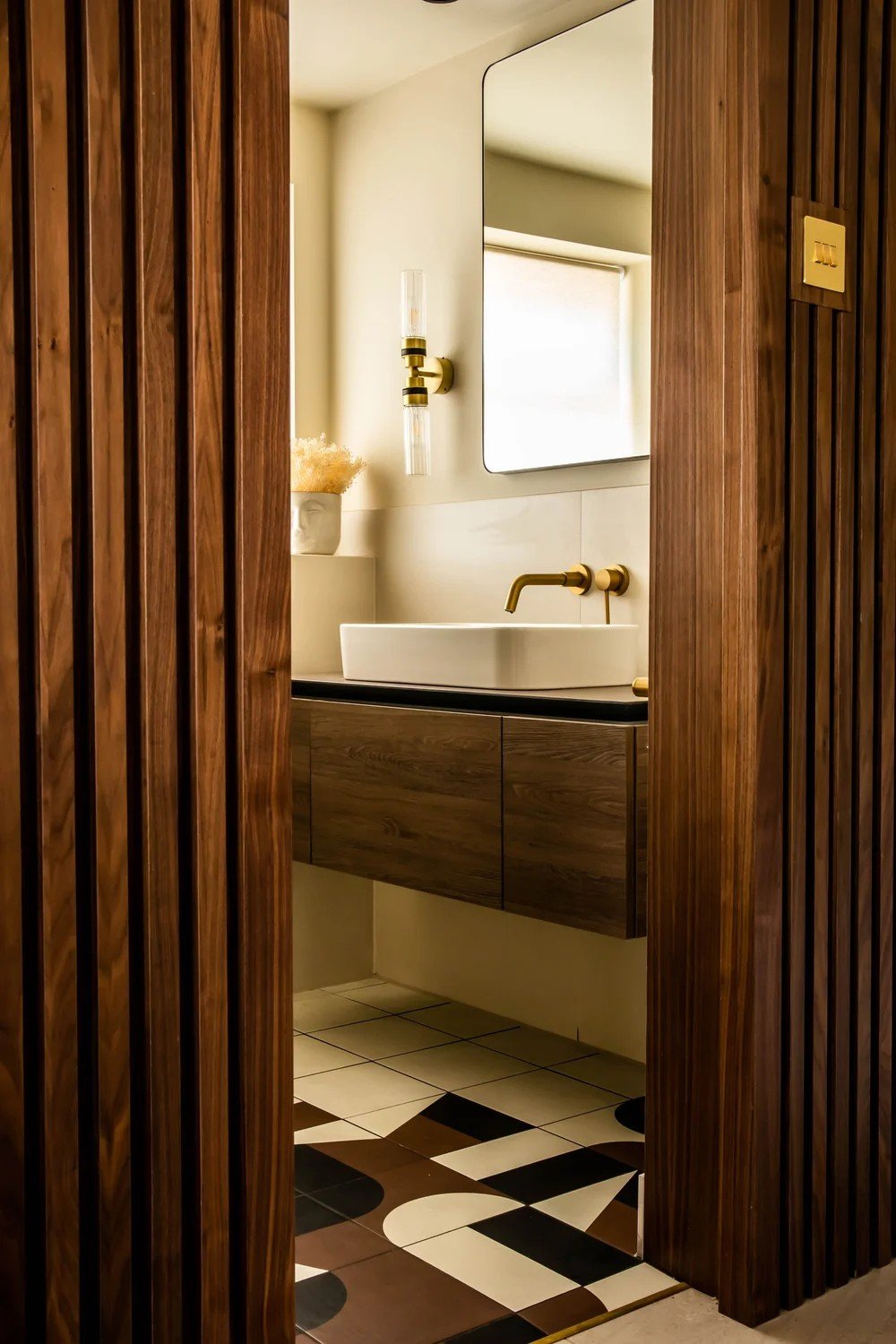
“A warm, modern wall light in the Gamlingay bathroom, mounted beside a rounded‑corner mirror and paired with Lusso Stone brass fixtures. The space features Mutina Puzzle tiles and a sculptural decorative vase with dried flowers, creating a calm, contemporary atmosphere. This image highlights how material warmth, layered lighting, and thoughtful detailing elevate a bathroom’s design
If you’re planning a renovation and feel unsure what to do next, you can explore my renovation consultation here → Interior Design Consultation for Renovations | Project Strategy Audit UK
Final Thoughts: Safe, Modern, Human‑Centred Bathrooms
Bathroom lighting is not a small detail.
It’s a blend of safety, atmosphere, and technical precision.
It’s where regulations protect you, and design elevates you.
Whether you’re renovating in Cambridge, Cambridgeshire, London, or simply searching for a modern interior designer near me, choose someone who understands both the beauty and the responsibility of lighting design. I’d love to help you shape a space that feels calm, intentional, and deeply supportive. You can learn more about working together or get in touch through my Contact page, where every project begins with a thoughtful conversation.
Your bathroom deserves to be safe.
Your bathroom deserves to be calm.
Your bathroom deserves to be designed with care.
Bathroom Lighting Trends Homeowners Are Embracing in 2026
In 2026, bathroom lighting is becoming increasingly focused on wellbeing, atmosphere, and adaptability. Homeowners are moving away from harsh overhead lighting and instead creating layered lighting schemes that support different moments throughout the day.
One of the strongest shifts is the use of warm, indirect lighting. Integrated LED strips beneath floating vanities, softly illuminated niches, and concealed lighting details help create a calmer and more restorative environment, particularly during evening routines.
There is also growing interest in lighting that responds to the way a space is used. Dimmable circuits, layered lighting controls, and carefully positioned mirror lighting allow bathrooms to feel bright and functional in the morning while offering a softer, more spa-like atmosphere at night.
Alongside these trends, materiality continues to play an important role. Brass finishes, textured stone surfaces, fluted glass, and natural materials interact with light in a way that adds depth, warmth, and visual comfort.
The most successful bathroom lighting schemes are no longer designed purely around visibility. They are designed around experience — creating spaces that feel calm, balanced, and emotionally supportive while still meeting all UK safety regulations.
Bathroom Lighting Trends Homeowners Are Embracing in 2026
Continue Your Journey
Thoughtful bathroom lighting is just one part of creating interiors that feel calm, functional and beautifully considered. Continue exploring these articles to discover how lighting, materials and design thinking work together to shape everyday living.
Read Next
How to Layer Lighting Like a Designer: Creating Depth, Warmth and Atmosphere
Discover how layered lighting transforms the way a home feels by balancing ambient, task and accent lighting.
How Lighting Affects Mood in Interior Design
Explore how thoughtful lighting influences wellbeing, comfort and the atmosphere of contemporary homes.
Bathroom Renovation Cost in London (2026 Guide): What to Expect and How to Plan
Understand how thoughtful planning, lighting and material choices contribute to a successful bathroom renovation.
Return to the Chapter
Learn About Interior Design
Explore more articles about lighting, colour, materials and the design principles that help create calm, functional and beautifully considered homes.