
Why Curved Interior Design Shapes Modern Living Spaces
Curved interior design is becoming increasingly important in modern living spaces, bringing softness, balance, and improved spatial flow to contemporary interiors. From curved walls and archways to rounded furniture and organic forms, soft architecture helps create calmer environments that feel more natural, comfortable, and visually connected.
In recent years, curves have quietly reshaped the language of contemporary interiors. Once dominated by sharp lines and rigid geometry, modern design is now embracing a softer, more fluid aesthetic — one that feels human, calming, and deeply connected to the way we move through space. This shift isn’t a trend; it’s a response to how we want our homes and commercial environments to feel.
As a designer working across Cambridge, Wyboston, London, and the surrounding villages of Cambridgeshire, I’ve seen firsthand how curved forms can transform a room’s emotional tone. Curves invite you in. They guide the eye gently. They soften transitions. They create a sense of flow that feels intuitive and restorative. In a world that often feels fast and angular, soft architecture offers a quiet counterbalance.
“A close-up of a contemporary interior showcasing the rise of soft architecture: a curved wooden countertop meeting a fluted cream wall panel, paired with dark timber shelving and a sculptural black vase with greenery. The composition highlights how gentle curves and tactile textures soften modern spaces, creating a calm, human-centred atmosphere.”
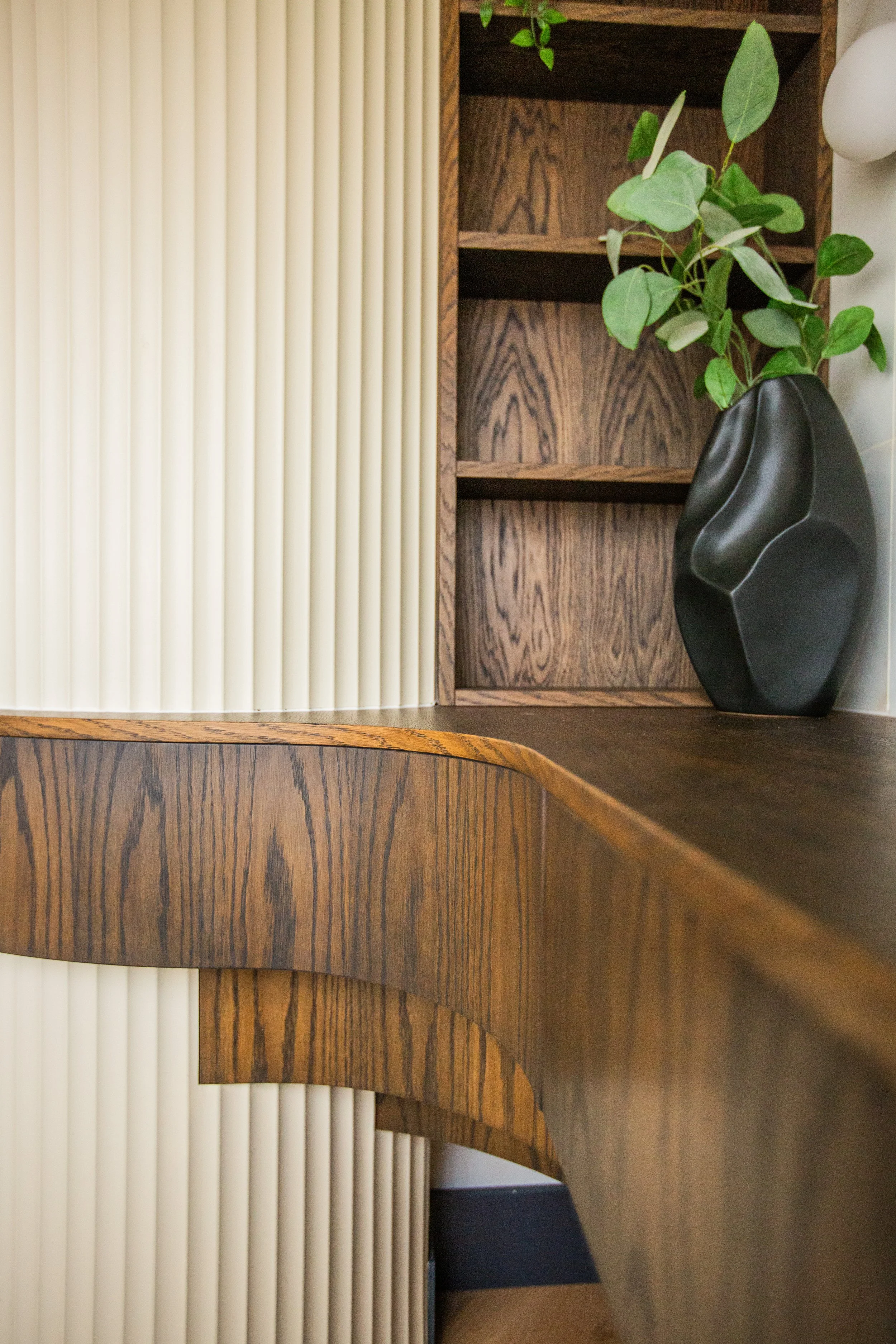
Curved dressing unit -Bespoke piece designed by us.
Curves as Emotional Architecture
Curves do more than shape a room — they shape how we experience it.
A softened corner, an arched doorway, a rounded wall: these elements create a sense of ease. They remove visual tension. They make a space feel more welcoming, more human, more alive.
In my recent spa project in Wyboston, curves became the foundation of the design language. Every junction was softened, every transition rounded, creating a room that feels like an exhale. The result is a space where visitors instinctively relax the moment they enter.
Introducing Curves Through Made‑to‑Measure Design
Curves can be introduced into a space in countless ways — architecturally, decoratively, or through bespoke furniture. As a designer who specialises in made‑to‑measure pieces, I often suggest curved walls, rounded joinery, or sculptural furniture that works in harmony with the architectural elements I incorporate into the space. Even the smallest gesture, like softening a corner, can make a room feel warmer, more welcoming, and more intuitive. These subtle curves maintain simplicity while adding emotional depth, creating interiors that feel calm, human, and beautifully resolved.
If you’re curious about how I shape bespoke pieces, you can explore more in my
Interior Design Services.
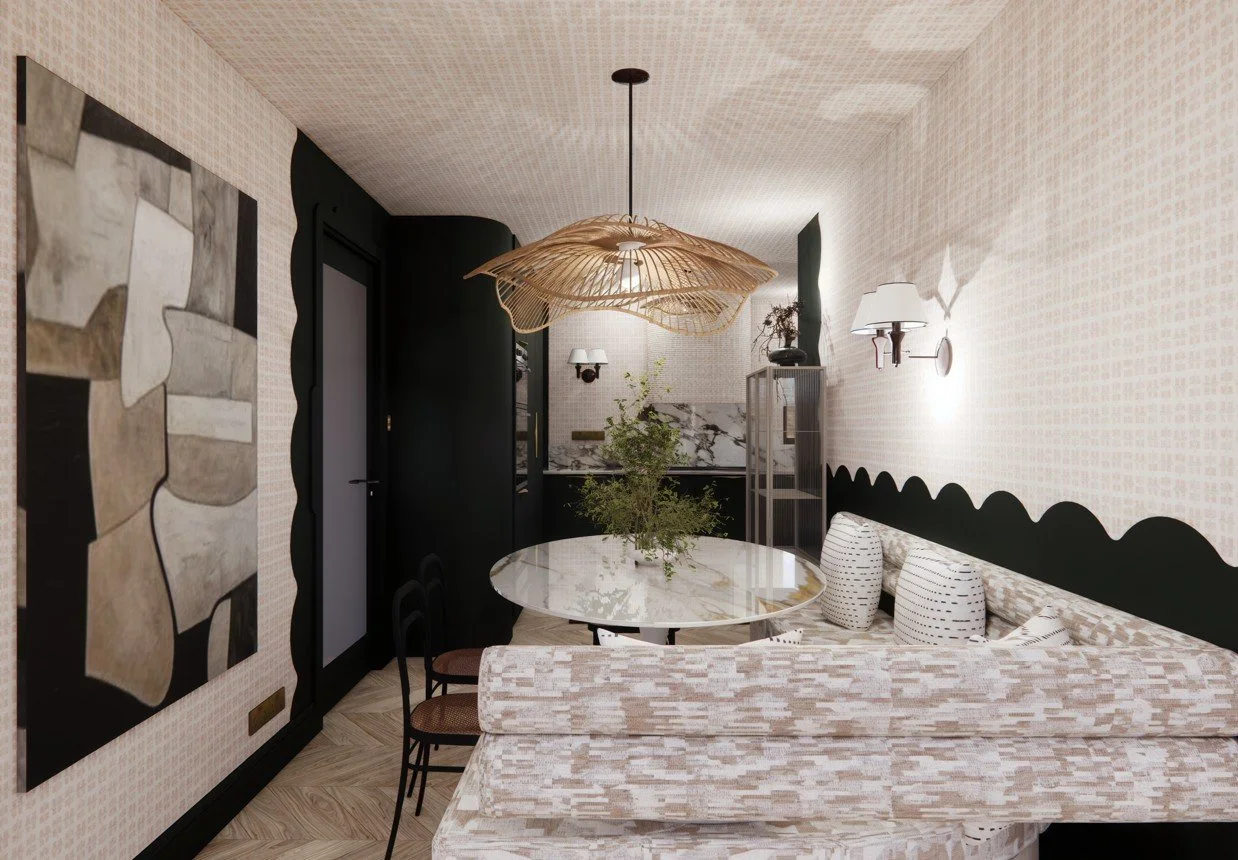
“A contemporary dining area that showcases curves as a defining design language: a round marble table, gently curved upholstered seating, and a scalloped wall border that softens the geometry of the room. The space blends warm materials, layered patterns, and organic forms to demonstrate how curvature brings comfort, flow, and a more human-centred feel to modern interiors.”
A Return to Organic Form
Soft architecture reconnects interiors with the natural world.
Nature rarely forms perfect straight lines — it bends, flows, and curves. By echoing these organic shapes, interiors feel more grounded and intuitive.
This is why curved forms work beautifully in both residential and commercial settings:
In Cambridge homes, they create warmth and intimacy
In wellness spaces across Cambridgeshire, they support calm and sensory ease
In contemporary London architecture, they add sculptural clarity and visual rhythm
Curves bring a sense of movement without chaos — a quiet, controlled fluidity.
Soft Minimalism: The New Modern
Minimalism has evolved.
Where once it was defined by stark lines and strict geometry, today’s minimalism is softer, warmer, and more tactile. Curves play a central role in this shift.
Soft minimalism is:
calm rather than cold
sculptural rather than severe
sensory rather than sterile
It’s a design language that prioritises wellbeing as much as aesthetics.
If you enjoy exploring visual direction, you may like my
Concept Boards.
Curves as a Design Strategy
Curves aren’t decorative — they’re strategic.
They can:
improve spatial flow
soften transitions between zones
create focal points without visual noise
make small rooms feel more generous
add architectural interest to simple spaces
In the Wyboston spa project, the curved forms weren’t added for beauty alone — they shaped the entire experience. They guided movement, softened the atmosphere, and created a sense of sanctuary.
You can see more examples of this approach in my
Portfolio.
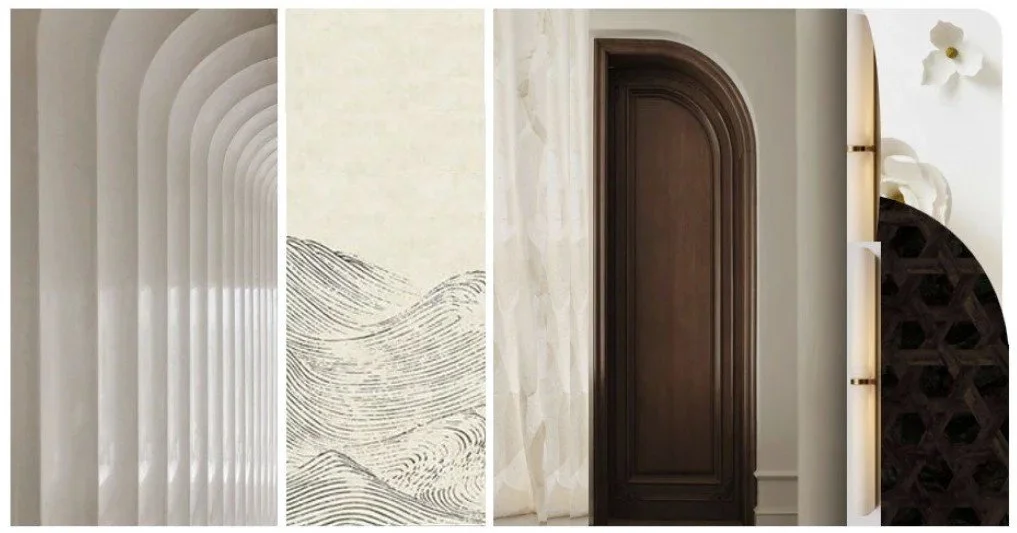
“A concept board for a spa treatment room in Wyboston, built around the soothing language of curves. The composition blends arched architectural forms, fluid ink artwork, a dark timber arched doorway, and sculptural interior detailing. Together, these elements express how curvature softens space, encourages calm, and creates a more restorative, human‑centred environment — a visual foundation for a spa experience shaped by gentle flow and sensory ease
Why Curves Matter Now
We’re living in a time where people crave comfort, calm, and connection.
Curves answer that need. They make spaces feel more human, more intuitive, more emotionally attuned.
And as more clients seek interiors that support wellbeing — whether at home, at work, or in wellness environments — soft architecture is becoming a defining element of contemporary design.
If you’re exploring ways to bring softness, flow, and sculptural clarity into your home or commercial space — in Cambridge, Wyboston, London, or the surrounding Cambridgeshire villages — I’d love to help you shape a design that feels calm, intentional, and beautifully human.
You can reach me through my Contact Page.