
Contemporary Interior Design Ideas for London Homes
London homes often present unique interior design challenges, from compact layouts and period features to architecturally complex spaces. Contemporary interior design can help create calm, functional interiors that improve flow, maximise natural light, and bring balance to modern city living while respecting the character of the home.
Why London homes require a thoughtful balance of creativity and constraint

This Greenwich, London apartment features a calm, contemporary interior with an open‑plan layout that connects the living area and bedroom. The space blends warm textures, sculptural lighting and refined modern furniture, creating a serene atmosphere within a compact footprint. Natural materials, soft tonal contrasts and thoughtful detailing bring clarity and quiet luxury to the home.
London is a city of extraordinary contrasts — grand Georgian terraces beside narrow Victorian conversions, elegant townhouses next to compact flats carved from once‑industrial buildings. Every street holds a different architectural story, and every home carries its own set of constraints: limited space, heritage restrictions, awkward proportions, layers of history, and the constant hum of urban life.
Designing within this context isn’t simply about style. It’s about understanding how people want to live in a city that moves quickly, feels dense, and often offers less space than they need. London homes ask for a design approach that is both imaginative and deeply considered — one that can bring clarity to complexity, calm to busyness, and contemporary refinement to spaces shaped by centuries of change.
This is where my practice naturally sits.
Rooted in the quiet clarity of Cambridge and Cambridgeshire, my work brings a sense of stillness, intention and modern simplicity into homes that need it most. London’s architectural challenges become opportunities to create interiors that feel spacious, grounded and quietly luxurious, even when the footprint is modest.
If you’re curious about how this approach has shaped my work across Cambridge and Cambridgeshire, you can explore my recent articles on the region’s most desirable streets and the design insights that inform my philosophy.
“London homes carry the rhythm of the city — design gives them a place to rest.”
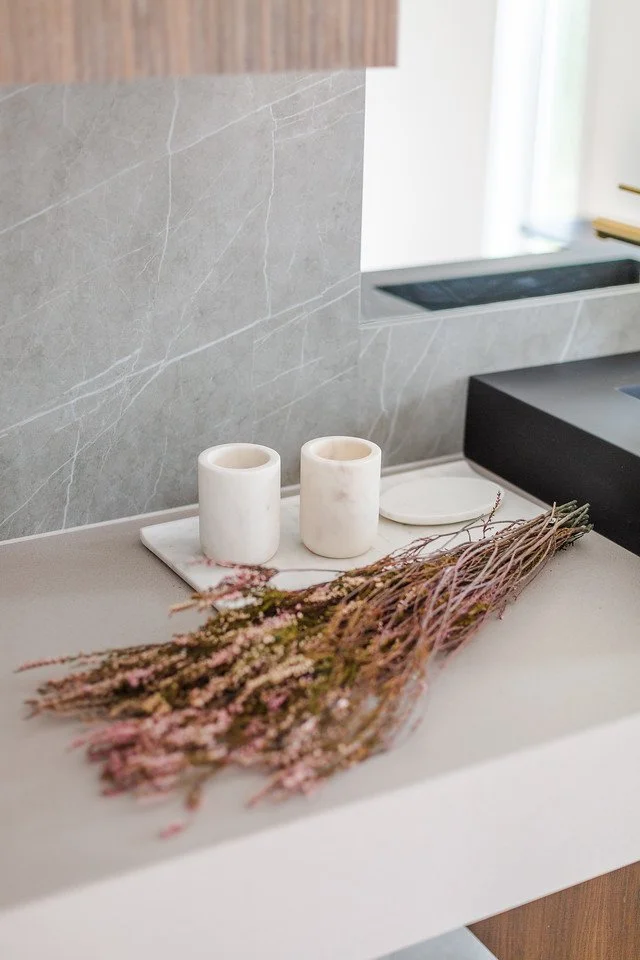
This image shows a refined detail from a bespoke ensuite bathroom in Gamlingay. A custom vanity mirror sits against a Neolith stone wall with soft veining, styled with marble accessories and dried florals. The composition highlights the calm, contemporary aesthetic of the space, emphasising natural textures, minimalism and thoughtful material selection.
The unique challenges of London homes — and why they benefit from a calm, contemporary response
London’s residential architecture is rich, layered and full of character, but it also presents a set of challenges that require sensitivity rather than force. Many homes were never designed for modern living, and yet they hold extraordinary potential when approached with care.
1. Small footprints and compact living
From converted Victorian flats to narrow terraced houses, space in London is often limited. Rooms can feel tight, circulation can be awkward, and storage is rarely integrated.
A calm, contemporary approach helps these spaces breathe — prioritising flow, light and intelligent planning over unnecessary decoration.
This clarity mirrors the way I approach many homes across Cambridge and Cambridgeshire, where thoughtful planning often makes the biggest difference.
2. Period architecture with modern expectations
Many London homes carry layers of history — Victorian, Georgian, Edwardian, mid‑century — each with its own proportions, quirks and structural limitations. Designing within these constraints requires a balance of respect and reinvention.
A contemporary interior designer in London must understand how to honour original features while creating a home that feels relevant, functional and quietly luxurious.
I explore these themes often in my Design Insight writing.
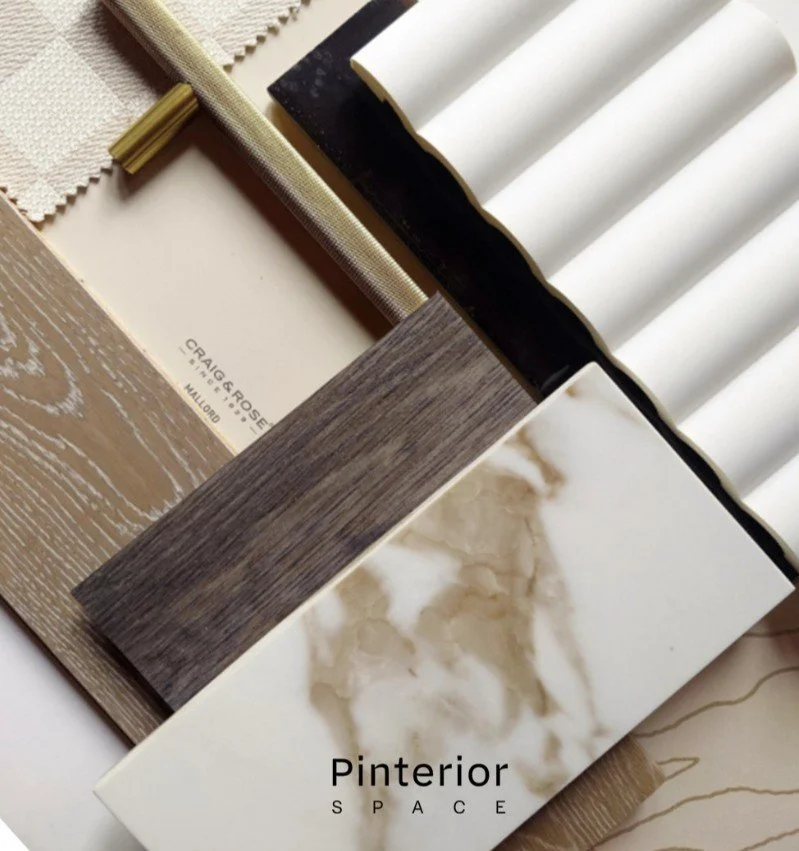
This image shows a curated interior design sample board featuring a harmonious palette of materials, including textured fabrics, light and dark wood veneers, stone with soft veining, sculpted surface detailing and a brass accent. The composition highlights how these materials work together to create a calm, contemporary aesthetic for a cohesive interior scheme.
3. Complex layouts shaped by time
London homes often evolve through decades of extensions, subdivisions and renovations. This can result in:
uneven ceiling heights
unexpected transitions
dark corridors
disconnected rooms
structural limitations
Rather than fighting these complexities, I work with them — simplifying where possible, softening transitions, and creating a sense of coherence through materiality, colour and light.
Readers who enjoy exploring how architecture shapes interior identity may find similar reflections in my articles on Cambridge’s most distinctive streets.
4. The emotional need for calm
London is vibrant, inspiring and full of energy — but it can also be overwhelming.
Many clients seek a home that feels like a counterbalance to the city: a place of stillness, clarity and restoration.
This is where my Cambridge‑informed sensibility becomes a strength.
The calm, contemporary aesthetic that defines my work offers London homeowners something rare: interiors that feel spacious even when the footprint is modest, and grounded even when life outside is fast.
My design approach for London homes
“Simplicity is not a lack of ideas; it’s the clarity to choose the right ones.”
Designing for London requires a sensitivity to space, history and atmosphere — an approach that balances creativity with the realities of the architecture. My work is rooted in calm contemporary design, shaped by years of working with period homes across Cambridge and Cambridgeshire, and refined through a deep respect for how people want to live today.
1. Spatial clarity above all else
In compact or complex homes, clarity becomes a form of luxury.
I begin by understanding how the space wants to function — how people move, where light falls, where the home feels tight or generous. From there, I simplify.
If you’re interested in how I think about space more broadly, my Design Insight articles explore the relationship between clarity, atmosphere and the lived experience of a home.
2. A refined, contemporary material palette
London homes often benefit from materials that feel grounded and timeless — soft woods, textured finishes, natural stone, warm neutrals and subtle contrasts.
These choices bring calm to busy urban environments and help older homes feel renewed without losing their character.
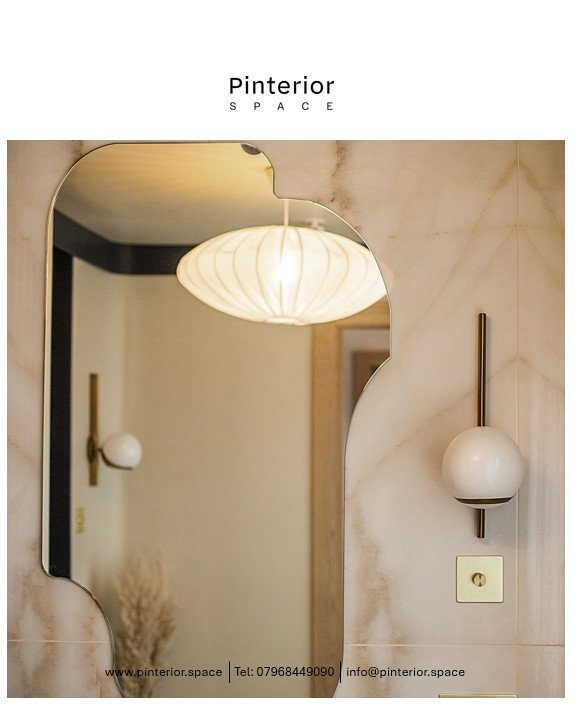
This image shows a bespoke, organically shaped mirror reflecting soft ambient light from a contemporary pendant and wall sconce. The sculptural lighting and the mirror’s fluid form work together to brighten the space and soften transitions, demonstrating how reflective surfaces can enhance light and create a sense of spaciousness in a modern interior.
3. Light as a structural element
Many London homes struggle with natural light — narrow terraces, deep Victorian plans, basement flats or rooms divided over time.
I treat light as a design material in its own right, using it to soften transitions, open sightlines and create a sense of spaciousness.
4. Contemporary calm — a signature approach
My work is often described as quiet, modern and atmospheric.
This calm contemporary aesthetic is not about minimalism for its own sake, but about creating homes that feel restorative and deeply human.
5. Sustainability and longevity
London homes are lived in intensely.
Designing for longevity — both aesthetic and practical — is essential.
I prioritise durable materials, thoughtful detailing and timeless palettes that support the home for years to come.
How a calm, contemporary approach transforms London homes
“Architecture gives us the boundaries; design gives us the possibilities.”
London homes come in many forms — Victorian terraces, compact flats, layered townhouses — yet they often share similar architectural patterns. Below are three common scenarios where thoughtful, contemporary design can make a meaningful difference.
1. Victorian terraces with narrow proportions
These homes often benefit from:
open sightlines
cohesive materials
integrated storage
layered lighting
When approached with calm, contemporary clarity, they can feel wider, lighter and more intuitive.
2. Compact London flats designed for modern living
Small flats can feel calm and quietly luxurious when designed with intention.
Key principles include:
simplified layouts
restrained palettes
multi‑functional furniture
light‑enhancing surfaces
This mirrors the clarity I bring to many of my Cambridge and Cambridgeshire projects.
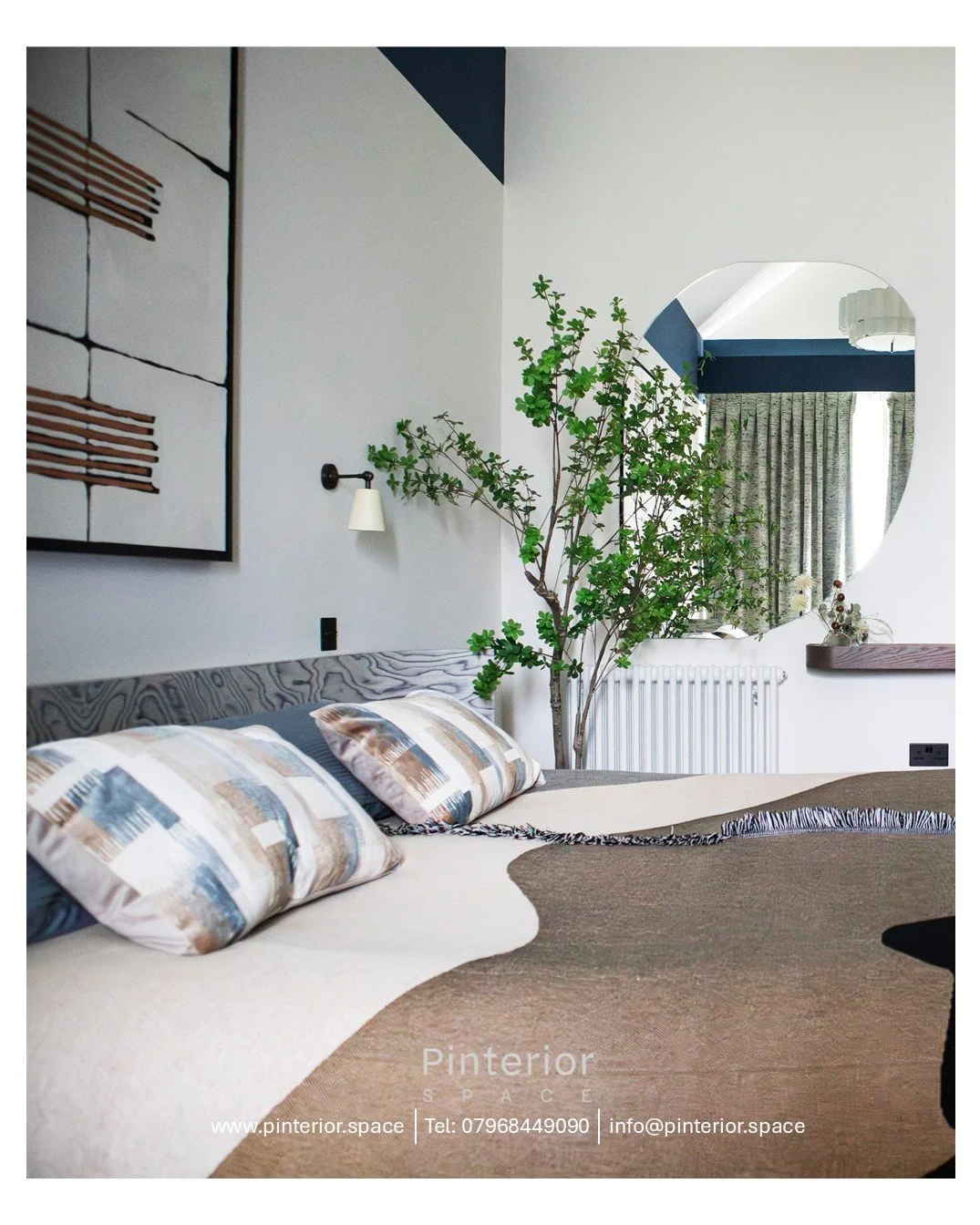
This image shows a serene bedroom in Cambridge featuring a bespoke curved headboard, sculptural wall art and a custom‑designed mirror that reflects soft light into the space. Layered textiles, warm neutrals and contemporary detailing create a calm, refined atmosphere. The design demonstrates how thoughtful material choices and gentle forms can make compact rooms feel more spacious and quietly luxurious.
3. Townhouses with layered history and uneven proportions
Townhouses respond beautifully to:
unified materials
softened transitions
refined circulation
a calm, contemporary atmosphere
Readers interested in how architectural character shapes interior identity may enjoy my articles on Cambridge’s most distinctive streets.
Why London clients choose a calm, contemporary designer
“Older homes don’t need to be corrected — they need to be understood.”
London is full of talented interior designers, each bringing their own perspective to the city’s layered architecture. What often draws clients to a calm, contemporary approach is not a particular style, but a feeling — the desire for a home that restores, clarifies and supports their daily life.
Clients often seek:
stillness in a fast‑moving city
sensitivity to architectural complexity
modern design that feels human, not minimal
clarity and functionality for everyday living
a designer who brings Cambridge clarity into London complexity
This cross‑city experience allows me to offer something quietly distinctive in the London market:
a design philosophy rooted in calm, clarity and thoughtful refinement.
A calm, contemporary approach to London living
Designing for London means designing for complexity — for homes shaped by history, constrained by space and lived in intensely. A calm, contemporary approach brings clarity to that complexity. It creates interiors that feel spacious even when the footprint is modest, and grounded even when life outside is fast.
For homeowners seeking a modern interior designer in London, this philosophy offers something quietly distinctive:
a home that feels restorative, intentional and deeply connected to the way you live.
If you’d like to explore how this approach might support your own home, you can learn more about my interior design services, browse my portfolio, or read further reflections in my Design Insight articles.
And if you’re considering a project in London, Cambridge or Cambridgeshire, I’m always happy to begin with a gentle conversation about your space, your needs and the atmosphere you want to create.
A calm home is not a luxury — it’s a foundation.
And in a city as dynamic as London, it becomes one of the most meaningful forms of modern living.
“London’s complexity isn’t a problem to solve — it’s a story to design with.”
Continue Your Journey
Designing contemporary homes is about more than following a particular style. It begins with understanding architecture, respecting a home's character and creating spaces that feel calm, timeless and deeply connected to the people who live there. Continue exploring these articles to discover the philosophy behind thoughtful contemporary interior design.
Read Next
Contemporary Interior Design in Holland Park Homes
Discover how contemporary interiors can complement period London homes by balancing architectural character with calm materials, thoughtful layouts and timeless design.
Why Emotionally Intelligent Interiors Are Redefining Modern Living
Explore why the most successful interiors are designed around wellbeing, emotion and everyday life rather than passing trends.
Why Creative Thinking Has Become The Ultimate Luxury
Learn why the best contemporary homes begin with imagination, thoughtful ideas and a design process shaped around the people who live there.
Return to the Chapter
Design Philosophy & Inspiration
Explore more articles about contemporary interiors, timeless design principles and the ideas that shape homes with lasting character.