
Contemporary Interior Design in Holland Park Homes
Contemporary interior design in Holland Park homes often requires a careful balance between architectural character and modern living. By combining natural materials, calm colour palettes, and thoughtful spatial planning, it is possible to create interiors that feel refined, functional, and quietly connected to the architecture of the home.
Holland Park is one of London’s most quietly prestigious neighbourhoods — a place where grand Victorian villas, Arts & Crafts houses and leafy avenues create an atmosphere that feels both refined and deeply residential. Unlike the more formal crescents of Belgravia or the theatrical scale of Kensington Palace Gardens, Holland Park carries a softer kind of luxury: elegant, architectural, understated.
It’s a neighbourhood defined by proportion, greenery and a sense of calm that feels surprisingly aligned with the qualities I often encounter in Cambridge’s most distinctive streets. Both places share a sensitivity to history, a respect for architectural character and a desire for interiors that feel grounded rather than showy.
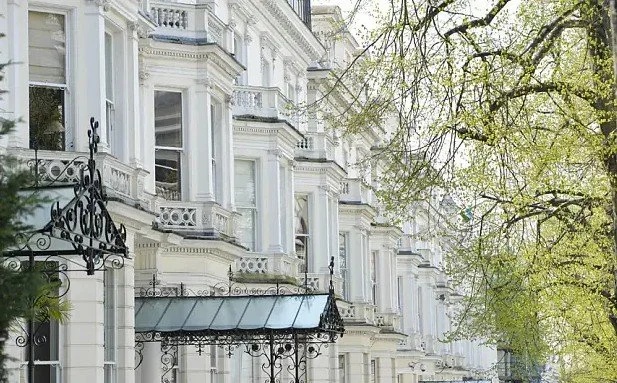
This image shows a row of elegant white stucco Victorian terraces in Holland Park, London. The homes feature ornate cornices, tall sash windows, wrought‑iron detailing and a glass‑covered entrance canopy. Trees line the street, creating a soft, residential atmosphere that reflects the neighbourhood’s quiet luxury and architectural refinement.
Image credit: The Telegraph. Holland Park: west London's forgotten luxury neighbourhood
This makes Holland Park a natural starting point for exploring how calm, contemporary design can support some of London’s most desirable homes.
The Architectural Character of Holland Park
Holland Park’s beauty lies in its variety — and in the quiet coherence that holds it all together. The neighbourhood is known for:
Grand Victorian villas with generous proportions and tall windows
Arts & Crafts houses rich in craftsmanship and natural materials
Stucco-fronted terraces with elegant rhythm and symmetry
Garden squares and tree-lined streets that soften the urban fabric
Creative heritage, with artists, writers and architects shaping its identity
These homes offer extraordinary potential, but they also require a thoughtful approach — one that respects their history while allowing for modern living.
This is where calm, contemporary design becomes not just an aesthetic choice, but a way of honouring the architecture itself.
Design Challenges in Holland Park Homes
Despite their beauty, Holland Park properties often come with complexities that require sensitivity rather than force.
1. Large but compartmentalised layouts
Many Victorian villas were designed with formal rooms, service spaces and secondary staircases. These divisions can feel disconnected for modern living.
2. Heritage constraints
Original features — cornices, fireplaces, joinery — must be preserved, integrated or reinterpreted with care.
3. Managing light
Even large homes can have deep plans, shaded gardens or rooms that feel darker than expected.
4. Balancing old and new
The challenge is to introduce contemporary clarity without overwhelming the home’s architectural character.
These are the same sensitivities I navigate in many Cambridge period homes, where clarity, restraint and respect for the building’s story guide every decision.
Design Opportunities in Holland Park
When approached with calm, contemporary intention, Holland Park homes respond beautifully. Their scale, craftsmanship and natural light create the perfect foundation for interiors that feel both modern and deeply rooted.
1. Embracing proportion and rhythm
Tall ceilings, generous windows and elegant room shapes allow for sculptural lighting, refined furniture placement and a sense of spaciousness.
2. Working with natural materials
Holland Park’s Arts & Crafts heritage pairs effortlessly with warm woods, textured stone, soft plaster and tactile fabrics.
3. Softening transitions
Contemporary interventions — bespoke joinery, curved forms, layered lighting — help unify older layouts without erasing their character.
4. A calm, contemporary palette
Soft neutrals, tonal layering and natural textures bring a sense of quiet luxury that feels right for the neighbourhood.
5. Light as a structural element
Reflective surfaces, sculptural pendants and layered lighting can transform deeper rooms, creating a sense of openness and flow.
(Internal link to your Design Insight article on light.)
Why Holland Park and Cambridge Speak the Same Design Language
At first glance, Holland Park and Cambridge might seem worlds apart — one is a leafy West London enclave, the other a historic academic city. But architecturally, they share something essential:
a respect for craftsmanship
a sensitivity to proportion
a preference for natural materials
a quiet, understated elegance
homes that respond best to thoughtful, contemporary refinement
This is why the clarity I bring to Cambridge and Cambridgeshire projects translates so naturally to Holland Park.
Both places reward design that listens before it speaks.
A Calm, Contemporary Approach for Holland Park Homes
For homeowners seeking a modern interior designer in Holland Park, a calm, contemporary approach offers something quietly distinctive:
interiors that feel restorative rather than performative
modern interventions that respect architectural history
clarity in homes shaped by complexity
natural materials that age beautifully
spaces that feel grounded, intentional and deeply personal
This philosophy sits at the heart of my work — whether I’m designing a Victorian villa in Holland Park or a period townhouse in Cambridge.
If you’d like to explore how this approach might support your own home, you can learn more about my interior design services, browse my portfolio, or read further reflections in my Design Insight articles.
(Internal links to Services, Portfolio, Design Insight.)
A calm home is not a trend — it’s a way of living.
And in a neighbourhood as quietly elegant as Holland Park, it becomes a natural expression of place.
Continue Your Journey
Contemporary interiors are shaped by more than a particular style. They emerge through thoughtful design philosophy, respect for architecture and a deep understanding of how people want to live. Continue exploring these articles to discover the ideas that create calm, timeless and enduring homes.
Read Next
Why Emotionally Intelligent Interiors Are Redefining Modern Living
Discover why the most memorable homes are designed around wellbeing, emotion and everyday experience rather than trends alone.
Why Creative Thinking Has Become The Ultimate Luxury
Explore why thoughtful design begins with imagination, creativity and ideas that are shaped around the people who live there.
How a Concept Board Shapes a Project: Clarity, Calm and Material Intelligence
Learn how concept boards transform ideas into a clear design direction, creating coherence from the earliest stages of a project.
Return to the Chapter
Design Philosophy & Inspiration
Explore more articles about contemporary interiors, timeless design principles and the ideas that shape homes with lasting character.