
How Interior Design Concept Boards Shape a Project
Interior design concept boards play an important role in shaping the direction of a project from the earliest stages. By combining materials, colours, textures, and spatial ideas into one visual reference, concept boards help create clarity, improve decision-making, and ensure a more cohesive interior design outcome.
Explore Related Guides
A concept board is the quiet beginning of every well‑designed home. Long before materials are ordered or layouts are finalised, the concept board holds the project together — visually, emotionally and architecturally. It is the visual format of the client brief, the first step in establishing the look and feel of a space, and the foundation that guides every subsequent decision. In my work across Cambridge, London and the surrounding Cambridgeshire villages, the concept board is never optional. It is the anchor that prevents overwhelm, protects the budget and ensures the final space feels coherent, modern and deeply connected to the home’s architecture.
You can learn more about how I work on my [services page → /services].
A strong concept board doesn’t just show what a room will look like — it shows what it will feel like. Calm, warm, textured, architectural, grounded. It translates ideas into something tangible, aligns everyone from the beginning and ensures the project is guided by the right skills for the right job.
What clients often see as a collection of colours, materials and images is actually the visible result of many design decisions happening behind the scenes. Concept boards help translate research, spatial planning and creative thinking into a clear visual direction before the project moves forward.
Related reading: The Invisible Value of Design
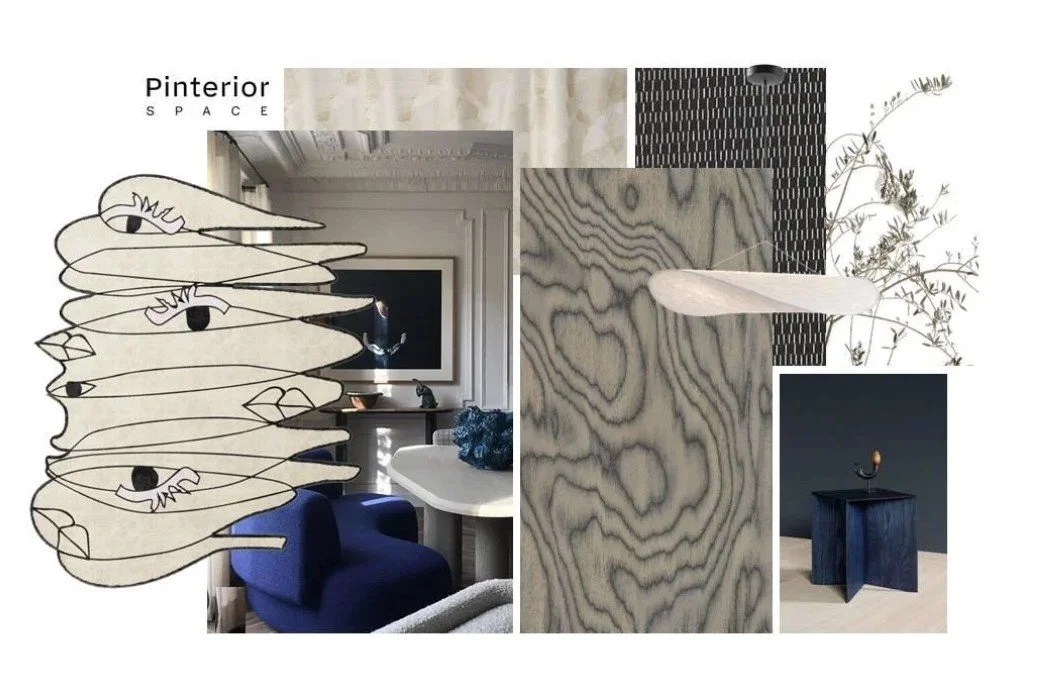
A contemporary concept board created for a Cambridge office–living space, combining wood veneer textures, soft grey fabrics, botanical references and bold cobalt blue accents. The layout includes modern furniture silhouettes, sculptural forms and material samples that define a refined, focused and visually clear interior direction.
“Clarity at the start is the quiet architecture behind every successful renovation.”
Why a Concept Board Matters More Than People Think
Many people imagine a concept board as a moodboard — a loose collage of inspiration. But in professional interior design, especially in places with strong architectural character like Cambridge and London, the concept board is far more rigorous. It is not decoration. It is a direction.
You can explore this philosophy in practice through my [interior projects → /interiors].
A well‑crafted concept board becomes the project’s internal logic. It defines the emotional tone, the material palette, the level of contrast, the rhythm of light and shadow, the architectural language and the level of refinement. It is the first moment where the client can see the project they’ve been trying to describe — often for years. When this clarity arrives, the overwhelm dissolves and the project begins to breathe.
“A concept board is where clarity replaces guesswork — and where the project finally begins to settle.”
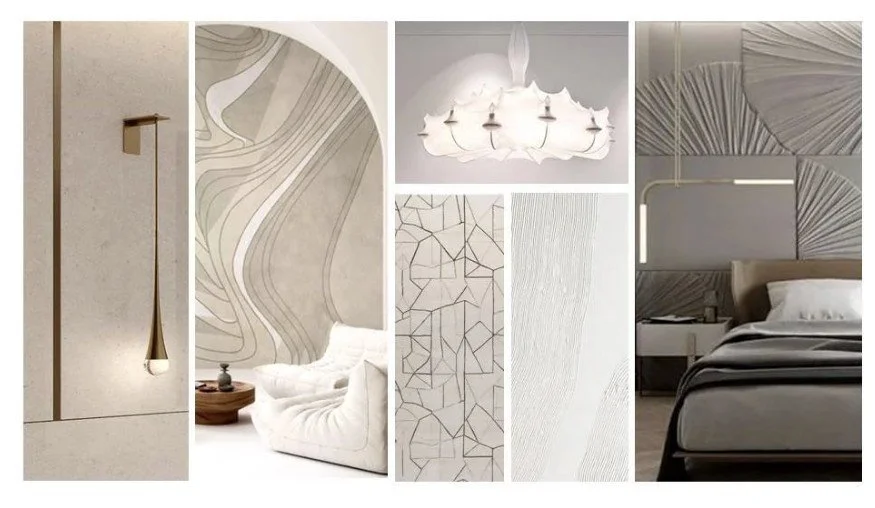
A light contemporary modern concept board created for a Cambridgeshire bedroom, combining sculptural lighting, soft neutral textures and layered wall finishes. The collage includes modern furniture silhouettes, abstract patterns and refined material samples, setting the direction for a serene, tactile and quietly expressive interior.
What Goes Into a Strong Concept Board
A strong concept board is never a random collection of pretty images. It is a carefully curated visual language — a distilled expression of proportion, materiality, light and atmosphere. Every element earns its place. Every image carries meaning. And every choice supports the emotional and architectural direction of the project.
You can see examples of concept boards in my [design process → /process].
In my work across Cambridge, London and Cambridgeshire, a concept board typically includes:
The emotional tone — the atmosphere the client wants to live in.
The material palette — stone, timber, metal, plaster, textiles.
The colour direction — warmth, contrast, depth and softness.
The architectural language — lines, proportions, rhythm.
The level of refinement — quiet, understated or expressive.
The client’s story — how they want to feel in their home.
“A concept board is not about taste — it’s about intention.”
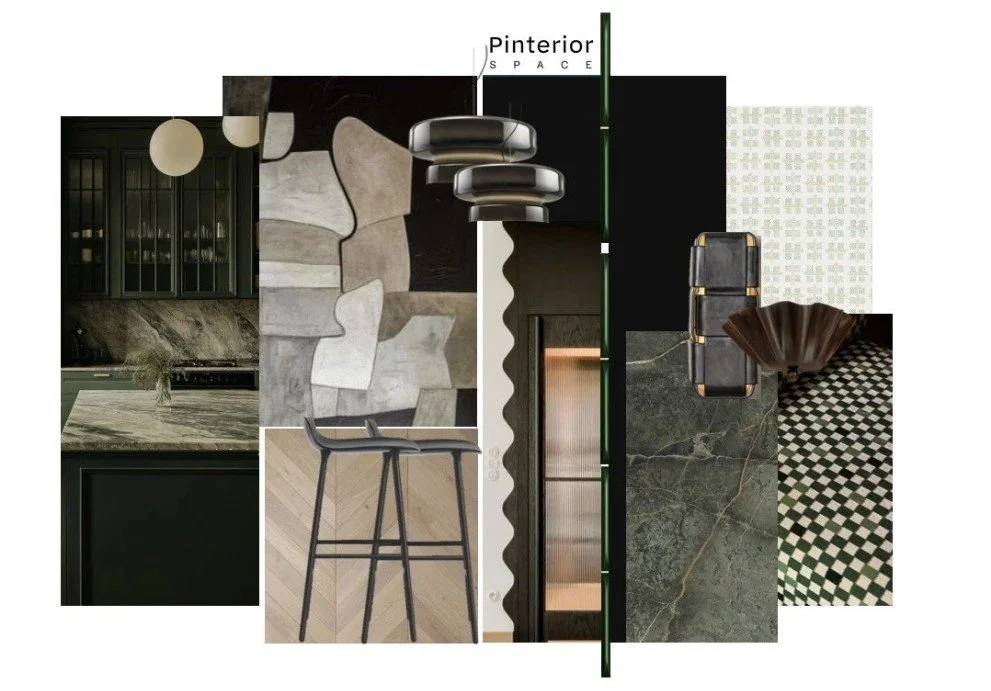
A moody contemporary masculine concept board created for a Biggleswade/Sandy kitchen–dining space. The collage blends dark green cabinetry, ribbed glass, marble surfaces, geometric flooring, sculptural lighting and warm wood textures. Together, these elements define a refined, expressive interior with strong contrasts and a quietly dramatic atmosphere.
How a Concept Board Guides Every Decision That Follows
Once the concept board is in place, every decision becomes clearer. It acts as a visual compass — a steady reference point that keeps the project aligned, no matter how many choices need to be made along the way.
You can explore examples of this approach in my [interior projects → /interiors].
A strong concept board guides:
Materials — chosen with purpose, not impulse.
Colour — structured, architectural, emotionally consistent.
Proportion — scale, rhythm and balance across the home.
Joinery and detailing — shadow gaps, profiles, junctions.
Lighting — layered, warm, atmospheric, intentional.
Client confidence — the most transformative outcome of all.
“When the concept is clear, the project becomes effortless — every decision has a place, a purpose and a quiet logic.”
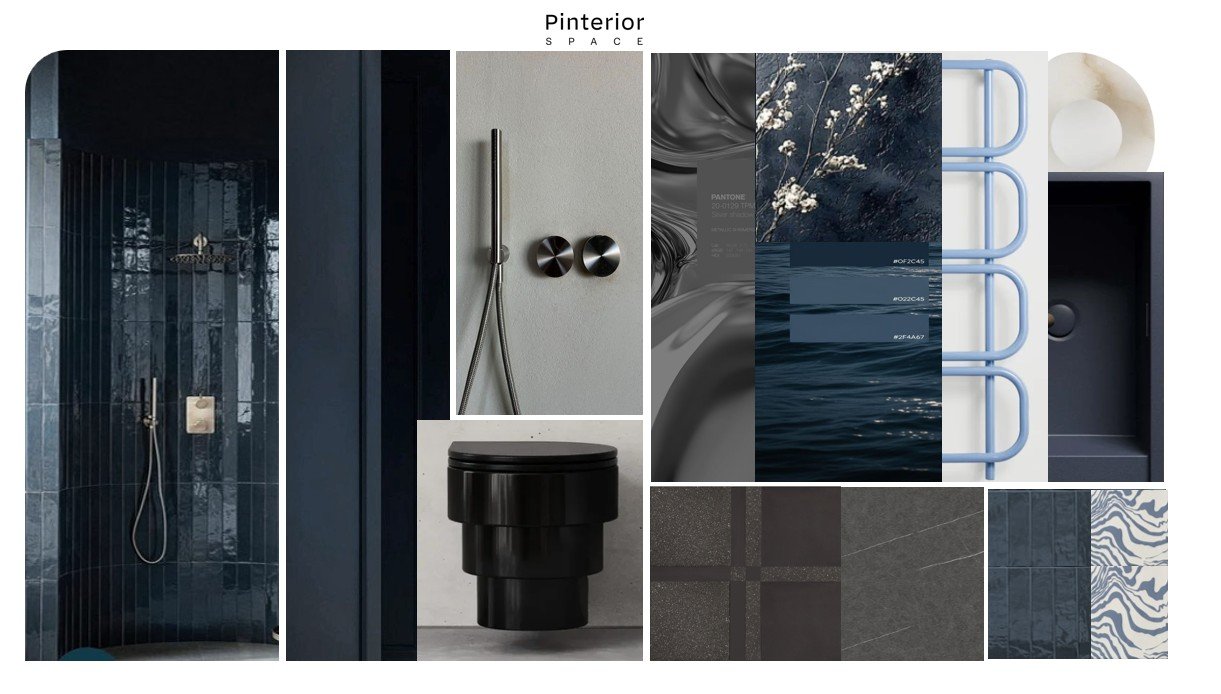
A contemporary modern concept board for a London bathroom renovation, combining deep blue finishes, black gloss sanitary ware, sculptural fixtures and layered tile textures. Anchored by Pantone Shark Shadow, the palette creates a quietly dramatic atmosphere suited to bathrooms, dressing areas and intimate transitional spaces.
What Clients Often Don’t Realise About Concept Boards
For many clients, the concept board feels deceptively simple. But its impact is profound. You can view examples of this in my [interior portfolio → /interiors].
Clients often don’t realise that:
The concept board is the design direction.
It prevents costly mid‑project changes.
It reduces overwhelm and decision fatigue.
It ensures the home feels coherent, not pieced together.
It speaks the same language as the architecture.
It reveals the why, not just the what.
“A concept board is not a collage — it’s a contract with the project’s future.”
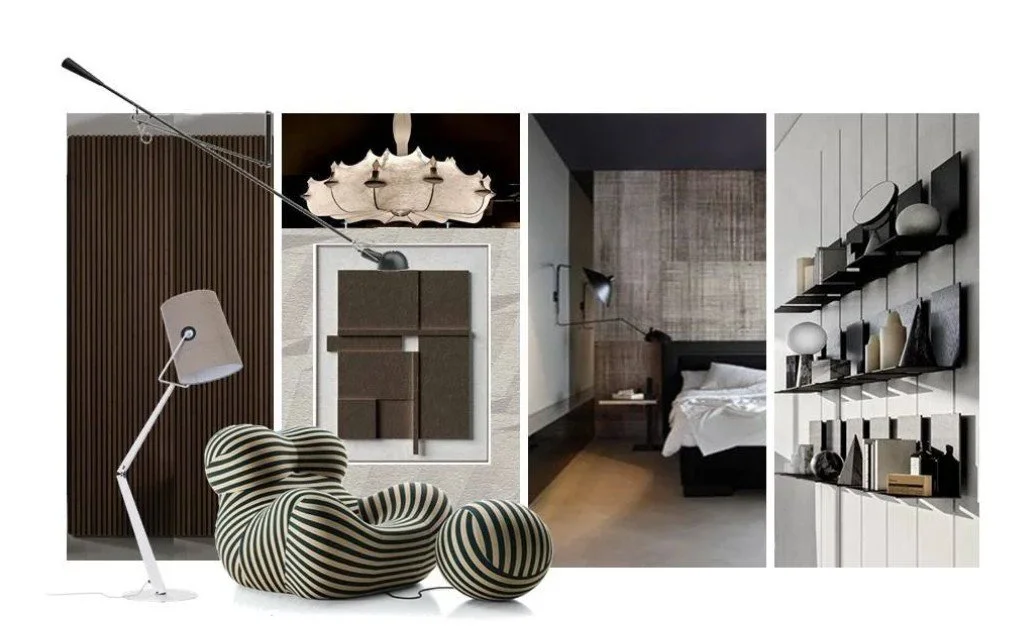
A moody masculine modern concept board created for an Italian client, blending sculptural lighting, bold textures and darker finishes. The collage includes striped upholstery, geometric wall panels, contemporary bedroom furniture and layered material samples, setting the direction for a refined and atmospheric interior.
How a Concept Board Protects the Budget
A clear concept is one of the most effective financial tools in any renovation. It prevents indecision, reduces impulse purchases, sets a clear material direction and helps contractors quote accurately. When the concept is strong, the project stays calm — and so does the budget. Explore examples in my [kitchen projects → /interiors].
“A concept board is not just a creative tool — it is a financial safeguard.”
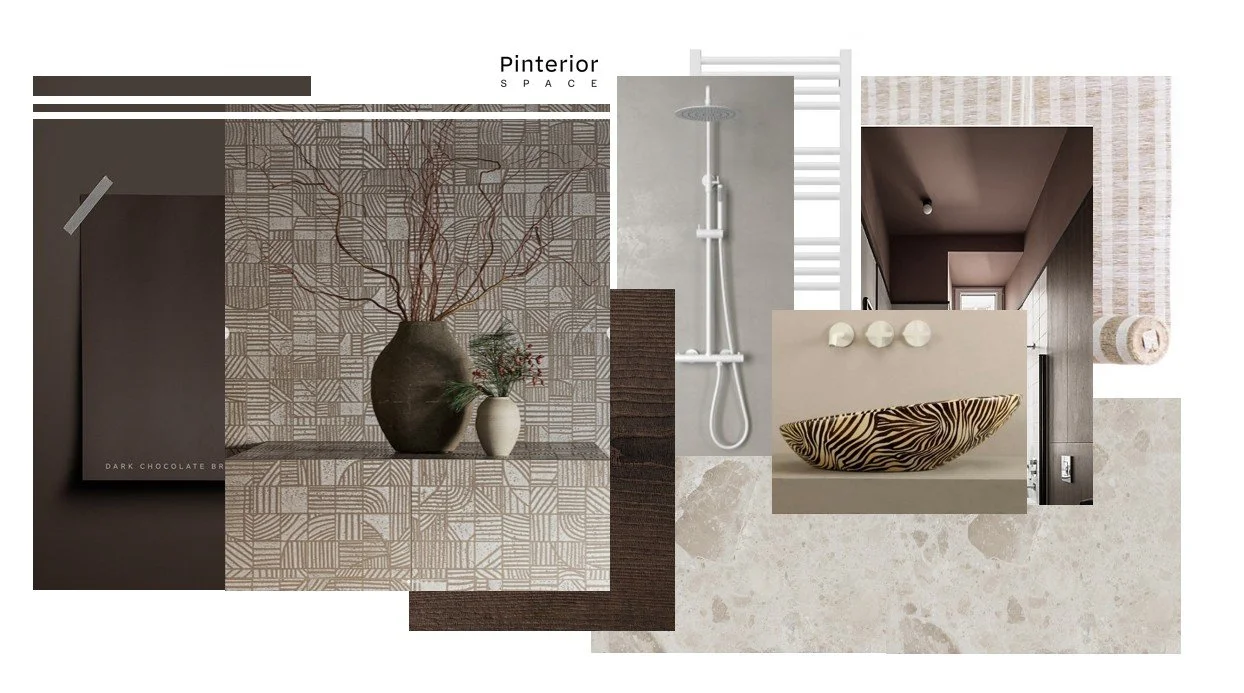
A Contemporary–Modern–Nordic–Japanese concept board created for a London bathroom renovation, blending warm textures, sculptural fixtures, dark chocolate patterned tiles and natural stone. The palette leans earthy and restrained, offering a visual anchor for bathrooms, dressing areas and quiet transitional spaces.
The Difference Between a Moodboard and a Professional Concept Board
A moodboard explores possibilities.
A concept board defines the path.
A moodboard inspires.
A concept board instructs.
A moodboard is optional.
A concept board is foundational.
If you’d like support applying these principles to your own home, you can learn more about my [design process → /process].
This distinction matters. A concept board is the visual contract that guides the entire project, protects the budget and ensures the final space feels coherent, modern and deeply rooted in its architecture.
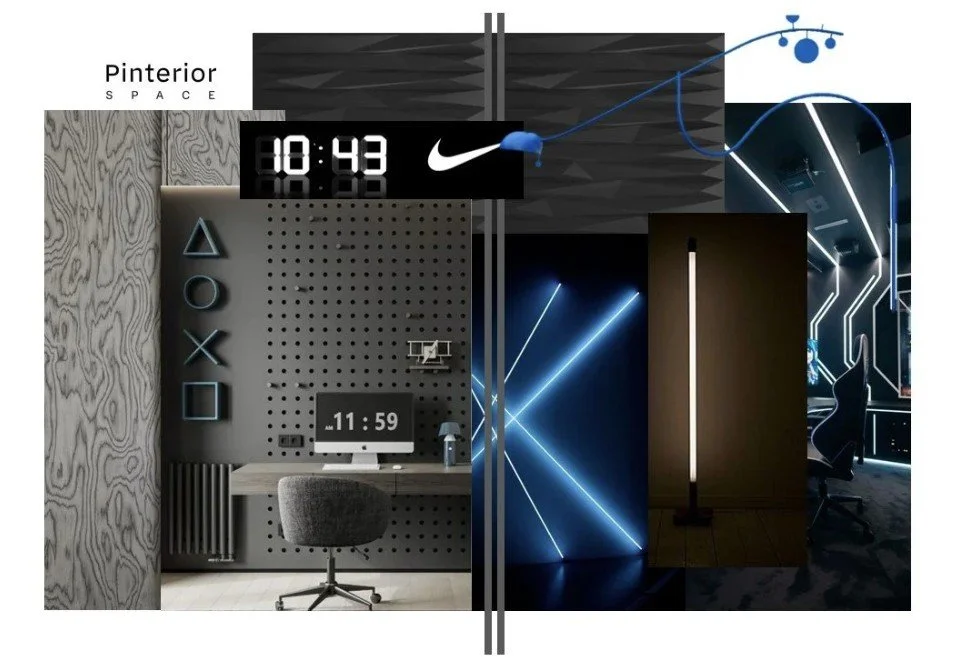
A moody masculine gamer‑style concept board created for a teen bedroom, blending LED lighting, sculptural furniture, layered tech‑inspired textures and immersive colour contrasts. The collage includes gaming setups, illuminated wall features and contemporary furniture, setting the direction for a bold, expressive and highly atmospheric interior.
Final Paragraph
Every project begins with a feeling — a sense of calm, warmth, texture or light. The concept board captures that feeling and turns it into a clear direction. It is the foundation that holds the project steady, guiding every choice with intention. When the concept is strong, the home that follows feels effortless, coherent and deeply rooted in its architecture.
If you’re exploring how to bring this kind of clarity, proportion, and modern design philosophy into your own home — whether you’re in Cambridge, Cambridgeshire, the surrounding shire villages, London, Letchworth, Hitchin, St Neots, or nearby — I’d love to help you shape a space that feels calm, intentional, and deeply supportive.
You can explore more here:
• my [Bathroom Concept Boards → /concept-boards]
• my [Recent Articles → /articles]
Continue Your Journey
Every successful interior begins long before furniture is selected or finishes are specified. Continue exploring these articles to discover how thoughtful design ideas evolve into calm, considered homes through a clear and collaborative design process.
Read Next
Concept to Completion
Follow the complete interior design journey, from the initial brief and concept development through to detailed design, specification and the finished home.
Why Creative Thinking Has Become The Ultimate Luxury
Discover why the best interiors begin with imagination, thoughtful design thinking and ideas that are tailored to the people who live there.
Why Interior Design Is A Service, Not A Product
Explore why great interior design is built on collaboration, understanding and professional expertise rather than simply selecting furniture and finishes.
Return to the Chapter
How Designers Think
Explore more articles about the creative process, concept development and the professional thinking behind beautifully considered interiors.