
The Hidden Cost of Poor Space Planning in Interior Design
Poor space planning can quietly affect the way a home feels and functions every day, influencing movement, storage, lighting, comfort, and overall wellbeing. Thoughtful interior design helps create layouts that improve flow, maximise functionality, and support calmer contemporary living through better spatial balance, proportion, and practical design decisions.
By Pavlina Campbell:
Every day, our homes quietly charge us a fee. Not in bills, but in wasted steps, strained materials, and spaces that tire instead of restore. Poor planning is the most expensive mistake you’ll never see on paper — until it drains your time, money, and wellbeing.
1. Kitchen Planning: The Unseen Distances
In kitchens, a few centimetres can make or break efficiency. The “working triangle” — sink, hob, fridge — should flow within 1.2–2.7 metres each, yet poor layouts often force unnecessary detours.
I was asked by a client in Cambridge to completely redesign a brand‑new kitchen because none of these guides had been implemented. The island sat less than 700mm from the base units, meaning doors couldn’t open at the same time. Circulation was blocked, and everyday tasks became a battle. To make matters worse, the floor tiles hadn’t been laid under the island, leaving exposed subflooring — a hidden flaw that compromised both durability and hygiene.
As an interior designer in Cambridgeshire, I see this often: kitchens that look polished on the surface but fail in function. Correcting these mistakes requires not just decoration, but foresight, precision, and clarity. Interior design Cambridge projects thrive when ergonomic standards are respected, ensuring kitchens flow effortlessly and stand the test of time.
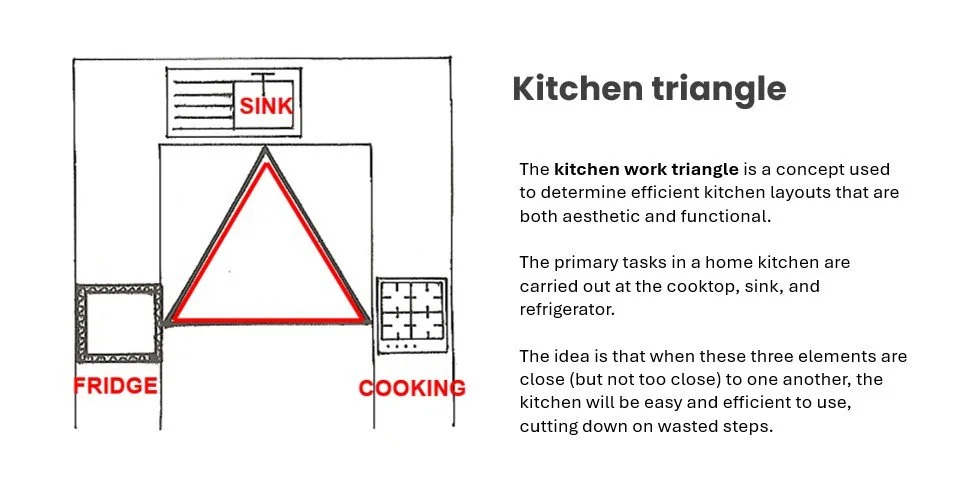
Kitchen Working Triangle. An image showing a kitchen working triangle diagram, illustrating the optimal relationship between the sink, hob, and fridge. The layout highlights how efficient space planning reduces unnecessary movement, improves workflow, and creates a more functional kitchen. The diagram demonstrates the importance of positioning key appliances within a comfortable distance to support everyday cooking and circulation.
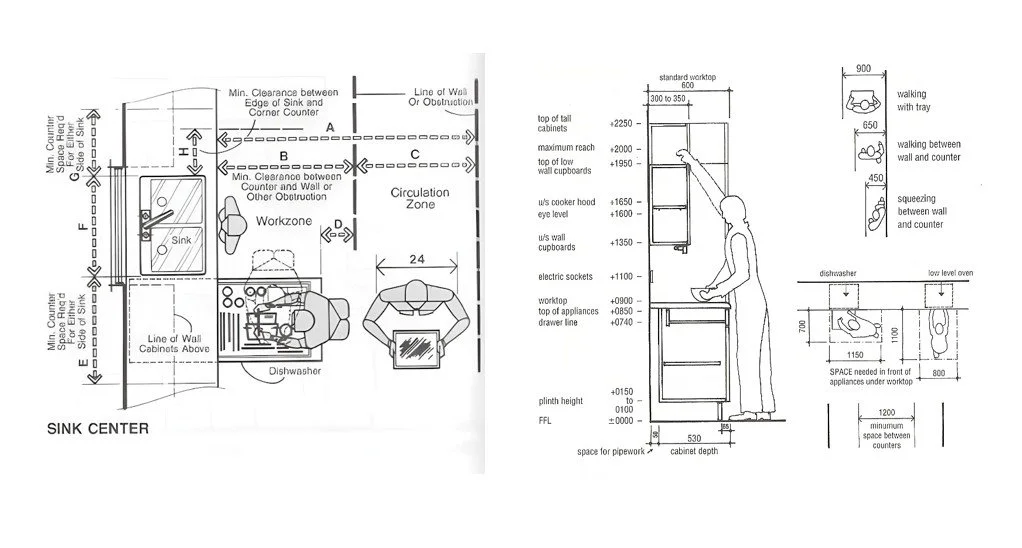
Essential planning distances and dimensions for efficient kitchen design. A collage of diagrams showing essential planning distances and dimensions for an efficient kitchen layout. The visuals include a top‑view plan illustrating clearances around appliances, recommended circulation widths, and optimal spacing between work zones. Section drawings show vertical dimensions such as counter heights, wall‑unit positioning, and ergonomic reach zones. Together, the diagrams highlight the technical requirements that support a functional, comfortable, and well‑planned kitchen.
2. Materials: Beauty Without Function Becomes Fragile
Choosing materials without considering function is a hidden cost waiting to happen. Wooden flooring throughout the downstairs may look warm and cohesive, but in practice, it can be vulnerable.
One Cambridge client had engineered wood flooring installed across the kitchen, dining, and hallway. Within months, leaks from the sink, dishwasher, and toilet forced multiple replacements. The engineered boards couldn’t withstand water damage, and because the original batch was no longer available, we couldn’t simply replace sections — the entire floor had to be redone.
This is the kind of expense that isn’t visible in the showroom but becomes painfully clear in daily life. As a local interior designer near you, I guide clients toward materials that balance beauty with resilience. Interior design Cambridge projects thrive when durability is prioritised: porcelain tiles in kitchens, moisture‑resistant finishes in bathrooms, and engineered wood reserved for spaces where water risk is minimal. Decorating services should not just chase fashion — they should anchor design in principles that endure.
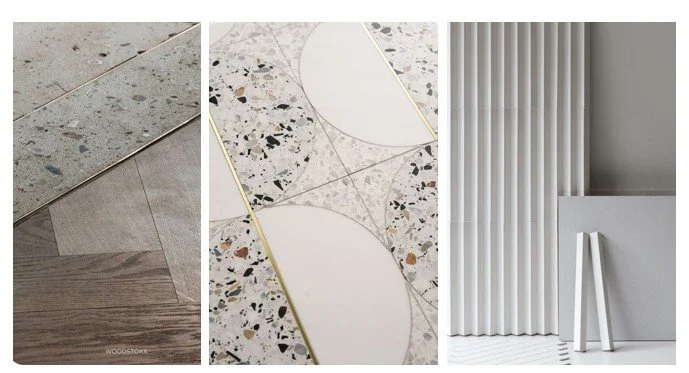
Suitable materials for a specific function. A collage of three images showing different interior materials used in home design. The set includes a tile, a wooden floor sample, a more durable alternative surface, and a complementary material option. Together, the images highlight how each material behaves differently in real‑world use, illustrating why function, durability, and maintenance must be considered alongside aesthetics when planning a space
3. Layout: Scale and Proportion in Real Life
Furniture that overwhelms a room doesn’t just compromise aesthetics — it erodes functionality and comfort. Sofas that dominate circulation routes, or oversized American fridge‑freezers squeezed into modest kitchens, are common mistakes I’m asked to correct.
In cottages with low ceilings, proportion becomes even more critical. A tall bed frame in a small bedroom will feel like the elephant in the room, visually consuming the space and making it uncomfortable to inhabit. By contrast, a low‑profile frame respects the architecture, creating balance and ease.
This is why every project begins with a site survey. Measuring the space, mapping circulation, and producing drawings allow us to determine the right scale, proportion, and layout flow before a single purchase is made. This is the first layer of great planning. The next layer is the precise selection of materials and furnishings — a process that demands professional foresight. As an interior designer in Cambridgeshire, expanding into interior design Cambridge, I ensure each decision is considered in every way, so clients avoid costly mistakes and achieve harmony between architecture and lifestyle.
Many of these issues stem from decisions made without fully understanding how the space should function as a whole. This is why space planning in interior design is so important, ensuring layout, flow and proportion are resolved from the outset.
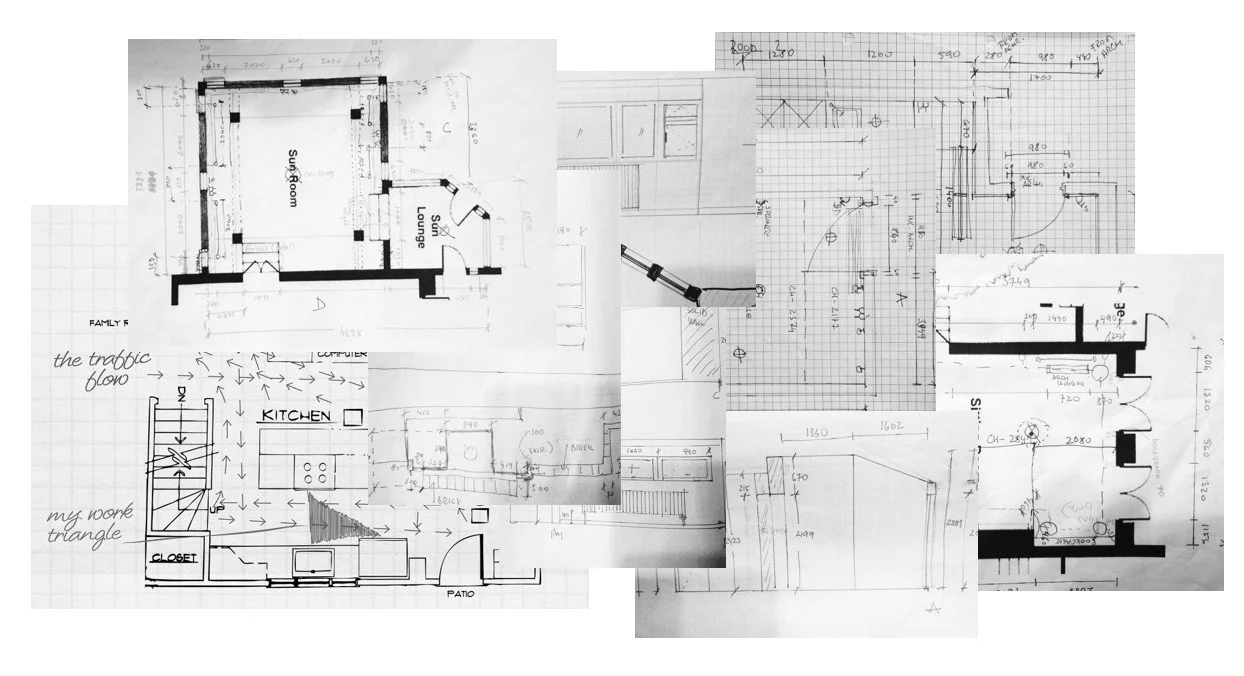
Site survey sketch drawings.A collage of site survey drawings, including measured floor plans, circulation diagrams, and scaled layout studies. The drawings document the existing space with precise dimensions, showing how movement, proportions, and architectural constraints are mapped before any design work begins. These visuals illustrate the foundational stage of the design process — understanding the space accurately so that scale, flow, materials, and furnishings can be selected with confidence
4. Lighting: The Overlooked Essential
Lighting is often treated as an afterthought, yet poor decisions on fixture placement, wattage, or colour temperature can ruin a space. A warm 2700K light nurtures intimacy, while a harsh 4000K can feel clinical.
I’ve seen Cambridgeshire homes where overlooked lighting plans left kitchens in shadow or living rooms washed in glare. Integrating lighting early ensures balance between function and atmosphere. Interior design Cambridge projects thrive when lighting is considered as carefully as furniture or finishes, shaping mood and usability in equal measure.
Beyond temperature, layering light is critical:
• Ambient lighting sets the overall tone.
• Task lighting ensures precision in kitchens, studies, or bathrooms.
• Accent lighting highlights architectural features or artwork.
When these layers are ignored, spaces feel flat and lifeless. When they are orchestrated together, rooms gain depth, warmth, and clarity.
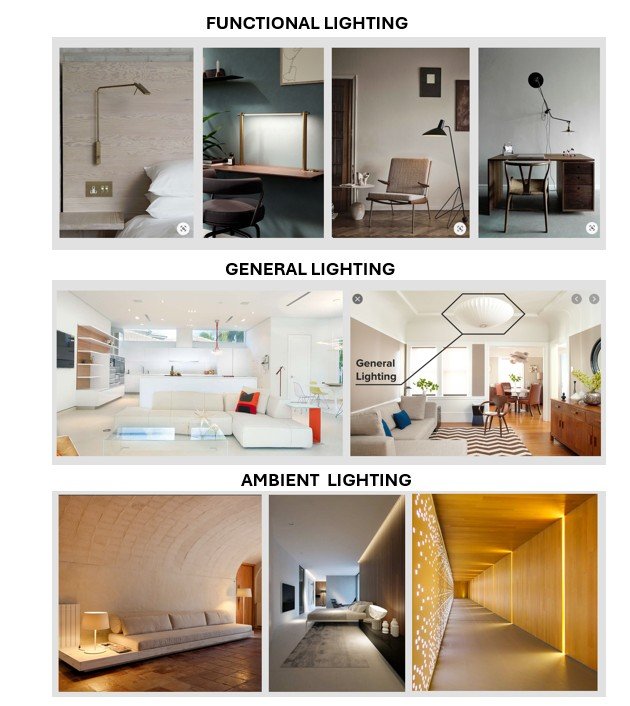
Functional - General -Ambient lighting. A collage of images illustrating three key types of interior lighting: functional lighting for task‑based areas, general lighting for overall illumination, and ambient lighting for mood and atmosphere. The visuals include diagrams and room examples showing how each lighting type is positioned and layered within a space. Together, the images demonstrate the importance of distributing light intentionally to create balance, comfort, and visual harmony in interior design.
5. Window Treatments: Balancing Light, Privacy, and Proportion
Every window presents a unique challenge: its position, orientation, and size all shape how light enters a room. Selecting the right treatment is never one‑size‑fits‑all — it’s about balancing client needs, functionality, and aesthetics.
Bathrooms demand materials that resist moisture while maintaining privacy. Bedrooms often require complete blackout solutions, especially for clients who want to block morning light. In living spaces, treatments must soften natural light without compromising views, while also working harmoniously with artificial lighting schemes.
This is why we take pride in advising on window treatments as part of the design process. From shutters to layered curtains, every choice is tailored to the room’s purpose and the client’s lifestyle. As an interior designer in Cambridgeshire, expanding into interior design Cambridge, I ensure window treatments are not just decorative, but integral to the flow, comfort, and timelessness of the space.
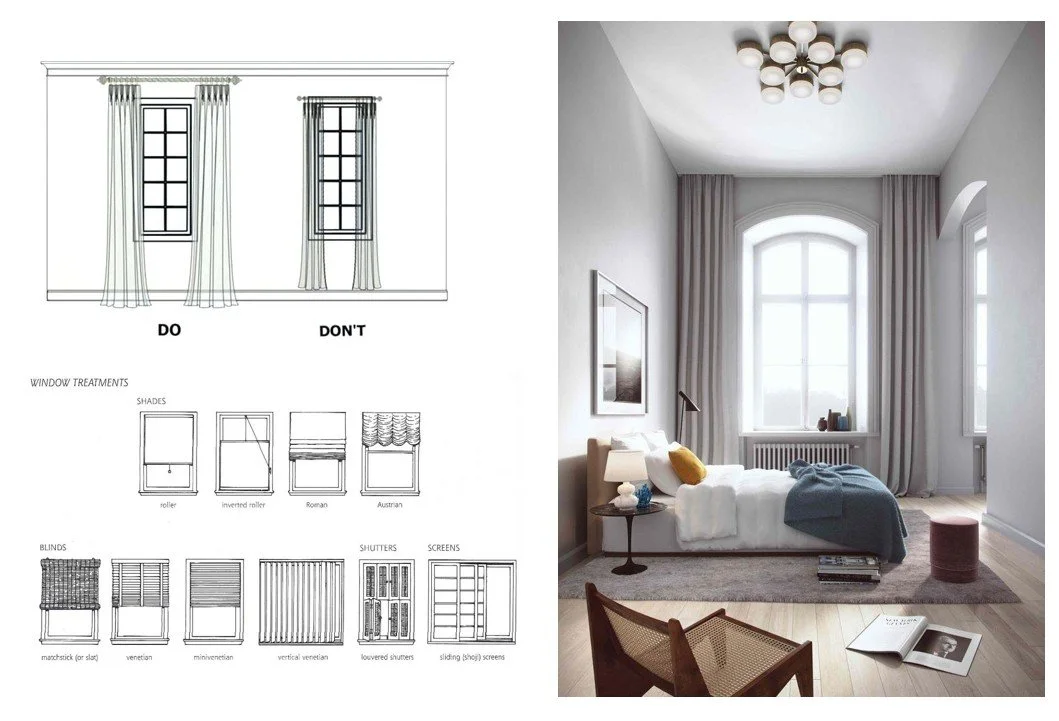
Window Treatment - Curtains - Roman blinds - Shutters - Venetian blinds. A collage of images showing different types of window treatments, each demonstrating how light, privacy, and proportion can be managed within a space. The visuals include examples of sheer curtains, blinds, and layered treatments, highlighting how each option affects the quality of light, visibility, and the overall aesthetic. Together, the images illustrate the importance of selecting window treatments that respond to the window’s size, orientation, and the functional needs of the room.
6. Timelessness: Sustainability in Disguise
Trends fade quickly. A space designed without foresight becomes dated before its time, forcing unnecessary renovations. Timeless planning is sustainable planning: it reduces waste, preserves resources, and ensures beauty that lasts.
Decorating services should not just chase fashion — they should anchor design in principles that endure. A well‑planned space doesn’t just look good; it gives you back your life.
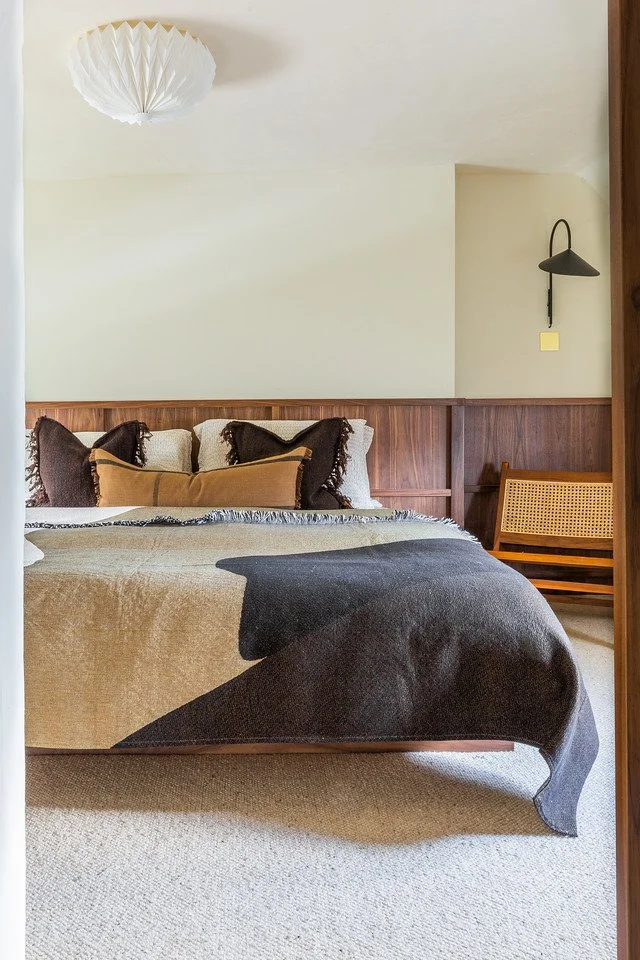
Grade II Listed Renovation house -Bedroom by Pinterior.space
Poor space planning is the most expensive mistake you’ll never see on a budget sheet. From kitchens to materials, furniture to lighting, and window treatments to timelessness, every decision carries hidden costs if not considered with foresight. As an interior designer in Cambridgeshire, expanding into interior design Cambridge, my role is to translate complexity into clarity — ensuring every project flows with precision, durability, and timeless beauty.
Contact Pinterior.space to begin your own narrative of place, purpose, and poetic living along Grange Road—or wherever your Cambridge journey may lead.
If you’re searching for a Cambridgeshire Interior Designer who blends practical solutions with poetic detail, this is where the journey begins.
Exploring Better Space Planning Solutions
Many layout problems are not immediately obvious. Poor circulation, awkward room arrangements and underused areas can affect how a home feels and functions every day. Thoughtful space planning helps create homes that feel calmer, more practical and better suited to modern living.
Explore Related Guides
• Space Planning Interior Design Cambridge
• Space Planning Ideas for Contemporary Homes in Cambridgeshire
• How to Design Awkward Room Layouts in Cambridge Homes
• How to Plan Circulation in Open Plan Homes
If you're considering a renovation, extension or home reconfiguration, understanding how space planning shapes the way a home works is often the best place to begin.
Continue Exploring Renovation & Home Transformation
Thoughtful space planning is one of the foundations of a successful home transformation. Explore the Renovation & Home Transformation knowledge library for more practical guides, professional insights and real project stories covering layouts, circulation, storage and creating homes that work beautifully for everyday living.
Explore the Renovation & Home Transformation Knowledge Library →