
🖤 Mies van der Rohe — Less, But Deeper
Some designers reduce.
Mies van der Rohe refined.
His work wasn’t about minimalism as a trend — it was about stripping away noise until only structure, proportion, and truth remained. In a world that often feels crowded, his philosophy feels more relevant than ever, especially for homeowners across Cambridge, the surrounding shire villages, London, Letchworth, Hitchin, St Neots, and Royston who crave clarity, calm, and a deeper sense of spatial purpose.
Mies didn’t design emptiness.
He designed essence.
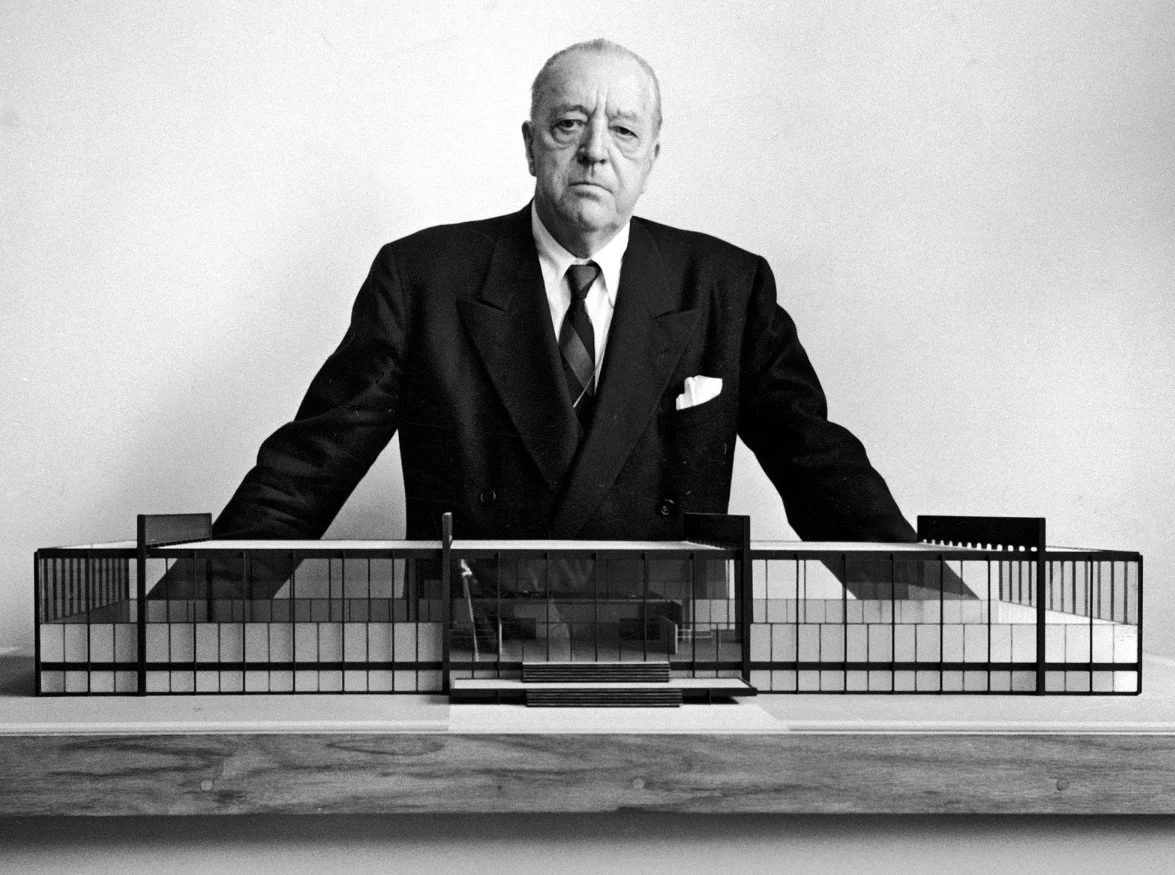
A black-and-white portrait of Ludwig Mies van der Rohe standing behind a scale model of one of his modernist buildings. The model’s grid-like glass and steel façade reflects his philosophy of “less is more” — a belief in structural clarity, material honesty, and emotional restraint. This image captures the quiet confidence and precision that shaped his legacy across Europe and continues to influence thoughtful design today. Mies van der Rohe | The Designer and his Barcelona Pavilion.
If you enjoy exploring the ideas behind modern living, you can browse more reflections in my [Design Insights archive → /design-insights].
A Philosophy of Clarity
“Less is more” is often misunderstood as cold or austere.
But for Mies, it meant something far more human:
Clarity over clutter
Structure over decoration
Purpose over performance
Calm over chaos
His buildings and furniture weren’t about impressing others — they were about creating spaces where the mind could settle and the body could breathe. This resonates deeply with modern living in Cambridge and London, where homes often need to work harder, feel calmer, and support multiple layers of life.
If you’re curious how this philosophy translates into real homes, you can explore my [Showcase of completed projects → /showcase].
Material Honesty and Emotional Depth
Mies believed materials should speak for themselves.
Steel, glass, leather, stone — each chosen with intention.
This honesty creates a quiet emotional depth that aligns beautifully with the way many people in Cambridgeshire villages and London suburbs want to live today: simply, intentionally, and with a sense of grounded elegance.
His iconic pieces — the Barcelona chair, the Brno chair, the daybed — are not just furniture. They are lessons in restraint, proportion, and emotional clarity.
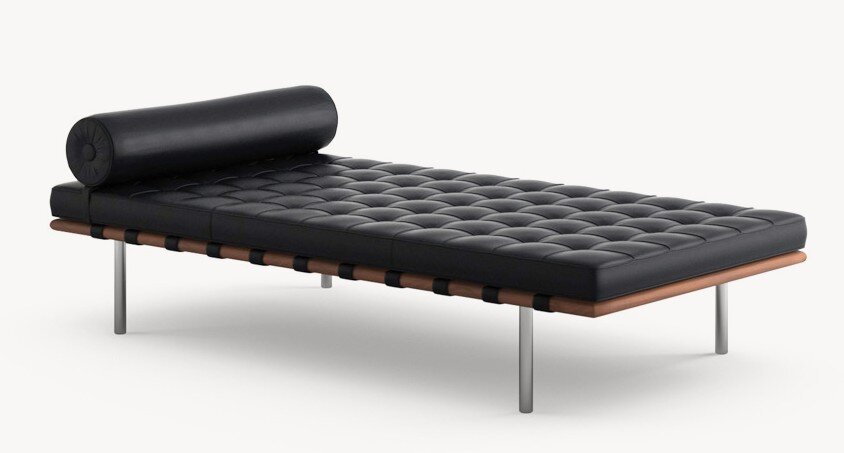
A modernist daybed inspired by Mies van der Rohe’s Barcelona collection, featuring a tufted black leather cushion, cylindrical bolster pillow, and sleek metal legs. This piece reflects the designer’s belief in material honesty, proportion, and emotional clarity — a sculptural form that supports rest, reflection, and modern living. www.knoll.com/design-plan/product/barcelona-couch?section=design
If you’d like to bring this kind of clarity into your own home, you can learn more about my [Interior Design Services → /concepts-design].
Designing for Modern Life
Mies shaped the way we think about:
1. Open-plan living
Spaces that flow, breathe, and adapt — a concept now essential in Cambridge terraces, London flats, and new-build homes across the shire.
2. Light as architecture
Large windows, clean lines, and uninterrupted sightlines that create calm and connection.
3. Proportion as poetry
Every line, every joint, every intersection considered with precision.
4. Furniture as architecture
His pieces don’t decorate a room — they define it.
5. Living with intention
A philosophy that mirrors your own approach: design that supports emotional wellbeing, clarity, and modern life.
Why Mies Still Matters in Cambridge and Beyond
Homes across Cambridge, Letchworth, Hitchin, St Neots, and London often face similar challenges:
Limited natural light
Awkward layouts
Busy family life
Hybrid work
A desire for calm, clarity, and purpose
Mies’s principles offer a timeless blueprint for solving these issues — not through trends, but through thoughtful, human-centred design.
His work reminds us that simplicity is not emptiness.
It is a focus.
It is an intention.
It is depth.
As someone who grew up in the Czech Republic, I’ve always felt a quiet connection to Mies’s work in Brno — especially the Tugendhat House. Its clarity, proportion, and emotional restraint shaped the architectural language of the region, and in many ways shaped my own understanding of what a home can be: calm, intentional, and quietly confident
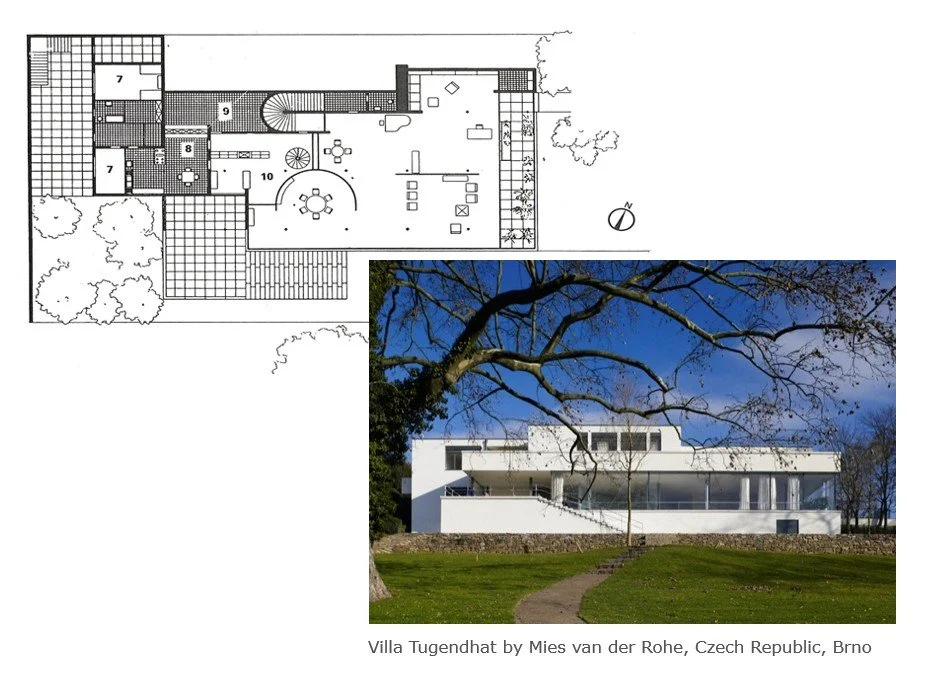
Villa Tugendhat, designed by Mies van der Rohe in 1930, stands as a landmark of modernist architecture in Brno, Czech Republic. This image pairs the building’s clean white façade and expansive glass with its original floor plan — a testament to Mies’s philosophy of clarity, proportion, and emotional restraint. As someone with Czech roots, I’ve always felt a quiet connection to this house and the way it shaped architectural thinking across Europe. Villa Tugendhat by Mies van der Rohe [483] | filt3rs
A Legacy of Quiet Confidence
Mies van der Rohe changed the way we live by teaching us that restraint can be powerful, and clarity can be deeply comforting. His work continues to shape modern interiors across Cambridge and the shire — not because it is fashionable, but because it is timeless.
His philosophy aligns with the way you design:
calm, intentional, quietly intelligent, and deeply human.
You can read more about my approach and past projects in the [Accolades section → /accolades], where I share press, recognition, and design reflections
If you’re exploring how to bring this kind of clarity, proportion, and modern design philosophy into your own home — whether you’re in Cambridge, the surrounding shire villages, London, Letchworth, Hitchin, St Neots, or nearby — I’d love to help you shape a space that feels calm, intentional, and deeply supportive. You can learn more about working together or get in touch through my Contact page, where every project begins with a thoughtful conversation.
Continue Your Journey
Mies van der Rohe believed that simplicity reveals the true beauty of architecture and design. Continue exploring these articles to discover the designers and movements whose ideas continue to shape contemporary interiors.
Read Next
Le Corbusier — The Poetry of Order
Discover how Le Corbusier's vision of order, proportion and modern architecture continues to influence contemporary interior design.
Marcel Breuer — The Strength of Simplicity
Explore how Marcel Breuer redefined furniture design through innovation, craftsmanship and elegant structural thinking.
Alvar Aalto — The Warmth of Modernism
Discover how Alvar Aalto brought warmth, humanity and natural materials to modernism, creating timeless interiors that continue to inspire designers today.
Return to the Chapter
Design History & Icons
Explore more articles about influential designers, iconic design movements and the timeless ideas that continue to inspire contemporary interior design.