
🖤Eileen Gray — Designing for Quiet Souls and Modern Lives
Design History & Icons
Eileen Gray was one of the rare designers who understood that a home is not a stage — it is a refuge. Long before “minimalism” became a trend, she shaped a way of living that centred on clarity, emotional intelligence, and the quiet dignity of well‑considered space. Her work feels astonishingly modern today, especially for homeowners in Cambridge, Cambridgeshire villages, London, Letchworth, Hitchin, and the surrounding towns who crave calm, thoughtful interiors rooted in real life rather than spectacle.
If you enjoy exploring the ideas behind modern living, you can browse more reflections in my [Design Insights → /design-insights] archive.
"To create, you first have to question everything."
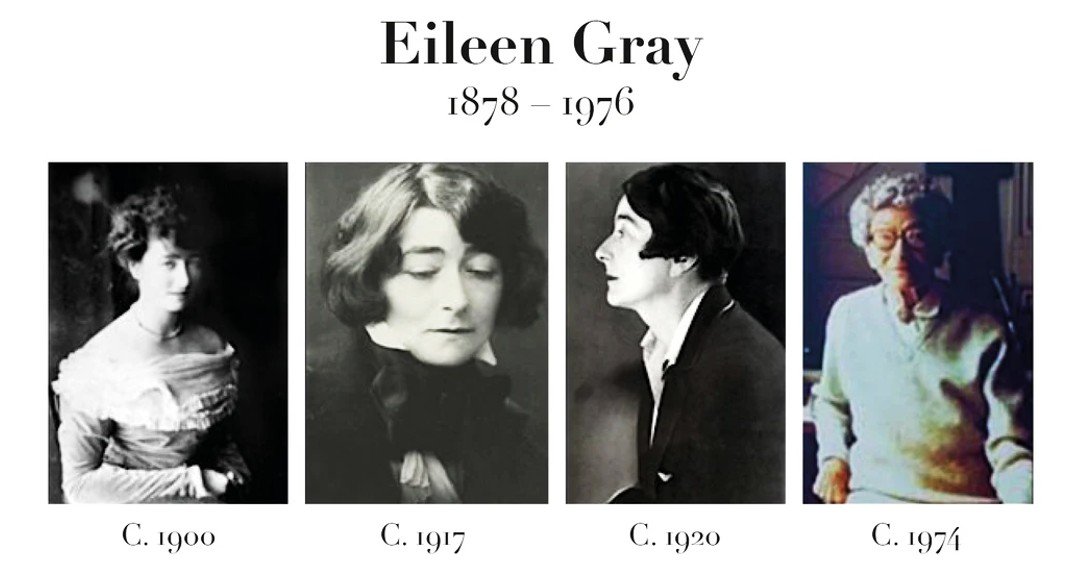
A visual timeline of Eileen Gray’s life and legacy — from her early years to her quiet brilliance in later life. This collage captures the evolution of one of modern design’s most emotionally intelligent pioneers. Can Pep Rey Magazine - Architecture Eileen Gray
A Modern Philosophy Before Modernism Had a Name
Gray’s approach was never about stripping things back for the sake of austerity. It was about removing noise so that real life could breathe. She designed with a sensitivity that feels deeply aligned with today’s desire for homes that support wellbeing, introverted living, and emotional clarity.
Her iconic house, E‑1027, wasn’t just architecture. It was a manifesto:
• Rooms shaped around human movement
• Furniture integrated into the architecture
• Light used as a material
• Spaces that adapt to the person, not the other way around
This is the same philosophy guiding many modern interior designers across Cambridge and the Cambridgeshire today — including the way you design: gentle, intentional, quietly intelligent.
This is the same philosophy guiding many modern interior designers across Cambridge and the shire today — including the way I work with clients through my [Concepts & Service page → /concepts-design].
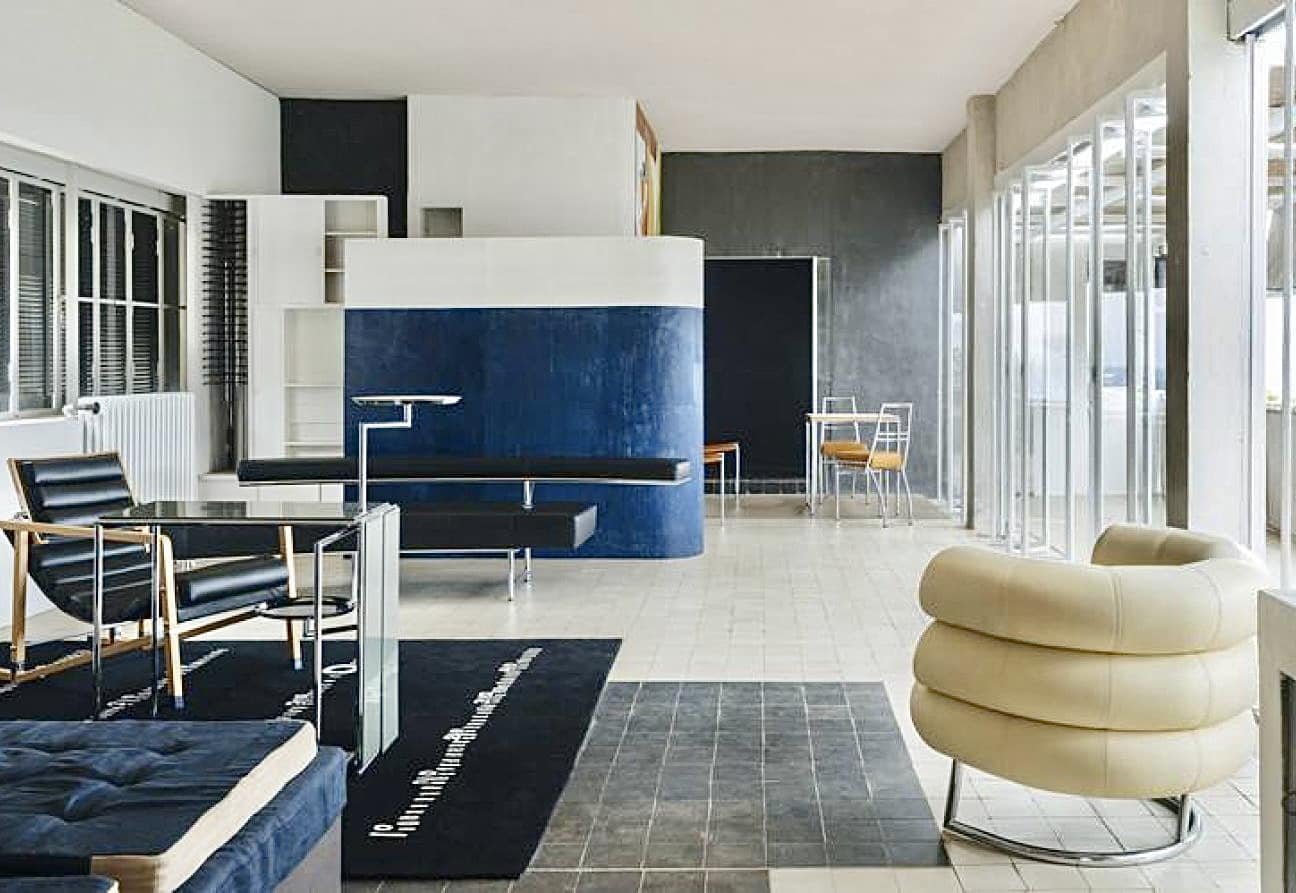
A stylish studio apartment featuring a minimalist layout, blue and white textiles, and iconic furniture pieces. The space includes a bed with blue bedding, a circular rug, a lounge chair, and a record player — all bathed in natural light. A large yellow map artwork adds a bold graphic touch, while the overall palette and layout reflect modern design clarity. Eileen Gray’s iconic E-1027 villa reopens after a €5m refurb - The Spaces
Designing for Quiet Souls
Gray understood introverted living long before the term existed. Her spaces were:
• Softly lit
• Human‑scaled
• Flexible
• Emotionally attuned
This resonates deeply with clients in places like Letchworth, Royston, Gamlingay, St Neots, and Cambridge’s residential streets, where homeowners often seek calm, restorative environments that balance modern life with a sense of sanctuary.
Her work reminds us that design is not about impressing others — it’s about supporting the person who lives there.
If you’d like to see how this philosophy translates into real homes, you can explore my [Showcase → /showcase] of completed projects.
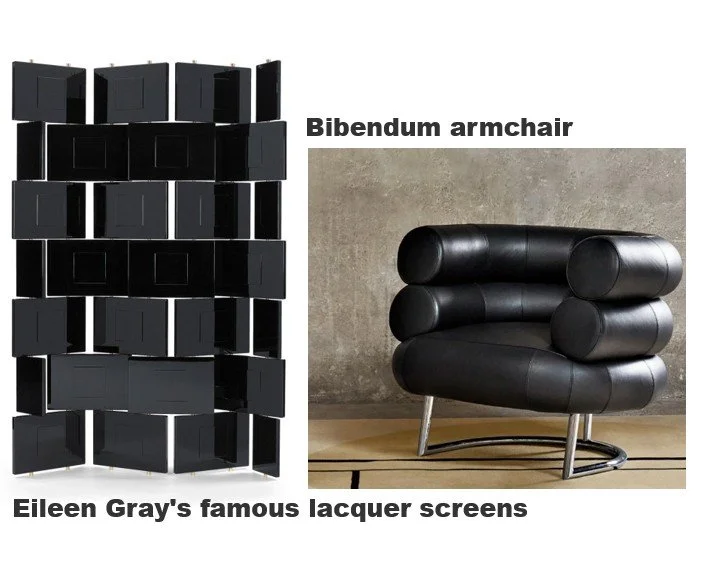
Two of Eileen Gray’s most celebrated furniture designs: the Bibendum armchair, with its bold cylindrical leather forms and chrome base, and her lacquer screens — a modular, sculptural room divider crafted from black lacquered panels. These pieces reflect Gray’s mastery of material, movement, and modernist elegance
A Modern Way of Thinking
Gray’s design philosophy aligns beautifully with contemporary needs:
1. Clarity over clutter
Not minimalism for its own sake — but clarity that allows the mind to settle.
2. Function shaped by feeling
She believed that emotional comfort is as important as physical comfort.
3. Adaptability
Her furniture moved, folded, rotated, or transformed — a precursor to the flexible living many Cambridge and London homeowners now need.
4. Material honesty
Steel, lacquer, textiles — each chosen with intention, not decoration.
5. Human-centred design
Every detail existed to support daily rituals, not disrupt them.
This is the modern philosophy your readers recognise: design that is quietly powerful, deeply human, and rooted in lived experience.
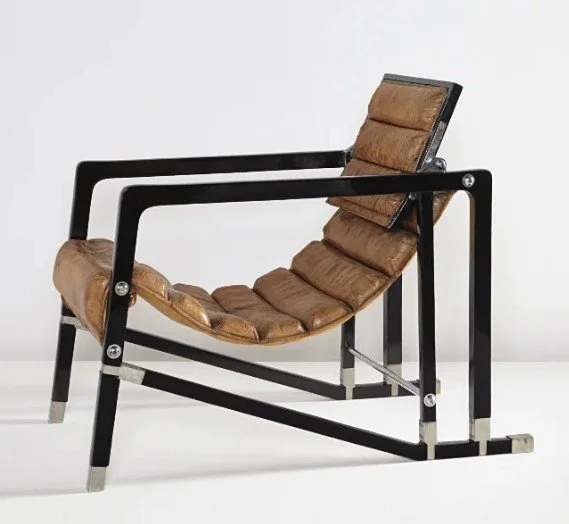
The Transat chair by Eileen Gray, designed in 1930 for the Maharaja of Indore’s Manik Bagh Palace. Crafted from lacquered wood, nickel-plated metal, leather, and fabric, this piece blends modernist geometry with luxurious materials. Its sculptural form and ergonomic curves reflect Gray’s mastery of both comfort and avant-garde design — a timeless icon of cross-cultural modernism.
Why Eileen Gray Still Matters in Cambridge and Beyond
Her work speaks directly to the challenges of modern homes across:
• Cambridge terraces
• Letchworth Garden City houses
• London flats
• Cambridgeshire village cottages
• New‑builds in St Neots and Sandy
These homes often need:
• Better flow
• More light
• Emotional clarity
• Flexible layouts
• Spaces that support both work and rest
Gray’s principles offer a timeless blueprint for achieving all of this.
A Legacy of Quiet Revolution
Eileen Gray didn’t shout. She didn’t chase fame. She simply designed with care, intelligence, and empathy — and changed the course of modern living.
-Her work reminds us that the most powerful spaces are not loud.
-They are not crowded.
-They are not performative.
They are clear, intentional, and quietly supportive — just like the homes you design across Cambridge, the shire, and the surrounding towns.
If you’re exploring how to bring this kind of clarity, emotional intelligence, and modern design philosophy into your own home — whether you’re in Cambridge, the surrounding shire villages, London, Letchworth, Hitchin, St Neots, or nearby — I’d love to help you shape a space that truly supports your life. You can learn more about working together or get in touch through my Contact page, where every project begins with a thoughtful conversation.
Continue Your Journey
Eileen Gray believed that great design should quietly support everyday life through intelligence, elegance and thoughtful craftsmanship. Continue exploring these articles to discover the designers and movements whose ideas continue to inspire contemporary interiors.
Read Next
Alvar Aalto — The Warmth of Modernism
Discover how Alvar Aalto brought humanity, natural materials and warmth to modern design, creating interiors centred around people and everyday living.
Mies van der Rohe — Less, But Deeper
Explore how simplicity, proportion and refined detail continue to shape contemporary architecture and interior design.
Marcel Breuer — The Strength of Simplicity
Discover how Marcel Breuer's innovative approach to materials and structure helped redefine modern furniture and interior design.
Return to the Chapter
Design History & Icons
Explore more articles about influential designers, iconic design movements and the timeless ideas that continue to inspire contemporary interior design.