
How to Make Your Home Feel Finished (Without Buying More)
Making a home feel finished is often less about buying more and more about creating balance, cohesion, and clarity within the space. Through thoughtful interior design, refined styling, layered textures, lighting, and improved spatial flow, even simple adjustments can help a home feel calmer, more complete, and better connected to the way people live.
A designer’s guide to proportion, placement, and considered storage for calm, cohesive homes in Cambridge, London, and Cambridgeshire villages.
Most people assume their home feels unfinished because they don’t have enough things.
Not enough storage.
Not enough décor.
Not enough “finishing touches.”
But in reality, a home rarely feels incomplete because it lacks objects.
It feels incomplete because the existing pieces aren’t the right size, shape, or proportion — or they’re simply not living in the right place.
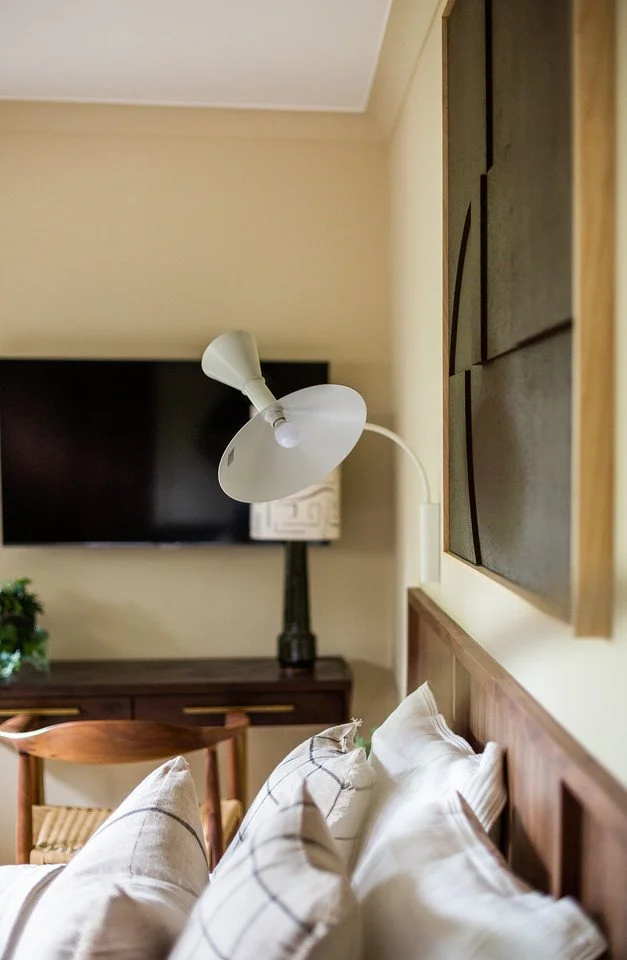
This image shows a quiet corner of the guest bedroom in the Gamlingay renovation near Cambridge. A mid-century style desk with brass-handled drawers anchors the space, paired with a woven-seat chair and sculptural lighting. The wall-mounted lamp and abstract artwork add rhythm and softness, while the television and headboard suggest a room designed for both comfort and clarity. The composition reflects a calm, considered approach to guest spaces — where every piece is chosen for proportion, function, and emotional tone.
A finished home isn’t created by buying more.
It’s created by seeing more.
This guide helps you look at your space the way a designer does:
through proportion, balance, visual weight, and thoughtful storage that supports how you live — whether you’re in Cambridge, London, or a quiet Cambridgeshire village.
1. Why Homes Feel ‘Unfinished’ - Even When They’re Full?
A room feels unresolved when something in the composition is slightly off:
The sofa is too small for the wall
The rug is undersized
The coffee table is the wrong height
The lighting doesn’t support the room’s rhythm
The storage is deep but not useful
The pieces don’t relate to each other
These issues have nothing to do with quantity.
They’re about proportion, placement, and purpose.
A finished room feels balanced — not busy.
If lighting is part of the reason your home feels unresolved, you may find my guide on how to layer light like a designer helpful — it explains how general, task, and ambient lighting work together to create clarity and calm.
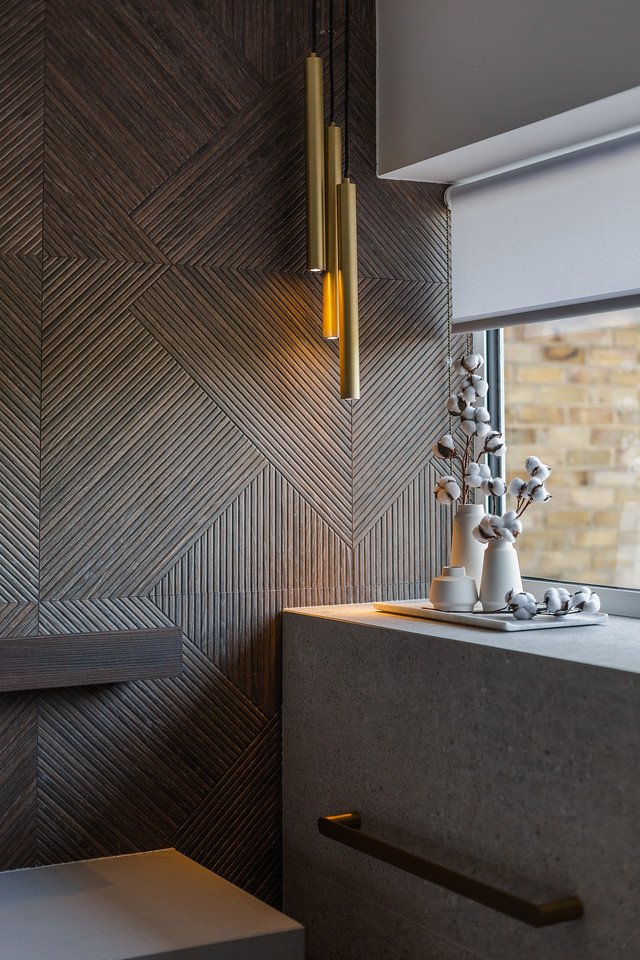
This image captures a quiet corner of the Gamlingay renovation near Cambridge, where texture and lighting create a sculptural moment. A geometric wall treatment adds depth and rhythm, while three brass pendant lights cast a warm, directional glow. On the concrete windowsill, minimalist white vases hold cotton stems, softening the composition with natural contrast. The interplay of materials — wood, brass, concrete, and cotton — reflects a calm, considered approach to small-space design, where every element is chosen for proportion, mood, and visual clarity.
2. The Right Pieces Matter More Than More Pieces
The right piece has nothing to do with trend or price.
It’s about scale.
A room comes together when:
The sofa length anchors the wall
The armchairs have the right visual weight
The coffee table sits comfortably within reach
The rug defines the seating zone
The artwork relates to the furniture below it
When proportions are right, the room feels calm — even with fewer items.
When proportions are wrong, the room feels unsettled — even when it’s full.
This is the designer’s secret:
Proportion finishes a room more than accessories ever will.
You can see this idea in practice in my Gamlingay renovation, where the right proportions — not more furniture — created a room that finally felt balanced and complete.
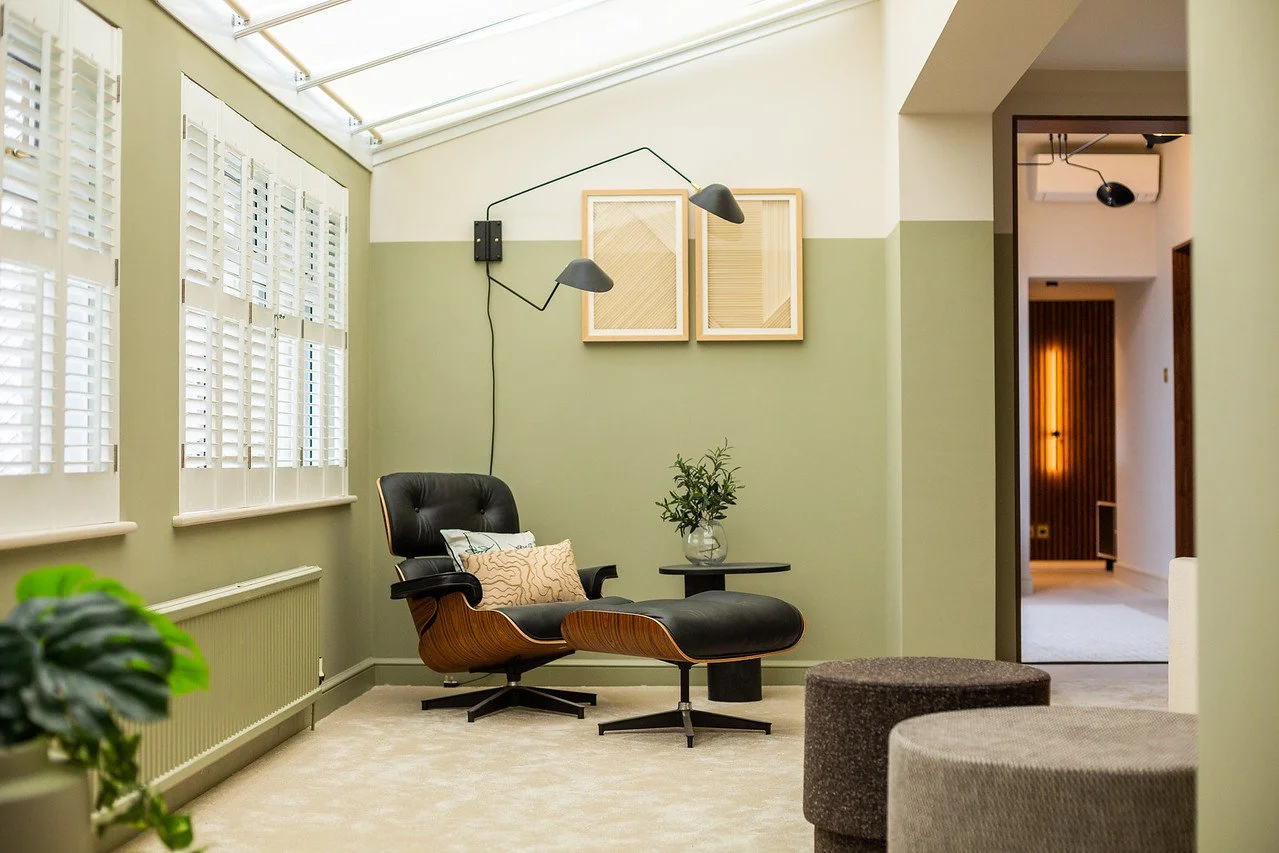
This image captures a quiet moment in the Gamlingay living room renovation near Cambridge, where every piece is chosen for proportion, comfort, and visual clarity. A classic Eames lounge chair anchors the space, paired with sculptural lighting and minimalist artwork that echo the room’s geometry. The two-tone wall treatment and natural light enhance the sense of calm, while the cylindrical stools and foliage add softness and rhythm. A refined example of how selecting the right pieces — not more pieces — creates a home that feels finished
3. Placement Finishes a Room More Than Shopping Does
Most homes don’t need more things.
They need things in the right place.
Small adjustments can transform a room:
A lamp that moves slightly can change the entire mood.
A chair angled inward can make a room feel welcoming.
A plant placed where the eye naturally lands can complete a corner.
A shelf styled with breathing room feels intentional, not cluttered.
Finishing a room is often about editing, not adding.
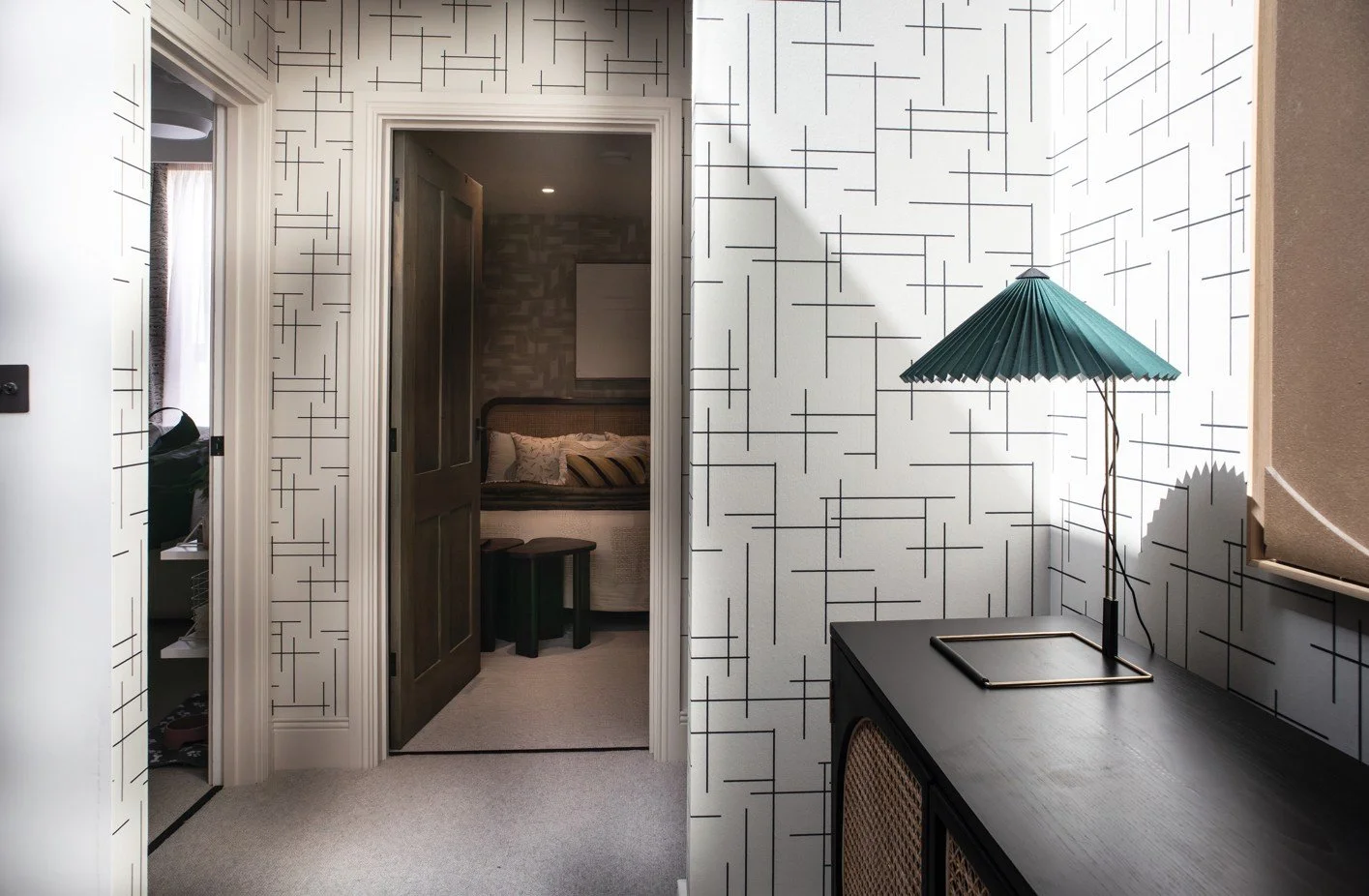
This image shows a transitional moment in the Cambridge Water Lane project — a hallway leading into the guest bedroom, where geometry, texture, and light work in quiet harmony. The black console with woven detailing anchors the space, paired with a sculptural lamp featuring a pleated green shade. Geometric wallpaper adds rhythm to the walls, while sunlight filters through a soft window blind, casting gentle shadows. Through the doorway, the guest bedroom reveals a layered composition of textured walls, green stools, and considered styling. A calm, cohesive example of how proportion and placement create a home that feels finished
4. Storage That’s Considered, Not Added
People often say, “I don’t have enough storage.”
But most homes don’t lack storage — they lack the right kind of storage.
Considered storage is:
the right height
the right depth
the right internal layout
placed in the right part of the room
proportioned to the architecture
A tall cabinet in the wrong place will always feel wrong.
A low, long sideboard in the right place can finish a room instantly.
Storage should support your life, not swallow your space.
For an example of storage that supports daily life without overwhelming the room, you can explore the bespoke joinery solutions in my recent Cambridgeshire projects.
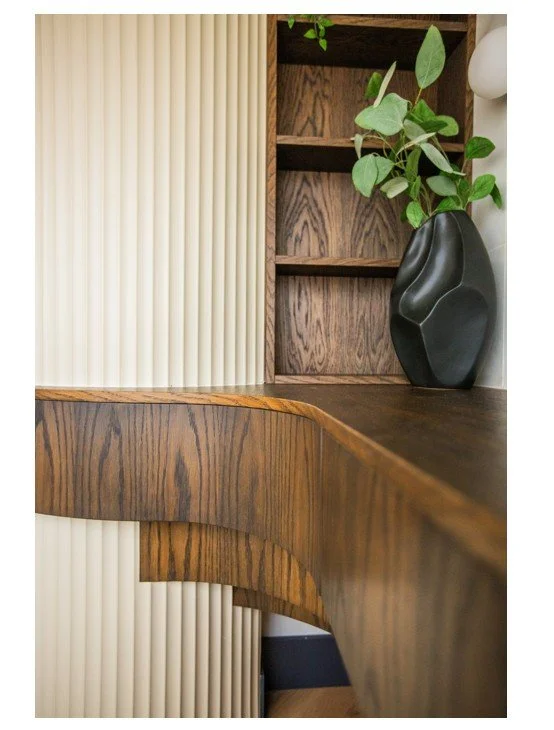
This image shows a refined corner of the Shelford Cambridge project, where texture and proportion create a calm, sculptural atmosphere. A curved wooden desk anchors the space, paired with a dark wood shelving unit and a black vase holding leafy stems. The adjacent ribbed cream panel adds contrast and rhythm, while the interplay of materials — smooth wood grain, vertical texture, and organic greenery — reflects a considered, quietly luxurious approach to interior design. A moment of stillness and clarity, shaped by the right pieces in the right place.
5. The Designer’s Way of Seeing a Room
Designers don’t look at a room as a collection of objects.
We look at it as a composition:
A finished home feels complete because everything has a purpose and a place.
It’s not about perfection.
It’s about coherence.
If you’d like to understand more about how I approach proportion, balance, and emotional clarity in interiors, you can read more about my design philosophy on the About page.
6. The Emotional Finish: When a Home Finally Feels Like You
A home feels finished when it feels like you, not a catalogue.
When the pieces support your routines.
When the lighting softens your evenings.
When the storage makes sense for your life.
When the proportions feel calm.
When the room holds you, rather than asks something of you.
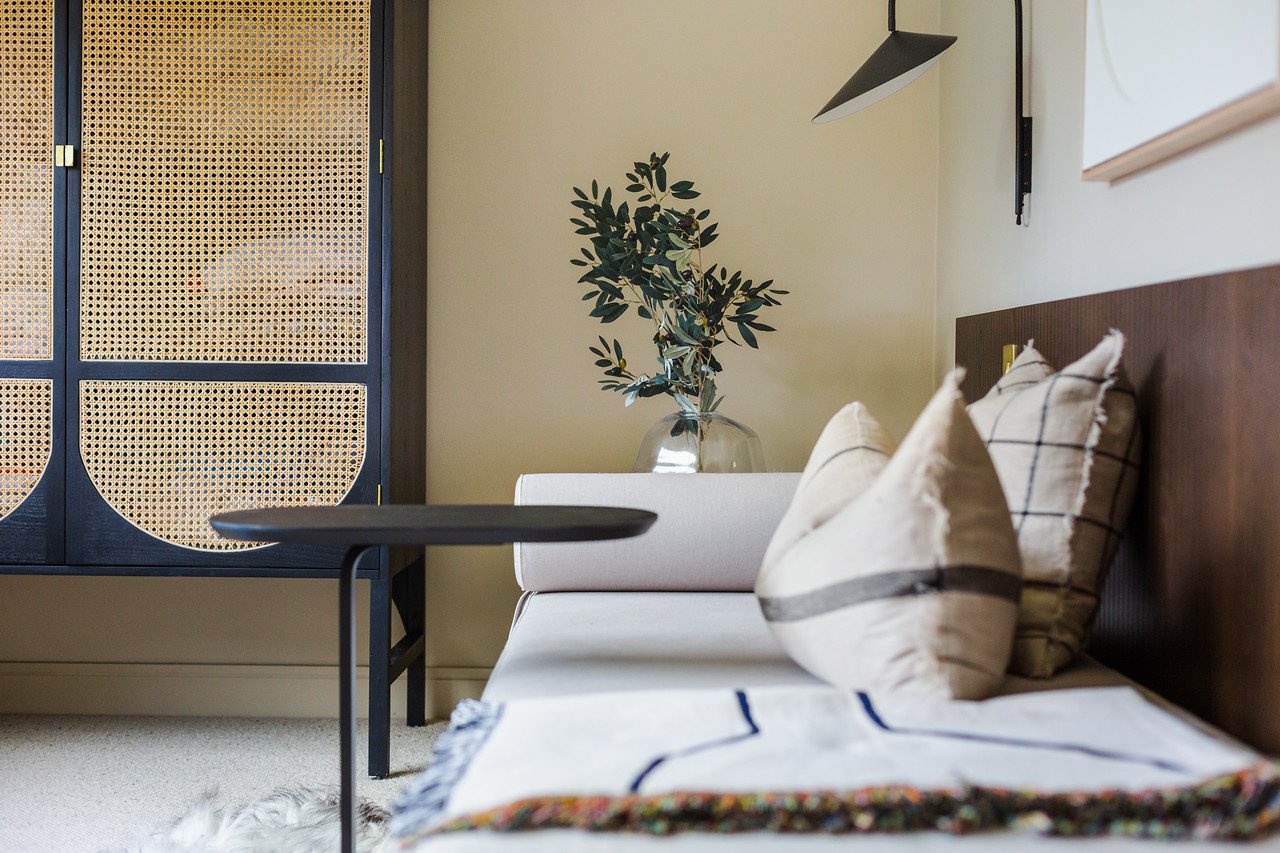
This image captures a Japandi-inspired bedroom corner from the Gamlingay renovation near Cambridge. A light-toned bench with layered neutral cushions sits beside a minimalist black side table and a sculptural wall light. Behind the seating, a large glass vase with leafy branches adds softness, while a dark wood cabinet with woven rattan doors introduces texture and rhythm. The palette is calm and cohesive, balancing modern lines with natural materials — a quiet example of how proportion, placement, and restraint create a space that feels finished and emotionally grounded
If you’re unsure how to apply this to your own home, you can explore my interior design consultation here →Interior Design Consultation – Clarity Audit
A finished home is a feeling, not a shopping list.
7. If You Want a Designer’s Eye
If you’d like a designer’s eye to help you choose the right pieces, refine proportions, or create storage that truly supports your life, I’d be glad to help. You can reach me through my Contact page — a simple, calm first step toward a home that feels finished, intentional, and unmistakably yours.
Continue Your Journey
A home rarely feels finished because of one final purchase. More often, it's the result of thoughtful decisions that work together—from colour and lighting to materials, proportion and flow. Understanding these principles helps create interiors that feel calm, balanced and designed to support everyday life.
Read Next
How to Layer Lighting Like a Designer: Creating Depth, Warmth and Atmosphere
Learn how layered lighting transforms the mood, function and character of every room.
How to Choose Colours for Your Home (Without Getting It Wrong)
Discover how a considered colour palette creates flow and cohesion throughout your home.
How to Choose Materials That Age Beautifully
Explore how timeless materials bring depth, texture and longevity to contemporary interiors.
Return to the Chapter
Renovation & Home Transformation
Explore practical guidance on planning, renovating and refining your home—from early design decisions to the finishing touches that create calm, contemporary interiors.