
🖤 Iconic Chairs: The Timeless Furniture That Shaped Modern Living
A designer’s perspective from Cambridge, Cambridgeshire, and London
1. The Chair as a Cultural Mirror
A chair is never just a chair.
A modernist interior shaped by the quiet power of early 20th‑century design — where Eileen Gray’s Bibendum Chair sits among Bauhaus forms, reminding us that iconic furniture is never just an object, but a story of innovation, resilience, and timeless beauty.
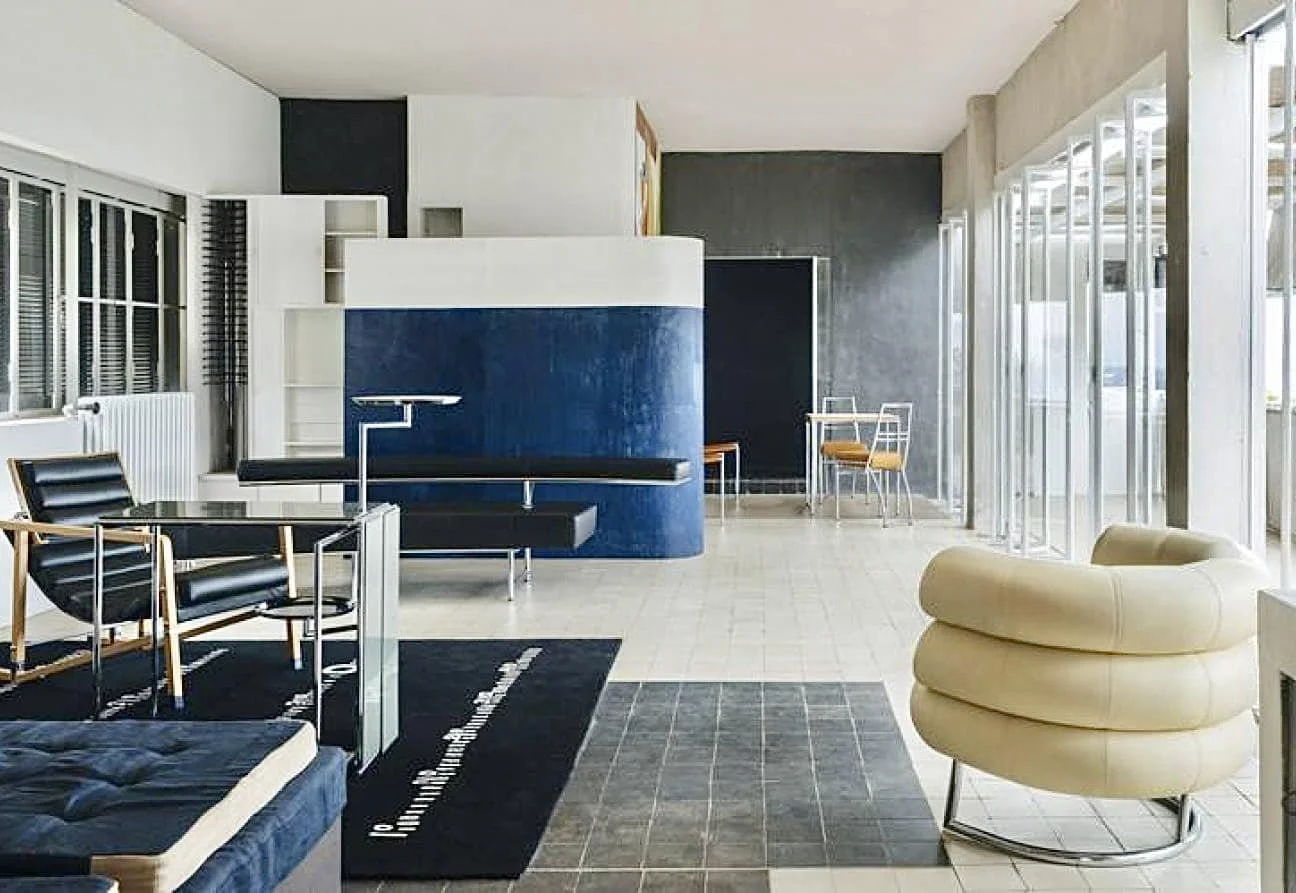
A modernist interior featuring Eileen Gray’siconic Bibendum Chair, surrounded by Bauhaus-inspired furniture and geometric accents. The space seamlessly blends sculptural forms, minimalist textures, and natural light, reflecting the timeless elegance of early modern design in a contemporary setting. Art Nouveau, Italian Liberty, Belle Epoque, Beaux Arts & Art Deco | LIVING SPACE INTERIOR of the Eileen Gray's Villa E-1027, built between 1926-1929, in Roquebrune-Cap-Martin, in the Alpes-Maritimes department of Franc... | Facebook
It is a portrait of the era that created it — a reflection of social change, material innovation, and the evolving relationship between the human body and the spaces we inhabit.
From the quiet streets of Cambridge to the architectural layers of London, iconic chairs continue to anchor contemporary homes with a sense of history, clarity, and intention. These pieces are more than functional objects; they are cultural artefacts that carry the spirit of modernism into today’s Nordic, Scandinavian, and Japandi‑inspired interiors.
2. What Makes a Piece Iconic
Iconic furniture endures because it embodies qualities that transcend trends:
Material honesty — wood that looks like wood, steel that looks like steel
Human‑centred design — comfort shaped by ergonomics, not ornament
Architectural clarity — clean lines, balanced proportions
Cultural resonance — each piece tells a story
Emotional longevity — they feel relevant decade after decade
These designs don’t fade because they were never created for a moment. They were created for a way of living.
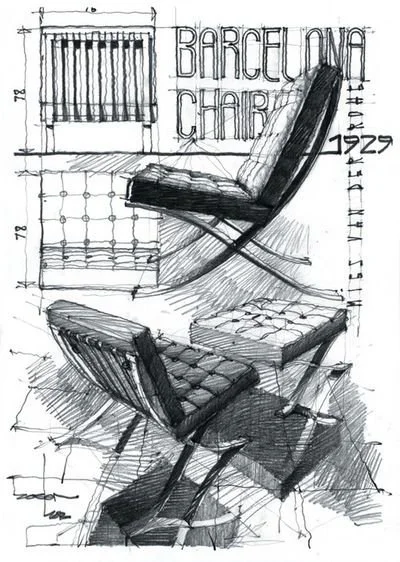
A detailed sketch of the Barcelona Chair, designed by Ludwig Mies van der Rohe and Lilly Reich in 1929. The drawing captures the chair’s sculptural geometry and minimalist elegance, blending technical precision with artistic shading — a visual homage to modernist design and its enduring influence on contemporary interiors. FastbikesandtoomuchCoffee
3. The Social Forces That Shaped Modern Furniture
The modern period was a time of profound transformation. Designers responded to:
Industrialisation, which introduced tubular steel, plywood, and new manufacturing methods
Post‑war optimism, which encouraged experimentation and democratic design
Bauhaus ideology, which united craft, architecture, and function
Shifting gender roles, which opened space for new voices
Globalisation, which spread design ideas across continents
The result was a design language that still defines contemporary interiors: simplicity, clarity, and a deep respect for the human body.
4. A Timeline of Icons — From Modernism to Now
Marcel Breuer’s Wassily Chair (1925) introduced a new visual lightness.
Inspired by bicycle handlebars, it embodied the Bauhaus belief that design should be functional, honest, and accessible.
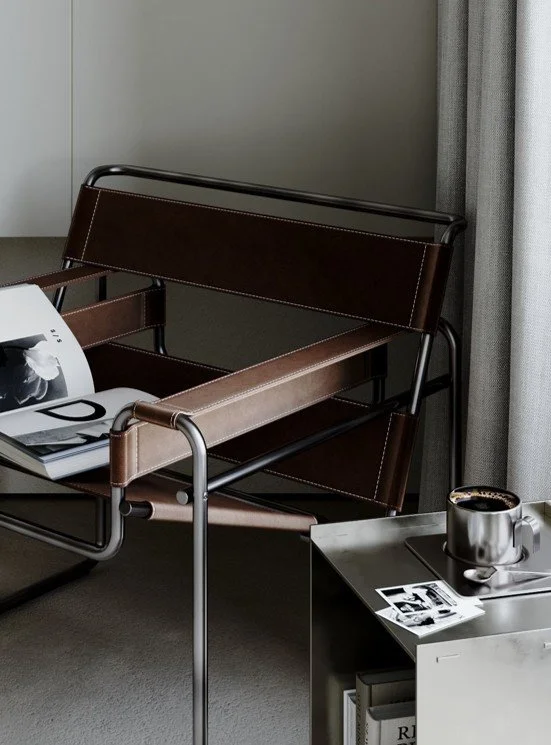
A Bauhaus-inspired lounge scene featuring Marcel Breuer’s Wassily Chair, styled with monochrome tones, geometric accents, and modernist clarity — ideal for Cambridge and London interiors. Articles | Custom Home Interiors | Modern Interior Designer
Breuer described it as:
“My most extreme work… the least artistic, the most logical, the least ‘cosy’ and the most mechanical.”
Marcel Breuer - "Wassily" Armchair - The Metropolitan Museum of Art
Le Corbusier, Charlotte Perriand & Pierre Jeanneret
The LC4 Chaise Lounge (1928) redefined relaxation.
Its adjustable form expressed a new relationship between architecture and the human body — a sculptural balance of steel, leather, and geometry.
Mies van der Rohe
The Barcelona Chair (1929) distilled luxury into pure form.
Its quiet confidence makes it a favourite in Cambridge extensions and London townhouses alike.
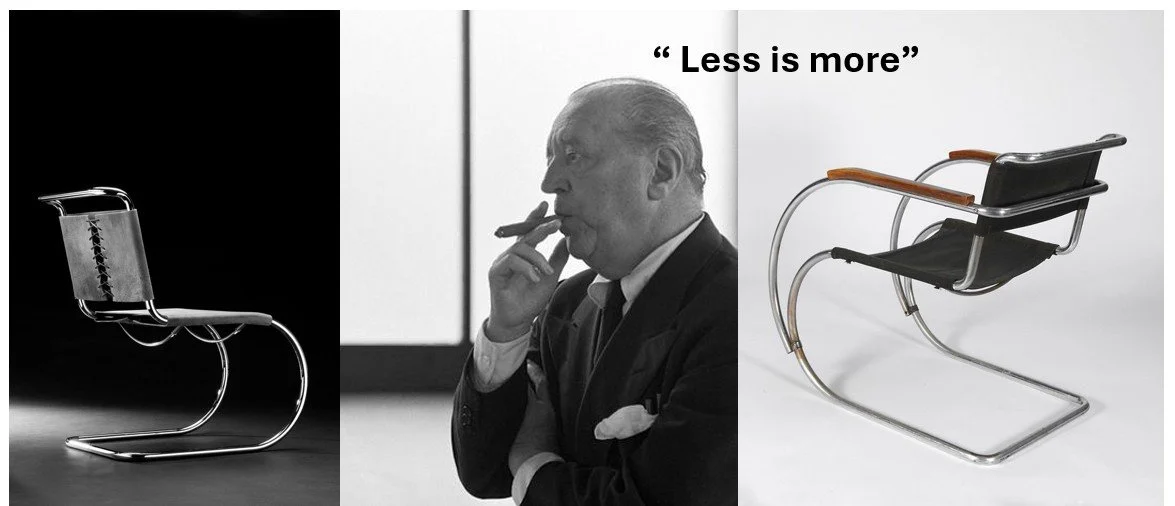
A triptych celebrating the legacy of Ludwig Mies van der Rohe, featuring two modernist chairs with cantilevered chrome frames and a central portrait of the designer beneath his iconic quote, “Less is more.” The composition reflects the minimalist philosophy that shaped 20th-century architecture and furniture design, and continues to influence contemporary interiors across Cambridge, Cambridgeshire, and London.
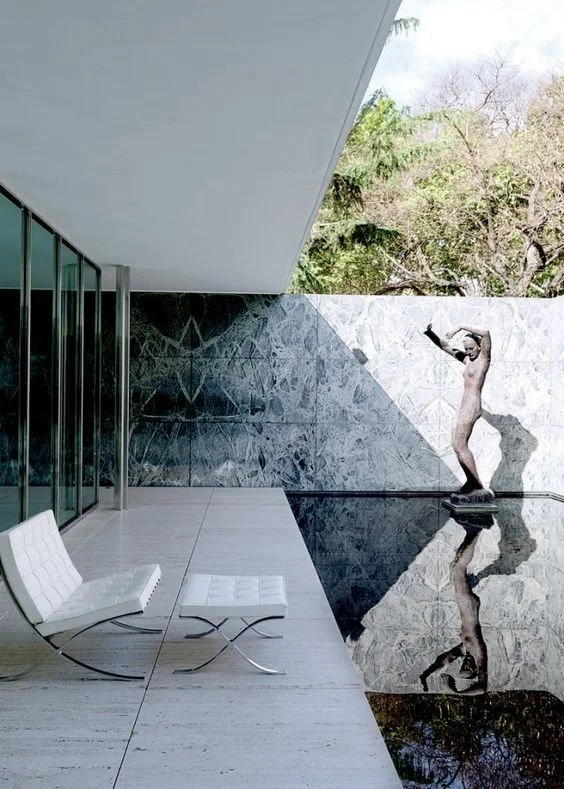
A minimalist outdoor composition inspired by the Barcelona Pavilion, featuring a sleek white modernist chair and ottoman beside a shallow reflective pool. A bronze sculpture stands at the water’s edge, mirrored in the surface, while polished stone and lush greenery frame the scene. The image captures the essence of Mies van der Rohe’s architectural clarity — where space, material, and art converge in quiet harmony. Pin on Furniture
Eileen Gray — A Woman Designing Against the Current
Eileen Gray’s work is the emotional heart of this story.
Designing in a male‑dominated era, she created furniture that was sensual, intelligent, and profoundly human.
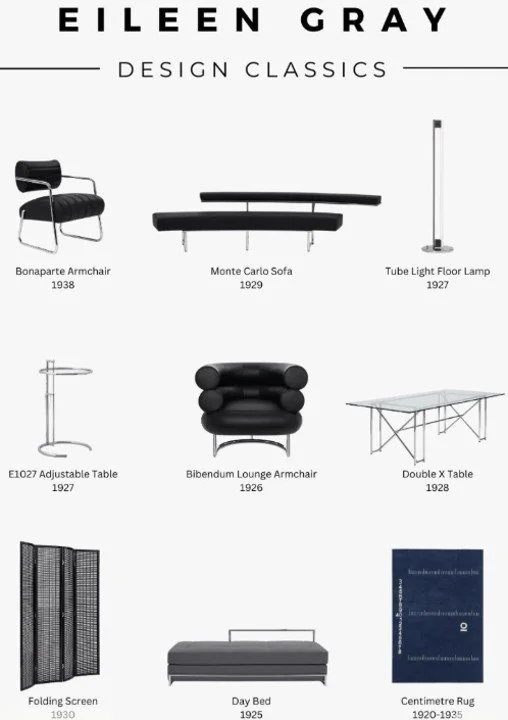
A curated visual timeline of Eileen Gray’s most iconic furniture and decor pieces, including the Bibendum Chair, E1027 Table, Monte Carlo Sofa, and Centimetre Rug. Each item is labeled with its design year, highlighting Gray’s pioneering role in modernist design and her enduring influence on contemporary interiors across Cambridge, Cambridgeshire, and London. Eileen Gray 101: The Woman Who Redefined Modern Design
Her Bibendum Chair, Transat Chair, and E‑1027 table remain some of the most sought‑after pieces in contemporary interiors.
Where her male contemporaries pursued strict geometry, Gray embraced softness, tactility, and emotional depth — a design language that resonates strongly with today’s Nordic, Scandinavian, and Japandi aesthetics.
She wasn’t just ahead of her time.
She was designing for our time.
The Eames Era
Charles and Ray Eames introduced warmth and optimism through moulded plywood and organic curves.
Their Lounge Chair remains one of the most recognisable silhouettes in design history.
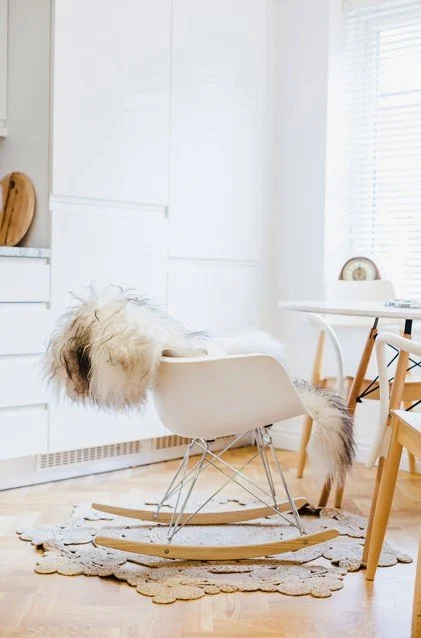
A serene kitchen interior featuring a white Eames-style rocking chair with wooden rockers and a soft fur throw, placed on a scalloped-edge floral rug. Surrounded by pale wood furniture and natural light, the scene blends modernist clarity with Nordic warmth — a quiet moment of design harmony in a contemporary Biggleswade home.
The Plastic Revolution
Verner Panton’s sculptural forms brought colour, playfulness, and experimentation to the modern home.
Contemporary Icons
Today’s designers continue the lineage with a focus on sustainability, craftsmanship, and sculptural minimalism — pieces that sit comfortably in modern, contemporary, and Nordic‑inspired interiors.
Alvar Aalto
Alvar Aalto’s approach to modernism was never rigid or mechanical — it was human, fluid, and deeply connected to nature. His furniture designs, like the sculptural lounge chair shown here, reflect a belief in emotional functionality: forms that feel intuitive, materials that breathe, and silhouettes that soften architectural space. Aalto’s organic modernism offered a counterpoint to the steel-and-glass austerity of his contemporaries, proving that modern design could be warm, tactile, and quietly radical.
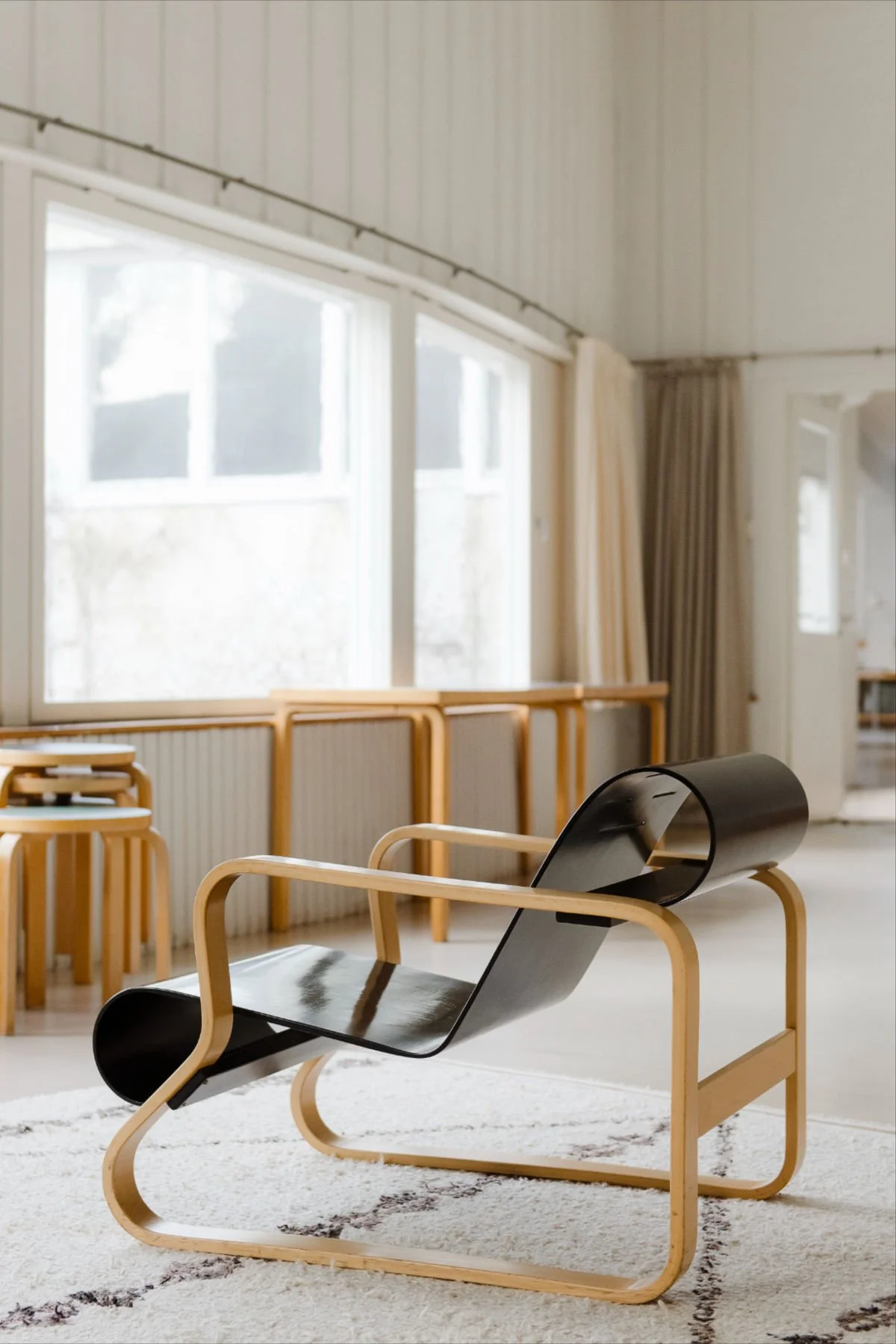
A serene Scandinavian interior featuring a sculptural lounge chair inspired by Alvar Aalto’s organic modernism. With its flowing black seat and pale wooden frame, the chair embodies Aalto’s belief in human-centred design and natural materials. The space is bathed in soft light, framed by nested tables, pale textiles, and architectural calm — a quiet tribute to Nordic clarity and emotional functionality. (256) Pinterest
5. Why These Pieces Are Still Desirable Today
These designs have survived wars, cultural shifts, and countless trends.
They remain desirable because:
They are timeless
They are architectural
They work in modern, contemporary, Nordic, Scandinavian, and Japandi interiors
They carry cultural and emotional weight
They feel personal, not performative
They are not relics. They are living objects.
6. Iconic Furniture as an Investment
Beyond aesthetics, iconic furniture is a genuine investment — financially, culturally, and emotionally.
These pieces:
Hold or increase their value
Are collected globally
Are instantly recognisable
They are built to last
Become heirlooms
Many of my clients across Cambridge, Cambridgeshire villages, and London already understand this.
They request these pieces not as status symbols, but as long‑term companions — objects that grow with them, move with them, and quietly define their homes.
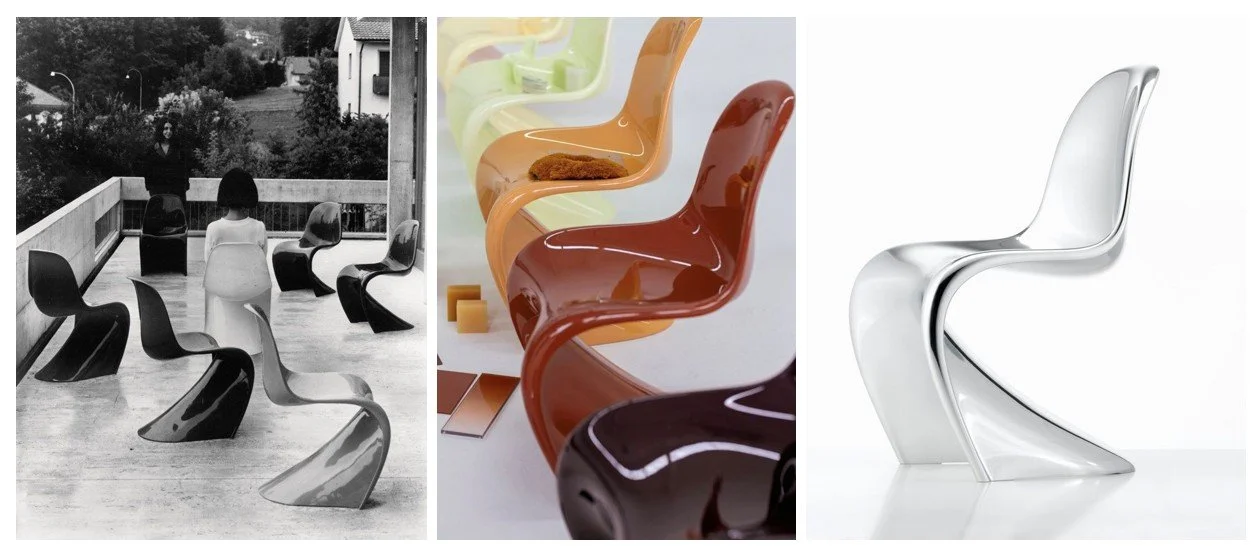
A triptych showcasing the evolution of Verner Panton’s iconic chair design. From black-and-white terrace scenes to vibrant studio colourways and a sleek metallic finish, the images highlight the chair’s sculptural fluidity, material innovation, and enduring relevance in modern and contemporary interiors across Cambridge, Cambridgeshire, and London. (256) Pinterest
7. How These Pieces Live in Cambridge, Cambridgeshire, and London Homes
In my projects, iconic furniture becomes a bridge between architecture and lifestyle.
A Barcelona Chair softens a Victorian bay window in Cambridge
A Wishbone Chair brings warmth to a Cambridgeshire kitchen extension
An Eileen Gray E‑1027 table adds quiet elegance to a London townhouse reading nook
A Panton Chair becomes a sculptural moment in a contemporary open‑plan space
These combinations feel effortless because the designs themselves are timeless.
8. My Passion for Furniture in My Projects
Furniture is never an afterthought in my work.
It is the emotional punctuation of a room — the moment where architecture meets the human body.
I choose pieces that speak.
Pieces that carry history.
Pieces that bring clarity, calm, and intention to a space.
This is the foundation of my approach as a modern and contemporary interior designer in Cambridge and Cambridgeshire, where a balance of beauty, practicality, and emotional resonance shapes every project. You can explore my interior design services to learn more.
If you’d like to learn more about my design philosophy and the values that shape my work, you can visit my About page.
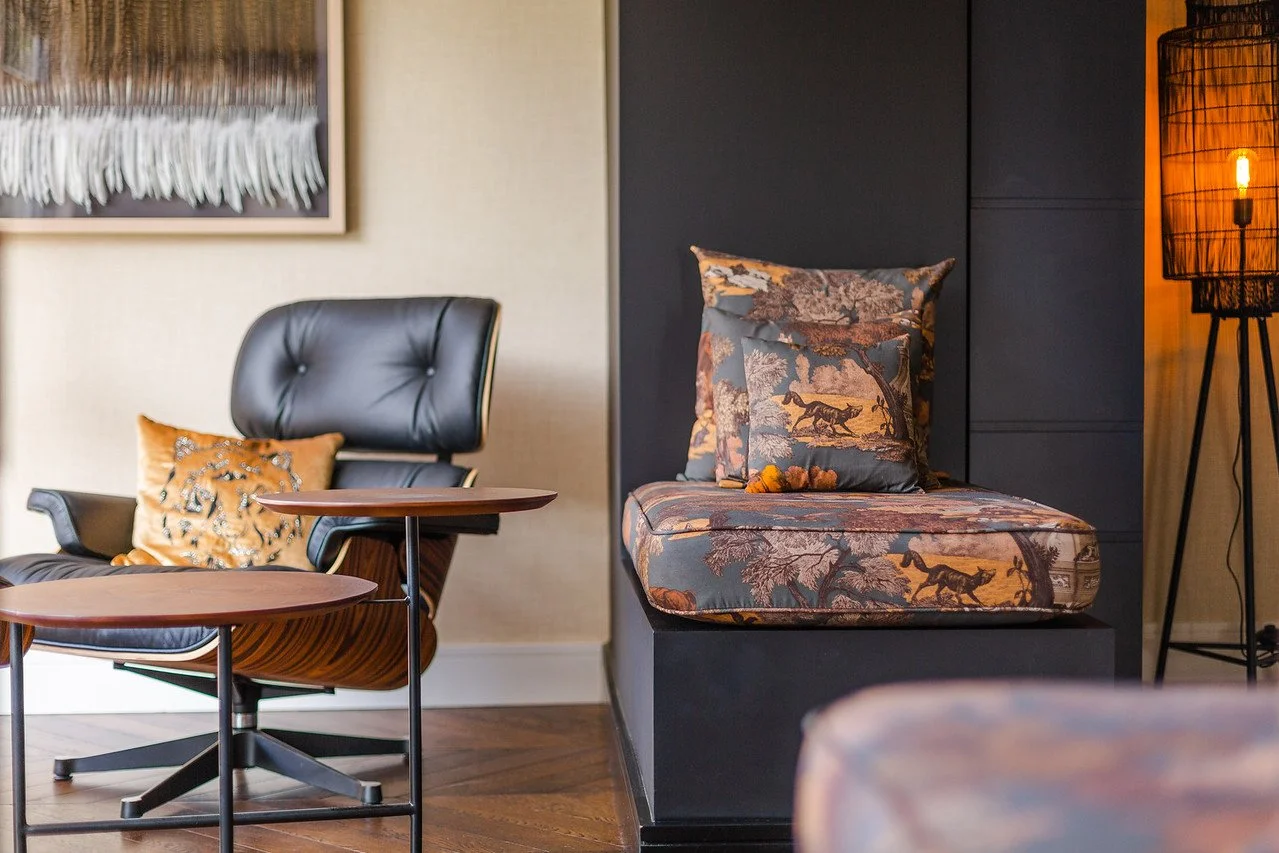
A layered interior composition featuring a black leather lounge chair with a floral embroidered cushion, paired with twin wooden side tables and a built-in bench upholstered in scenic horse-and-tree textiles. The herringbone floor, abstract artwork, and warm lighting create a space that feels both curated and lived-in — a quiet celebration of texture, storytelling, and modernist comfort in a Gamlingay home.
9. Closing — The Quiet Power of Choosing Well
Iconic furniture endures because it was never designed for a trend.
It was designed for life.
In a world of fast interiors and disposable objects, these pieces remind us that craftsmanship, clarity, and cultural depth still matter — and always will.
These iconic chairs remind us that great design is never just functional — it’s emotional, cultural, and deeply human. In my own projects across Cambridge and beyond, I draw on these principles to create interiors that feel timeless, personal, and quietly powerful.
If this article has sparked ideas for your own home — whether you’re drawn to modern classics, Nordic calm, or a more contemporary expression — I’d be delighted to explore them with you. You can begin the process by visiting my contact page.
Continue Your Journey
The history of design is told not only through architecture and movements, but through the objects that quietly transformed everyday life. Iconic furniture reveals how craftsmanship, innovation and thoughtful design continue to influence contemporary interiors.
Read Next
Marcel Breuer — Rethinking Furniture Through Modern Materials
Discover how Breuer's revolutionary approach transformed furniture design and helped define modern living.
Bauhaus: The Design Movement That Changed Modern Living
Explore how Bauhaus principles continue to influence contemporary architecture, furniture and interiors.
Alvar Aalto — Designing for Everyday Life
Learn how Aalto's human-centred approach to furniture and architecture created timeless interiors that remain relevant today.
Return to the Chapter
🖤 Design History & Icons
Explore the designers, movements and iconic pieces that continue to shape contemporary interior design.