
Interior Design Ideas for Calm and Quiet Living Spaces
Calm and quiet living spaces are becoming increasingly important in contemporary interior design, especially in homes designed for rest, focus, and emotional balance. Through soft lighting, natural materials, thoughtful layouts, and reduced visual clutter, interior design can help create environments that feel grounded, restorative, and easier to live in every day.
Explore Related Guides
In the gentle hush of a thoughtfully designed room — where soft light settles, textures soothe the senses, and nothing feels rushed or overwhelming — the needs of introverts are not simply considered, they are honoured. As the world grows louder and more visually crowded, the desire for calm, emotionally grounding interiors has become a quiet form of resistance. A way of reclaiming space. A way of returning to ourselves.
Designing for Introverts: Calm Spaces for Quiet Souls explores this shift with sensitivity and intention. It looks at how interiors can support those who move through life with depth, reflection, and a need for sanctuary.
Across Cambridge, the Cambridgeshire villages, and London, the language of calm living is becoming increasingly important. People are searching for homes that feel gentle, restorative, and easy to inhabit — spaces that offer emotional clarity in a world that rarely slows down.
This article is a personal reflection on interiors that honour stillness, sensitivity, and the beauty of retreat.
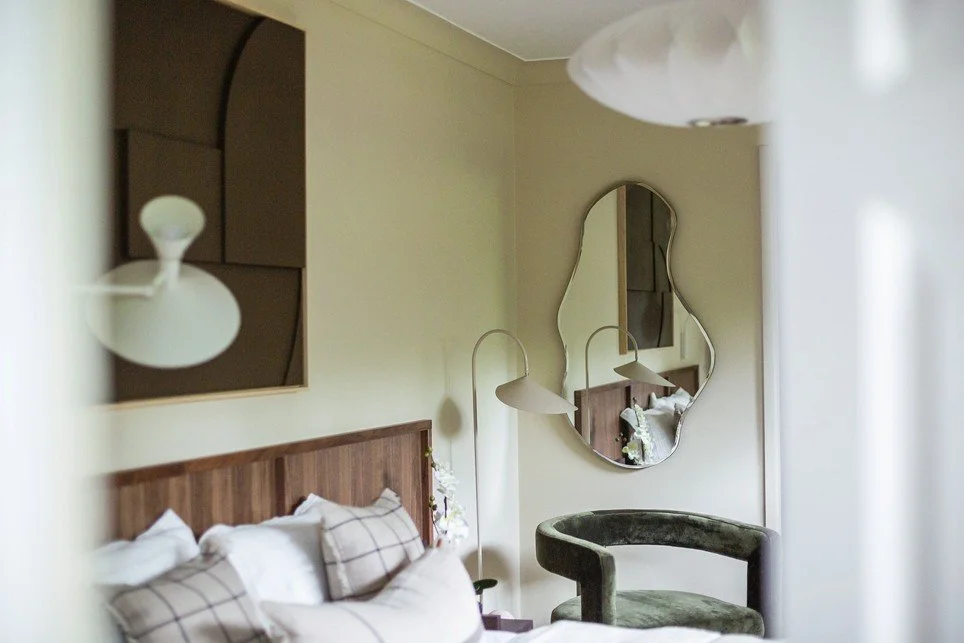
A calm, contemporary guest bedroom from the Gamlingay project, designed to feel quietly welcoming. The soft neutral palette, warm wood headboard, and tactile textiles create a sense of emotional ease. A green velvet chair adds a gentle contrast, while the irregular mirror and geometric wall art introduce subtle visual rhythm. This space reflects the project’s wider ethos: interiors that soothe, support, and never overwhelm.
The Quiet Radicalism of Introverted Design
There is a particular strength in choosing calm. Designing for introverts is not about withdrawing from the world — it’s about creating interiors that help people return to themselves. In a culture that celebrates noise, speed, and constant visibility, stillness becomes quietly radical. It’s a form of self‑respect. A way of saying: my inner world matters too.
Introvert‑friendly interiors are not defined by a single style. They are defined by how they make you feel: grounded, unhurried, gently held. These are homes that soften the edges of daily life — spaces that offer room to breathe, think, and simply be.
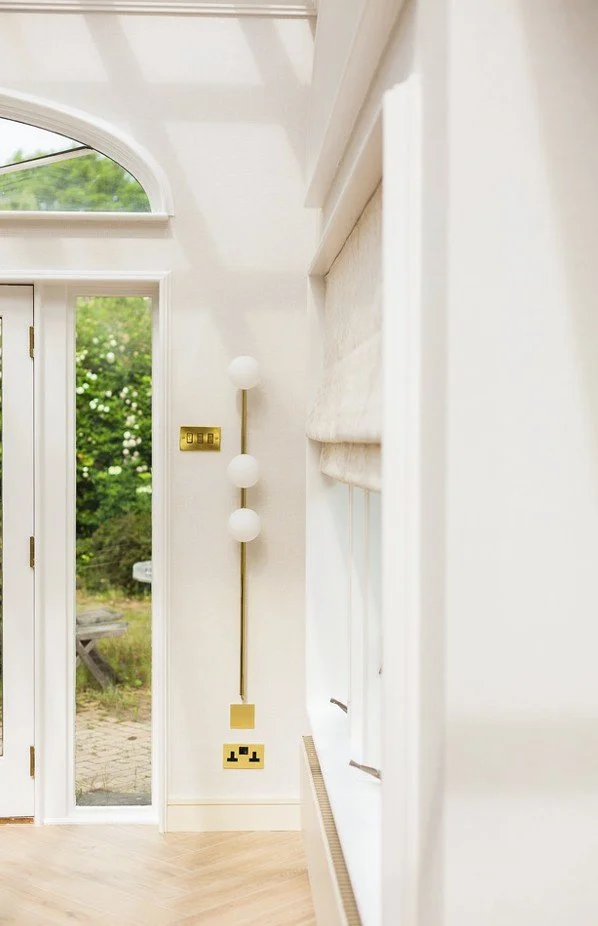
A quiet moment from the Gamlingay dining room, where natural textures and soft geometry meet. The brass wall light adds warmth and rhythm, echoed by the matching switch and outlet below. Pale herringbone flooring and white walls create a sense of calm, while the Roman shade filters daylight from the garden beyond. This detail reflects the project’s wider ethos: interiors that feel grounded, elegant, and emotionally clear — a dining space designed for quiet connection and visual ease.
1. Soft Boundaries and Gentle Transitions
Introverts often move through the world with heightened sensitivity to sound, light, texture, and emotional atmosphere. Homes that honour this sensitivity rely on soft boundaries rather than abrupt shifts.
• layered curtains instead of hard blinds
• warm pools of light instead of overhead glare - an approach I often explore in my guidance on → (layered lighting design)
• zoning through rugs, flooring changes, or furniture placement
• colour gradients that move from warm neutrals to deeper grounding tones
These transitions create a sense of flow — a home that guides you rather than overwhelms you. In Cambridge townhouses and London flats, where rooms often shift quickly from one function to another, these gentle cues become essential.
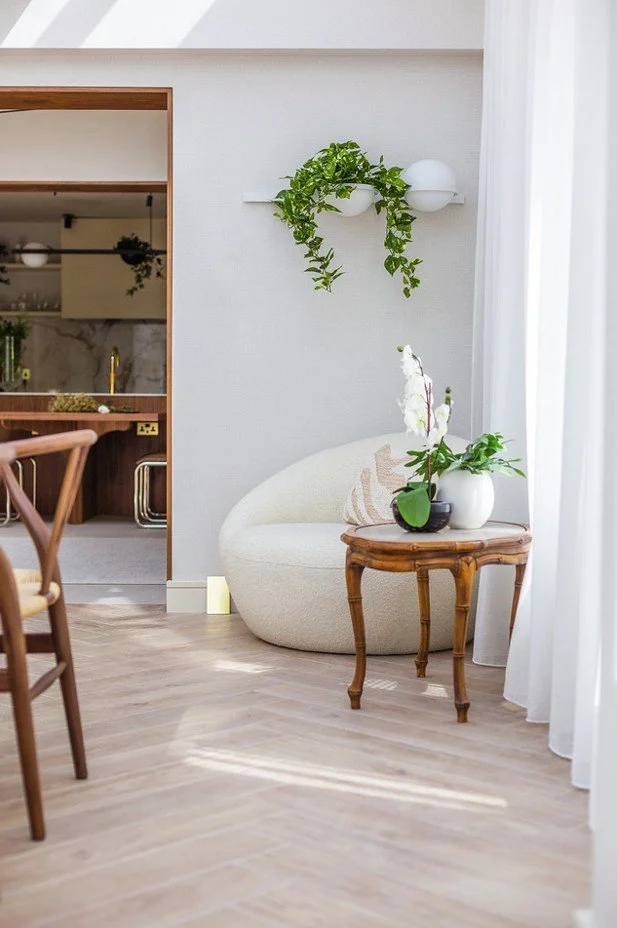
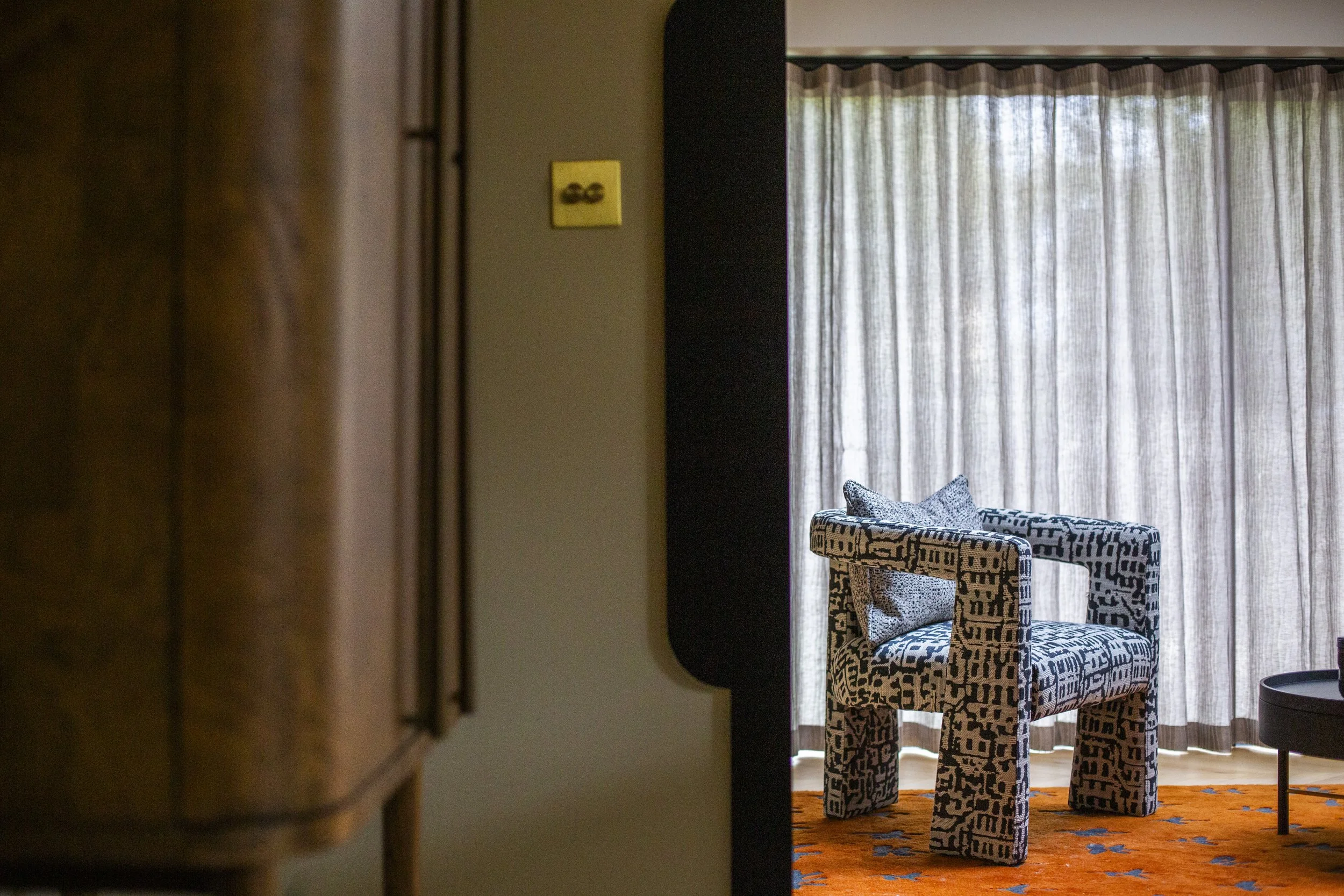
A quiet corner of the Gamlingay dining room, designed as a soft retreat within the home. The curved white chair and wooden side table offer tactile comfort, while trailing greenery and sheer curtains bring nature and light into the space. This detail reflects the project’s introvert‑friendly ethos: interiors shaped for rest, reflection, and emotional ease — where minimalism feels warm, and every element supports quiet living.
2. Textures That Comfort, Not Overwhelm
Texture is emotional.
For introverts, it can be deeply grounding — but only when curated with intention.
Think of:
• wool throws that feel like an exhale
• matte ceramics that invite touch
• limewashed walls that soften light - the kinds of tactile choices I often highlight in my notes on → [ materials in interior design]
• natural oak, ash, or walnut that warm the room without shouting
• soft rugs that quieten footsteps and improve acoustic comfort
This is texture as a form of care, not decoration. In Cambridgeshire cottages, where natural materials already carry history, these tactile layers deepen the sense of home.
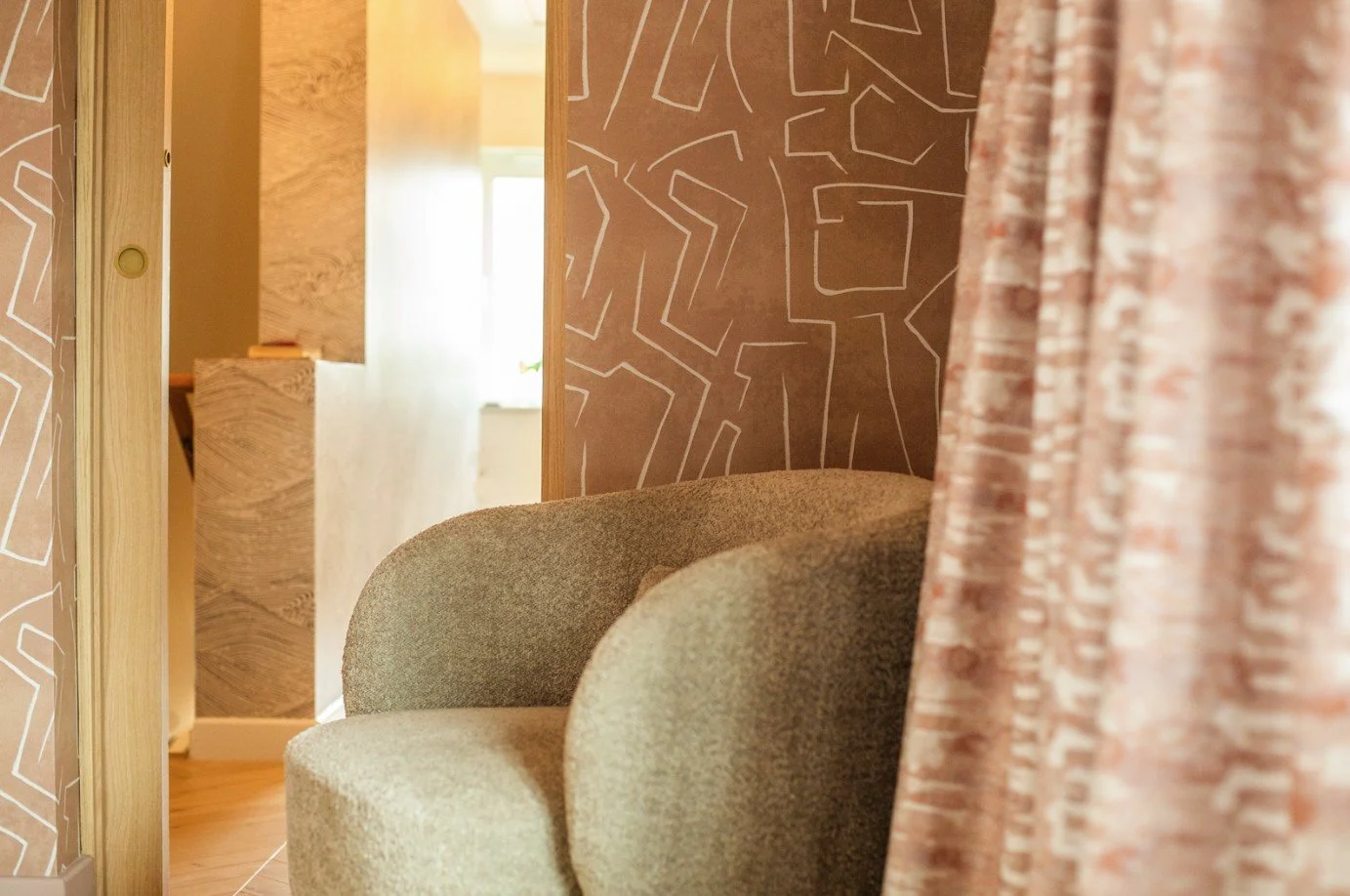
A softly textured seating corner in the Shelford master bedroom, designed for quiet retreat and emotional ease. The rounded armchair and plush rug create a tactile sense of comfort, while the patterned curtain and geometric wall detail add gentle rhythm. This space reflects the project’s introvert‑friendly ethos — interiors that feel warm, grounded, and quietly personal.
3. Light That Supports the Nervous System
Light shapes how we feel. For introverts, it needs to be warm, responsive, and forgiving.
• dimmable lamps for evening calm
• pockets of shadow for rest
• sheer fabrics that diffuse daylight
• task lighting that focuses without intensity
• concealed LED strips that create a soft, indirect glow
Light becomes a tool for emotional regulation — guiding the shift from alertness to calm — and aligns closely with the principles I share in → [creating warm, calm lighting schemes]. In smaller London apartments, layered lighting can transform even compact rooms into gentle sanctuaries.
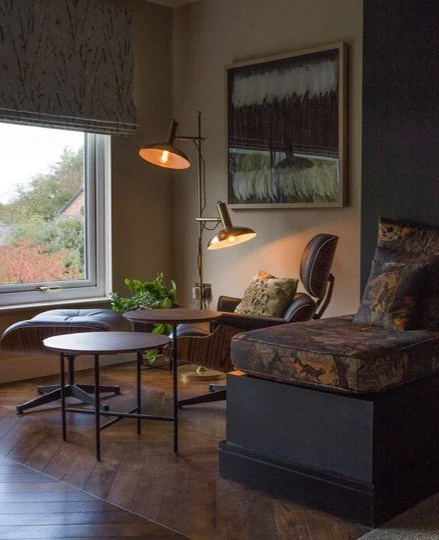
A calm reading nook from the Gamlingay project, designed for quiet focus and emotional ease. The layered textures — soft upholstery, nature-inspired fabric, and warm wood — create a tactile sense of comfort. A brass floor lamp offers gentle, adjustable light, while the garden-facing Roman shade filters daylight with softness. This space reflects the project’s introvert-friendly ethos: interiors that support solitude, thoughtfulness, and the beauty of retreat.
4. Spaces for Solitude and Deep Focus
Every introvert needs a place where the world falls away.
It might be:
• a reading nook tucked into a corner, a window seat overlooking the garden, or a lounge chair that becomes a personal retreat — especially when paired with pieces like those in my exploration of → [iconic chairs articles] → can transform even the smallest home into a sanctuary.
• a window seat overlooking the garden
• a small desk with a view of the sky
• a lounge chair that becomes a personal retreat
These micro‑spaces don’t need to be large. They simply need to feel like they belong to you. In Cambridge homes, where bay windows and alcoves are common, these become natural pockets of solitude.
A quiet snug just off the kitchen-dining space in the Shelford project, designed as a gentle pause point between rooms. The textured armchair and soft rug create a cocooning sense of comfort, while the patterned curtain and geometric wall detail add subtle rhythm. Natural light from the garden window softens the space, making it an inviting spot for morning coffee, reflection, or simply stepping away from the busier heart of the home.
5. Nature as a Quiet Companion
Introverts often draw energy from the natural world.
Bringing nature indoors creates a sense of companionship without social demand.
• plants that soften the air
• natural stone, clay, and timber that age gracefully
• views that frame trees, sky, or shifting light
• earthy palettes, natural textures, and views that frame trees or sky echo the principles of → [well-being, biophilic design in the home] → bringing a sense of quiet companionship indoors.
Nature becomes a silent collaborator in the design. Biophilic design is not a trend — it’s a grounding force, especially in urban London interiors where greenery becomes a form of emotional balance.
6. Emotional Clarity Through Minimalism (But Not Emptiness)
Introvert‑friendly minimalism isn’t about starkness.
It’s about removing visual noise so the mind can rest.
• fewer, better objects
• meaningful pieces with emotional resonance
• built‑in storage that hides the chaos of daily life
• surfaces that feel open, not empty
This is minimalism as emotional clarity, not aesthetic purity. In compact Cambridge terraces, this clarity becomes essential for creating calm.
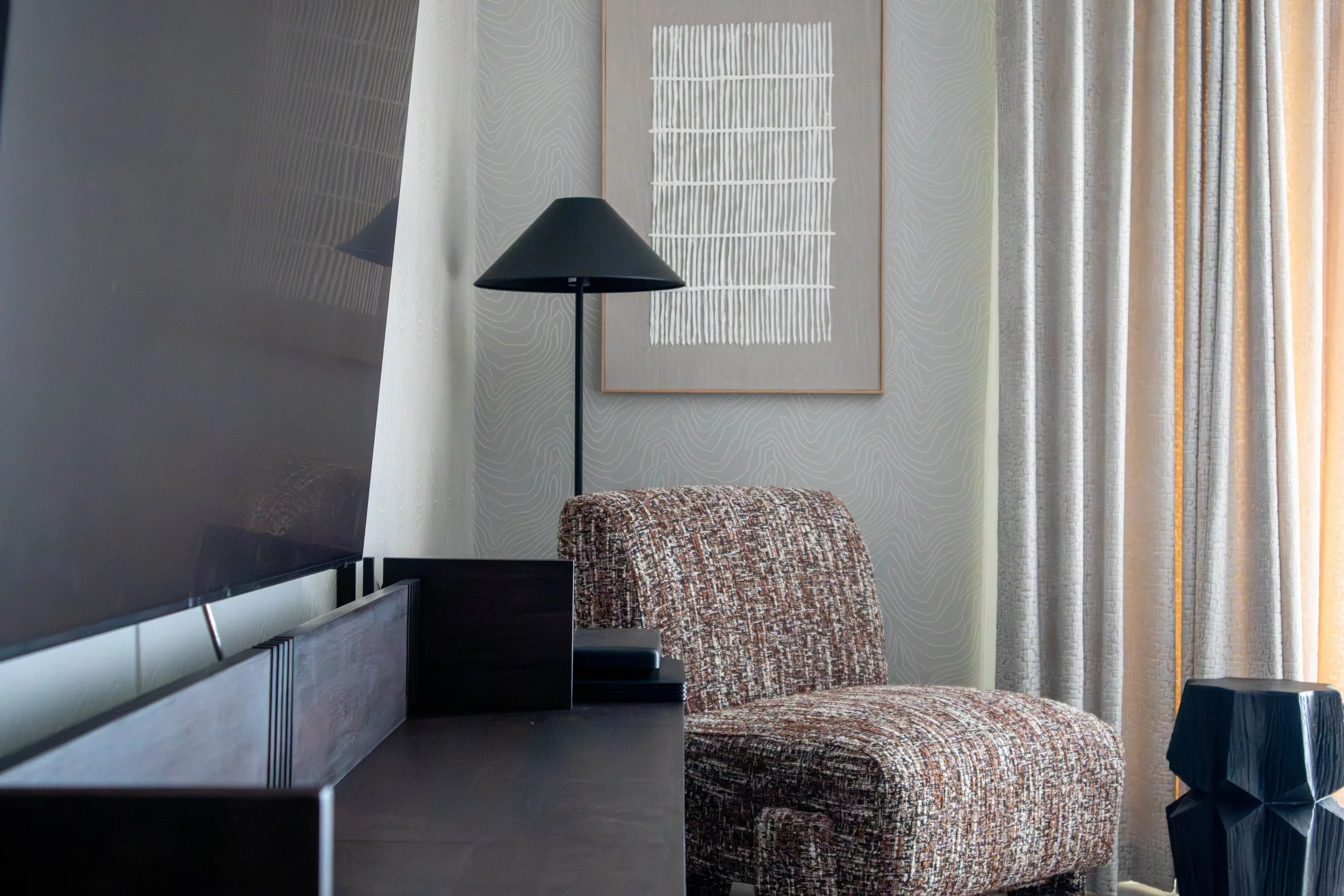
A quiet seating corner in the Cambridge Water Lane living room, designed for comfort, clarity, and visual softness. The textured armchair and sculptural side table offer tactile interest, while the abstract artwork and wavy wallpaper add subtle rhythm. A black floor lamp provides warm, adjustable light, and soft curtains filter natural daylight from the garden. This space reflects the project’s introvert‑friendly ethos — interiors shaped for rest, reflection, and emotional ease
7. A Home That Allows You to Retreat — and Return
For introverts, home is not just a backdrop.
It’s a refuge, a creative studio, a place to recharge before stepping back into the world.
Designing for introverts means designing for quiet mornings, slow evenings, and emotional safety — ideas that sit beautifully alongside my thoughts on → [slow living and interior design] .
• quiet mornings
• slow evenings
• deep thinking
• emotional safety
• the beauty of solitude
It’s a way of honouring the inner life — the part of us that is often unseen but always essential.
A Personal Note
As an introverted designer, I’m drawn to spaces that feel gentle, grounding, and emotionally intelligent. In my projects across Cambridge, the Cambridgeshire villages, and London, I design homes that support the quiet moments as much as the lively ones — spaces where sensitivity is not a weakness but a strength.
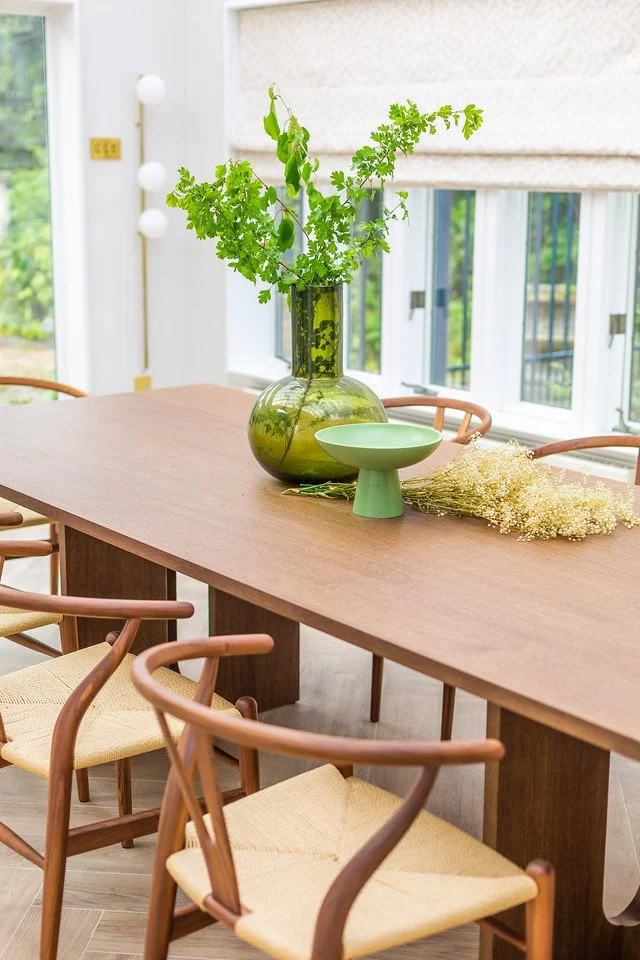
A calm, garden-facing dining room from the Gamlingay project, designed with natural textures and emotional clarity in mind. The wooden table and woven chairs offer tactile warmth, while the green glass vase and dried flowers echo the palette of the garden beyond. Large windows flood the space with soft daylight, creating a gentle transition between indoors and out. This room reflects the project’s introvert-friendly ethos — interiors shaped for quiet connection, visual ease, and the grounding presence of nature.
Calm is not the absence of life.
Calm is the space where life can finally be felt
In the end, designing for introverts is an act of gentleness — a way of shaping space so it listens as much as it speaks. These homes don’t demand attention. They don’t perform. They simply hold you, quietly and consistently, through the shifting rhythms of daily life.
Whether in a Cambridge townhouse, a Cambridgeshire cottage, or a London flat, the most meaningful interiors are the ones that let us retreat, restore, and return to the world with a steadier heart.
Continue Your Journey
Calm interiors are never the result of one design decision. They emerge from the careful relationship between space, light, materials and the way we live. Exploring these principles helps create homes that feel both peaceful and deeply personal.
Read Next
How to Make Your Home Feel Finished (Without Buying More)
Discover how thoughtful design decisions create interiors that feel calm, cohesive and complete.
Balanced & Well-Proportioned Spaces
Learn why proportion and spatial balance are essential for creating homes that feel comfortable and effortless.
Quiet Luxury: The Beauty of Understated Interior Design
Explore why timeless materials, craftsmanship and thoughtful restraint create interiors that feel elegant without excess.
Return to the Chapter
Interior Design Styles & Ideas
Explore different design philosophies, timeless styles and thoughtful approaches that shape calm, contemporary interiors.