
Japandi Interior Design Ideas for Calm Contemporary Living
Japandi interior design combines Japanese minimalism with Nordic warmth to create calm, functional spaces designed for contemporary living. Through natural materials, muted colour palettes, thoughtful craftsmanship, and balanced spatial design, Japandi interiors bring simplicity, comfort, and a quieter approach to modern home design.
Japandi design sits at the intersection of Japanese simplicity and Scandinavian warmth. If you're interested in how these influences can work alongside contemporary interiors, you may also enjoy our guide to mixing Scandinavian, Nordic and Japanese interior design styles.
How to Mix Scandinavian, Nordic and Japanese Interior Design Styles
Japandi design resonates deeply with homeowners seeking calm, clarity, and craftsmanship. As a Cambridge interior designerworking across Cambridgeshire villages, I see how this aesthetic aligns beautifully with the region’s gentle landscapes and quiet architectural character.
In a world that moves quickly and speaks loudly, Japandi design offers a different rhythm — one shaped by quiet clarity, natural materials, and a deep respect for the spaces we inhabit. It’s a style that merges Japanese minimalism with Nordic warmth, creating interiors that feel both intentional and deeply comforting. Across Cambridgeshire villages and rural homes, this aesthetic resonates with a growing desire for calm, simplicity, and craftsmanship. In the Gamlingay renovation, these principles come to life through soft textures, sculptural lighting, and rooms that breathe.
Japandi is more than a trend; it’s a philosophy of living. It invites us to slow down, to choose objects with care, and to create homes that feel grounded and emotionally spacious. It’s a style that honours the beauty of restraint while celebrating the tactile richness of natural materials — a balance that feels especially at home in the gentle landscapes of Cambridgeshire.
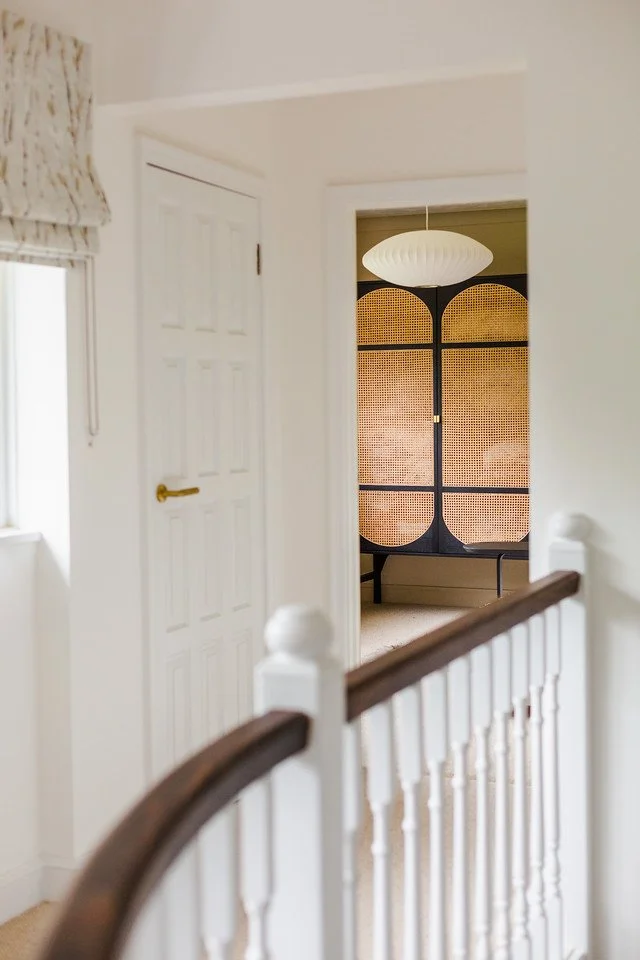
Hallway detail from the Japandi renovation in Gamlingay. A quiet composition of rattan, sculptural lighting, and minimalist architecture — blending Japanese restraint with Nordic warmth.
What Japandi Really Means
At its heart, Japandi is a dialogue between two cultures that value simplicity, craftsmanship, and connection to nature. Japanese design brings Kanso — simplicity without austerity — and Ma, the intentional use of space and pause. It embraces the imperfect, the handmade, the quietly beautiful. Scandinavian design contributes warmth, comfort, and the idea that beauty should be lived with, not admired from afar. Together, they create interiors that are minimal but never cold, refined but never precious.
This fusion is what makes Japandi so compelling: it offers clarity without sterility, warmth without clutter, and a sense of harmony that feels timeless.
The Core Principles of Japandi Design
Japandi interiors are shaped by a few guiding ideas that work together to create a sense of balance:
Simplicity with soul — Rooms are pared back, but never empty. Every object has purpose, presence, and a quiet beauty.
Warm minimalism — Clean lines meet soft textures, creating spaces that feel both structured and inviting.
Functional beauty — Furniture is practical, comfortable, and designed to last.
Connection to nature — Organic forms, natural light, and raw textures bring the outside in.
These principles form the backbone of Japandi design — and they translate beautifully into real homes.
The Japandi Colour Palette
Japandi colour stories are quiet, layered, and deeply soothing. They draw from nature rather than trend cycles: warm whites, soft beiges, muted browns, gentle greens, and the occasional charcoal or black for grounding. These tones create a sense of calm that works beautifully in bedrooms, living spaces, and open‑plan homes.
In the Gamlingay renovation, the palette leans into warm neutrals and natural wood, creating rooms that feel restful and timeless. The colours don’t shout; they whisper.
Materials and Textures That Define the Style
Japandi is a tactile experience. It’s the warmth of timber, the softness of linen, the honesty of clay, and the quiet geometry of woven fibres. These materials bring depth without visual noise, allowing the room to feel layered but never cluttered.
Rattan headboards, sculptural wooden side tables, pleated lampshades, and textured wallpapers all play a role in shaping the mood. Each material adds a different note — some warm, some cool, some smooth, some raw — creating a balanced composition that feels effortless.
Furniture and Styling in Japandi Interiors
Japandi furniture is low, grounded, and beautifully simple. Pieces are chosen for their form, function, and craftsmanship. You’ll often see:
• clean, linear silhouettes
• sculptural lighting
• handcrafted ceramics
• woven baskets
• natural fabrics
• minimal but meaningful decor
Styling is intentional. Surfaces aren’t crowded; they’re curated. Negative space becomes part of the design, giving the eye room to rest.
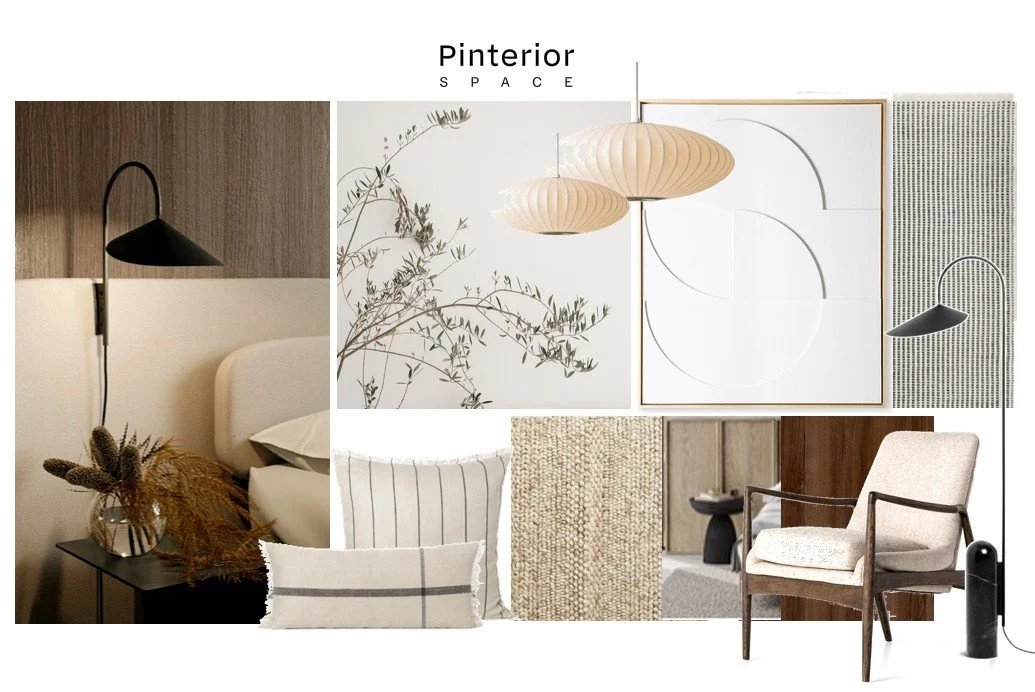
Concept board for the Japandi guest bedroom in Gamlingay. A layered study in materials and texture — blending sculptural lighting, natural fibres, and muted tones to create a calm, tactile interior
Japandi in Real Homes: The Gamlingay Renovation
The Gamlingay renovation offers a quiet, authentic expression of Japandi principles. In the guest bedrooms, natural textures and sculptural forms create spaces that feel both grounded and serene. Rattan headboards bring warmth, while pleated lamps cast soft, atmospheric light. Muted palettes and tactile materials shape rooms that feel restorative — places where guests can slow down, breathe, and feel held by the space.
Concept boards for these rooms explore the interplay of timber, woven fibres, abstract art, and gentle contrasts. Each board becomes a study in balance: Japanese restraint meeting Nordic tactility, simplicity meeting comfort, minimalism meeting warmth.
These rooms aren’t styled for show; they’re designed for living.
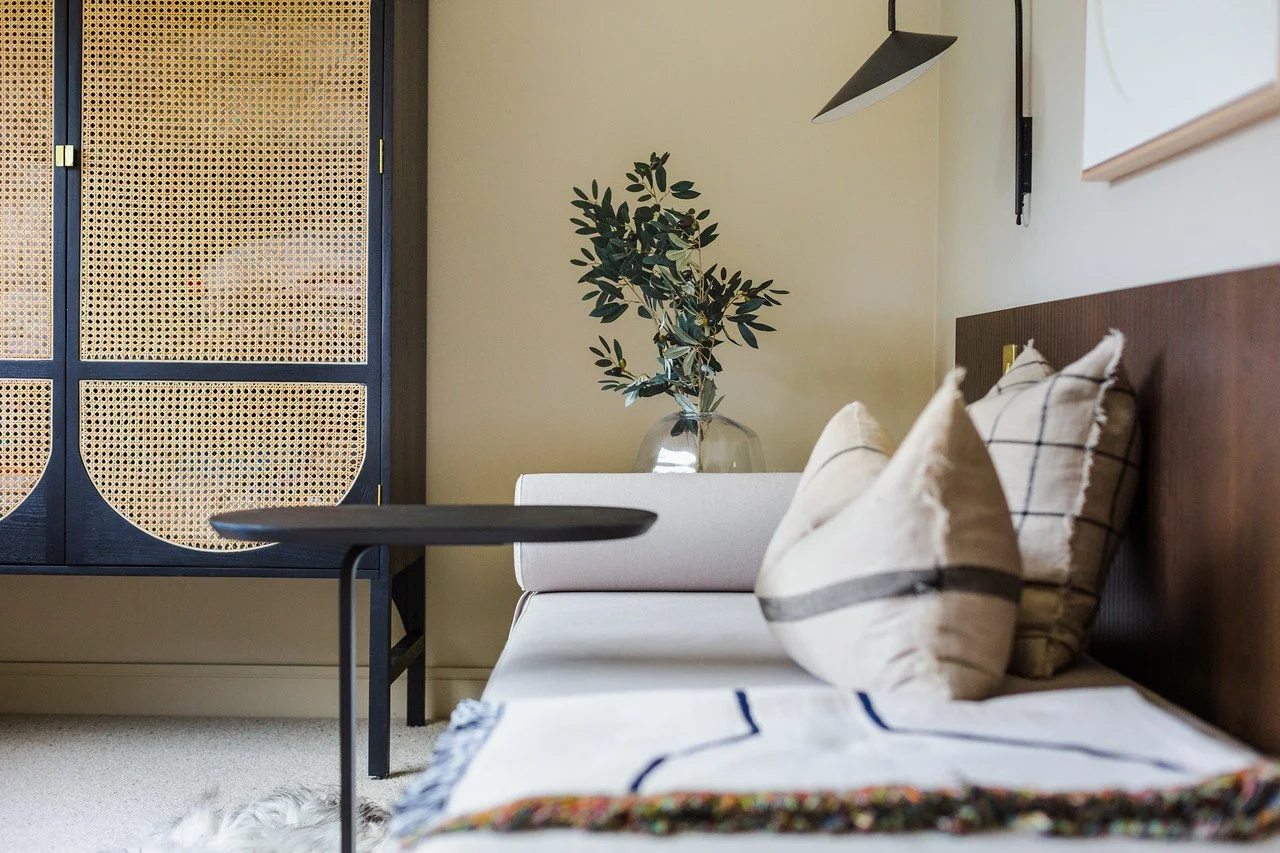
Real-life detail from the Japandi renovation in Gamlingay. A calm composition of rattan cabinetry, sculptural lighting, and soft textures — blending Japanese restraint with Nordic warmth in a contemporary living space.
How to Bring Japandi Into a UK Home
Whether in a Cambridge townhouse, a St Neots new‑build, or a Gamlingay renovation, Japandi adapts beautifully to the textures and proportions of British homes. Its quiet palette and natural materials settle easily into both contemporary spaces and older properties across Royston, Biggleswade, and the wider Cambridgeshire countryside.
• Choose natural materials wherever possible.
• Keep the palette soft, warm, and grounded.
• Prioritise craftsmanship over quantity.
• Use lighting to create atmosphere, not drama.
• Layer textures instead of adding clutter.
• Embrace negative space — let the room breathe.
• Mix Japanese and Nordic influences subtly, not literally.
Japandi isn’t about recreating a look; it’s about shaping a feeling.
Why Japandi Works So Well in Cambridgeshire Villages
In places like Gamlingay, Caldecote, and the wider Cambridgeshire countryside, Japandi’s natural materials and muted palettes echo the softness of the landscape. The style feels equally at home in the quiet streets of St Neots, the rural edges of Royston, and the heritage textures found throughout Biggleswade and surrounding villages.
Japandi becomes not just a design choice, but a way of inhabiting space with intention.
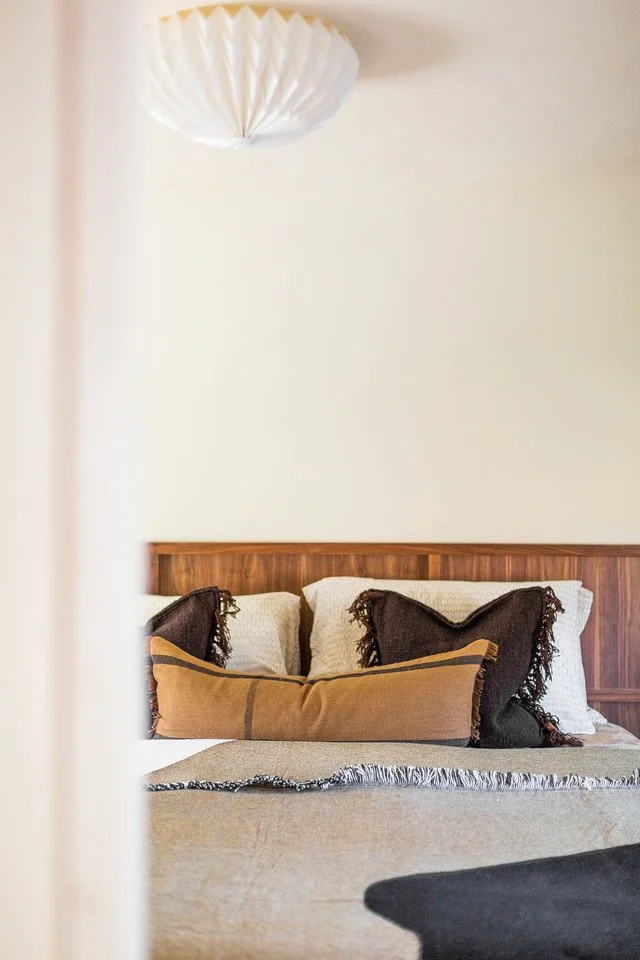
Bedroom detail from a Japandi renovation in Cambridge. A layered composition of rattan, sculptural lighting, and soft textures — shaped for calm, clarity, and quiet presence.
“In Japandi interiors, every texture speaks softly, every object holds purpose, and every room becomes a breath.”
Conclusion — A Style That Breathes
Japandi design invites us to create homes that feel calm, grounded, and deeply human. It celebrates craftsmanship, honours natural materials, and embraces the beauty of simplicity. In a world full of noise, Japandi offers a place to rest — a space shaped by clarity, warmth, and quiet presence.
For homeowners seeking interiors that feel both contemporary and timeless, Japandi is more than a style. It’s a way of living with intention, care, and calm.
Contact Pinterior.space to begin your own narrative of place, purpose, and poetic living along Grange Road—or wherever your Cambridge journey may lead.
If you’re searching for a Cambridgeshire Interior Designer who blends practical solutions with poetic detail, this is where the journey begins.
Ready to design with intention? Book your free consultation today.
You can explore more here:
• my [Bathroom Concept Boards → /concept-boards]
• my [Recent Articles → /articles]
• my [Home page ]
Continue Your Journey
Japandi is more than a design trend. It is a philosophy that values simplicity, craftsmanship, natural materials and intentional living. By understanding the principles behind the style, you can create interiors that feel peaceful, functional and beautifully connected to the way you live.
Read Next
Japanese Interior Design Ideas for Contemporary Homes
Explore the principles of Japanese interior design, from simplicity and natural materials to light, space and intentional living.
Scandinavian and Nordic Interior Design Ideas for Cambridge Homes
Discover how Scandinavian and Nordic design principles create warm, functional and timeless interiors inspired by everyday living.
How to Mix Scandinavian, Nordic and Japanese Interior Design Styles
Learn how to combine these complementary design philosophies into one cohesive home that feels authentic, balanced and personal.
Return to the Chapter
Interior Design Styles & Ideas
Explore timeless interior design styles, inspiring ideas and thoughtful design approaches that help you create contemporary homes with character, balance and lasting appeal.