
🖤 Le Corbusier — The Poetry of Order
Design History & Icons
Some designers search for beauty.
Le Corbusier searched for order — not the rigid kind, but the kind that frees the mind, steadies the body, and gives a home its quiet rhythm.
His work wasn’t about perfection.
It was about proportion, light, and the belief that architecture could shape the way we live, think, and feel. In Cambridge, the surrounding Cambridgeshire villages, London, and the quieter edges of the region, his ideas still echo in the way people crave clarity, flow, and a sense of calm purpose in their homes.
Corbusier didn’t design machines.
He designed a possibility.
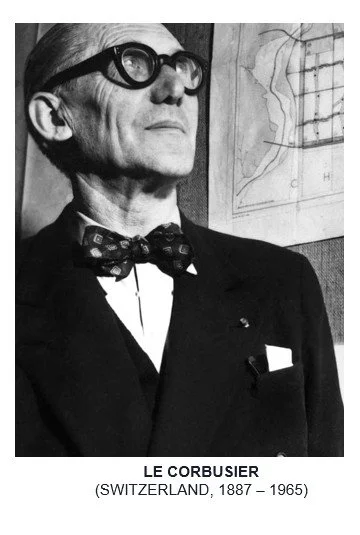
Le Corbusier (Switzerland, 1887–1965)
A quiet portrait of the architect whose philosophy shaped modern living. His gaze, the map behind him, and the clarity of his form reflect a life devoted to proportion, light, and the poetry of order.
If you’re curious how these ideas connect to other design icons, you can explore my [Design History & Icons collection → /design-history-icons].
A Philosophy of Living
Le Corbusier famously described the home as “a machine for living” — a phrase often misunderstood.
He didn’t mean cold or mechanical.
He meant efficient, intentional, supportive.
A home should:
lift the weight of daily life
offer clarity instead of clutter
create space for rest, work, and reflection
support the body through proportion and light
If you’re curious how I bring this philosophy into real homes, you can explore my [Interior Design Services → /services].
This philosophy resonates deeply with modern living in Cambridge and Cambridgeshire, where homes often need to adapt to hybrid work, family rhythms, and the desire for emotional calm.
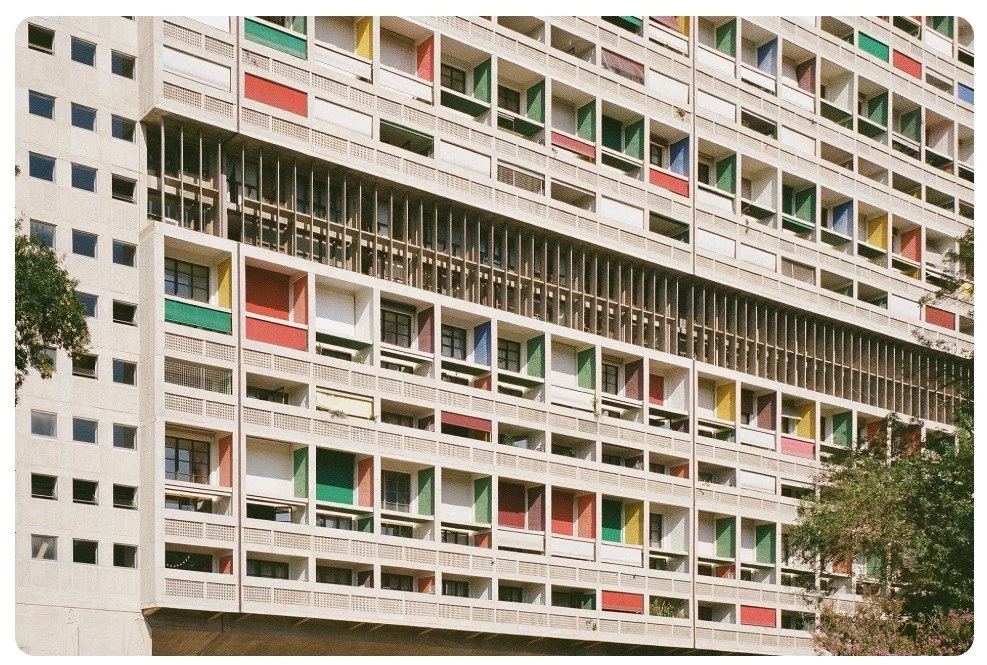
Modular Modernism in Colour
A striking example of mid-century modernist architecture, where rhythm, repetition, and bold colour panels transform a residential facade into a sculptural grid. The interplay of vertical louvers, modular balconies, and primary hues reflects the spirit of Le Corbusier’s vision — clarity, proportion, and emotional resonance through structure. Le Corbusier: Pioneer in modular architecture - Kub's House
A Philosophy Born from Scarcity and Rebuilding
The idea of the home as a “machine for living” emerged from a Europe recovering from war — a continent facing housing shortages, economic strain, and the need to rebuild quickly, intelligently, and with dignity.
After the First World War, millions were displaced. Cities were damaged. Traditional craftsmanship was slow and expensive. Families needed homes that were:
efficient to build
affordable to maintain
healthy to live in
filled with light and air
adaptable to modern life
Corbusier saw architecture not as a luxury, but as a matter of public health.
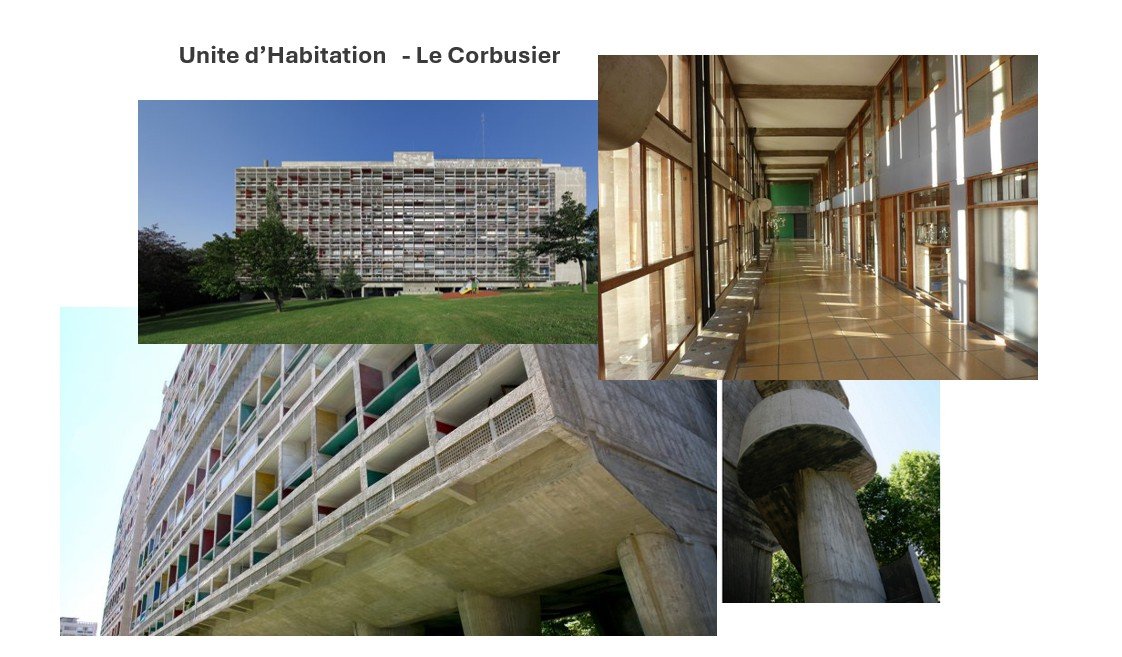
Unité d'Habitation — Le Corbusier
A layered glimpse into one of Corbusier’s most iconic projects: modular living raised on pilotis, coloured panels as rhythm, corridors as arteries of light. This building wasn’t just shelter — it was a philosophy made concrete. A city within a structure, shaped by proportion, clarity, and civic purpose.
He believed that if homes were designed with clarity, proportion, and rationality, they could support the emotional and physical well-being of the people living in them. His “machine for living” was a response to crisis — a way to create order, stability, and hope in a time of uncertainty.
He imagined homes that worked for people, not against them:
sunlight as nourishment
open plans for flexibility
rooftops as gardens
pilotis lifting buildings into the fresh air
modular systems to speed construction
standardised components to reduce cost
In many ways, his ideas were early forms of social design — architecture as a tool for rebuilding society.
This is why his philosophy still resonates today in Cambridge, the Cambridgeshire villages, and London, where homes must adapt to hybrid work, family rhythms, and the need for emotional calm. His vision wasn’t mechanical. It was deeply human.
Light, Proportion, and the Modulor
Corbusier believed that proportion was a form of poetry.
His Modulor system — based on human scale, rhythm, and harmony — shaped everything from windows to staircases.
It wasn’t mathematics.
It was music.
If you’re curious how other modernists shaped space with the same poetic clarity, you can read my [Eileen Gray article → /design-history-icons/eileen-gray].
This human-centred approach aligns beautifully with the way many people in Cambridgeshire and London want to live today: in spaces that feel balanced, grounded, and quietly supportive.
The Modulor Marks — Human Rhythm Made Visible
Le Corbusier’s Modulor wasn’t just a proportional system; it was a way of grounding architecture in the scale and dignity of the human body. The Modulor marks — often sketched directly onto walls or construction surfaces — acted as quiet reminders that every threshold, window height, and spatial rhythm should serve the person moving through it. These marks turned building sites into living notebooks, where geometry met intuition and proportion became a kind of choreography. They reveal Corbusier’s belief that harmony is not abstract but embodied, and that good design begins with the simple act of honouring human presence.

Human Proportion Systems — Vitruvian, Modulor, and the Poetry of Scale
A visual dialogue across centuries: Leonardo’s Vitruvian Man, Corbusier’s Modulor sketch, and the colour-coded Modulor scale. Each figure reflects a different philosophy of space — from classical symmetry to modern rhythm. Corbusier’s Modulor reimagined proportion not as perfection, but as emotional clarity: a way to shape architecture around the lived experience of the human body.On the Dislocation of the Body in Architecture: Le Corbusier's Modulor | ArchDaily
Material Honesty and Sculptural Clarity
Like Mies van der Rohe and Eileen Gray, Corbusier believed materials should speak for themselves.
Concrete, glass, steel, timber — each chosen with intention, each allowed to express its character.
His buildings and furniture weren’t decorative.
They were sculptural.
This clarity of form mirrors your own design ethos: calm, intentional, emotionally intelligent, and rooted in the belief that a home should feel like a place to breathe.
If you’re curious about the ethos behind my own work, you can explore my [About page → /about].
Architecture as a Way of Thinking
Corbusier’s work stretched across continents, but three projects capture his philosophy with particular clarity:
Villa Savoye — a floating poem of light and proportion
Ronchamp Chapel — a sculptural embrace of shadow and silence
Chandigarh — a city shaped by order, rhythm, and civic purpose
Each one reveals a different facet of his belief that architecture is not just shelter — it is a way of thinking.
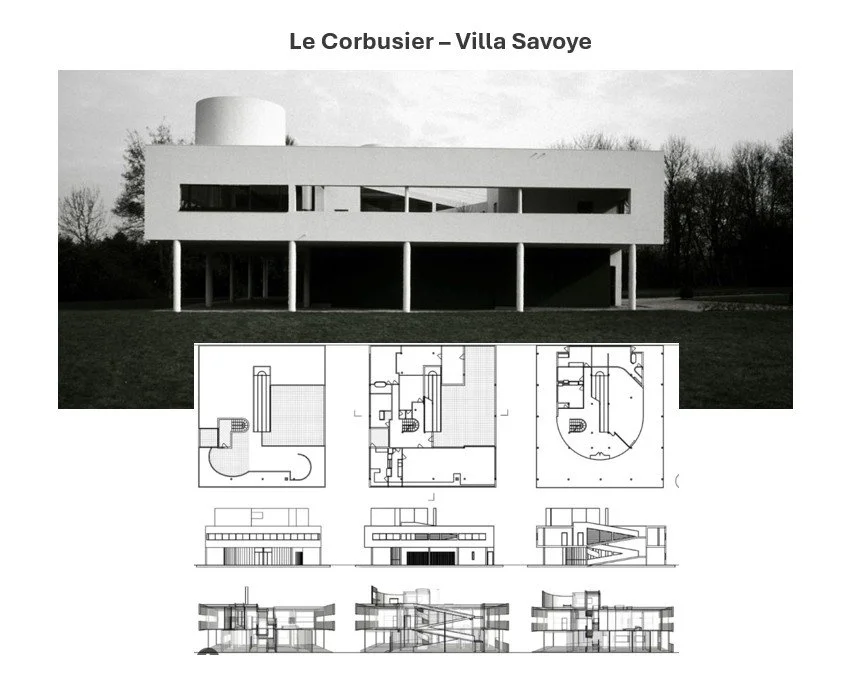
Villa Savoye — Le Corbusier
A floating poem of light, proportion, and spatial rhythm. The photograph reveals the pilotis, ribbon windows, and open plan that defined Corbusier’s vision of modern living. The architectural drawings below show how structure becomes choreography — a quiet interplay of geometry, movement, and human scale. Villa Savoye wasn’t just a house. It was a manifesto. Villa Savoye | Architectuul
Why Corbusier Still Matters in Cambridge and the Shire
Homes across Cambridge, Letchworth, Hitchin, St Neots, Royston, and London often face similar challenges:
limited natural light
awkward layouts
the need for multifunctional spaces
the desire for calm, clarity, and emotional grounding
Corbusier’s principles offer timeless solutions — not through trends, but through proportion, flow, and thoughtful design.
If you’re curious how I help clients resolve these exact challenges, you can start a conversation through my [Contact page → /contact].
His work reminds us that order is not restrictive.
It is liberating.
A Quiet European Thread
As someone with Central European roots, I’ve always felt a connection to the modernist movement that shaped so much of the region.
Corbusier’s influence reached far beyond France — touching the architectural language of Europe, including the Czech Republic, where modernism found its own voice in places like Brno and beyond.
This shared lineage of clarity, proportion, and emotional restraint continues to shape the way I think about home.
A Legacy of Rhythm and Light
Le Corbusier changed the way we understand space.
He taught us that proportion can soothe, light can guide, and order can create emotional freedom.
His philosophy aligns with the way we approach design:
calm, intentional, quietly intelligent, and deeply human.
If you’re exploring how to bring this kind of clarity, proportion, and modern design philosophy into your own home — whether you’re in Cambridge, the surrounding shire villages, London, Letchworth, Hitchin, St Neots, or nearby — I’d love to help you shape a space that feels calm, intentional, and deeply supportive. You can learn more about working together or get in touch through my Contact page, where every project begins with a thoughtful conversation.
Continue Your Journey
Le Corbusier believed that architecture should bring clarity, proportion and order to everyday life. Continue exploring these articles to discover the designers and movements that continue to shape contemporary interior design.
Read Next
Alvar Aalto — The Warmth of Modernism
Discover how Alvar Aalto brought warmth, humanity and natural materials to modern design, creating a more human-centred approach to architecture and interiors.
Marcel Breuer — The Strength of Simplicity
Explore how Marcel Breuer redefined furniture design through innovation, craftsmanship and elegant structural thinking.
Bauhaus: The School That Shaped Modern Society
Understand how Bauhaus transformed architecture, furniture and interior design through function, simplicity and purposeful design.
Return to the Chapter
Design History & Icons
Explore more articles about influential designers, iconic design movements and the timeless ideas that continue to inspire contemporary interior design.