
2026 Interior Design Trends for Luxury Contemporary Homes
The leading interior design trends of 2026 reflect a growing focus on calm contemporary living, emotional comfort, natural materials, and sculptural architectural forms. Luxury interiors are becoming warmer, more tactile, and deeply connected to wellbeing through layered textures, thoughtful lighting, sustainable craftsmanship, and spaces designed to feel personal, restorative, and timeless.
By Pavlina Campbell : Interior Designer, Educator, and Storyteller
In 2026, Interior Design enters a new era—one defined by emotional intelligence, sculptural elegance, and purposeful living. For those seeking high-end, culturally attuned spaces, this guide explores the defining trends in colour, materials, shapes, fabrics, flooring, wall coverings, and lighting. Expect originality, depth, and a clear sense of direction.
The Future Is Circular
Sustainability took centre stage this season, with circular design emerging not just as a concept, but as a creative force. Belgian Designer of the Year, Lionel Jadot, reimagined a hotel lobby through a zero-waste lens—crafting furniture, textiles, and décor entirely from biomaterials and upcycled components. His work challenged conventional hospitality aesthetics, proving that luxury and environmental responsibility can coexist.
Elsewhere, the Eco-Materials showcase unveiled a rich spectrum of regenerative resources, while the Rising Talents Awards—spotlighting Northern designers—celebrated pieces that transformed waste into beauty with intelligence and grace.
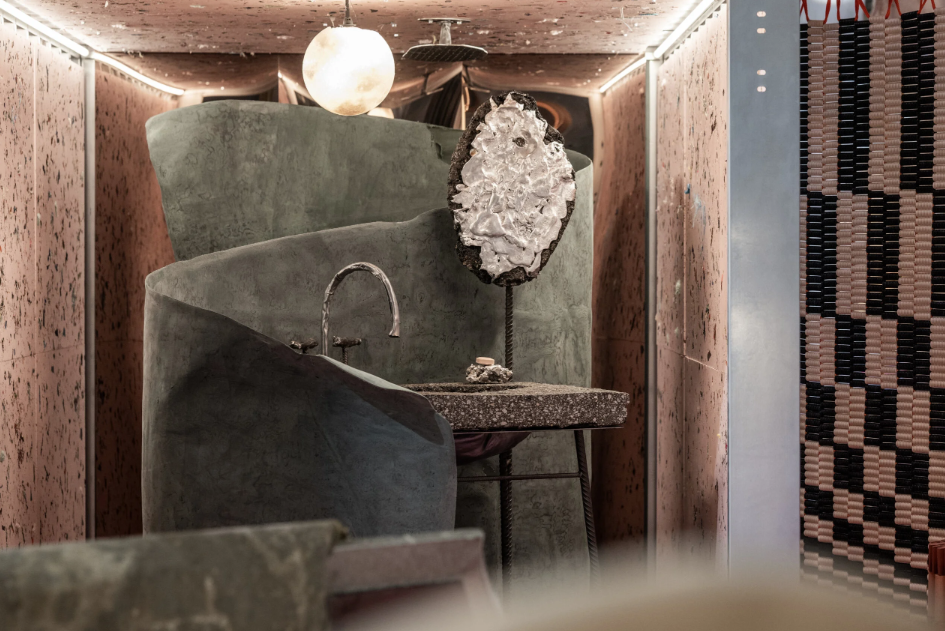
Lionel Jadot ©Anne-Emmanuelle-Thion. A tactile, layered material collage by Lionel Jadot ©Anne‑Emmanuelle Thion, featuring raw textures, earthy tones, and sculptural surfaces. The composition captures the essence of 2026 luxury: sensory richness, material honesty, and a shift toward interiors that feel grounded, emotional, and deeply textural. This image sets the tone for the year’s design direction — luxury expressed through touch, depth, and authentic materiality rather than spectacle.
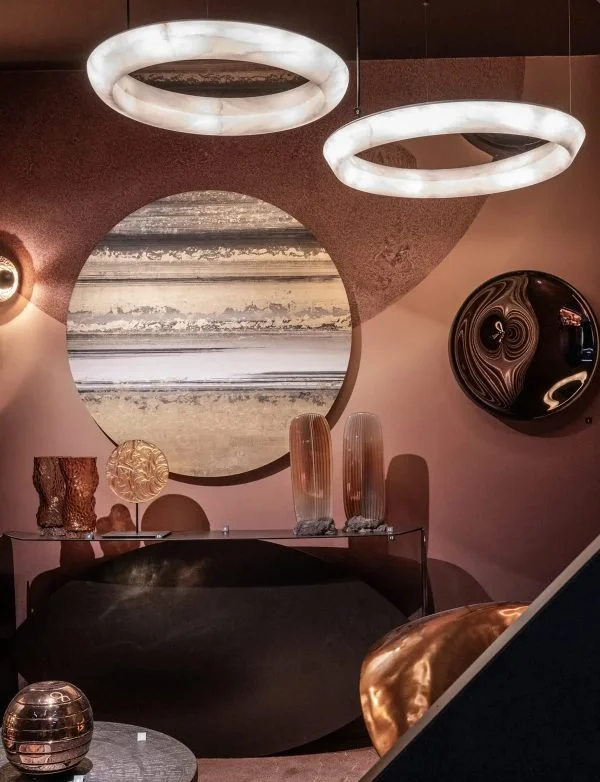
Future of Design: Maison & Objet Paris 2025 Circular Design Takes Centre Stage. A curated vignette from Future of Design: Maison & Objet Paris 2025, showcasing circular‑design principles through sculptural objects in glass, metal, and stone. A circular mirror anchors the composition, paired with tactile materials and a plum progressive wall paint that adds depth and modernity. This image reflects a key 2026 trend: luxury defined by sustainability, material longevity, and objects designed to be repaired, reused, and emotionally valued over time.
The Origins of 2026 Interior Design Trends
History, Intention & Fashion Parallels
Interior design in 2026 is not a fleeting aesthetic—it’s a reflection of cultural memory, emotional resonance, and cross-disciplinary influence. This year’s trends are rooted in both historical design movements and contemporary shifts in fashion, psychology, and sustainability.
Historical echoes of mid-century modern, Art Nouveau, and soft Brutalism reappear in curved forms, textured walls, and sculptural furniture.
Fashion parallels—from earthy palettes to tactile fabrics—create a unified language across lifestyle domains.
Design philosophy is paramount: every choice is intentional, every material tells a story, and every space supports wellbeing.
In our studio, we don’t follow trends—we interpret them through the lens of meaning, emotion, and lived experience.
Colour Trends: New Neutrals & Emotional Depth
Sage, blush, and pale blue replace sterile whites and greys, offering calm and sophistication.
Grounding browns and terracotta evoke a sense of nature and warmth, making them ideal for layered palettes.
Bold accents—mustard, teal, and deep plum—add personality without overpowering serenity.
Colour psychology is central: hues are chosen to support wellbeing, productivity, and emotional comfort.
Luxury tip: Layer tonal variations of one colour family to create depth and elegance.

2026 Trends in interior design. A curated collage of images showcasing the 2026 colour‑trend direction: soft new neutrals in sage, blush, and pale blue; grounding browns and terracotta; and bold accents such as mustard, teal, and deep plum. The materials and textures highlight emotional depth — from tactile fabrics to natural finishes — reflecting a shift toward palettes chosen for wellbeing, warmth, and psychological comfort. This visual composition captures the essence of the 2026 colour design: layered, sensory, and emotionally intelligent.
Materials: Tactile, Sustainable, and Story-Rich
Textures vs Shine Home Decor Trends 2026
While bold patterns once danced across interiors earlier this year, the mood has shifted—quietly, deliberately. Designers are now drawn to the language of texture: the grain of wood, the softness of boucle, the whisper of layered surfaces. Geometry gives way to tactility. At the same time, gloss returns with confidence—mirrored finishes, polished metals, and lacquered accents shimmer once more, gently reclaiming space from the matte minimalism that held sway for seasons past. Natural textures dominate: rattan, bamboo, acacia, and wicker bring softness and organic rhythm.
Innovative eco-materials like agave fibres, coconut shells, and coffee grounds signal a shift toward circular design.
Reclaimed wood and recycled metals offer sustainability without sacrificing luxury.
Stone and mineral finishes—especially travertine and oxidised marble—add sculptural weight.
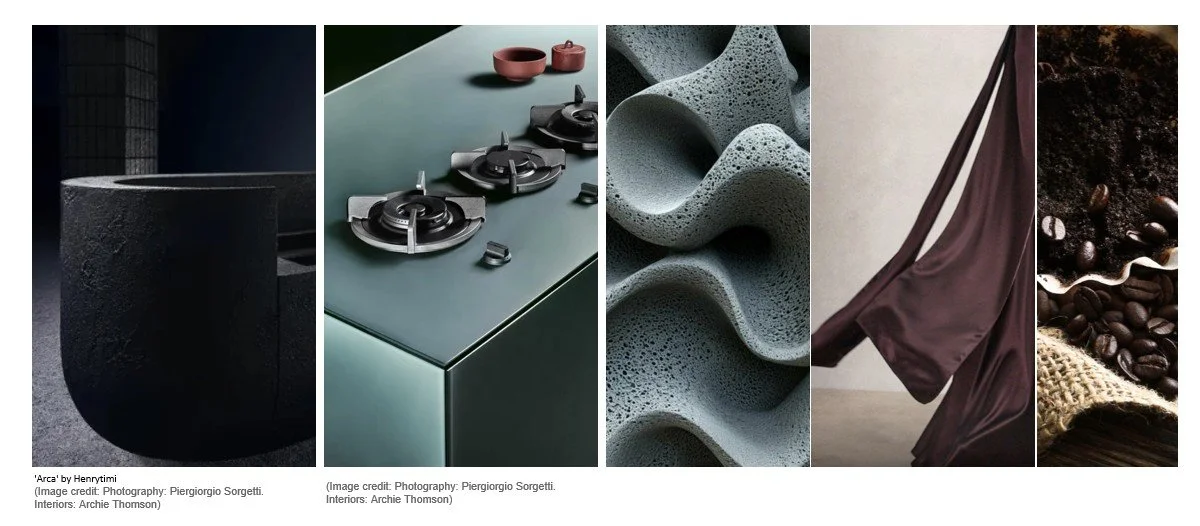
Textures vs Shine Home Decor Trends 2026. A collage of five images expressing the 2026 home décor direction, focusing on the interplay between texture and shine. The visuals capture the emerging mood: soft, natural tactility contrasted with polished, reflective surfaces. Together, the images suggest a shift toward materials that feel grounded, sensory, and emotionally rich, balanced with accents of gloss that add depth and modernity. This collage represents the broader trend toward sustainable, story‑driven materials and a renewed appreciation for both texture and subtle luminosity in contemporary interiors.
Luxury tip: Mix heritage materials with cutting-edge eco-tech for a curated, conscious aesthetic.
Shapes: Sculptural, Irregular, and Emotionally Expressive
Curved silhouettes and freeform contours dominate furniture and architectural details.
Oversized, “fat” seating blurs the line between art and comfort.
Organic asymmetry replaces rigid minimalism, creating spaces that feel alive and intuitive.
Luxury tip: Invest in one statement piece—like a sculptural island or curved sofa—that anchors the room.
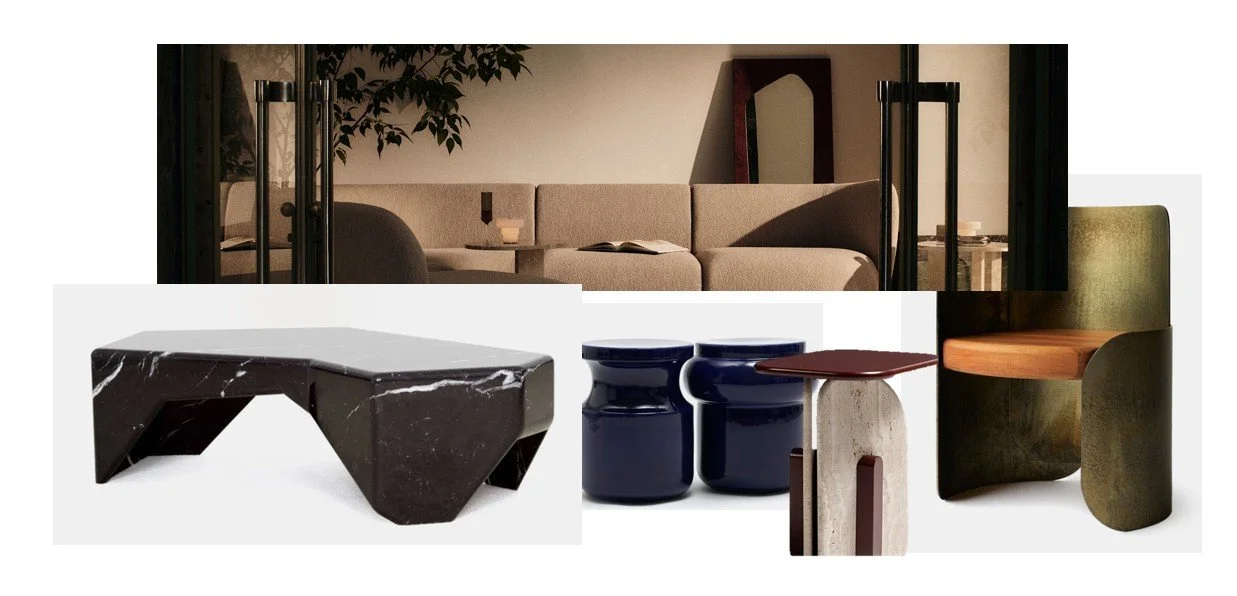
Shapes: Sculptural, Irregular, and Emotionally Expressive. A collage of images illustrating the 2026 trend toward sculptural, emotionally expressive shapes in furniture and décor. The visuals highlight curved silhouettes, soft upholstery, lacquered surfaces, and freeform contours that move away from rigid minimalism. Together, the images suggest a shift toward oversized, inviting seating and organic, intuitive forms that blur the line between art and function. This collage captures the broader design direction: shapes that feel alive, tactile, and deeply human.
Fabrics: Soft Modernism Meets Heritage Craft
Bouclé, mohair, and brushed cottons offer tactile comfort and visual softness.
Artisanal textiles—handwoven, embroidered, or naturally dyed—add narrative and depth.
Layered drapery in sheer and opaque combinations creates mood and movement.
Luxury tip: Choose fabrics that invite touch and tell a story—comfort is the new opulence.
Flooring: The New Canvas
Wide-plank wood floors in warm tones remain timeless, now paired with inlaid patterns or sculptural rugs.
Textured stone and terrazzo add visual interest and durability.
Sustainable cork and bamboo are rising in luxury applications due to their eco credentials.
Luxury tip: Treat floors as foundational art—choose materials that elevate the entire space.
Wallcoverings: Expressive, Layered, and Immersive
Textured plaster and limewash finishes offer depth and subtle movement.
Large-scale murals and hand-painted panels bring storytelling to walls.
Natural fibre wallpapers—like grasscloth and jute—add warmth and tactility.
Luxury tip: Use wall treatments to create emotional zones—retreat, inspire, energise.
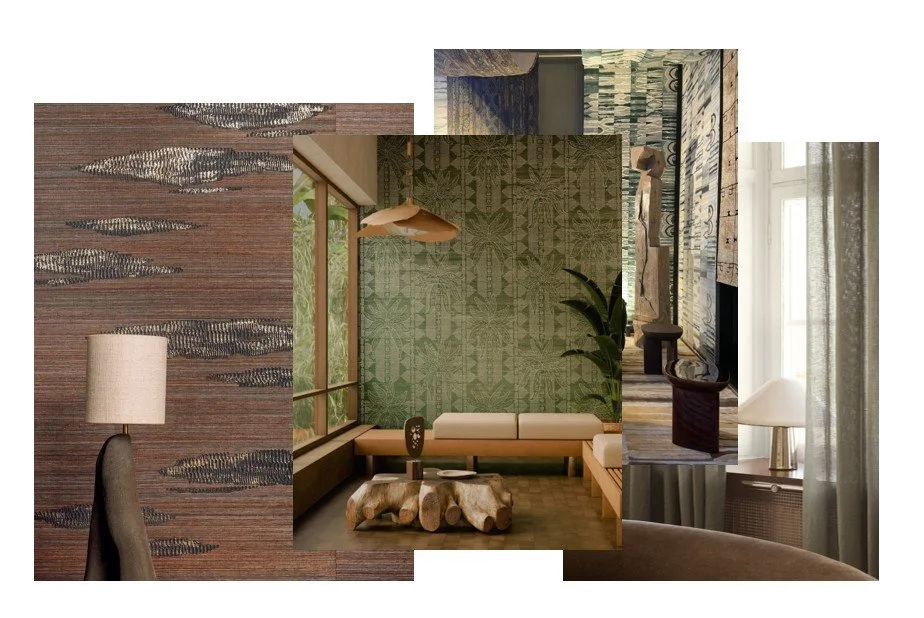
Wallcoverings: Expressive, Layered, and Immersive. A collage of images expressing the 2026 direction in wallcoverings, focusing on expressive, layered, and immersive surface treatments. The visuals suggest depth, subtle movement, and tactile richness — from softly textured finishes to more artistic, statement‑making surfaces. Together, the images reflect a broader trend toward wall treatments that create emotional zones within a home, offering warmth, storytelling, and sensory comfort.
Lighting: Adaptive, Sculptural, and Circadian-Aware
Modular lighting systems that shift with your body clock support wellness.
Sculptural pendants and wall lights act as functional art.
Layered lighting schemes—ambient, task, and accent—create mood and flexibility.
Luxury tip: Prioritise lighting that responds to both time and emotion—luxury is in the nuance.
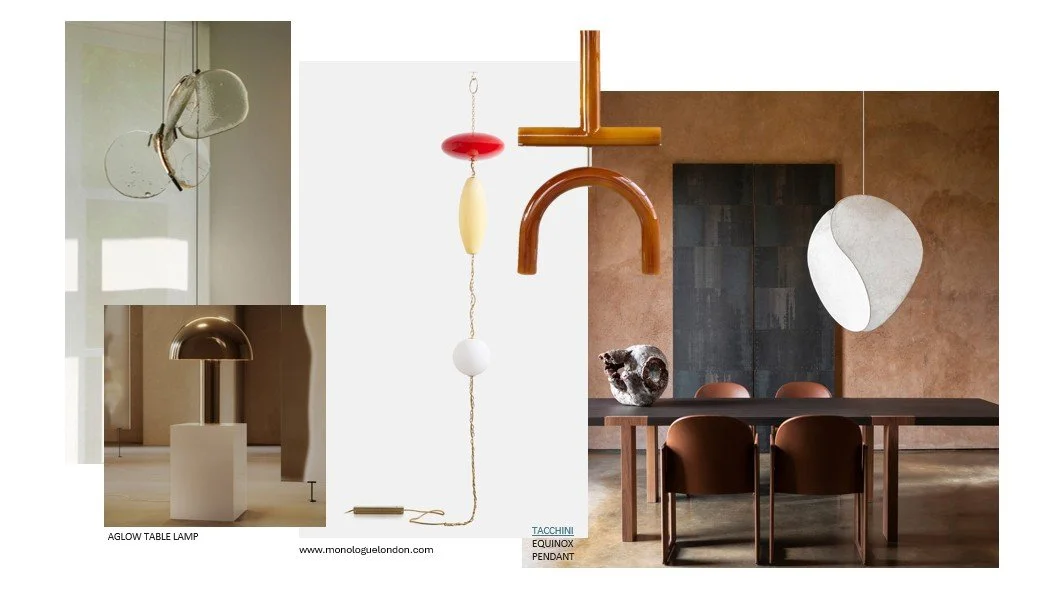
Lighting: Adaptive, Sculptural, and Circadian-Aware - All items from www.monologuelondon.com A collage of images expressing the 2026 direction in lighting design, focusing on sculptural forms, adaptive illumination, and layered light. The visuals suggest a shift toward lighting that supports wellbeing — from soft ambient glows to more expressive, art‑like fixtures. Together, the images reflect the broader trend toward circadian‑aware systems, functional sculpture, and lighting that responds to time, emotion, and atmosphere, creating spaces that feel both intentional and deeply human.
Our Design Philosophy: Nothing Without Meaning
At the heart of our practice is a simple belief: Nothing happens without reason. Every curve, colour, and texture is chosen with intention. We design spaces that feel emotionally resonant, culturally aware, and deeply lived-in.
We honour history—not by replicating it, but by evolving it.
We mirror fashion—because your home should feel as curated as your wardrobe.
We design for emotion—because luxury is not just visual, it’s visceral.
We don’t decorate. We design with purpose. We create spaces that speak.
If you're looking for an Interior designer in Cambridge who blends professional rigour with a love for teaching and sharing ideas, Pavlina is not only a designer—you’ll want her as your creative collaborator.
You can explore more here:
• my [Bathroom Concept Boards → /concept-boards]
• my [Recent Articles → /articles]
• my [Home page ]
Continue Your Journey
The most meaningful design trends are those that respond to changing lifestyles rather than fleeting fashions. As homes become places of wellbeing, connection and everyday living, today's trends are increasingly defined by craftsmanship, authenticity and thoughtful design choices that continue to feel relevant long after the year has passed.
Read Next
Why Emotionally Intelligent Interiors Are Redefining Modern Luxury
Explore why today's luxury homes are centred on wellbeing, emotional connection and spaces designed around the way people truly live.
Affordable Luxury Interior Design Ideas for Cambridge Homes
Discover how thoughtful planning, timeless materials, and carefully considered design create homes that feel luxurious without relying on excess.
Modern vs Contemporary Interior Design Explained
Understand the difference between modern and contemporary design and discover how today's trends build upon timeless design principles.
Return to the Chapter
Interior Design Styles & Ideas
Explore timeless interior design styles, inspiring ideas and thoughtful design approaches that help you create contemporary homes with character, balance and lasting appeal.