
The Designer as Translator: Turning Feeling into Form
By Pavlina Campbell:
Emotional Interior Design: More Than Aesthetic
Interior design is more than layout and lighting—it’s emotional translation. At Pinterior SPACE, we begin every project by listening deeply. Before the mood board, before the materials, there’s a moment of intuition: a client trying to express a feeling they can’t quite name.
That’s where emotional interior design begins.
Translating Emotion into Residential Design
The Shelford Project, our SBID award-winning residential design, started with a conversation. The client wanted a home that felt grounded yet light, expressive yet calm. We translated that into form:
Light woods for depth
Unique materials
Curated lighting to guide and soothe
Every texture told a story. Every detail was chosen to resonate—not just impress.
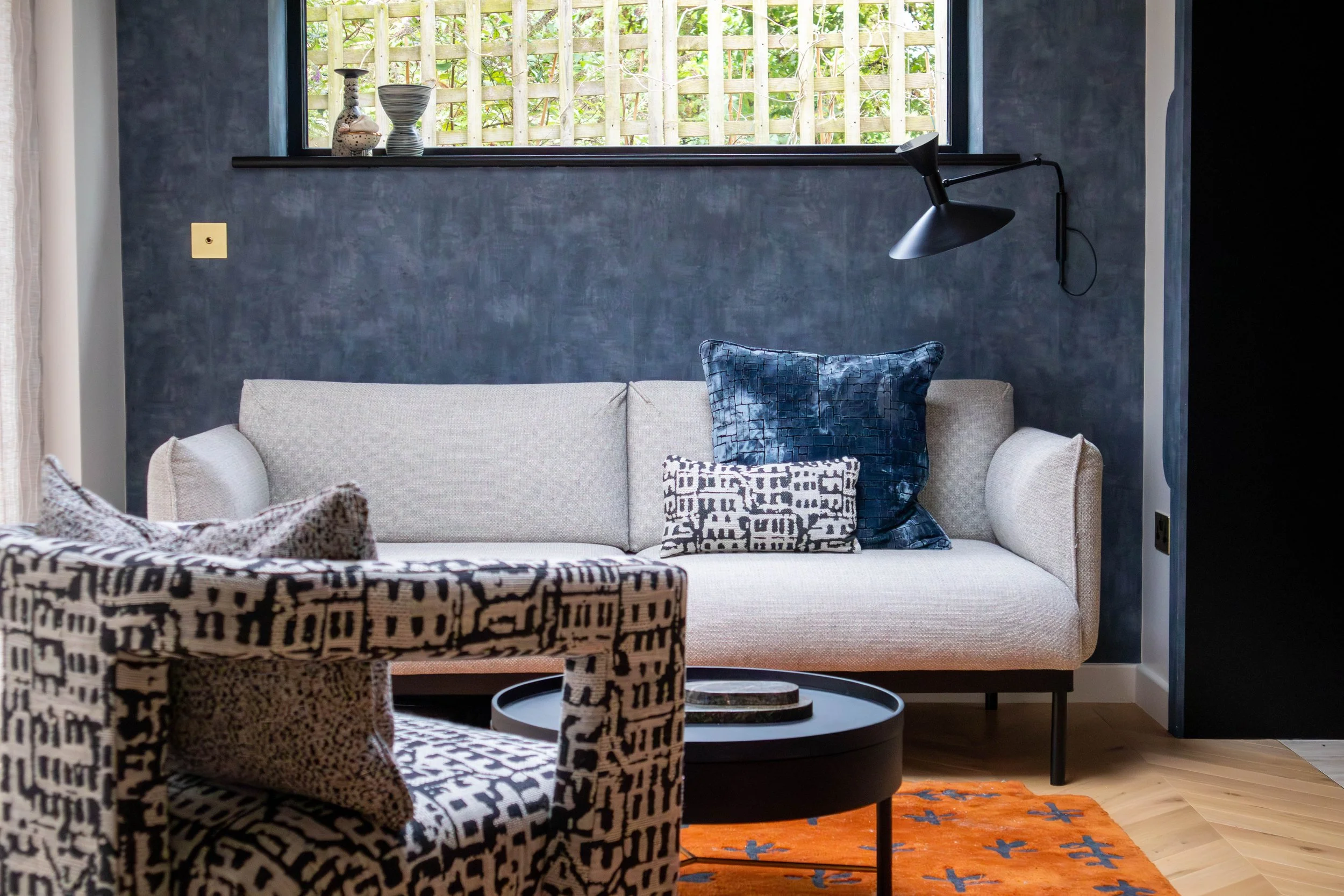
Snug area designed by Pinterior.space. A view of the snug in the Shelford Project designed by Pinterior.space. The blue textured wallpaper sets a calm, enveloping backdrop, while the Courbusier‑inspired wall light adds sculptural warmth. A Nordic knot rug grounds the room with tactile softness, and the curated furnishings create a balanced, emotionally attuned composition. This image captures the essence of the article’s theme: the designer as translator — turning feeling into form through texture, light, proportion, and atmosphere.
Thoughtful Interiors That Whisper
We believe the most powerful spaces are the ones that whisper. Emotional precision means knowing when to step back, when to let the materials speak. It’s about designing homes that feel like answers to unspoken questions.
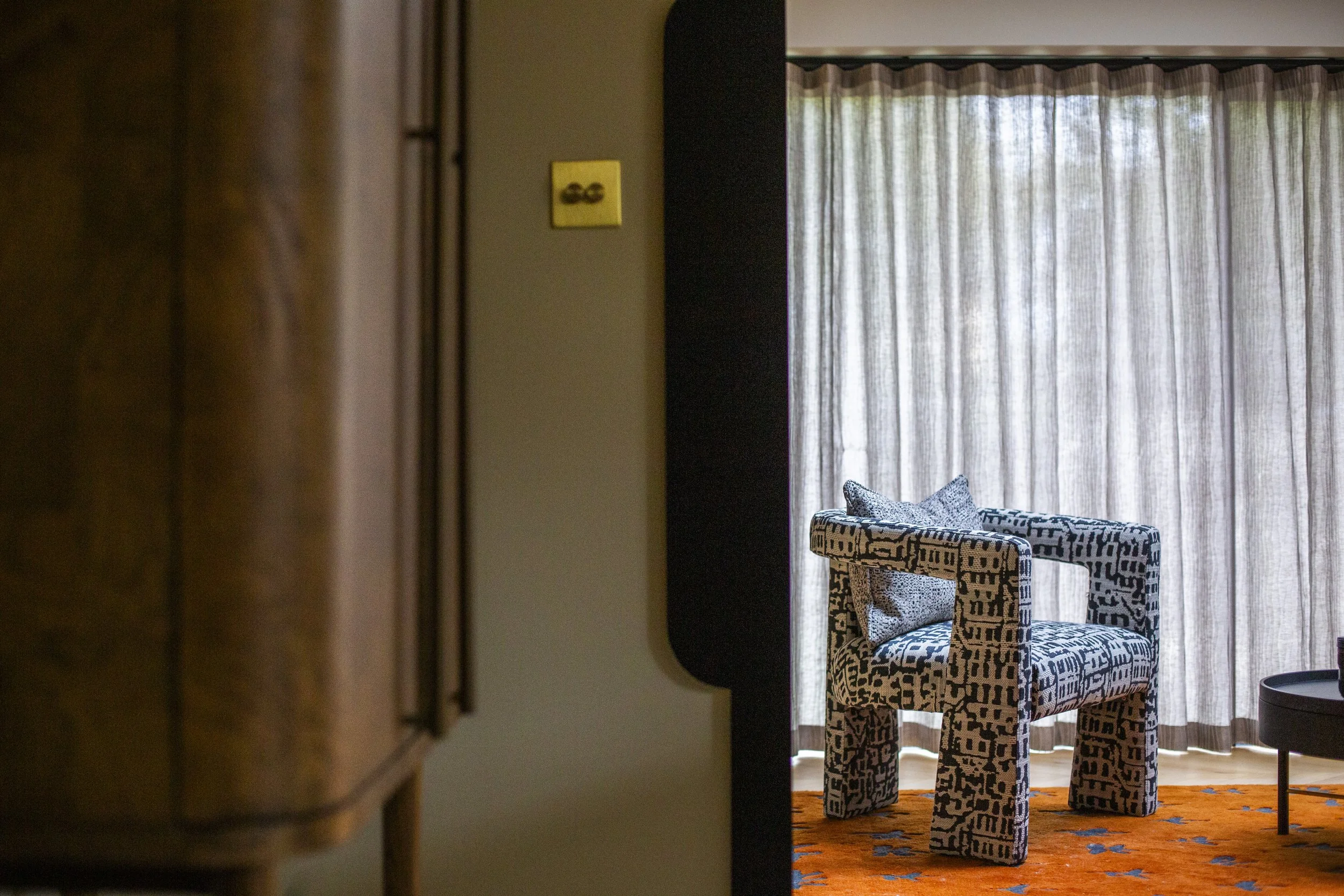
Snug room designed by Pinterior.space. A view from the kitchen into the snug in the Shelford Project designed by Pinterior.space. The tall kitchen unit frames the transition, while bespoke architraves create a soft architectural threshold. Inside the snug, a black‑and‑white armchair, a patterned Nordic Knot rug, and a Nordic Nest coffee table form a calm, tactile composition. This image captures the essence of translating feeling into form — how materials, silhouettes, and sightlines guide emotion as you move from one space to another.
Teaching Emotional Precision in Interior Design
As a Cambridge-based interior designer and educator, I teach students to read the room—literally and emotionally. Whether drafting contracts or choosing finishes, the goal is clarity with care. Design is a language, and our job is to translate it with empathy and precision.
Ready to Design a Space That Feels Like Home?
Explore the Shelford Project or connect with us to begin your own journey in thoughtful, emotionally resonant design.
Let’s create interiors that whisper with meaning.
“Design is not what we add to a space, but what we reveal within it. When we listen deeply, the room begins to speak.”
Whether she’s conceptualising a spa-inspired bathroom or exploring materiality in a classroom discussion, Pavlina approaches every creative opportunity with clarity, care, and heart.
If you're looking for an interior designer in Cambridge who blends professional rigour with a love for teaching and sharing ideas, Pavlina is not only a designer—you’ll want her as your creative collaborator.
You can explore more here:
• my [Bathroom Concept Boards → /concept-boards]
• my [Recent Articles → /articles]
• my [Home page ]
Continue Your Journey
Great interior design begins long before colours, furniture or finishes are chosen. It begins by listening. Every conversation, every memory and every aspiration becomes part of a creative process that gradually transforms feeling into form. Understanding this process reveals why the most successful interiors are never copied—they are carefully translated into spaces that reflect the people who live within them.
Read Next
The Invisible Value of Design
Explore why the most valuable part of interior design is often the thinking, research and creative problem-solving that happens long before the finished space is revealed.
How to Create an Interior Design Concept Board
Discover how ideas, emotions and aspirations are translated into a clear visual direction that guides every design decision.
Creativity and Interior Design: From Practice to Teaching
Learn how creativity, design thinking and education work together to shape spaces that are meaningful, functional and deeply human.
Return to the Chapter
Learn About Interior Design
Explore the principles behind successful interior design, from design thinking and creative process to colour, light, materials and spatial planning. Discover how professional designers transform ideas into homes that feel thoughtful, personal and timeless.