
Contemporary Bathroom Design Ideas for Cambridgeshire Homes
Contemporary bathroom design in Cambridgeshire homes is increasingly focused on creating calm, functional, and architectural spaces that support modern living. Through natural materials, thoughtful lighting, spatial balance, and refined detailing, bathrooms can feel grounded, timeless, and connected to the overall character of the home.
Bathrooms are some of the most emotionally important rooms in a home. They’re where the day begins and ends — and when designed with intention, they become quiet sanctuaries rather than purely functional spaces.
As a bathroom interior designer in Cambridge, working across Cambridgeshire and London, I approach these rooms as small pieces of architecture: places shaped by proportion, material intelligence, and the way light moves across a surface.
Quiet luxury isn’t about excess. It’s about calm, clarity, and the confidence of good design.
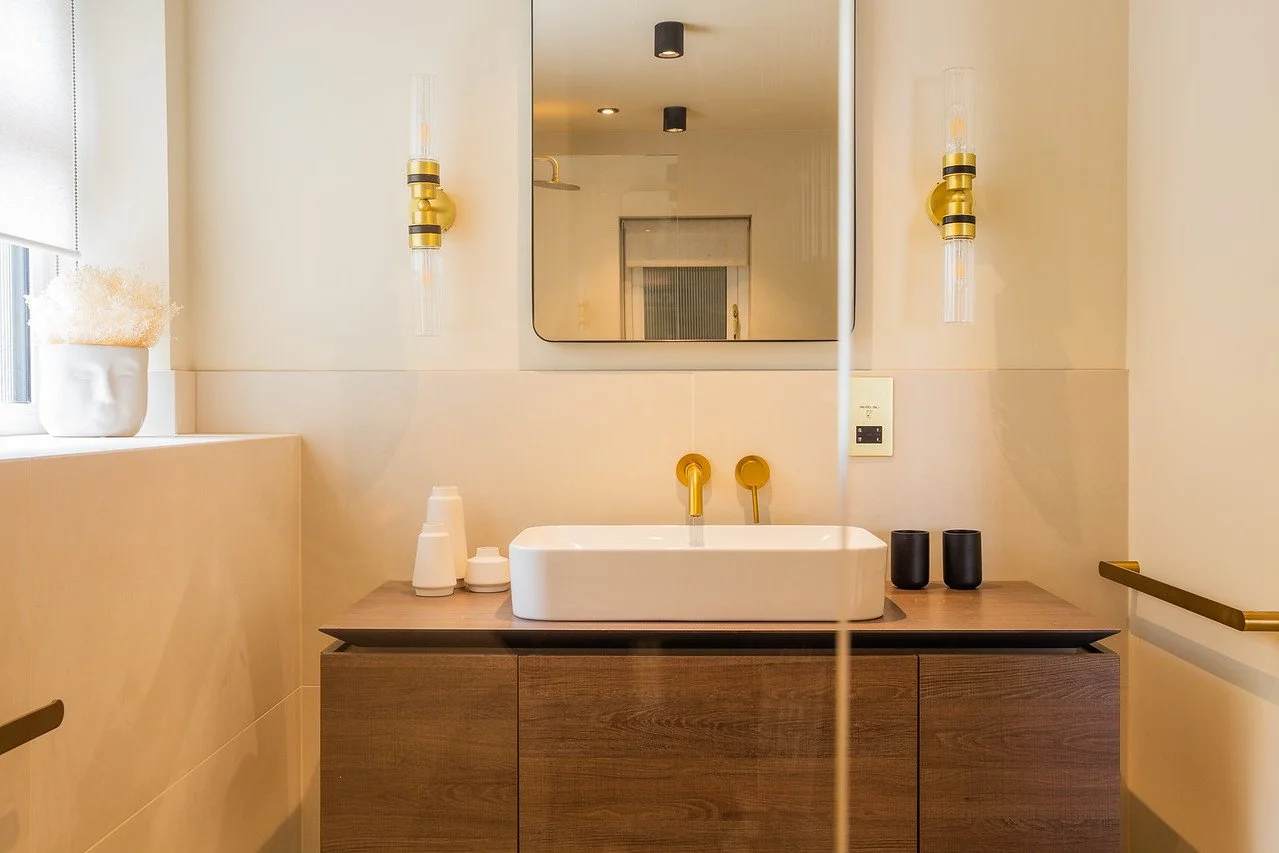
Bathroom interior from a Gamlingay home, designed with warm neutrals, sculptural brass fixtures, and soft lighting. The wall-mounted sink and mirror create a clean architectural rhythm, while the dried floral arrangement and rounded sconces add emotional softness. A quiet, modern space that balances practicality with poetic restraint.
For homeowners searching for a local bathroom interior designer near me, this guide brings together the principles I use in my client projects — including two new bathrooms I’m currently designing for a London home — to help you create spaces that feel grounded, timeless, and beautifully practical.
Why Quiet Luxury Works in Bathroom Design
A quiet luxury bathroom isn’t defined by marble everywhere or high‑gloss finishes. It’s defined by how the room feels:
calm rather than clinical
warm rather than shiny
architectural rather than decorative
timeless rather than trend‑led
This design language works beautifully in Cambridgeshire’s heritage homes, where materials need to feel sympathetic, and in London’s contemporary extensions, where clarity and proportion matter just as much.
Quiet luxury is not minimalism. It’s intentional simplicity — every line, surface, and junction considered.
If you’d like to see how quiet luxury translates into real Cambridge homes, you can explore my [Cambridge Residential Projects → /cambridge-projects]. Quiet luxury is not minimalism. It’s intentional simplicity — every line, surface, and junction considered.
Calm + Materiality
“Calm isn’t a style — it’s the outcome of materials chosen with intention.”
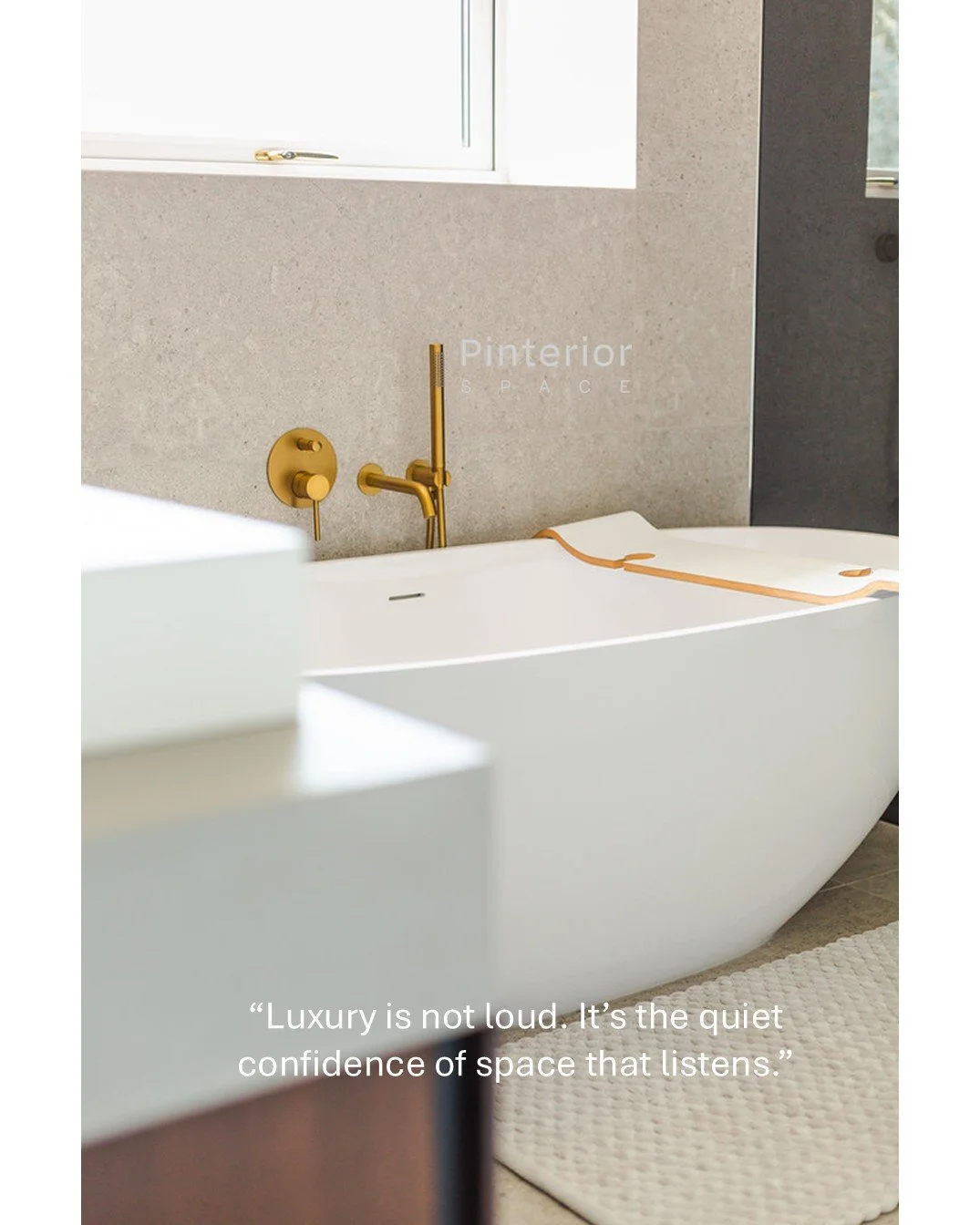
Bathroom interior featuring a sculptural freestanding bath, gold fixtures, and soft stone surfaces. Designed to evoke quiet luxury, the space balances architectural clarity with emotional warmth. Natural light, gentle textures, and restrained detailing create a sanctuary-like atmosphere rooted in proportion and material intelligence.
1. Material Intelligence: Choosing What Ages Well
The most successful bathrooms are built from materials that improve with time.
This is the foundation of architectural bathroom design. If you’re curious how design icons shaped this quieter, more architectural approach, you can explore my [Design History & Icons collection → /design-history-icons].
Materials I prioritise:
honed stone
brushed metal
timber with grain
limewash
microcement (when appropriate)
high‑quality ceramics
venetian plaster
These surfaces develop character rather than wear. They feel warm to the touch and visually calm.
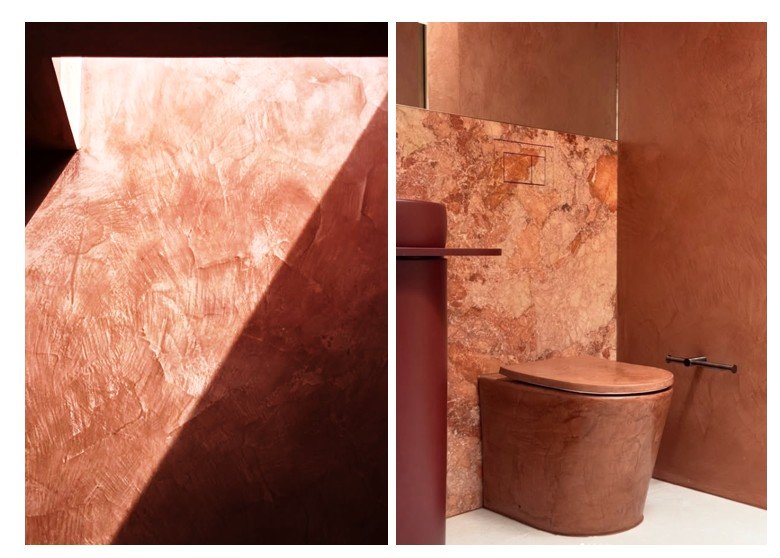
Bathroom interior featuring Venetian plaster in a warm, earthy palette. The textured wall finish adds depth and softness, while the sculptural toilet and sink echo the same tonal clarity. Designed to feel grounded and expressive, this space balances natural materials with modern restraint.
Credit: Venetian Plaster Gallery Melbourne (@venetianplastergallery_melb)
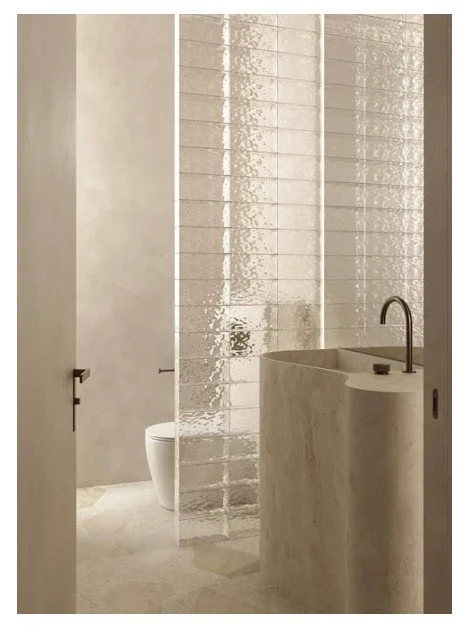
A serene bathroom interior from Zürich, Switzerland, shaped by matte plaster walls, honed limestone volumes, and a vertically stacked glass tile partition that softly filters light. The sculptural stone washbasin anchors the space, creating a quiet architectural composition where transparency and mineral mass remain precisely balanced.
Credit: Interior Trends Book (@interiortrendsbook)
2. Stone: Weight, Veining, and Natural Calm
A stone bathroom doesn’t need to be dramatic. In fact, the quietest stone choices often feel the most luxurious.
Design principles I use:
Choose honed or textured finishes
Let veining run uninterrupted where possible
Use stone sparingly but intentionally
Pair stone with warm metals and timber
Stone brings emotional grounding — a sense of permanence. To see how stone and proportion work together in a real home, you can explore my [Shelford Project → /shelford-road]
3. Microcement: Seamless, Soft, Architectural
(Used when appropriate)
While not part of the first London bathroom concept, microcement bathrooms remain one of the strongest ways to create architectural calm.
Why microcement works:
seamless surfaces with no grout lines
soft, sculptural edges
gentle light reflection
perfect for showers, niches, and feature walls
It’s a material that supports quiet luxury without shouting.
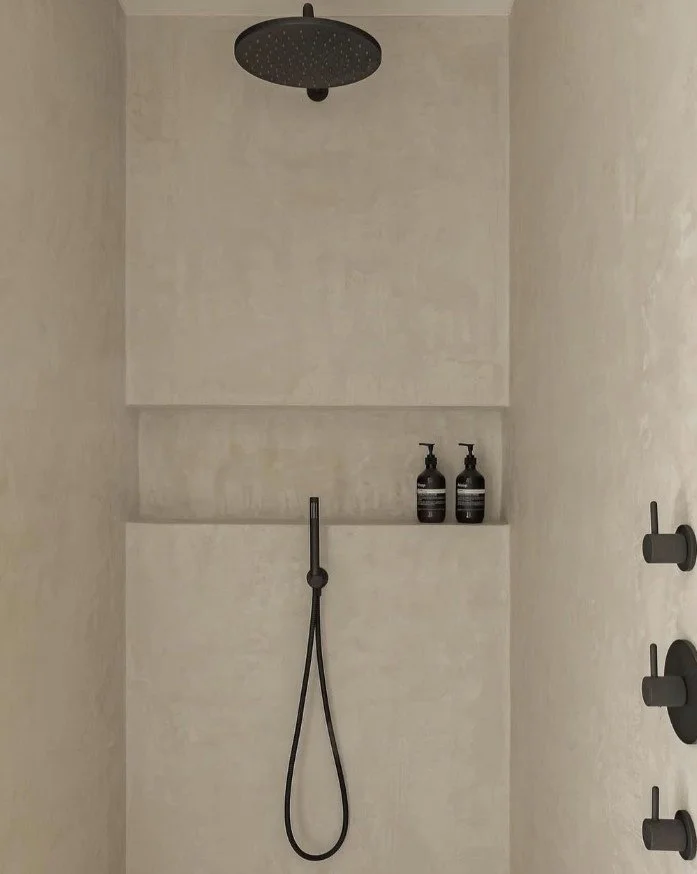
Minimalist bathroom interior from Dubai featuring microtopping wall finishes, matte black fixtures, and a recessed shower shelf. The palette is neutral and architectural — soft beige tones, sculptural fittings, and restrained detailing create a space that feels quietly luxurious and deeply functional.
Credit: microlayer.co — Dubai, United Arab Emirates
Specialists in microtopping flooring and renovation services.
“Quiet luxury is not minimalism. It’s clarity — the confidence of knowing what matters.
4. Lighting: The Architecture of Atmosphere
Lighting is where a bathroom becomes emotional.
I design with three layers:
soft wall lights for evening calm
concealed LED strips for architectural definition
warm temperatures (never cool white)
Good lighting shapes mood, depth, and proportion.
If you’d like to see how sculptural lighting transforms a space, you can explore my [Guest Bedroom Project → /guest-bedroom]
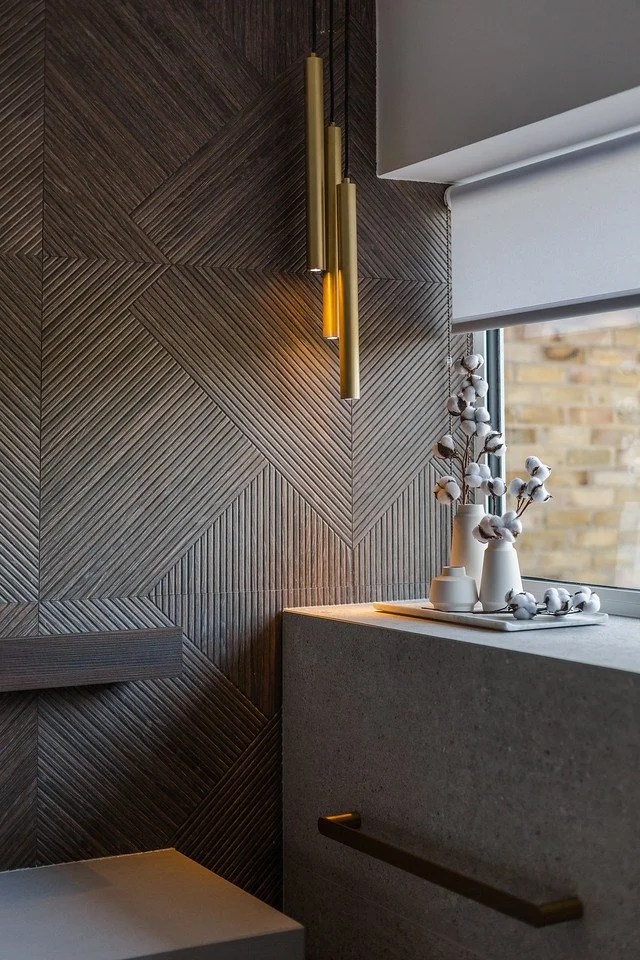
A modern family bathroom in Gamlingay featuring Porcelanosa Diamond 3D wall tiles with a sculptural diamond pattern. Brass pendant lights cast a warm glow over the concrete countertop, softened by minimalist vases with cotton stems. The mix of textures — ceramic, brass, concrete, and cotton — creates a quietly luxurious and inviting space.
Credit: Pinterior.space
5. Proportion: The Silent Luxury
Proportion is the element clients feel but rarely notice.
I consider:
vanity height
spacing between fittings
mirror‑to‑basin relationships
the rhythm of planes and junctions
Even small bathrooms can feel generous when the proportions are right.
If you’re interested in how proportion shapes design thinking, you can explore my [Reflection & Design Strategy Notes → /design-reflection
Proportion + Architecture
“Good design is not what you add, but what you refuse to disturb.”
Two Concept Directions: Current London Project
I’m currently designing two bathrooms for a London home, each with a distinct mood but the same architectural clarity. These concepts illustrate how quiet luxury adapts to different needs.
Concept 1: Form, Durability, and Practical Blue drench
The first bathroom is built around form and longevity.
No microcement — instead, the design focuses on:
durable, long‑life materials
clean architectural lines
a layout that supports everyday practicality
grounded tones
fixtures chosen for function first, beauty second
This bathroom is about quiet confidence.
The calm comes from clarity, not ornament.
It’s a space designed to feel relevant in ten or twenty years because it’s built on form, not fashion.
If you’d like to see how quiet confidence appears in another project, you can explore my [Bedroom Project → /bedroom]
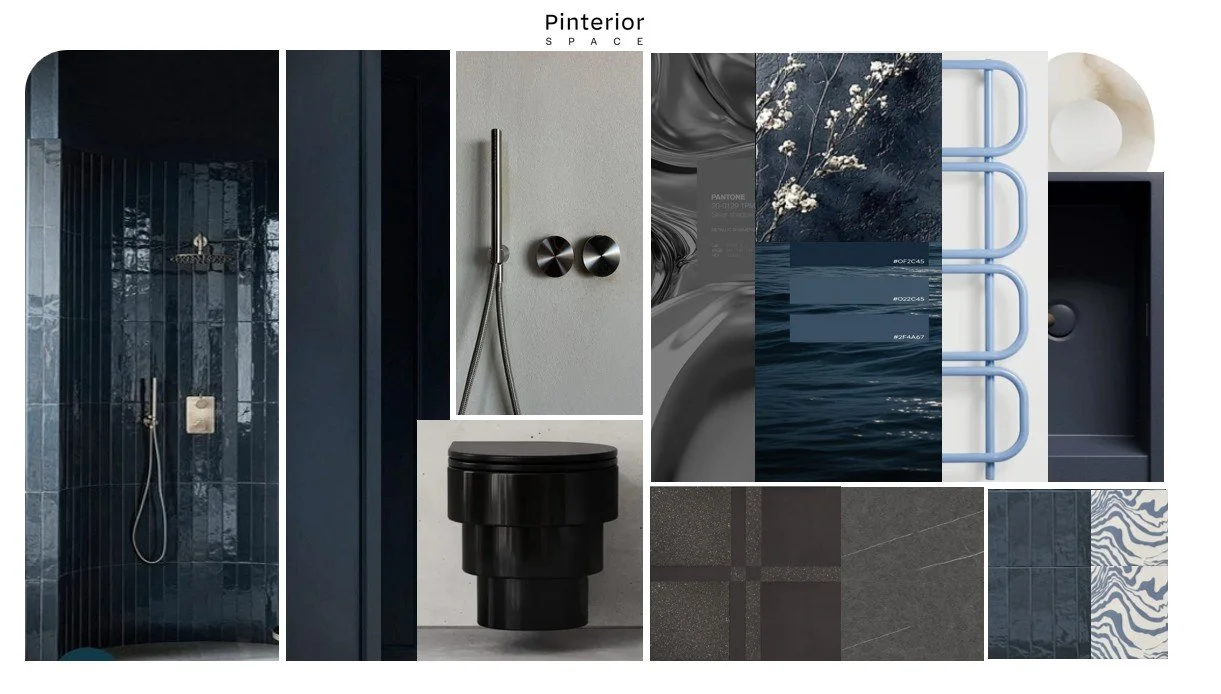
Concept design for a quiet luxury bathroom, featuring deep blue tiles, sculptural black fixtures, and a palette of moody neutrals. The composition explores architectural calm through texture, proportion, and restrained contrast — balancing bold pattern with material clarity. Designed to evoke grounded elegance and emotional depth.
Credit: Pinterior.space
Concept 2: Lightness, Pattern, and Expressive Calm
The second bathroom takes a lighter, more expressive approach — still calm, but with striking patterns used intentionally. If you’re curious how expressive restraint works in architectural design, you can explore my [Design History & Icons collection → /design-history-icons]
Key elements:
a zebra‑striped basin as a sculptural focal point
geometric wall reliefs for subtle movement
light stone and soft neutrals to balance the pattern
modern fixtures with clean lines
earthy accents like dark chocolate brown and warm timber
This bathroom is about expressive restraint.
Bold elements breathe within a calm framework.
It shows that quiet luxury can be warm, playful, and modern — without losing its architectural grounding.
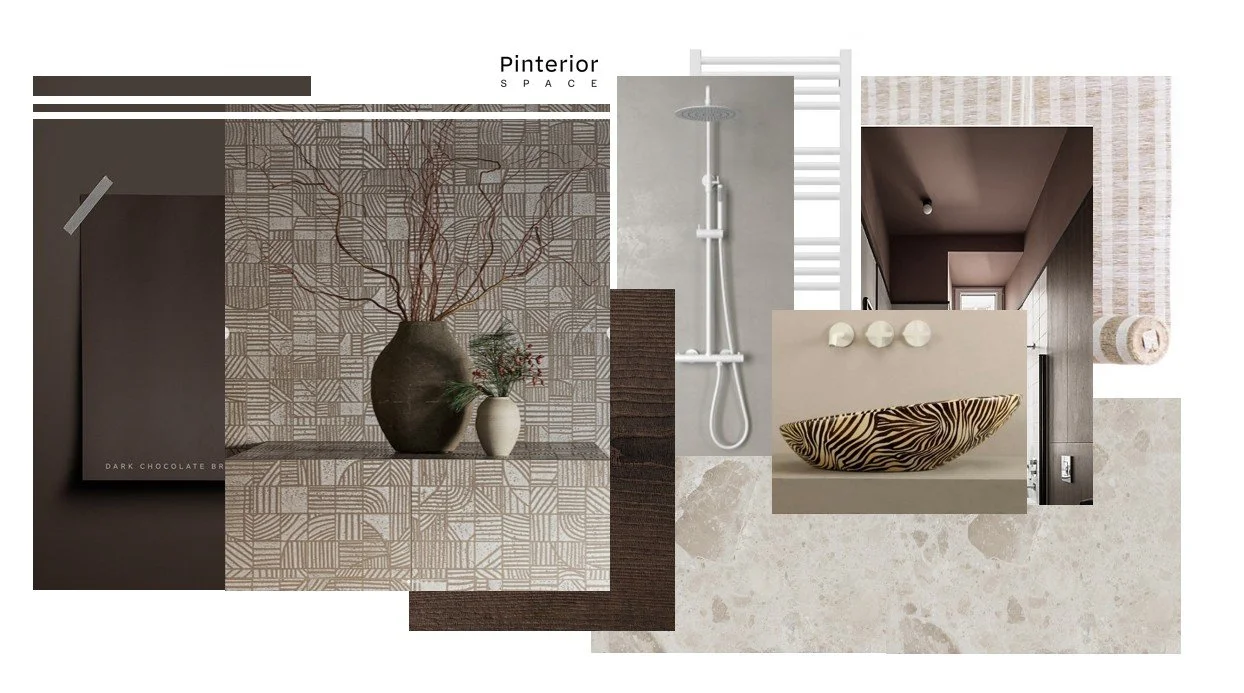
Concept design for a warm, expressive bathroom rooted in architectural calm. The palette blends dark chocolate brown, soft neutrals, and sculptural textures — including a zebra-patterned sink, geometric wall reliefs, and natural flooring samples. Designed to explore expressive restraint, this mood board balances bold pattern with quiet clarity.
Credit: Pinterior.space
Durability + Practicality
“A bathroom designed for real life will always feel more luxurious than one designed for trends.”
Why This Matters for Cambridgeshire Clients
Bathrooms are the second‑highest conversion area after kitchens.
Homeowners want spaces that feel restorative, not just functional.
By designing with:
texture
proportion
material intelligence
architectural clarity
…you create bathrooms that feel timeless and add long‑term value to homes across Cambridgeshire, Cambridge, London, and surrounding villages. If you’re looking for a designer who specialises in calm, architectural bathrooms, you can explore my [Bathroom Interior Design Services → /services-bathroom-design].
For anyone searching for a bathroom interior designer Cambridge or a local bathroom interior designer near me, this approach ensures a bathroom that feels both personal and architectural — a space that supports daily life with quiet confidence.
Choosing materials, finishes, colours doesn’t have to feel overwhelming. If you’d like support creating a palette that feels calm, cohesive, and true to your home, I’d be glad to support you. Whether you’re based in Cambridge, one of the surrounding villages, or London, you’re welcome to get in touch — sometimes a conversation with a designer is all it takes to turn uncertainty into clarity.
Ready to design with intention? Book your free consultation today.
Continue Your Journey
Beautiful bathrooms are created through thoughtful planning, carefully chosen materials and a clear understanding of how a space should feel. Continue exploring these articles to discover the design principles that create timeless bathrooms and contemporary homes.
Read Next
Bathroom Renovation Cost in London (2026 Guide): What to Expect and How to Plan
Understand what influences the cost of a bathroom renovation and discover how thoughtful planning creates long-term value.
Bathroom Lighting Guide (UK): Safe, Modern Lighting Design and IP Ratings Explained
Discover how thoughtful lighting balances safety, functionality and atmosphere to create bathrooms that work beautifully every day.
How to Choose Bathroom Tiles for a Luxury Bathroom Design
Explore how materials, texture and proportion influence the character and timeless appeal of a beautifully designed bathroom.
Return to the Chapter
Interior Design Styles & Ideas
Explore more articles about interior design styles, design philosophy and practical ideas that shape calm, contemporary homes.