
How to Design Quiet Luxury Interior Spaces
Quiet luxury interior design is centred around creating calm, refined spaces that feel timeless, architectural, and deeply connected to the way people live. Through natural materials, layered textures, thoughtful lighting, and restrained detailing, quiet luxury interiors bring warmth, balance, and sophistication to contemporary homes without feeling excessive or overdesigned.
Quiet luxury isn’t about marble everywhere or a room filled with designer labels. It’s about how a space feels when you walk into it — calm, textural, and quietly confident.
The real luxury lives in the thinking: in the way materials are chosen, combined, and allowed to age; in the proportion of a room; in the light that lands on a wall at 4 pm in winter.
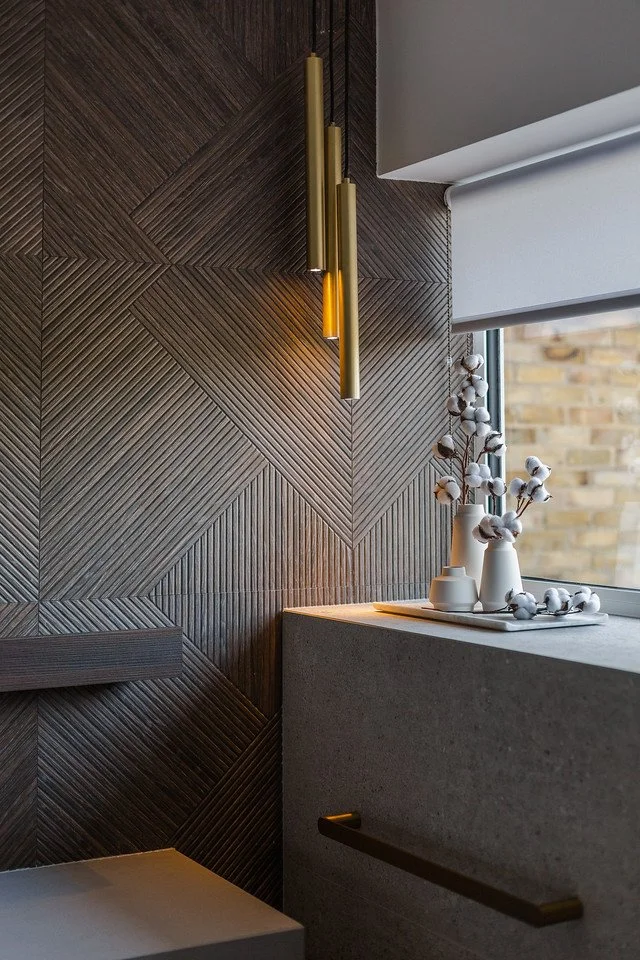
A modern family bathroom in Gamlingay featuring Porcelanosa Diamond 3D wall tiles with a sculptural diamond pattern. Brass pendant lights cast a warm glow over the concrete countertop, softened by minimalist vases with cotton stems. The mix of textures — ceramic, brass, concrete, and cotton — creates a quietly luxurious and inviting space.
As an interior designer working across Cambridge and London, I see quiet luxury not as a style, but as a way of designing. It’s a process. It begins with a clear concept, a deep understanding of how you live, and a careful, almost forensic attention to materials. Expensive choices alone can’t create this feeling. Thoughtful ones can.
What Quiet Luxury Really Means
Quiet luxury is architectural rather than decorative. It’s the opposite of noise — a home shaped by restraint, clarity, and intention.
A quiet luxury interior is defined by:
calm, textural surfaces
natural finishes that age beautifully
architectural proportion and balance
material-led design
spaces that feel grounded, not styled
It’s a form of luxury that doesn’t need to announce itself. It’s felt rather than seen.
If you’re curious how other design icons shaped this quieter, more architectural approach, you can explore my
[Design History & Icons collection → /design-history-icons].
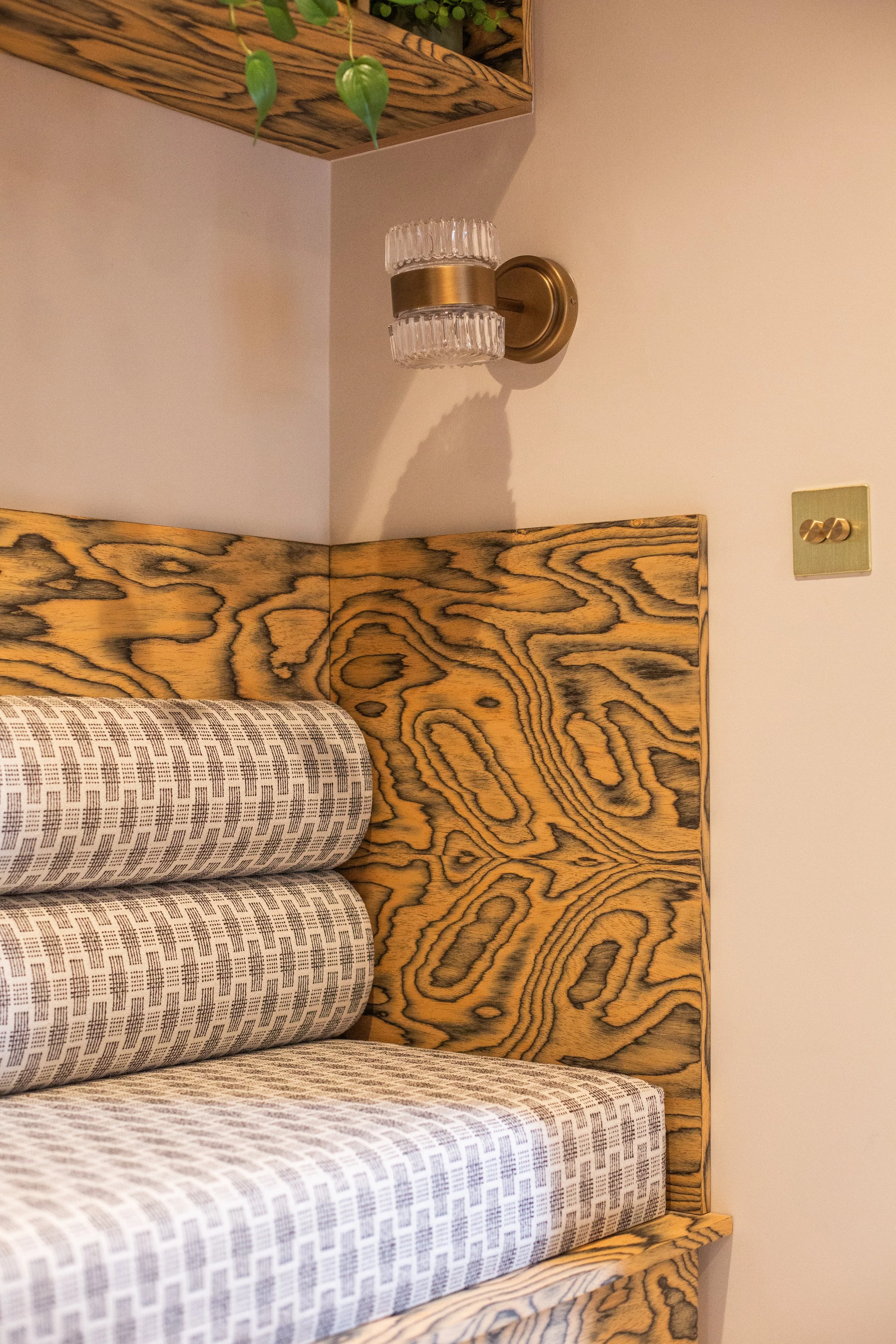
Award-winning hallway from the Shelford project, recipient of the SBID 2025. A sculptural wood-grain bench anchors the space, paired with geometric upholstery and brass accents. A modern wall sconce and toggle switch plate add quiet elegance, while trailing greenery softens the composition.
The Role of Concept Design: Where Luxury Begins
Every quiet luxury home starts with a concept design — the invisible structure that holds the project together.
A strong concept:
guides every decision
prevents random, trend-driven choices
creates coherence across rooms
allows creativity to flourish within clear boundaries
This clarity echoes the modernist discipline of Mies van der Rohe [Mies van der Rohe — Less, But Deeper → /mies-van-der-rohe],
where restraint becomes a form of richness.
Concept design is the quiet architecture behind the architecture. It’s where luxury begins — not in the shopping, but in the thinking.
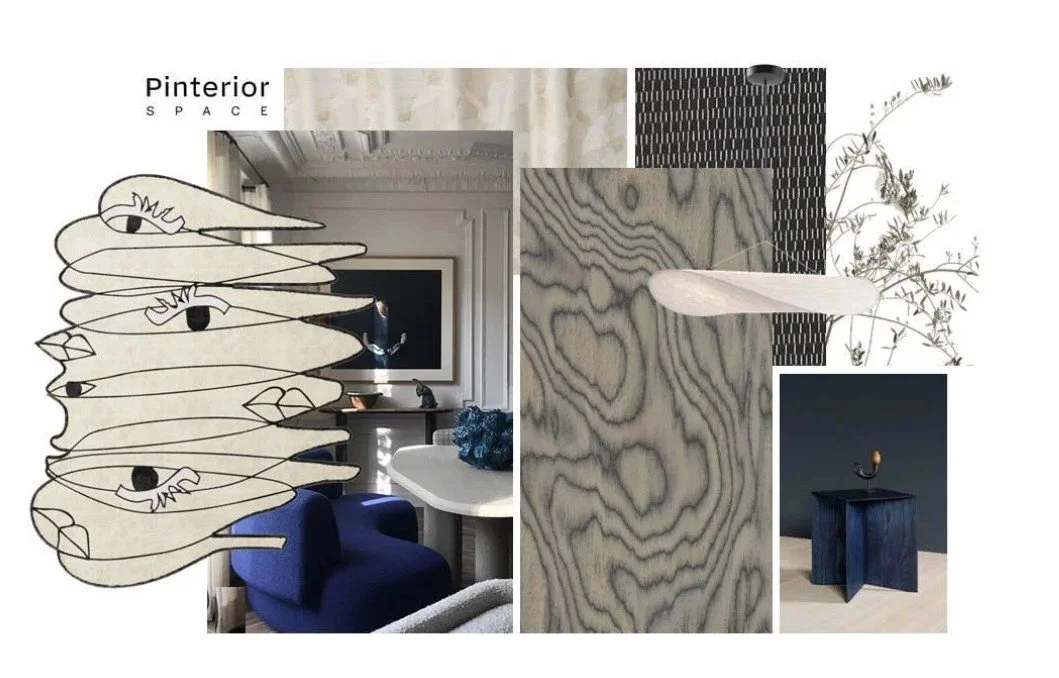
Concept board for a contemporary Cambridge office–living space, blending swirling wood veneer textures, soft grey textiles, and bold cobalt blue accents. Layered with architectural references, sculptural lighting, and expressive art, it evokes a refined interior that balances focus, comfort, and visual clarity.
Material-Led Design: The True Foundation of Quiet Luxury
Quiet luxury is built from materials, not objects.
The luxury comes from understanding:
Which materials will age beautifully
How textures interact
How stone, timber, metal, and limewash behave over time
How to combine materials so they feel calm, not chaotic
A quiet luxury home might use:
Limewash for softness
Microcement for sculptural calm
Timber for warmth
Stone for grounding
Linen and wool for a gentle texture
If you’d like a deeper look at how to choose materials that last, you can read my guide: [How to Choose Materials That Age Beautifully → /how-to-choose-materials-that-age-beautifully]. This material intelligence echoes the sculptural simplicity of Marcel Breuer [Marcel Breuer — The Strength of Simplicity → /marcel-breuer], where the honesty of a material becomes the luxury itself.
None of these needs to be the most expensive option. What matters is knowledge, selection, and combination.
Luxury is not the price of the material — it’s the intelligence behind the choice.
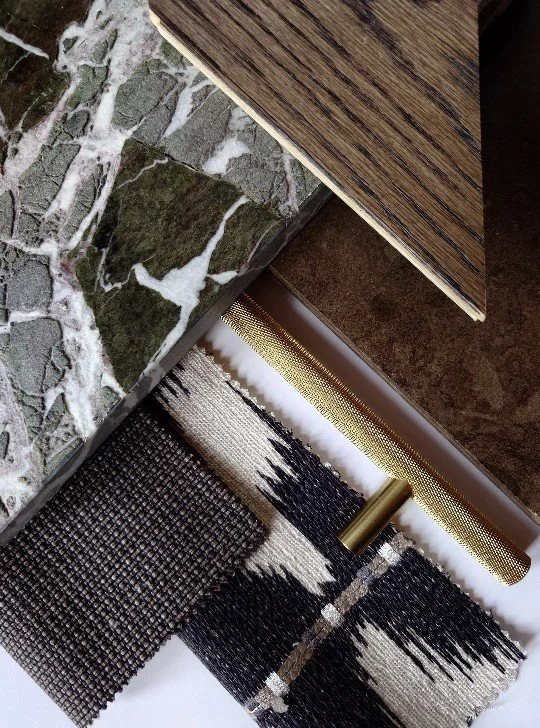
Sample board showcasing the tactile richness of quiet luxury — green-veined marble, dark wood, suede, and woven textiles. Each material is chosen for its depth, restraint, and enduring quality, reflecting a design ethos rooted in sensory clarity and timeless elegance.
Texture Over Decoration
Quiet luxury interiors rely on texture, not ornament.
Texture creates depth without noise. It softens light. It makes a room feel lived in, not styled. This emotional clarity aligns beautifully with Eileen Gray’s approach [Eileen Gray — Designing for Quiet Souls and Modern Lives → /eileen-gray], where comfort and calm are designed into the very surfaces of a room.
Examples of quiet luxury texture:
stone with natural veining
brushed metal
limewash with movement
timber with grain
linen that wrinkles softly
microcement that feels like sculpture
Texture is what makes a space feel calm, tactile, and emotionally grounded.
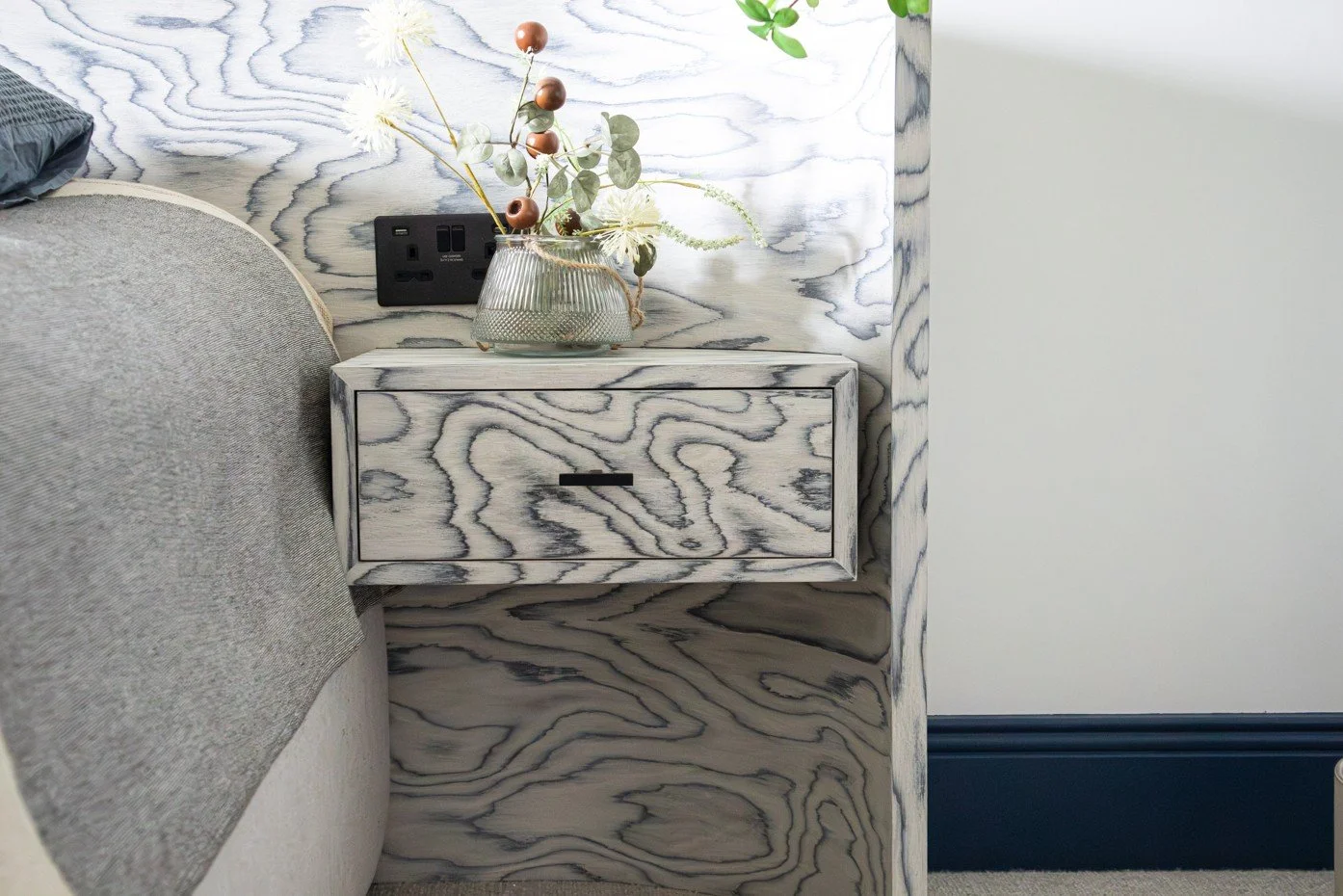
Bespoke headboard in a Cambridge bedroom, crafted from Sotsatts wood veneer with swirling grain that evokes movement and depth. The floating nightstand and ribbed glass vase add tactile contrast, while the layered foliage softens the composition. This is texture over decoration — a quiet luxury that grounds the room emotionally and visually
Proportion, Light, and Architectural Calm
Quiet luxury is deeply architectural.
It’s shaped by:
proportion
negative space
rhythm
light
Light becomes a material in its own right — grazing a wall, softening a corner, revealing texture.
This is where your architect articles interlink beautifully:
The clarity of Mies van der Rohe
The warmth of Alvar Aalto
The order of Le Corbusier
The sculptural simplicity of Marcel Breuer
Quiet luxury is modernism softened — architectural thinking made intimate.
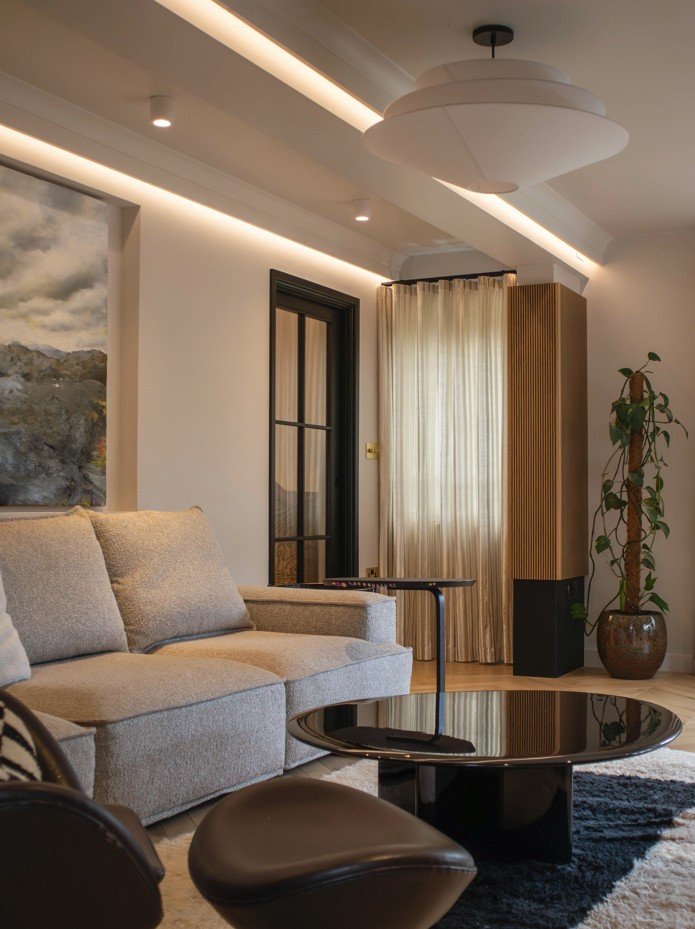
Open-plan living space from the Shelford project, featuring a neutral sectional sofa, black glass coffee table, and sculptural leather chair. An abstract landscape painting anchors the wall, while layered lighting — recessed LEDs and a white pendant — adds depth. A tall potted plant and sheer curtains soften the architectural lines, creating a warm, modern atmosphere.
Trends: Selective, Considered, and Always in Moderation
Trends can be wonderful. They introduce new materials, new textures, and new ideas. But in a quiet luxury home, trends are used selectively.
Not every trend will bring calm or longevity.
Not every fashionable material will age with grace.
Quiet luxury uses trends only when they support:
durability
practicality
timelessness
architectural clarity
A trend becomes luxurious only when it’s guided by understanding — not novelty.
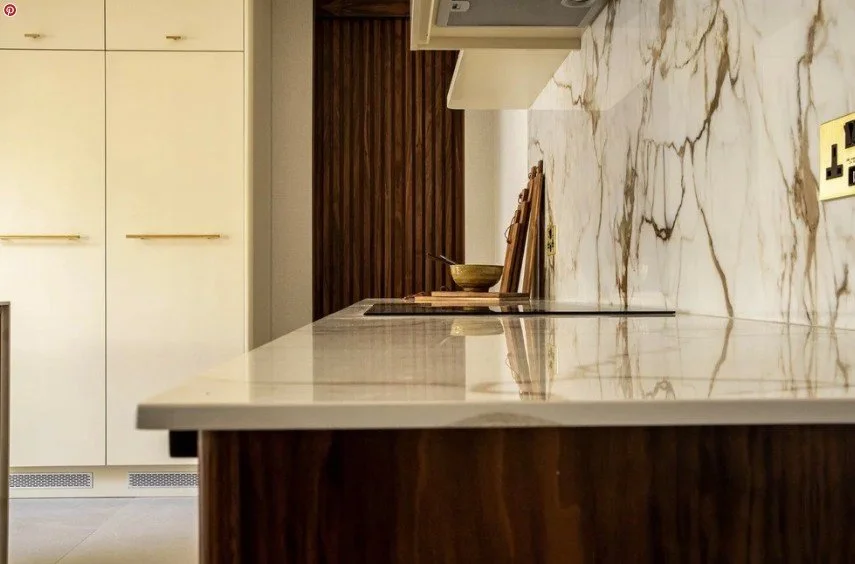
Detail from a bespoke kitchen in Gamlingay featuring a pocket sliding door with dark walnut panelling. The polished stone countertop and richly veined marble backsplash add depth and elegance, while warm-toned accessories and gold hardware complete the composition. Every element is custom-made, reflecting a quiet luxury rooted in material integrity and spatial clarity.
Why Quiet Luxury Works So Well in Cambridge & London Homes
Cambridge and London homes — Victorian terraces, mid-century houses, contemporary extensions — all benefit from quiet luxury’s architectural calm.
It works because it:
respects heritage
softens modern additions
brings coherence to mixed-era homes
supports family life with durable materials
creates spaces that feel grounded and timeless
Quiet luxury is the bridge between old and new.
If you’re exploring how to harmonise old and new, you may enjoy my reflections on modernist principles in the [Design History & Icons collection → /design-history-icons].
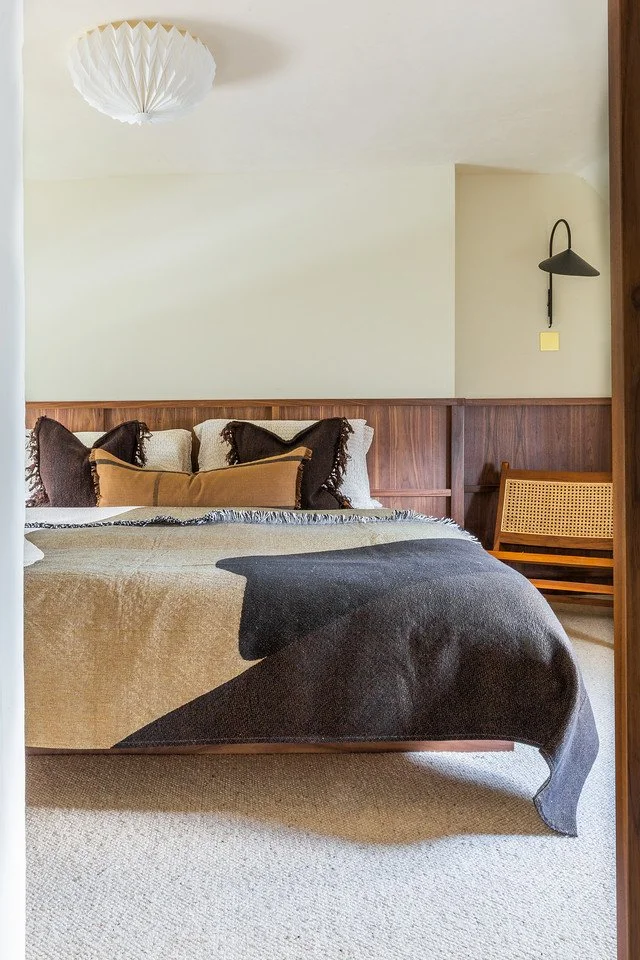
Grade II listed bedroom in South Cambridgeshire, where quiet luxury bridges old and new. A sculptural pendant light, abstract textiles, and a woven chair soften the architectural bones, while natural materials and layered lighting create a space that feels both timeless and lived in.
Working With a Material-Led Interior Designer
If you’re exploring quiet luxury for your home, working with a Cambridge and London interior designer ensures the materials, proportions, and architectural context are chosen with precision.
My role is to:
develop a clear concept design
select materials that age beautifully
create calm, textural, architectural interiors
design kitchens and bathrooms that feel sculptural and practical
guide every decision so nothing feels random or noisy
Quiet luxury becomes not a trend, but a way of living.
For a deeper look at my work, you can visit my [Accolades → /accolades].
“True luxury is quiet — it lives in the materials, the light, and the way a space makes you feel.”
If this approach resonates with you, you’re welcome to begin your project through my Contact page, or explore more ideas and reflections on my Home page.
Continue Your Journey
Quiet luxury is rooted in thoughtful design rather than passing trends. Continue exploring these articles to discover the principles, materials and design philosophies that create interiors with lasting beauty, comfort and character.
Read Next
How to Design Balanced and Well-Proportioned Interior Spaces
Discover how balance, proportion and thoughtful spatial composition create interiors that feel calm, harmonious and naturally comfortable to live in.
The Invisible Value of Design
Explore why the most valuable part of interior design is often the thinking, experience and professional judgement that shapes every successful project.
How to Make Your Home Feel Finished with Interior Design
Understand how thoughtful interior design supports wellbeing by creating homes that feel calm, personal and genuinely enjoyable to live in.
Return to the Chapter
Interior Design Styles & Ideas
Explore more articles about interior design styles, design philosophy and practical ideas that shape calm, contemporary homes.