
How to Design Awkward Room Layouts in Cambridge Homes
Awkward room layouts are a common challenge in Cambridge homes, particularly in period properties, loft conversions, and older terraces. Thoughtful interior design can improve flow, maximise space, and make difficult layouts feel functional and cohesive. In this guide, we explore practical ways to design awkward rooms without compromising comfort or style.
Why are the most challenging rooms often the most beautiful?
Introduction: Why British Homes Are Full of Awkward Layouts
If you live in Cambridge,Cambridgeshire, or London, you already know: British homes rarely give you a perfect rectangle to work with. Instead, they offer:
• angled Victorian rooms in Newnham
• chimney breasts in Petersfield
• narrow terraces in Chesterton
• bay windows in Romsey
• long corridors in Trumpington
• loft rooms in Girton
• quirky extensions in Ely, St Ives, and Saffron Walden
• asymmetrical living rooms in London townhouses
And with every inherited quirk comes frustration. People search for help when they’re overwhelmed, stuck, and ready for change. But here’s the truth I’ve learned after years of designing Cambridge and Cambridgeshire homes: This guide shows you how.
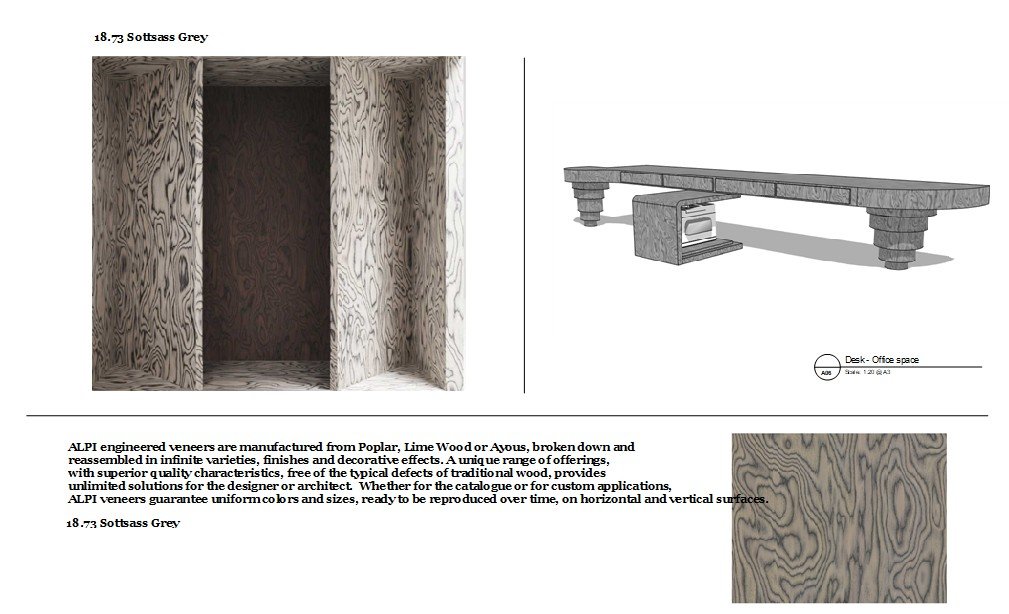
A design concept showcasing ALPI Sottsass Grey engineered veneer, including a bespoke shelving unit, a custom office desk, and a close‑up of the veneer’s textured grain. This material represents the tailored, architectural approach used in solving awkward layouts through made‑to‑measure furniture and premium finishes
Awkwardness as Opportunity: The Designer’s Mindset. Most homeowners try to solve awkward rooms with standard furniture.
It never works.
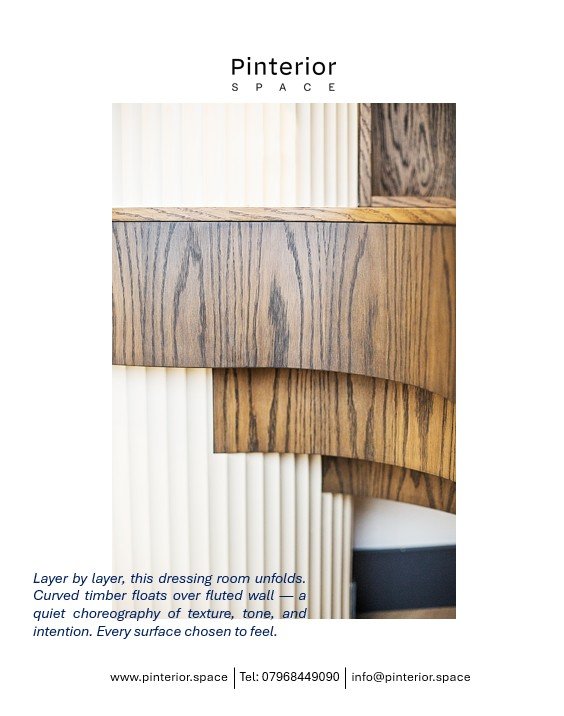
A sculptural detail showing curved timber panels floating over a white fluted wall. The materials meet with seamless precision, demonstrating how layered textures, tone, and bespoke joinery can transform awkward geometry into a calm, intentional design moment.
Most homeowners try to solve awkward rooms with standard furniture — but bespoke joinery and made‑to‑measure furniture ( → Services page) is what truly transforms them.
This is where bespoke design becomes not a luxury — but the only way to make the space work, especially in homes where open‑plan circulation and zoning ( → circulation article) matter.
Why?
Because awkward rooms demand:
• tailored proportions
• custom geometry
• human‑centred dimensions
• integrated solutions
• materials chosen for the home’s character
This is where bespoke design becomes not a luxury — but the only way to make the space work.
The Four Pillars of Solving Awkward Layouts
1. Form + Proportion
Proportion is the invisible architecture of comfort.
It’s what makes a room feel calm, balanced, and intentional.
In awkward spaces, proportion matters more than size.
A piece must:
• align with the room’s geometry
• respect the wall lengths
• sit with quiet confidence
• feel sculptural, not squeezed
This is why made‑to‑measure furniture transforms spaces that standard pieces overwhelm.
2. Human Dimensions
Good design is not just about aesthetics — it’s about how people move.
• circulation widths
• ergonomic heights
• reach and comfort
• the kitchen triangle
• desk depth
• seating proportions
Awkward rooms require tailored dimensions because the human body doesn’t adapt to bad geometry — the geometry must adapt to the human body.
3. Space Planning
This is where awkwardness becomes opportunity.
• Where does the room want you to walk?
• Where does the light fall?
• Which corners are dead?
• Which walls can carry weight?
• How do multiple entry points affect flow?
This is the difference between a room that feels chaotic and one that feels effortless.
4. Integration: It Must Feel Like It Was Always There
The best bespoke pieces don’t look “added.”
They look inevitable.
Integration means:
• materials that echo the home
• curves that follow the architecture
• joinery that wraps the room
• proportions that feel natural
• a sense of permanence
This is what higher‑earning Cambridge and London clients value: authorship, craftsmanship, and a one‑of‑a‑kind solution. Case Studies: Real Cambridge & Cambridgeshire Homes. These examples show how awkwardness becomes beauty when design is tailored.
Case Study 1: The Curved Dressing Room — A Masterclass in Spatial Fluency
This dressing room was small, curved, and full of potential.
This bespoke dressing room design in Cambridge ( → dressing room project page) wasn’t a simple rectangle.
A standard dressing table would have:
• wasted space
• blocked circulation
• broken the curve
• looked visually heavy
Instead, we designed a bespoke dressing table that followed the curve of the wall — a wall we introduced to soften the room and create flow.
The result:
• perfect proportions
• tailored depth
• fluent movement
• no wasted space
• a sculptural piece that feels like it was always meant to be there
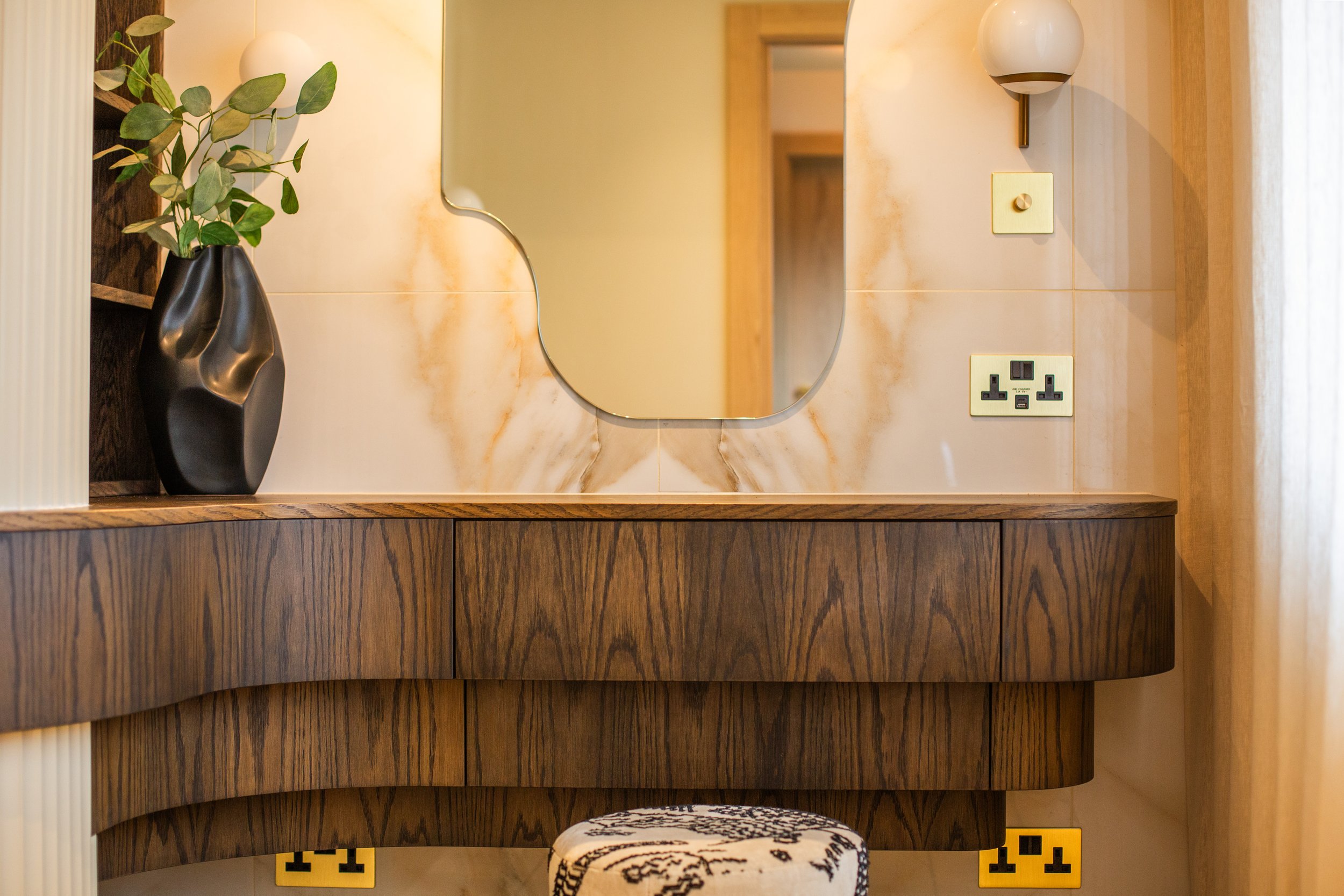
A curved dressing table that follows the room’s architecture — a bespoke solution that saves space, enhances flow, and feels utterly intentional.
This is the power of made‑to‑measure design.
Case Study 2: The Shelford Project — Hidden Storage Wrapped in Sculptural Slatted Panelling (SBID Winner)
A once‑awkward under‑stairs void became a signature design moment — an award‑winning interior design project in Cambridgeshire (link → Shelford project page) recognised by SBID.
This wasn’t a simple hallway. This was a transitional space with an awkward under‑stairs void — the kind of space that usually becomes a dumping ground or remains completely wasted. Instead, you transformed it into a sculptural, functional, award‑winning moment.
The challenge
• an under‑stairs area with no clear purpose
• awkward geometry
• limited depth
• a need for storage without visual heaviness
• a desire for calm, architectural presence
Our solution
You designed a fully bespoke seating and storage system, hidden seamlessly behind vertical slatted panelling that wraps the entire wall.
The panelling:
• conceals deep storage under the stairs
• creates a continuous architectural rhythm
• softens the geometry
• adds warmth and texture
• turns a functional need into a design feature
The seating:
• is perfectly proportioned
• integrates into the panelling
• feels sculptural, not added
• offers a practical moment for shoes, bags, or a pause
Why it works
Because the storage is hidden, the space feels calm and uncluttered.
Because the panelling is continuous, the architecture feels intentional.
Because the proportions are tailored, the piece feels like it has always belonged to the house.
And the result?
A once‑awkward under‑stairs void became a signature design moment — one that earned SBID recognition( Winner 2025 SBID)and stands as a perfect example of how bespoke joinery can elevate even the most overlooked spaces.
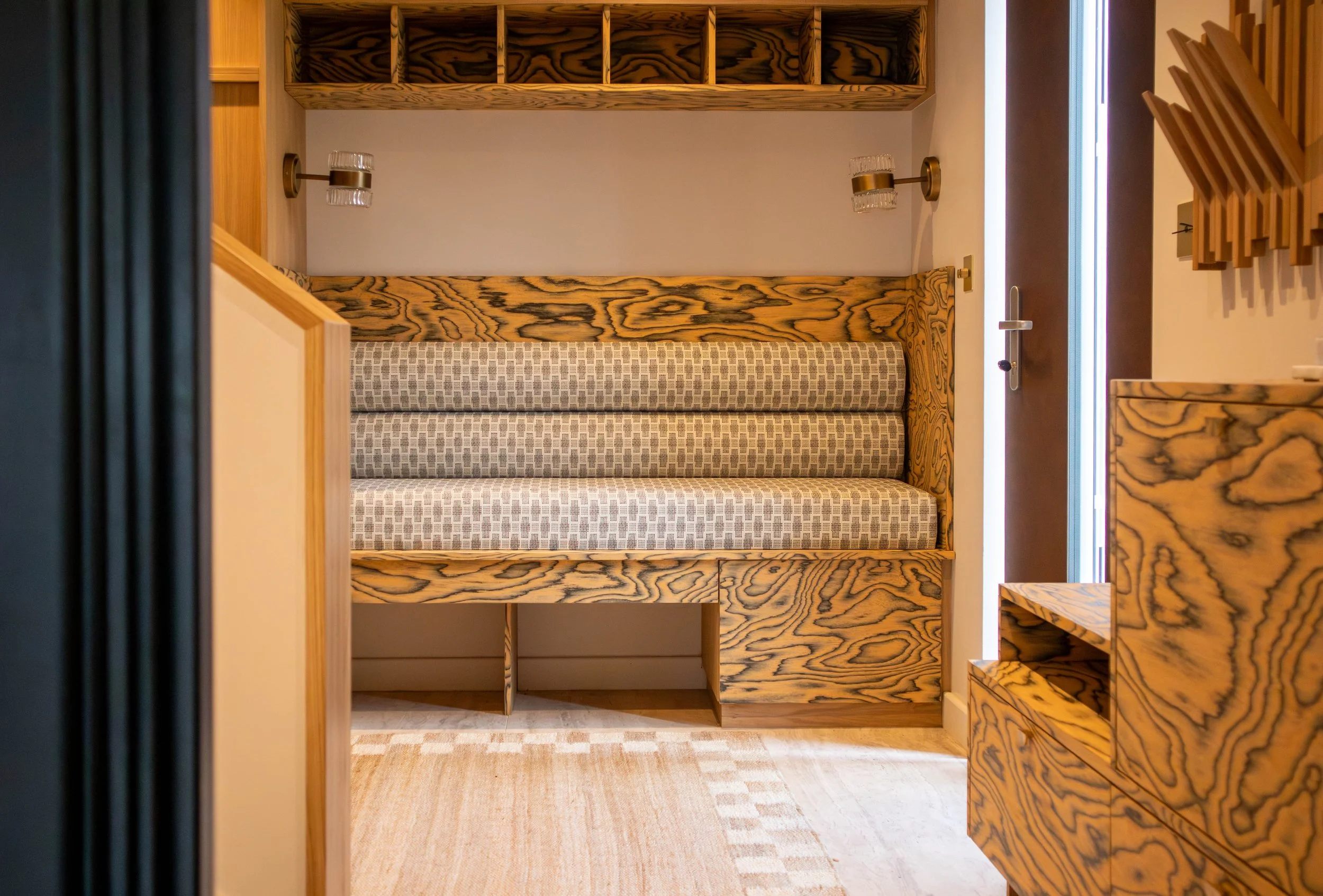
Under‑stairs space reimagined: bespoke joinery, hidden storage, and sculptural timber grain — an SBID award‑winning solution to an awkward architectural void
Case Study 3: Wood‑Burner Integration — Balancing a Chimney Breast
Many Cambridge and London homes have asymmetrical chimney breasts that make living rooms feel unbalanced.
Our solution:
• bespoke shelving
• integrated storage
• a sculptural frame around the wood burner
• materials chosen to ground the room
The room became calm, centred, and visually coherent.
This living room design in Cambridge (link → living room project page) wasn’t just about adding a fireplace
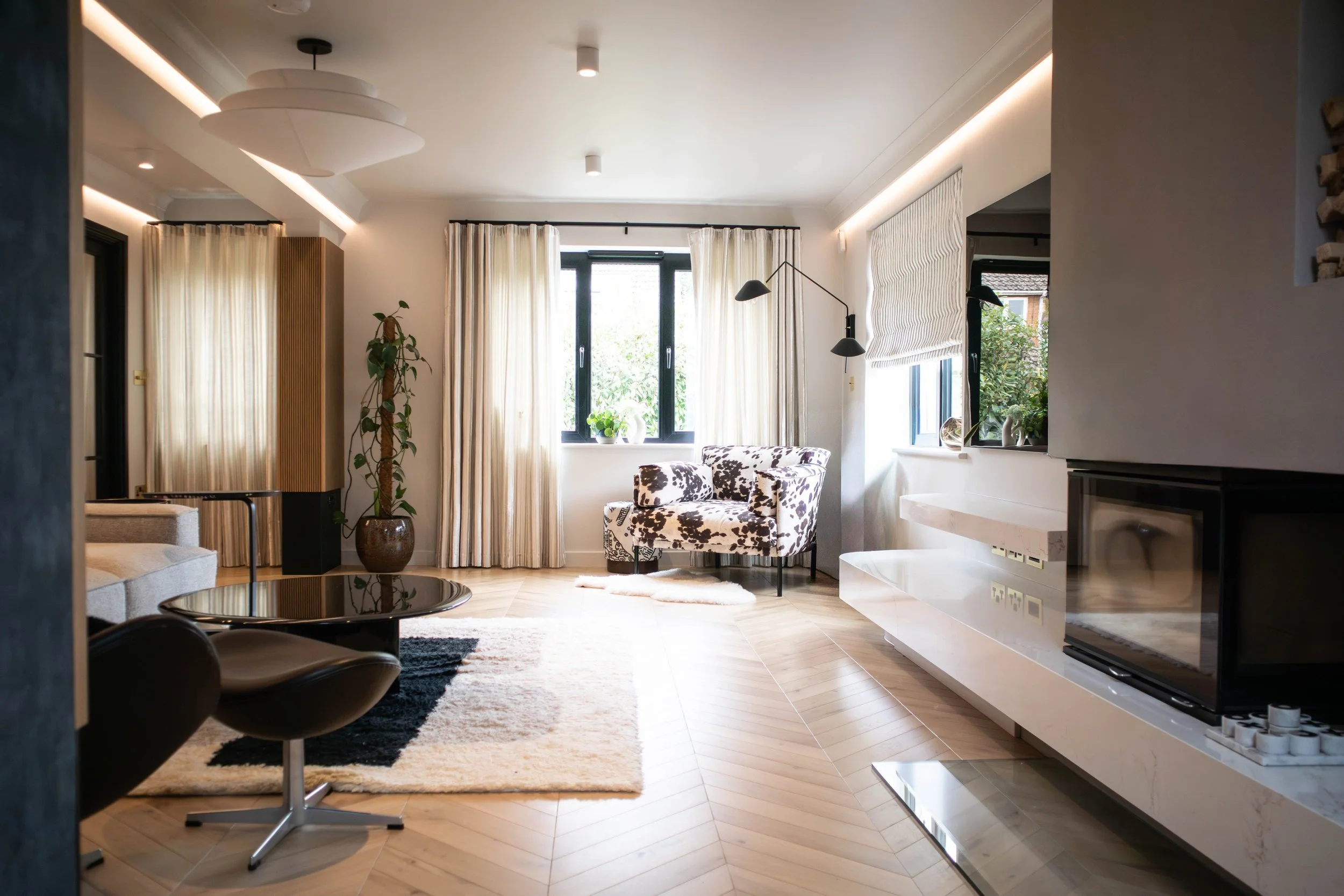
Bespoke living room design featuring an integrated wood burner, recessed log store, and balanced architectural composition tailored to the room’s proportions
Case Study 4: The 5‑Metre Office Desk — Turning a Long Room Into a Purposeful Workspace
A long, awkward room in Cambridgeshire needed purpose.
Standard desks looked lost.
We designed a 5‑metre bespoke desk that:
• matched the room’s rhythm
• used the full length
• integrated storage
• hid cables
• created a workspace with presence
This is proportion at its finest.
Some rooms are awkward not because they’re small, but because they’re too long — especially when designing bespoke office furniture in Cambridge (link → office/workspace project page)
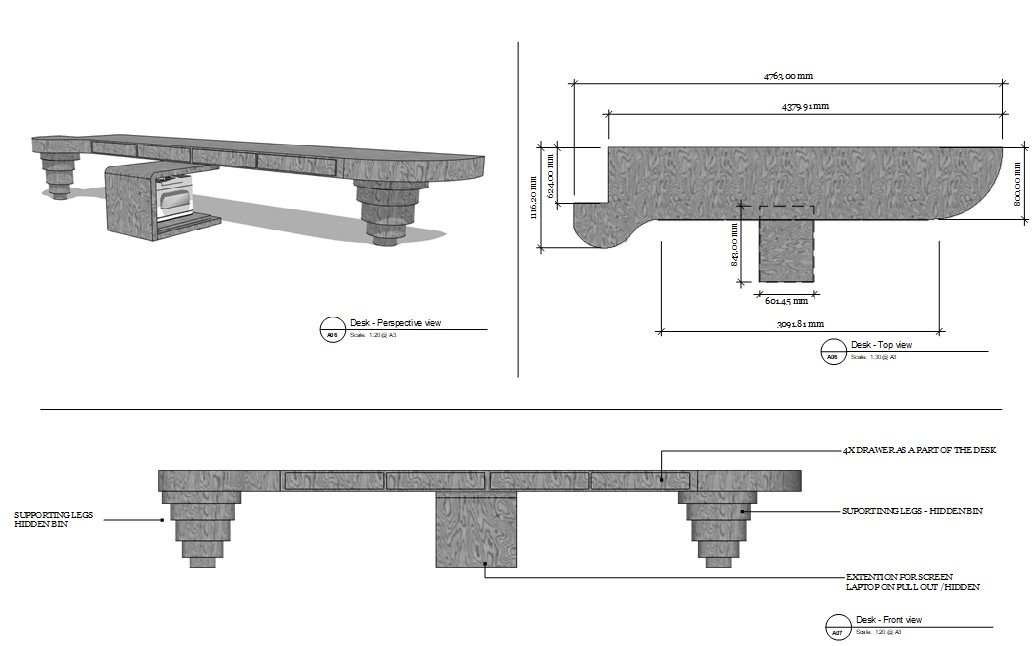
A 5‑metre desk engineered to match the room’s proportions — a bespoke solution for a long, awkward office space.
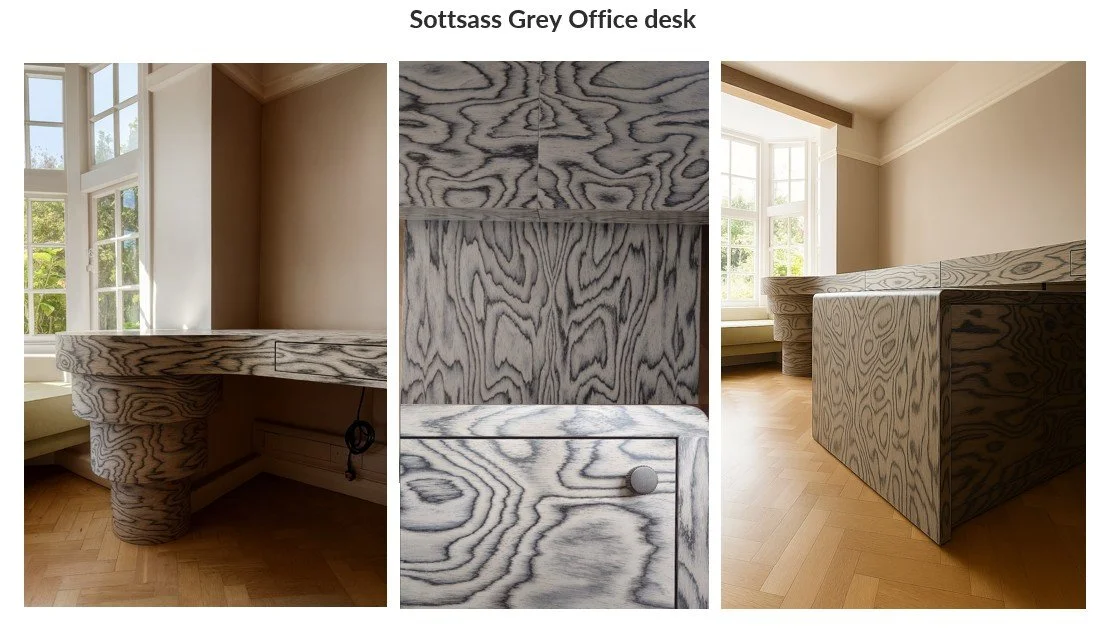
“From drawing to reality — a 5‑metre desk that anchors the room with sculptural presence and tailored proportion.”
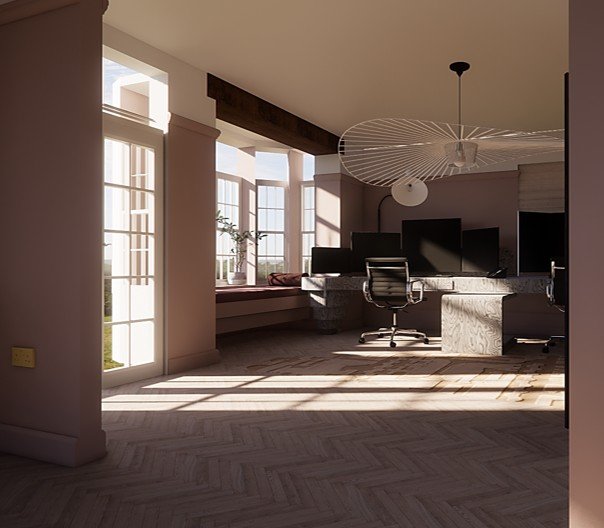
The vision before the build — a render showing how the 5‑metre desk would anchor the long room with light, proportion, and calm intention.
Case Study 5: The Gamlingay Kitchen — Four Entry Points, One Calm Layout
This kitchen had four competing doorways — a circulation nightmare. This home in Gamlingay had a layout that many Cambridgeshire homeowners will recognise — especially those searching for kitchen layout planning in Cambridge (link → kitchen article).
We:
• closed some openings
• created new ones
• restored the kitchen triangle
• designed bespoke cabinetry
• selected materials for warmth and longevity
The result:
A calm, intuitive, contemporary kitchen that flows beautifully into the dining and living spaces.
Why Made‑to‑Measure Is Worth the Investment
For Cambridge, Cambridgeshire, and London homeowners, bespoke design offers:
• space saved
• function gained
• beauty elevated
• materials chosen for longevity
• one‑of‑a‑kind pieces
• increased property value
• a home that feels intentional
This is why higher‑earning clients choose bespoke: It solves problems that standard furniture simply cannot. Local Expertise: Cambridge, Cambridgeshire, and London. I design for the way people live:
• Cambridge
• Cambridgeshire villages (Ely, St Ives, Huntingdon, Royston)
• Saffron Walden
• London
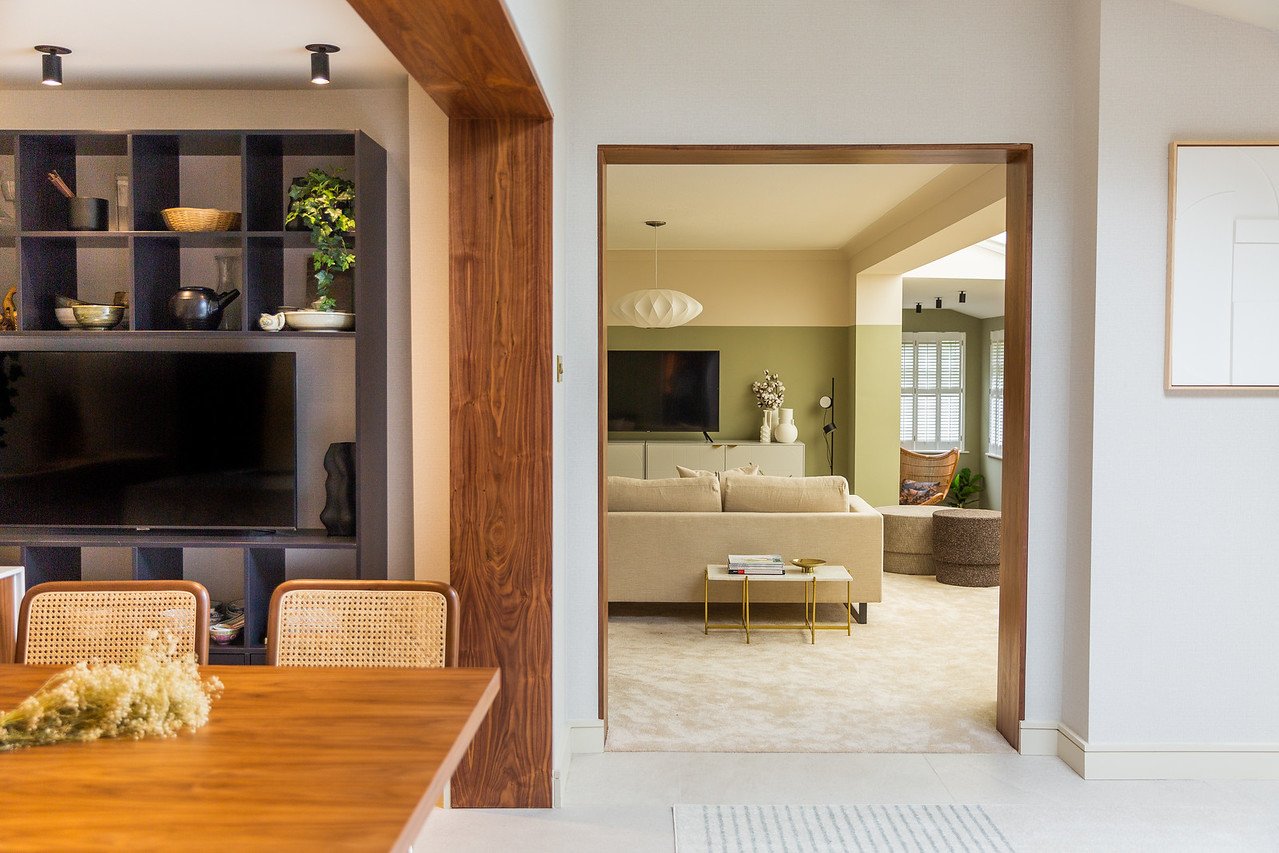
Four entry points, one calm flow — a complete rethinking of circulation, zoning, and everyday living in this Gamlingay home.”
Every home has quirks. Every room has potential. Every awkward layout can become something extraordinary.
Conclusion: Awkward Rooms Are Where the Magic Happens
Awkward layouts are not limitations.
If you’re unsure how to apply this to your own home, you can explore my interior design consultation here →Interior Design Consultation – Clarity Audit
They are opportunities for:
• craftsmanship
• proportion
• human‑centred design
• sculptural beauty
• one‑of‑a‑kind solutions
If your home has a room that feels impossible, that’s where the most exciting transformation can happen.
If you’re planning a renovation, I’d love to help you shape a home that moves with you.
Explore Related Guides
• Space Planning Interior Design Cambridge
• Space Planning Ideas for Contemporary Homes in Cambridgeshire
• The Hidden Cost of Poor Space Planning in Interior Design
• How to Plan Circulation in Open Plan Homes
Many awkward room layouts are not caused by a lack of space, but by how that space is organised. Thoughtful space planning can improve circulation, create better connections between rooms and help a home feel more comfortable to live in every day.
If you're struggling with a challenging layout, you may also find our guide to Space Planning Interior Design Cambridge helpful.
Continue Exploring Renovation & Home Transformation
Every home has its challenges, but thoughtful design can reveal opportunities that aren't immediately obvious. Explore the Renovation & Home Transformation knowledge library for more practical guides, professional insights and real project stories covering space planning, layouts and creating homes that work beautifully for everyday living.
Explore the Renovation & Home Transformation Knowledge Library →