
How to Plan Circulation in Open Plan Homes: Creating Flow, Function and Balance
Open plan living is often associated with simplicity and openness, yet many spaces feel disjointed or difficult to use due to poor circulation. The way you move through a space is just as important as how it looks. In this guide, I explain how to plan circulation in open plan homes, based on real residential projects across Cambridge and London, helping you create a layout that feels both calm and functional.
A Cambridge Designer’s Guide to Movement, Zoning, and Calm Contemporary Living
Open‑plan living promises light, connection, and a sense of spaciousness — but without thoughtful planning, it can just as easily feel chaotic. As a modern interior designer in Cambridge and Cambridgeshire, I see the same pattern again and again: homeowners remove walls hoping for freedom, only to discover that the space suddenly feels directionless.
Circulation — the way people move through a home — becomes the invisible architecture.
And when the walls are gone, zoning and furniture placement become the new structure.
This guide explores how to plan circulation in open‑plan homes with clarity, calm, and contemporary elegance, drawing on real Cambridge projects and the design principles I use every day.
Circulation is one of the key elements of how a space is experienced, shaping how we move through it and how it feels day to day. It forms an essential part of the wider planning process, which we explore in more detail in our guide to space planning in interior design.
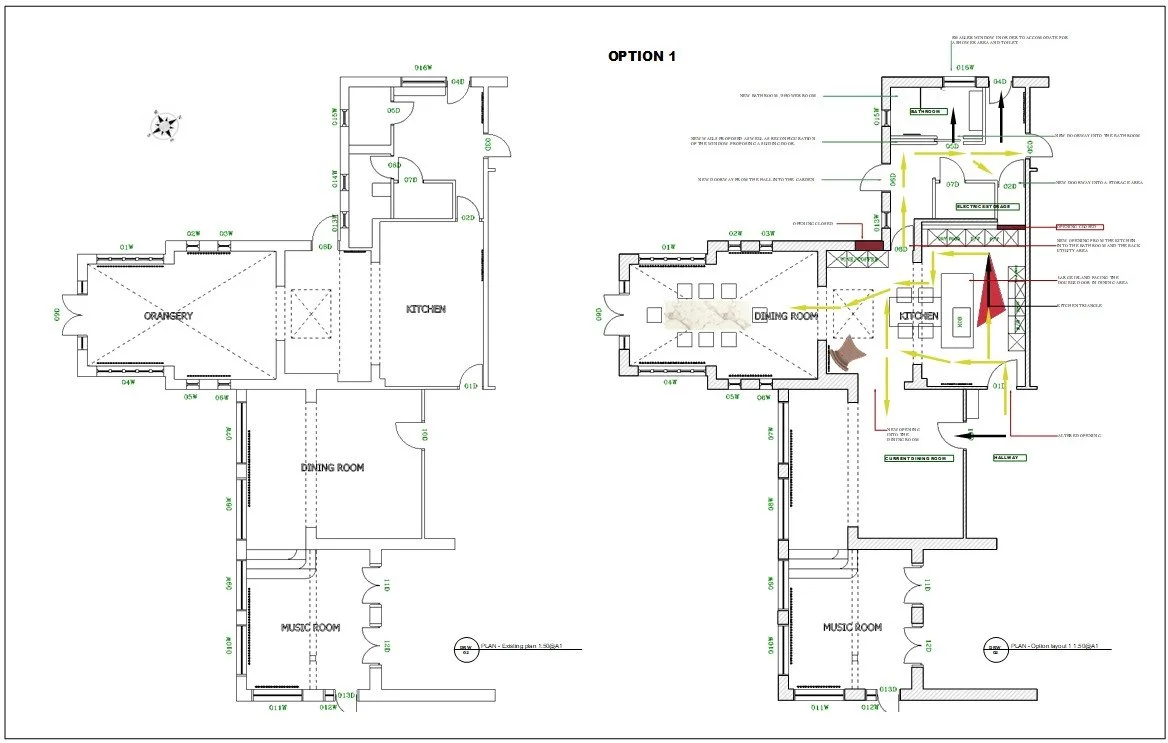
Option 1: A proposed open-plan layout for a South Cambridge home, illustrating circulation flow with yellow arrows. The design reconfigures the kitchen, dining room, orangery, and music room to create intuitive movement and clear zoning. Furniture placement and structural changes support a calm, contemporary layout.
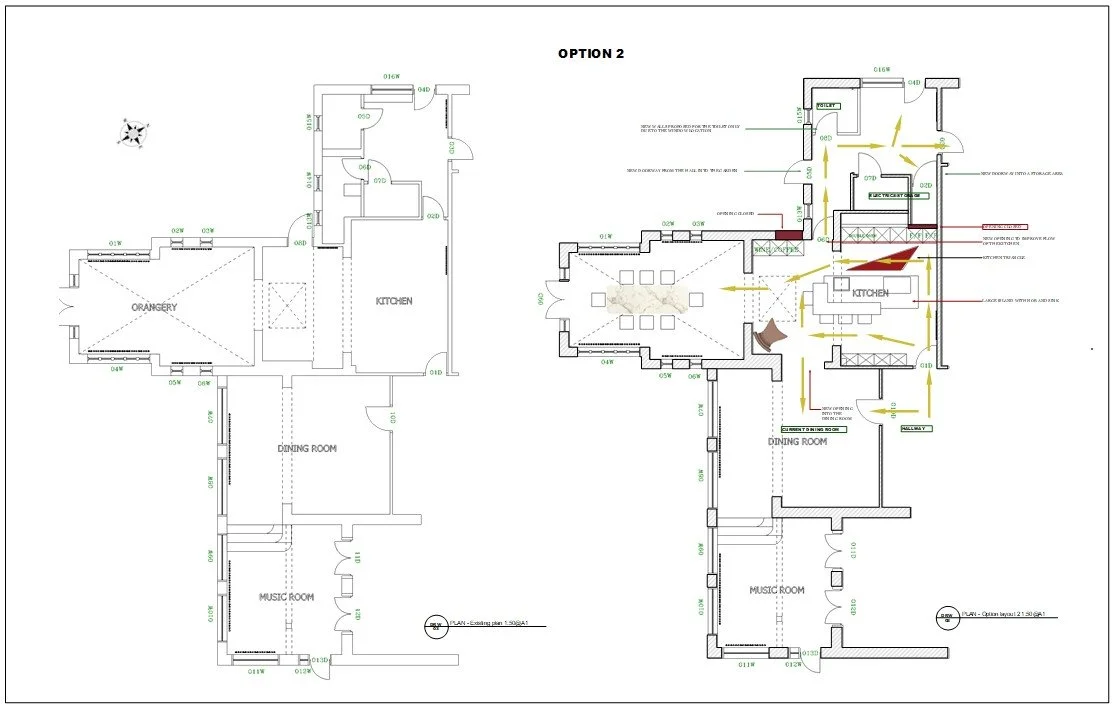
A second design option for the same South Cambridge open‑plan floor plan, illustrating how circulation changes with a different layout. Yellow arrows show movement patterns through the kitchen, dining room, orangery, and music room. Structural notes, new openings, and furniture placement demonstrate how the space is being tested and developed to understand flow, zoning, and proportion before finalising the design
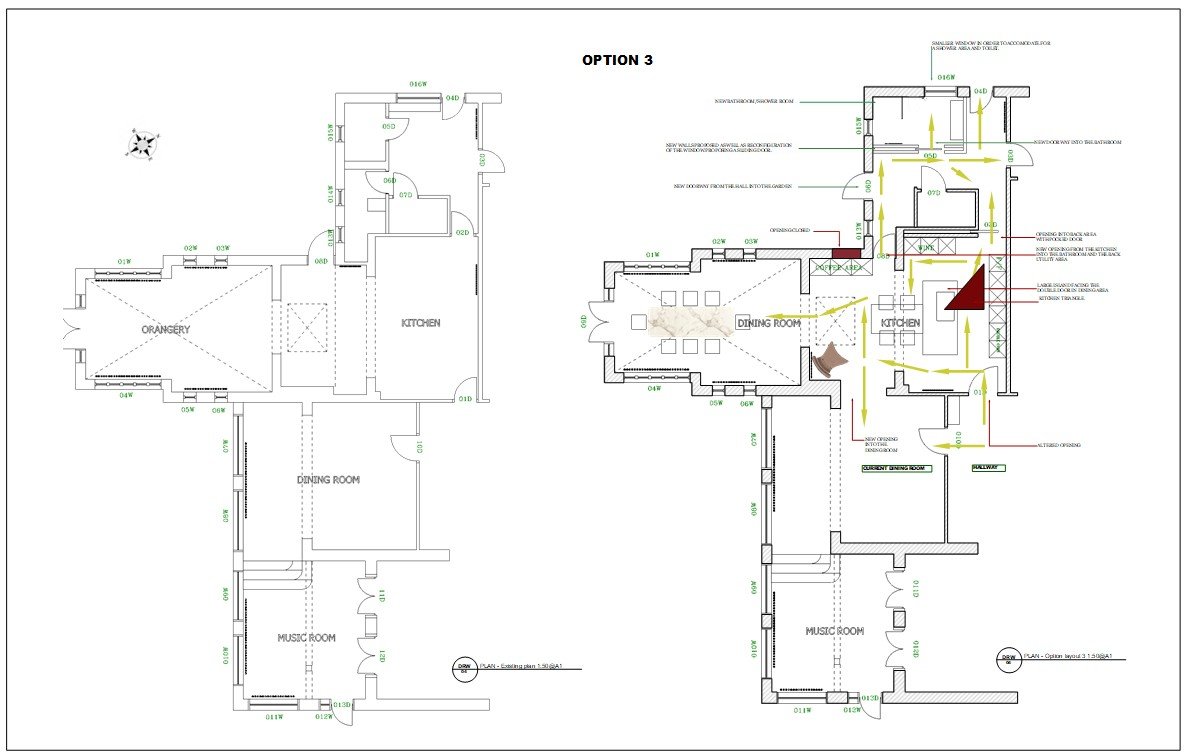
The final chosen layout for the South Cambridge open‑plan renovation, showing a refined circulation flow and fully resolved zoning. The plan illustrates the reconfigured kitchen, dining room, orangery, and music room, with new openings, blocked doors, and structural adjustments. Furniture placement, movement arrows, and annotations reveal how the design evolved through testing and iteration to achieve a calm, intuitive, contemporary layout.
If you’re unsure how to apply this to your own home, you can explore my interior design consultation here →Interior Design Consultation – Clarity Audit
Why Circulation Matters More in Open‑Plan Homes
In traditional homes, walls quietly guide movement. They create natural routes, boundaries, and moments of pause. But once those walls are removed — as is common in Cambridge’s Victorian, Edwardian, and 1930s homes — the space becomes a landscape. Without planned circulation, that landscape can feel:
• visually noisy
• difficult to furnish
• awkward to navigate
• disconnected from daily routines
Good circulation is what makes an open‑plan home feel intuitive. It’s the difference between a space that looks open and a space that lives beautifully.
Related reading:
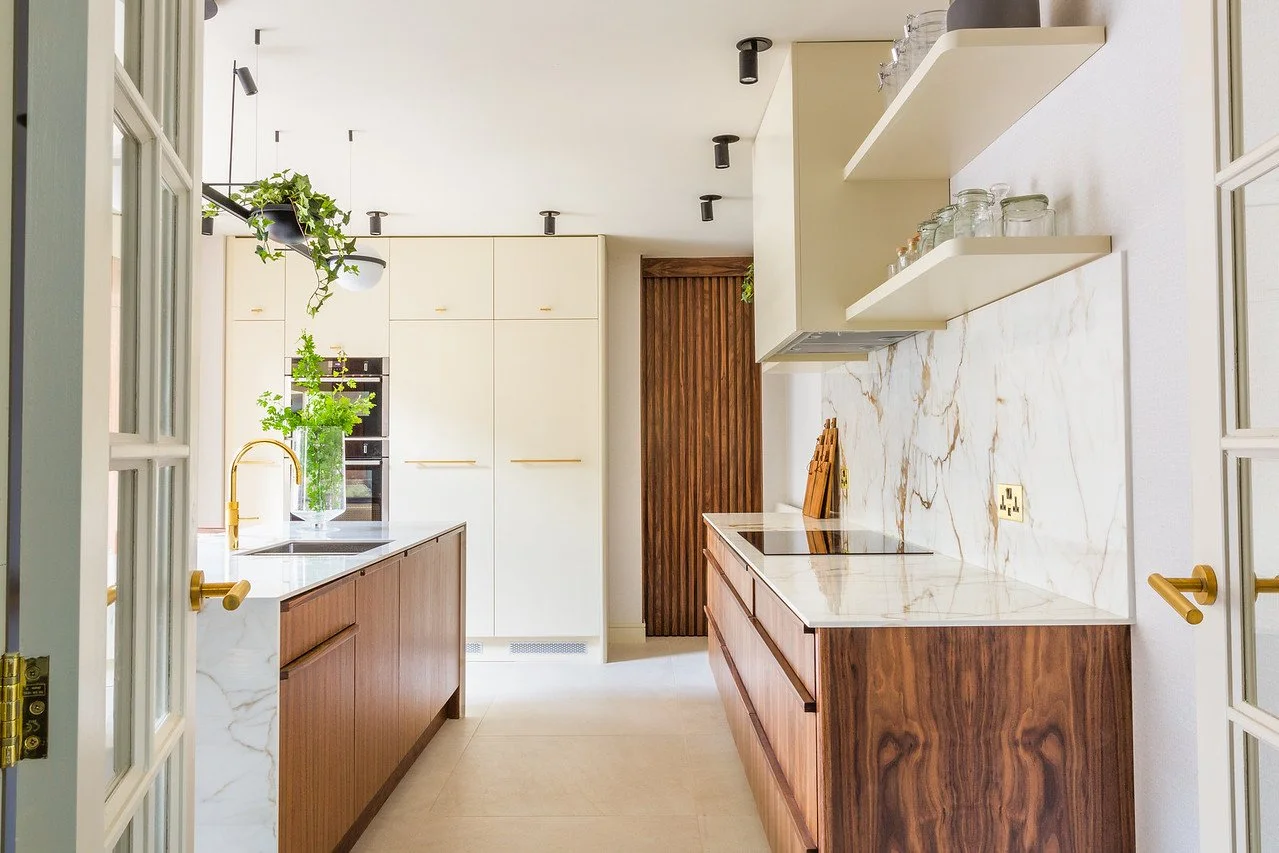
A calm, contemporary bespoke kitchen installed in Gamlingay, featuring white marble worktops, warm wood cabinetry, and a central island with a gold tap. Open shelving, integrated appliances, and soft lighting create a refined, modern atmosphere. This image represents the final outcome of the open‑plan circulation and zoning strategy developed during the design process.
Understanding Movement Patterns: The Designer’s Method
As a local interior designer, I begin every open‑plan project by mapping movement. Not furniture. Not colours. Movement.
There are three types of routes in every home:
Primary routes
The essential pathways:
kitchen → dining → garden
front door → hallway → living space
Secondary routes
The quieter connections:
sofa → study nook
dining table → reading corner
Service routes
The practical ones:
utility → back door
laundry → drying area
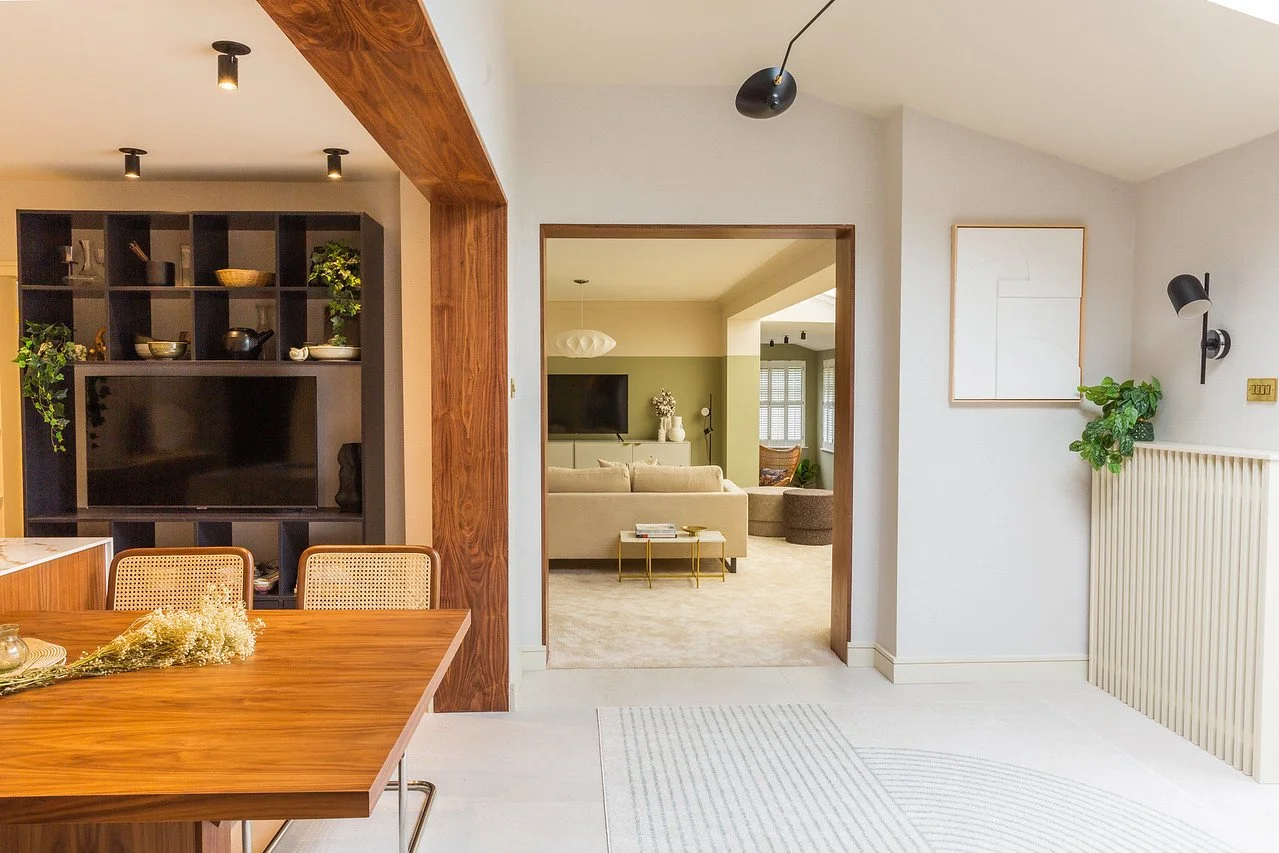
A warm, contemporary open‑plan view from the dining area into the living space, created through a new opening introduced during the Gamlingay renovation. The image shows how the redesigned connection allows movement to flow naturally between the kitchen, dining, and living zones. Soft lighting, layered textures, and calm, neutral tones highlight the seamless transition and the success of the circulation strategy.
These patterns form the “quiet script” of contemporary interior design — the choreography of daily life.
Related reading:
When Walls Are Removed: Zoning Becomes Architecture
This is the moment most homeowners underestimate.
Removing walls creates openness, but it also removes structure.
Suddenly, the question becomes:
Where does everything go when the walls are gone?
This is where zoning becomes essential. Zoning is the act of creating “rooms” within the room — not with walls, but with:
• furniture placement
• lighting
• rugs
• ceiling height
• colour
• material changes
Zoning prevents circulation routes from cutting through functional areas. It ensures the dining table isn’t in a walkway, the sofa isn’t blocking a natural path, and the kitchen island doesn’t create bottlenecks.
Related reading:
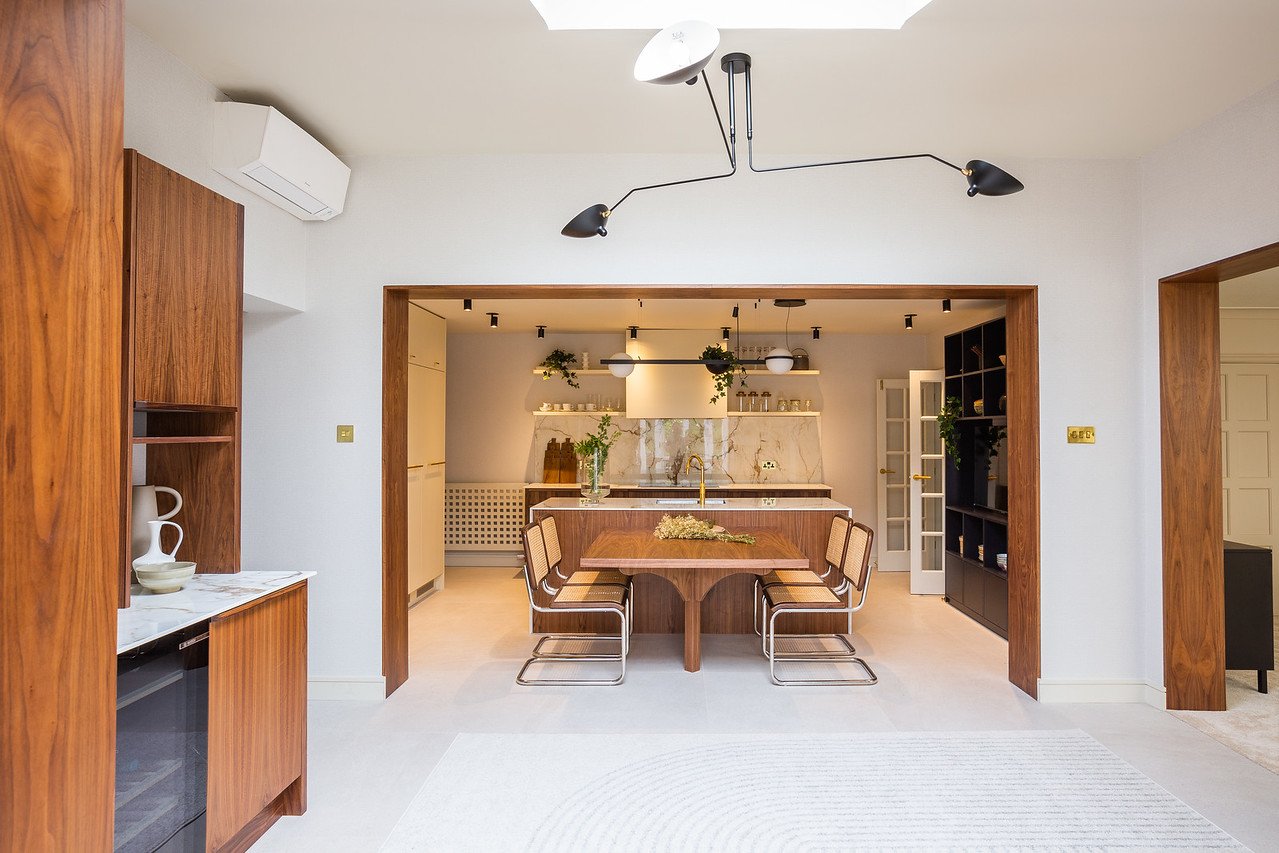
A modern/contemporary open‑plan kitchen and dining space in Gamlingay, featuring a marble‑topped island, warm wood cabinetry, and a natural dining area. The room connects to four adjoining spaces, making circulation a crucial part of the design. This view shows how the final layout allows movement to flow naturally between the kitchen, dining, living, and hallway zones, demonstrating the importance of zoning and furniture placement in an open‑plan home.
Furniture Placement as Structure
In open‑plan homes, furniture becomes the architecture.
• Sofas act like soft walls, defining the living zone.
• Dining tables anchor the centre of gravity.
• Kitchen islands create natural loops and prevent cross‑traffic.
• Rugs carve out rooms within the room.
• Lighting reinforces boundaries and guides movement.
This is where contemporary interior design shines — using form, proportion, and materiality to shape behaviour without building work.
Related reading:
Case Study: Gamlingay — Creating Flow in a Large Open‑Plan Extension
In this full renovation, the homeowners wanted a bright, connected space for cooking, dining, and relaxing. But once the structural walls were removed, the room felt vast and directionless.
Working alongside the structural engineer, we:
• created a clear circulation loop around the kitchen island
• positioned the dining table to anchor the centre of the space
• used a large rug to define the living zone
• aligned furniture with the new beam lines to restore architectural rhythm
• ensured movement flowed naturally toward the garden
The result was a calm, intuitive, open‑plan layout that feels effortless to live in.
Related reading:
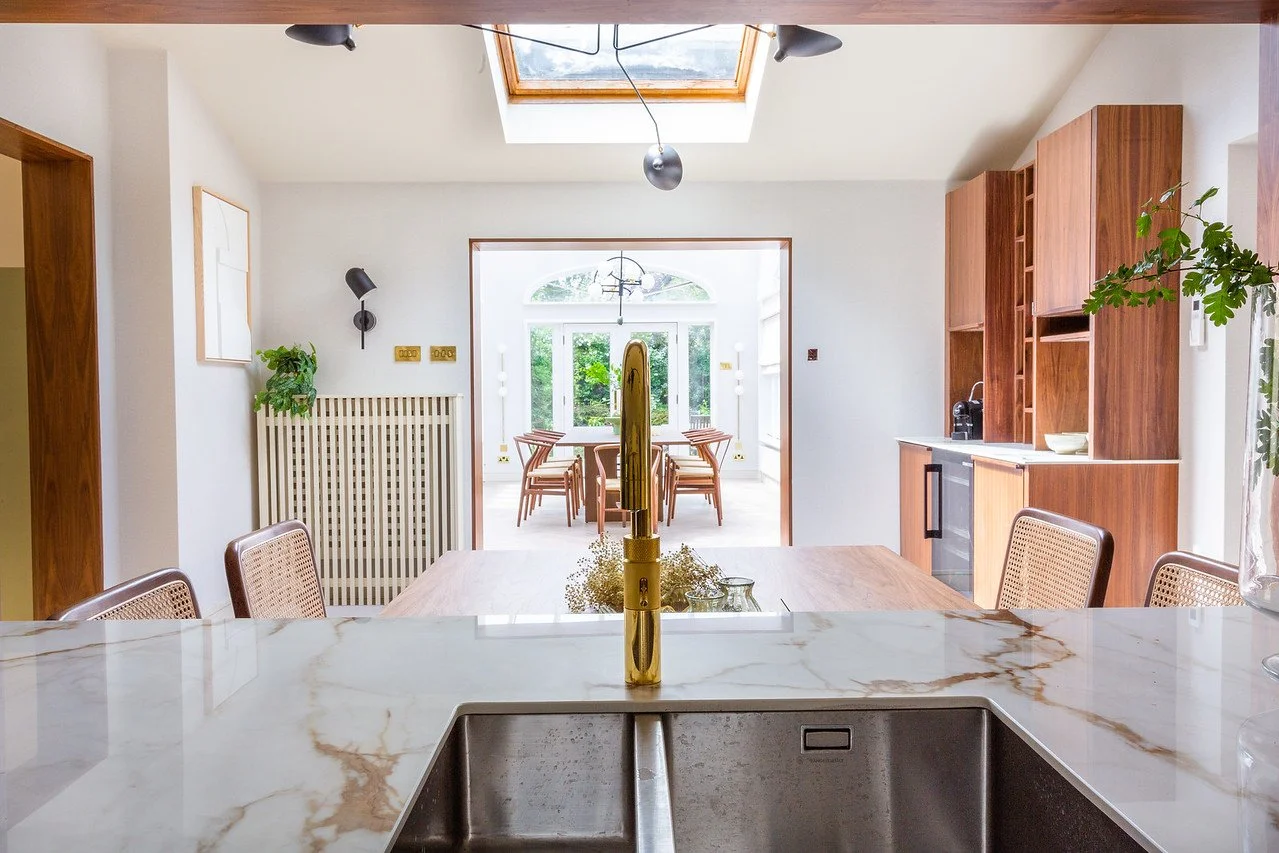
Case Study: Shelford — Circulation in a Narrow, Light‑Led Open‑Plan Space
This project presented the opposite challenge: a long, narrow open‑plan room where circulation risked becoming a corridor.
We solved it by:
• placing the sofa perpendicular to the length of the room to break up the space
• using lighting to create pockets of atmosphere
• positioning the dining table where natural light widened the space
• ensuring no walkway cut through the living zone
• using joinery to guide movement without blocking light
The space now feels balanced, calm, and beautifully proportioned.
Related reading:
Storage and Circulation: The Hidden Relationship
Clutter is the enemy of circulation.
In open‑plan homes, storage must be:
• accessible
• discreet
• outside main routes
• integrated into the architecture
Built‑in joinery can subtly guide movement, create boundaries, and support zoning.
Related reading:
Designer’s Checklist: How to Map Circulation in Your Own Home
A simple, practical guide:
• Identify your main daily routes
• Keep 900–1200mm clear walkways
• Avoid crossing kitchen work zones
• Anchor furniture to create pathways
• Use rugs to define rooms
• Use lighting to guide movement
• Avoid placing sofas in circulation routes
• Keep sightlines open
• Place storage outside circulation lines
Related reading:
When to Involve a Designer or Structural Engineer
Circulation planning often requires structural changes — especially in older Cambridge homes. A modern interior designer in Cambridge can:
• map movement patterns you may not notice
• ensure zoning supports your lifestyle
• collaborate with structural engineers
• prevent costly mistakes
• create a layout that feels calm and contemporary
If you’re planning a renovation and feel unsure what to do next, you can explore my renovation consultation here → Interior Design Consultation for Renovations | Project Strategy Audit UK
If you’re planning an open‑plan renovation in Cambridge or the surrounding villages, early design involvement makes all the difference.
Conclusion: Open‑Plan Homes Feel Better When Movement Feels Natural
Open‑plan living isn’t just about removing walls.
Explore Related Guides
• Smart Space Planning Ideas for Cambridge Homes
• Space Planning Ideas for Contemporary Homes in Cambridgeshire
• How to Design Awkward Room Layouts in Cambridge Homes
• The Hidden Cost of Poor Space Planning in Interior Design
Good open-plan design is about more than removing walls. The way people move through a space, interact with different zones and experience daily routines has a significant impact on how a home feels and functions.
If you're planning a renovation, extension or reconfiguration project, you may also find our guide to Space Planning Interior Design Cambridge helpful.
Continue Exploring Renovation & Home Transformation
Well-designed homes are shaped by more than individual rooms—they're defined by how each space connects and flows. Explore the Renovation & Home Transformation knowledge library for more practical guides, professional insights and real project stories covering layouts, circulation, space planning and creating homes that work beautifully for everyday living.
Explore the Renovation & Home Transformation Knowledge Library →