
Modern Kitchen Design Mistakes to Avoid in 2026 (And What to Do Instead)
Designing a modern kitchen requires more than clean lines and minimal finishes. Many kitchens look refined at first but quickly reveal functional issues due to poor planning. In this guide, I outline the most common kitchen design mistakes I see in residential projects across Cambridge and London, and how to approach your kitchen with clarity, functionality and long-term thinking.
A Cambridge Interior Designer’s Guide.
Designing a kitchen in 2026 is more exciting — and more overwhelming — than ever.
As a modern interior designer in Cambridge, I see homeowners navigating rising costs, new regulations, and endless aesthetic choices. Kitchens have become the emotional and functional centre of the home, and mistakes here are often the most expensive to fix.
This guide will help you avoid the most common pitfalls and design a kitchen that feels intentional, practical, and beautifully aligned with the way you live — whether you’re in Cambridge, London, Hitchin, or Welwyn Garden City.
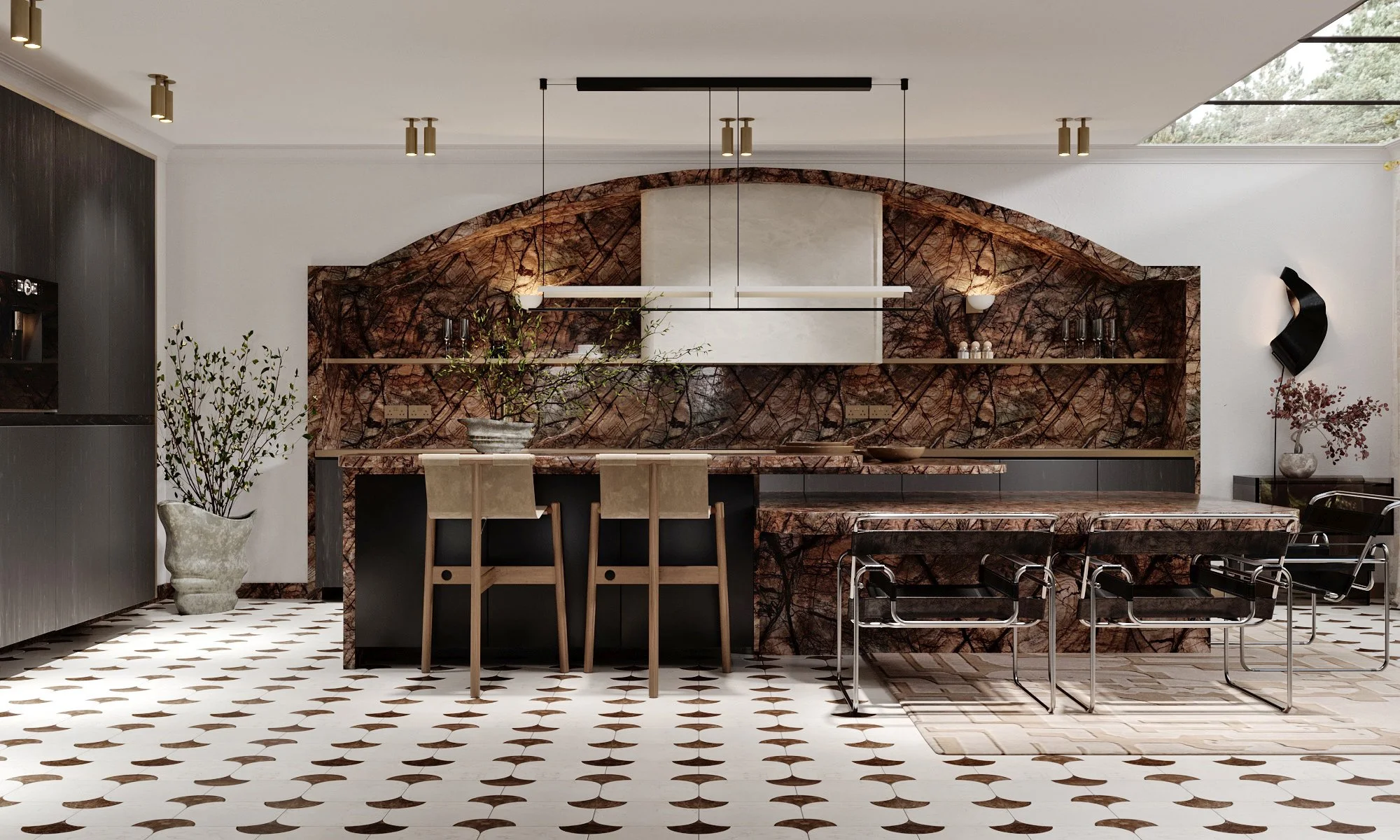
A contemporary kitchen featuring a sculptural marble island, curved stone backsplash, warm wood cabinetry and patterned flooring. Soft pendant lighting, open shelving and natural greenery create a refined, modern atmosphere — a space designed for both beauty and everyday living.
“A well‑designed kitchen doesn’t begin with colours or cabinets — it begins with clarity.”
1. Designing Without a Clear Strategy
Most kitchen problems begin long before cabinetry is chosen.
They start with unclear priorities.
Without a strategy, homeowners often:
Choose appliances before planning the layout
Design around trends instead of lifestyle
Underestimate structural or Building Control requirements
Commit to materials too early
Overspend in the wrong places
AProject Strategy Audit {{ LINK: Project Strategy Audit }} is often the smartest first step — especially if you’re searching for an interior designer near me and comparing local options.
2. Ignoring the Architecture of the Space
A kitchen cannot be designed in isolation.
It must respond to:
natural light
circulation
ceiling height
existing structure
adjacent rooms
window placement
Ignoring these leads to awkward layouts, dark corners, and spaces that feel “off” no matter how beautiful the finishes are.
Alocal interior designer in Cambridgeshire understands how to work with — not against — the architecture.
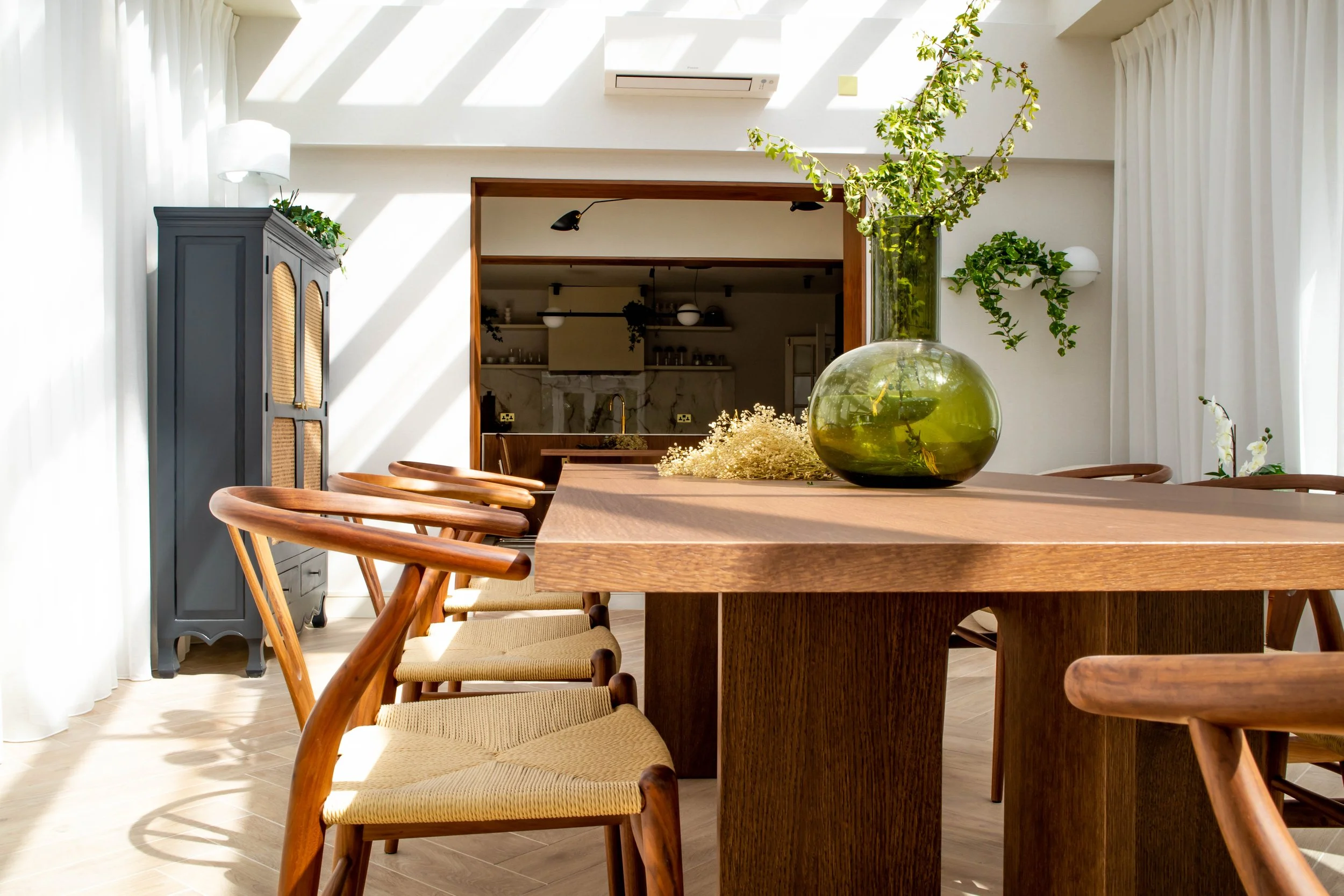
A sunlit kitchen and dining space from a Gamlingay project, shaped by natural light, warm timber textures and soft architectural shadows. A large wooden table, woven chairs and greenery create a calm, grounded atmosphere that responds beautifully to the room’s proportions and skylight above.
3. Over‑Focusing on Aesthetics
A kitchen can look stunning and still fail in daily life.
Common examples:
no landing space beside the hob
bins placed too far from prep areas
dishwashers blocking walkways
fridges opening into islands
poor lighting over work zones
nowhere to hide small appliances
A contemporary interior designer blends beauty with function so the kitchen supports your routines effortlessly.
You can see this balance in my project showcase {{ LINK: Showcase }}.
4. Choosing the Wrong Layout
The layout is the backbone of the kitchen.
And yet, many homeowners choose cabinetry before understanding:
workflow
circulation
appliance placement
safety clearances
door swing
ergonomic heights
This leads to kitchens that feel cramped, chaotic, or visually heavy.
Your layout should be designed before any aesthetic decisions are made — something I outline in my Services Process {{ LINK: Services Page }}.
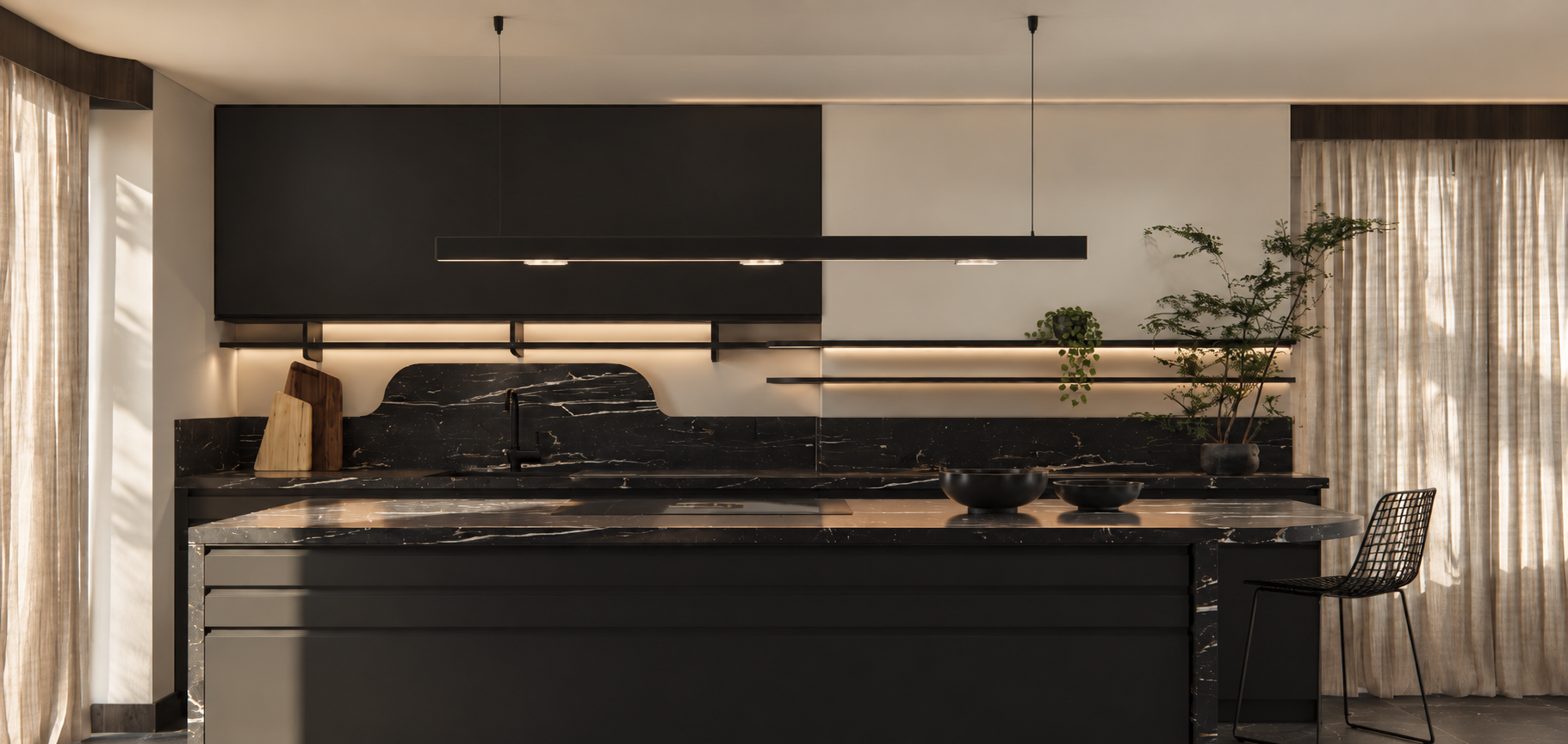
A contemporary kitchen design visualisation by Pinterior.space for Henslow Mews, Cambridge CB2. The generous dark stone island anchors the composition, complemented by minimalist cabinetry, slim floating shelves and architectural lighting. A single black metal bar stool and carefully placed greenery introduce subtle detail, while natural daylight filtering through sheer curtains softens the dramatic palette and creates a calm, welcoming atmosphere.
“The most beautiful kitchens are not the ones that follow trends, but the ones that understand the people who live in them.”
5. Underestimating Storage Needs
Storage is the most underestimated element of kitchen design.
Homeowners often forget to plan for:
tall pantry storage
internal drawers
recycling and waste systems
small appliance zones
baking trays and chopping boards
cleaning products
bulk items
everyday clutter
A well‑designed kitchen hides the chaos and reveals only calm.
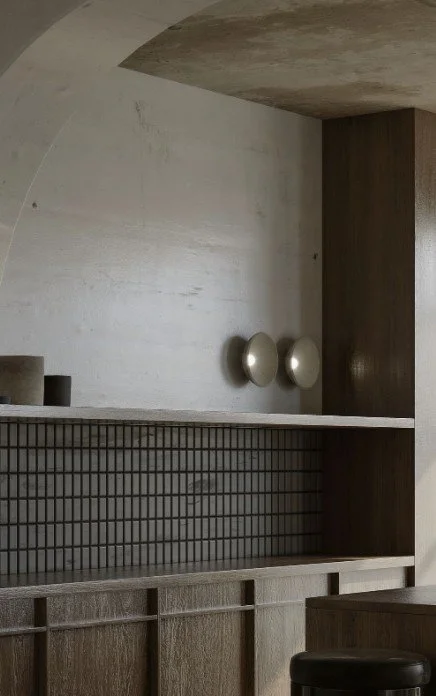
Credit: Pin on Nordic A refined kitchen detail featuring warm timber cabinetry, a grid‑tiled backsplash and soft circular wall lights. The minimalist composition highlights how thoughtful material choices and concealed storage create a calm, uncluttered atmosphere — a reminder that effective storage is as much about architecture as it is about organisation.
6. Poor Lighting Planning
Lighting can make or break a kitchen.
The most common mistakes include:
relying on a single ceiling light
forgetting under‑cabinet lighting
no task lighting over prep zones
no dimmable circuits
cold, clinical colour temperatures
A modern kitchen needs layered lighting that shifts from functional to atmospheric.
Many of these issues don’t come from individual choices, but from how the space has been planned from the outset. We explore this further in our guide to space planning in interior design, where layout, flow and functionality are considered together.
7. Choosing Materials Too Early
Homeowners often fall in love with:
a worktop
a cabinet colour
a splashback
a flooring sample
…before the layout is resolved.
This leads to compromises, mismatched tones, or materials that don’t suit the space.
Material selection should be the final step — not the first.

A curated sample board of materials from a Gamlingay project, featuring warm timber samples, stone textures, patterned tile, soft fabric and brass hardware. The palette shows how thoughtful material selection creates harmony — and why choosing finishes too early can limit the design before the layout is resolved.
8. Not Planning for Ventilation, Electrics, and Services
This is where costs escalate quickly.
Common oversights:
extractor ducting routes
insufficient sockets
Incorrect appliance power requirements
no dedicated circuits
poor plumbing placement
lack of future‑proofing
These are the details that amodern interior designer in Cambridge manages quietly in the background — preventing expensive rework later.
9. Forgetting About Building Control
Even small kitchen changes can trigger:
structural considerations
fire safety requirements
ventilation standards
insulation upgrades
electrical certification
Ignoring these early can cause delays, redesigns, and unexpected costs.
If you’re unsure what applies to your home, a Clarity Audit {{ LINK: Clarity Audit }} is the perfect place to begin.
10. Trying to Manage the Project Alone
Kitchens involve:
joiners
electricians
plumbers
tilers
flooring installers
decorators
appliance suppliers
Building Control
structural engineers (if walls move)
Coordinating this without experience is overwhelming.
A design‑led process brings order, clarity, and calm — ensuring every decision supports the next.
You can learn more about this approach in my Services Process {{ LINK: Services Page }}.
How to Avoid These Mistakes
Start with clarity.
Then build strategy.
Then design.
Then execute.
This sequence protects your budget, your home, and your peace of mind.
If you’re planning a kitchen renovation in Cambridge, London, Hitchin, or Welwyn Garden City, consider beginning with a Project Strategy Audit{{ LINK: Project Strategy Audit }}— a focused session designed to help you understand:
What’s possible
What to avoid
What to question
What to prioritise
What to explore next
It’s the calmest, clearest way to begin.
“Design with intention now, and your kitchen will support you for years — quietly, beautifully, and without compromise.”
Ready to Design a Kitchen That Works Beautifully?
If you’re searching for a modern interior designer in Cambridge or a local interior designer near me, this is the most grounded place to start.
Book your Project Strategy Audit {{ LINK: Project Strategy Audit }} and take the first step toward a kitchen that feels intentional, functional, and beautifully designed.
If you’re planning a renovation and feel unsure what to do next, you can explore my renovation consultation here → Interior Design Consultation for Renovations | Project Strategy Audit UK
Continue Your Journey
Designing a successful kitchen is about far more than choosing beautiful finishes. Continue exploring these articles to help you make informed decisions before your renovation begins.
Read Next
When Should You Hire an Interior Designer During a Home Renovation?
Discover why involving an interior designer early can improve layouts, avoid costly changes and create a more successful renovation.
Why Every Home Does Not Need An Open-Plan Layout
Explore why successful kitchen layouts are designed around the way you live rather than simply following open-plan trends.
How to Plan Storage in a Modern Home
Discover why integrated storage is one of the foundations of calm, functional and beautifully organised interiors.
Return to the Chapter
Planning a Renovation
Explore more articles about planning successful renovations, avoiding common design mistakes and creating homes that work beautifully for everyday living.