
Common Awkward Layouts and How to Design for Them
Awkward layouts are one of the most common challenges in residential design, particularly in period homes or complex urban properties. Rather than forcing a space to behave in a conventional way, good design works with the constraints to create balance, flow and functionality. In this guide, I explain how to approach difficult layouts, based on real projects across Cambridge and London.
How to transform angled walls, narrow rooms, and quirky Victorian geometry into bespoke beauty.
Cambridge homes are full of character — and full of challenges.
Angled walls, chimney breasts, bay windows, long Victorian corridors, narrow terraces, loft rooms with sloping ceilings… these quirks are part of the city’s architectural DNA.
For many homeowners searching for “interior designer near me”or “local interior designer Cambridge”, the frustration is real. Standard furniture doesn’t fit. Rooms feel unbalanced. Nothing quite works.
But here’s the shift:
Awkward layouts are often the most rewarding spaces to design.
They invite creativity, bespoke solutions, and a level of craftsmanship that mass‑market interiors can’t achieve.
As a modern interior designer in Cambridge, I see these constraints as opportunities — moments where a home becomes truly personal.
Why Cambridge Homes Feel “Awkward”
The quirks aren’t accidental. They come from:
Victorian and Edwardian extensions layered over decades
Chimney stacks were removed on one floor but not another
Terraced homes with narrow footprints
Bay windows added for light, not furniture planning
Loft conversions squeezed into tight rooflines
Patchwork renovations across generations
This is true across Cambridge, Cambridgeshire villages (Grantchester, Girton, Histon, Shelford, Waterbeach), and even London period homes.
These spaces aren’t standard — so they shouldn’t be designed in standard ways.
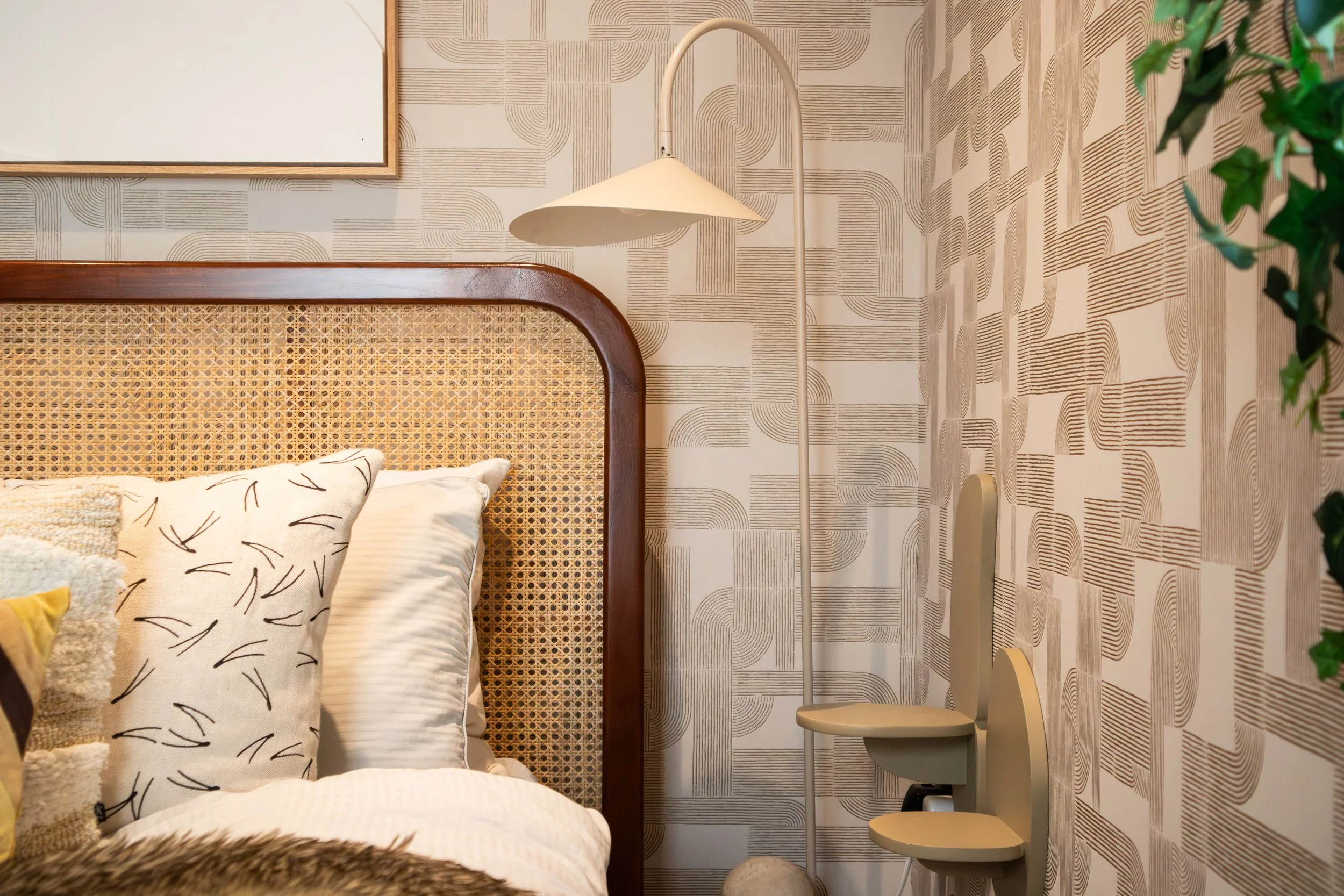
This small Cambridge bedroom from the Water Lane project shows how thoughtful design transforms limited space into something calm and intentional. With no room for traditional bedside tables, the surfaces were custom‑mounted on the wall to free the floor and keep the layout feeling open. A woven rattan headboard adds warmth and texture, while the geometric wallpaper introduces quiet pattern without overwhelming the room. Soft, layered lighting and a minimal colour palette create a contemporary, restful atmosphere — a demonstration of how compact rooms in Cambridge and its surrounding villages can still feel beautifully composed.
Common Awkward Layouts — and How to Design for Them
1. Long, Narrow Victorian Corridors
Often dark. Often underused. Often a missed opportunity.
Design strategies
Create rhythm with repeated wall lights or artwork
Use colour zoning to visually shorten or lengthen the corridor
Add built‑in storage in alcoves
Place a sculptural focal point at the end
Why it works
The corridor becomes a gallery — purposeful, atmospheric, and beautifully functional.
2. L‑Shaped Living Rooms
A classic Cambridge challenge: two spaces that don’t quite speak to each other.
Design strategies
Define zones (reading nook, TV area, dining corner)
Use rugs to anchor each zone
Repeat materials to unify the whole
Float furniture instead of pushing everything to the walls
Why it works
The room becomes a sequence of moments rather than one confused space.
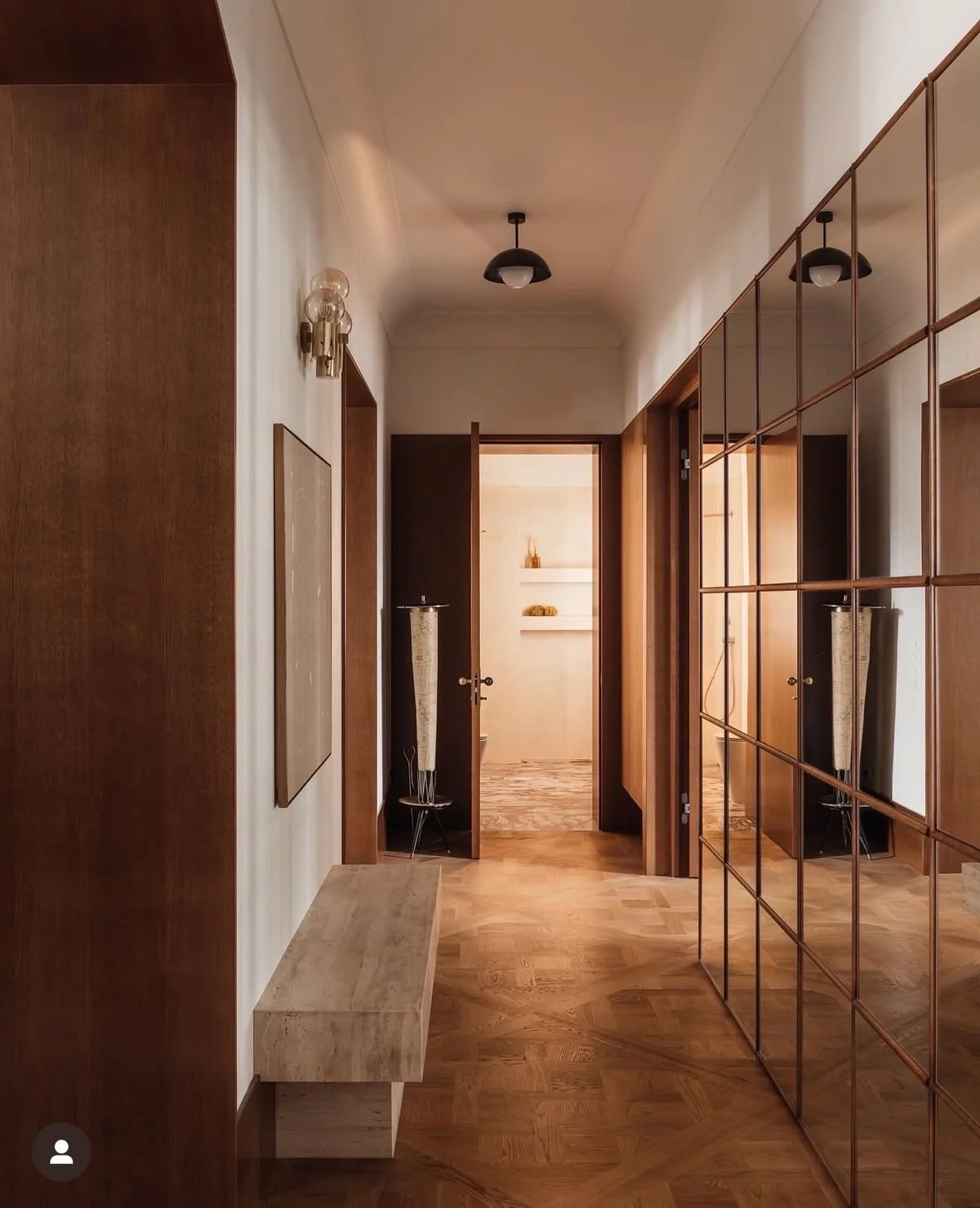
Credit to the image: Pin on Hallway. This narrow hallway showcases how thoughtful design can make even the tightest circulation spaces feel calm and intentional. Warm timber flooring, a sculptural stone bench and soft wall lighting create a welcoming rhythm, while the mirrored wall expands the sense of depth without overwhelming the space. The clean lines, natural materials and minimal styling demonstrate how small hallways — common in Cambridge, Cambridgeshire villages and many period homes — can feel elegant, functional and beautifully composed with the right design approach.
3. Loft Rooms with Sloping Ceilings
Beautiful in theory, impossible in practice — until you design with the angles.
Design strategies
Low, bespoke joinery under eaves
Soft, enveloping colour to make slopes feel intentional
Bed placement under the highest point
Hidden storage in knee walls
Why it works
The room becomes cocoon‑like, architectural, and deeply calming.
4. Chimney Breasts + Alcoves
Every Victorian home has them. Most homeowners don’t know what to do with them.
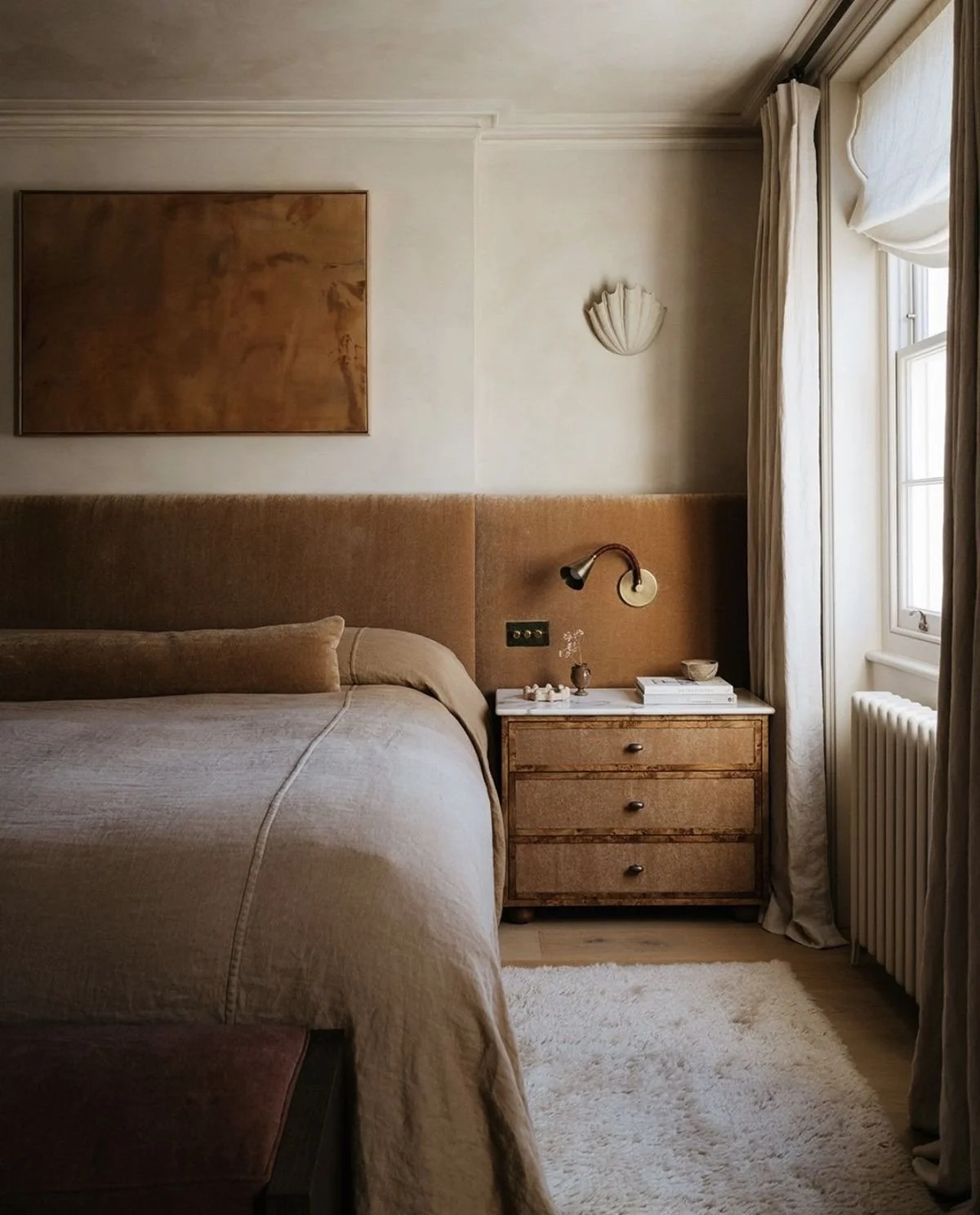
Credit to the image: Pin on Bedroom. This bedroom illustrates a beautifully resolved alcove solution, showing how small or awkward spaces can feel intentional and serene. The upholstered headboard runs wall‑to‑wall, creating a soft architectural backdrop, while the alcove houses a compact wooden bedside unit with a marble top — a practical way to introduce storage without overwhelming the room. A wall‑mounted reading light frees the surface and keeps the layout clean, while warm neutrals, layered textures and gentle natural light create a calm, contemporary atmosphere. It’s a strong example of how alcoves in Cambridge and Cambridgeshire homes can be transformed into functional, elegant design moments.
Design strategies
Built‑in shelving for books or display
Symmetry or deliberate asymmetry
A statement fireplace to anchor the room
Integrated lighting to highlight alcoves
Why it works
What once felt like a constraint becomes the room’s strongest architectural feature.
5. Bay Windows
Beautiful light, awkward angles, and furniture that never quite fits.
Design strategies
Curved or angled seating
A built‑in window seat with storage
Layered window treatments
A round table to echo the bay
Why it works
The bay becomes a destination — a reading nook, a breakfast spot, a moment of calm.
The Cambridge Mindset Shift
Most homeowners try to “fix” awkward layouts by forcing standard furniture into non‑standard spaces. But Cambridge homes aren’t standard.
They’re layered, historic, and full of personality.
This is where a contemporary interior designer makes the difference:
We design with the architecture, not against it
We use bespoke solutions where mass‑market furniture fails
We turn constraints into anchors
We reveal the beauty already hidden in the home
Awkwardness becomes opportunity.
When to Bring in a Designer
You’ll benefit from professional help when:
You’ve rearranged the room ten times
You’re planning joinery but don’t know the right dimensions
You want to invest in furniture that will last
You’re renovating and want to avoid expensive mistakes
You want your home to feel cohesive, calm, and intentional
A designer sees geometry differently. Angles become invitations. Slopes become sculptural. Narrow rooms become elegant.
If you’re unsure how to apply this to your own home, you can explore my interior design consultation here →Interior Design Consultation – Clarity Audit
If you’re planning a renovation and feel unsure what to do next, you can explore my renovation consultation here → Interior Design Consultation for Renovations | Project Strategy Audit UK
Final Thought
Cambridge homes aren’t easy — but that’s exactly why they’re special. With thoughtful, bespoke design, the quirks become the soul of the space. And when a home finally “clicks,” it feels effortless, personal, and deeply yours.
If you’re searching for a local interior designer in Cambridge, Cambridgeshire, or London, this is where the transformation begins.
You can explore more here:
• my [Bathroom Concept Boards → /concept-boards]
• my [Recent Articles → /articles]
• my [Home page ]
Continue Your Journey
Every home has its own challenges, but thoughtful space planning can reveal opportunities that aren't always obvious at first. Continue exploring these articles to discover how better layouts create homes that feel more connected, functional and enjoyable to live in.
Read Next
Why Your Home Feels Disconnected (And It's Not Just The Furniture)
Discover why a home can feel unsettled even when every room looks beautiful, and how thoughtful space planning creates a stronger sense of connection.
→ Read the article
Why Every Home Does Not Need An Open-Plan Layout
Explore why successful layouts are designed around the way you live rather than simply following open-plan trends.
How to Plan Storage in a Modern Home
Discover why integrated storage is one of the foundations of calm, functional and beautifully organised interiors.
Return to the Chapter
Space Planning & Layout
Explore more articles about improving layouts, creating better flow and designing homes that work beautifully for everyday living.