
Bedroom Design Ideas for Contemporary Homes in Cambridgeshire
Bedroom design plays an important role in shaping comfort, relaxation, and the overall experience of everyday living within the home. Through thoughtful layouts, layered lighting, bespoke furniture, natural materials, and balanced contemporary interiors, bedrooms can feel calmer, more functional, and deeply connected to rest, wellbeing, and modern living.
From Layout to Lighting: How to Design the Perfect Bedroom Retreat
A well-designed bedroom isn’t just about aesthetics—it’s about balancing comfort, functionality, and personal style. Whether you're working with a Bedroom Interior Designer in Cambridge, refreshing your own space, or sourcing bespoke solutions, every detail contributes to creating a truly relaxing retreat.
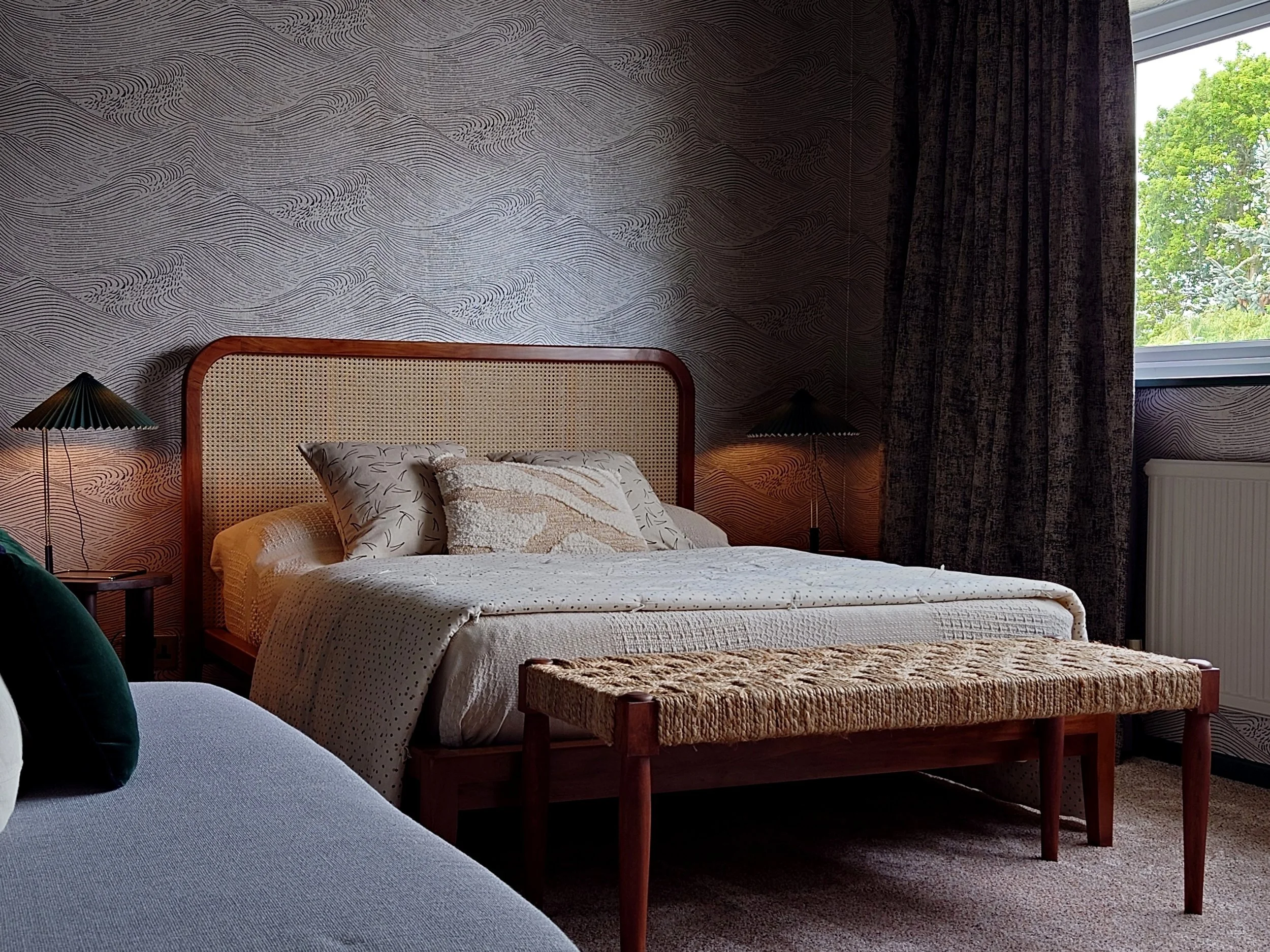
This Japanese‑inspired bedroom from the Gamlingay house renovation, designed by Pinterior.space, blends natural materials with calm, modern detailing. A woven rattan headboard and wooden bench introduce warmth and texture, while neutral bedding and pleated lamps create a soft, layered atmosphere. The wave‑patterned feature wall adds subtle movement, and the dark curtains frame natural light from the window. The composition reflects a thoughtful approach to expert bedroom design in Cambridgeshire, balancing layout, lighting, and bespoke furniture solutions with a serene, Japanese‑influenced aesthetic.
1. Optimising Layout for Comfort and Practicality
Your bedroom layout should allow for effortless movement, ensuring no awkward corners, cramped spaces, or inaccessible furniture placements. Here are key measurements to keep in mind:
Bed Clearance: Aim for at least 75 cm of space around the sides and foot of the bed for easy movement. If placing the bed against a wall in a smaller room, ensure there's at least 90 cm of clearance on the accessible side.
Drawer Space: Whether it’s a bedside table or a dresser, allow for at least 40-50 cm in front of drawers so they can open without obstruction.
Wardrobe Access: Sliding wardrobe doors work well in compact spaces, but if using hinged doors, ensure there’s at least 75 cm of clearance when opened.
Door Placement: Standard bedroom doors are typically 76-81 cm wide. If doors open inward, make sure they don’t interfere with furniture placement or access points.
Making the Bed: The space around the bed should be comfortable enough for easy access when tucking in sheets or fluffing pillows—at least 60 cm is ideal.
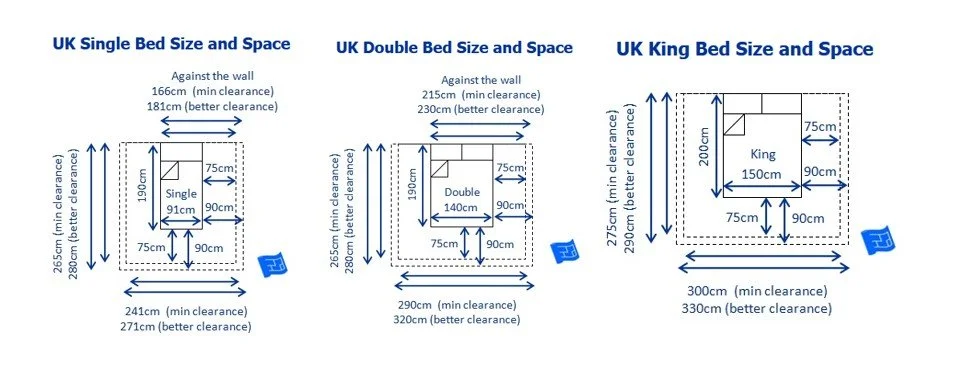
Bed size and clearance
2. Bespoke Headboards: A Personal Touch
A headboard does far more than frame a bed—it’s a statement feature that brings personality, creativity, and functionality to your space. Investing in a custom headboard from a Bespoke Furniture Designer in Cambridge allows you to tailor the design to both aesthetic and practical needs.
Custom Headboard Ideas:
Built-in Storage: Integrated shelving or hidden compartments within the headboard offer sleek storage solutions for books, lamps, or night-time essentials.
Textured Luxury: Upholstered headboards in velvet or boucle fabric create an inviting softness, while leather or reclaimed wood add character.
Feature Walls: Extend the headboard beyond the width of the bed to create a full accent wall, adding depth and visual interest.
Multi-Functional Design: Some bespoke headboards can include LED lighting strips or hidden bedside tables for streamlined functionality.
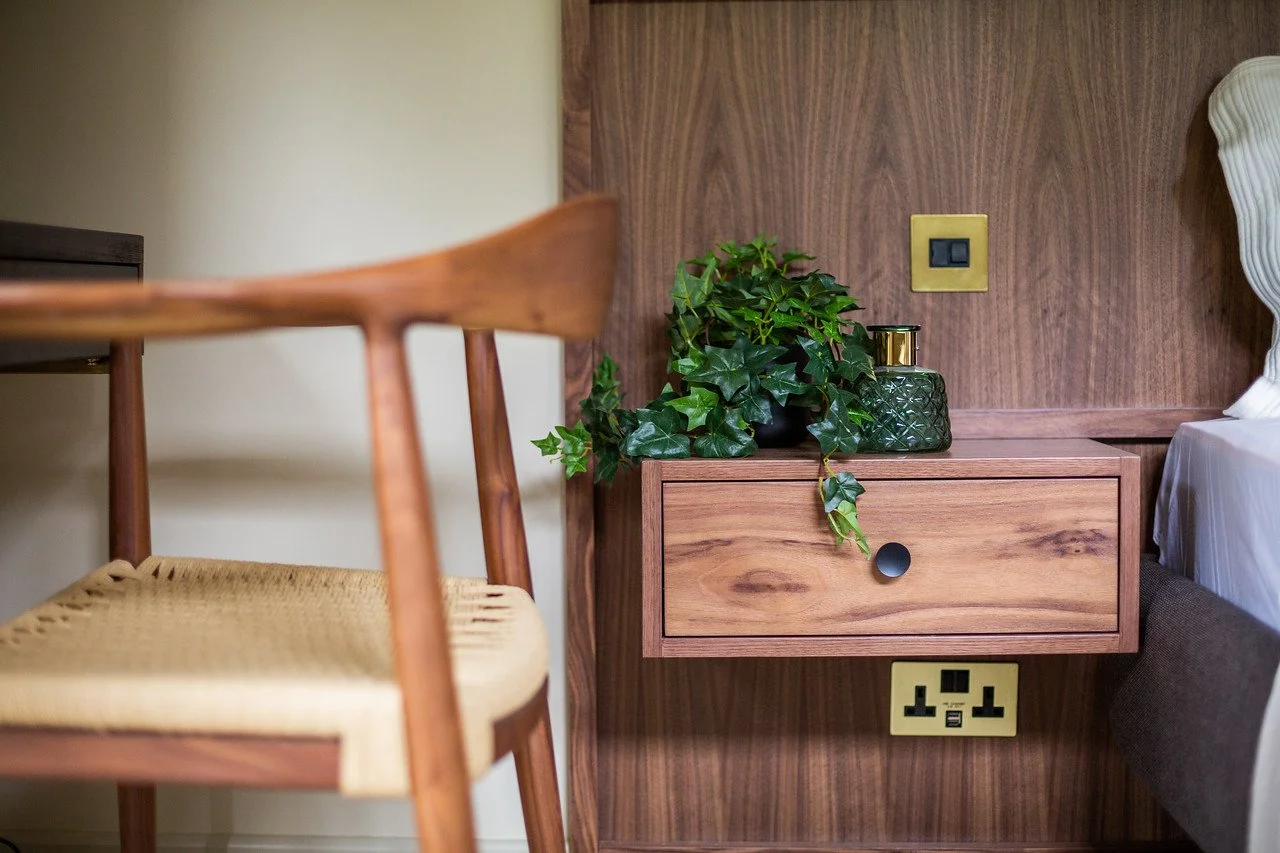
This guest bedroom from the Gamlingay house renovation, designed by Pinterior.space, reflects a calm Nordic‑inspired aesthetic with modern, functional detailing. A bespoke built‑in drawer is integrated seamlessly into the wooden headboard, paired with soft greenery and sculptural accessories for a natural, understated look. The woven chair, neutral bedding, and warm timber tones create a serene, minimalist atmosphere that aligns with the project’s modern Scandinavian design direction.

Bespoke upholstered headboard designed by Pinterior.space.This master bedroom from the Gamlingay house renovation, designed by Pinterior.space, blends Nordic simplicity with modern warmth. A bespoke green upholstered headboard anchors the space, paired with botanical wallpaper that introduces soft pattern and natural calm. Mid‑century‑influenced bedside furniture, layered green textiles, and warm lighting create a serene, grounded atmosphere. The composition reflects the project’s Nordic‑modern design direction, balancing clean lines, crafted details, and a nature‑inspired palette.
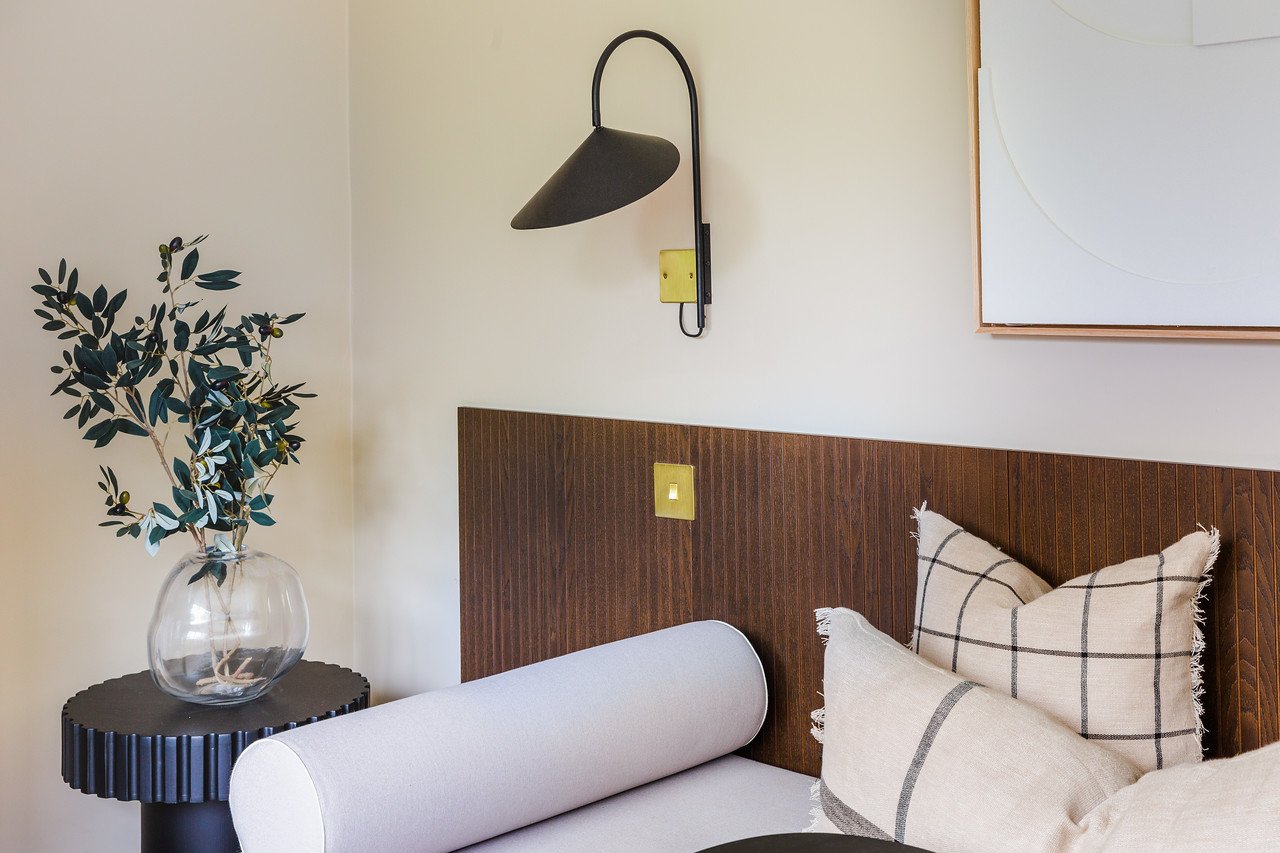
This bedroom from the Gamlingay house renovation, designed by Pinterior.space, reflects a Nordic‑Scandinavian approach rooted in natural materials and quiet modern detailing. The bespoke wooden headboard introduces warmth through its vertical grain and brass accent, paired with soft, minimalist textiles and a sculptural black side table. Clean lines, greenery, and refined lighting create a calm, understated atmosphere that aligns with the project’s modern Scandinavian design direction.
3. Choosing Materials That Enhance Comfort
The right materials influence both aesthetics and functionality in your bedroom:
Flooring: Soft carpet is cozy, but hardwood paired with a plush rug is stylish and easy to maintain.
Wall Finishes: Textured wallpapers or painted feature walls add personality. Bedroom Interior Designers in Cambridge often recommend breathable, eco-friendly paints that improve indoor air quality.
Soft Furnishings: opt for natural linen, organic cotton, or cashmere blends to enhance the cosiness factor.
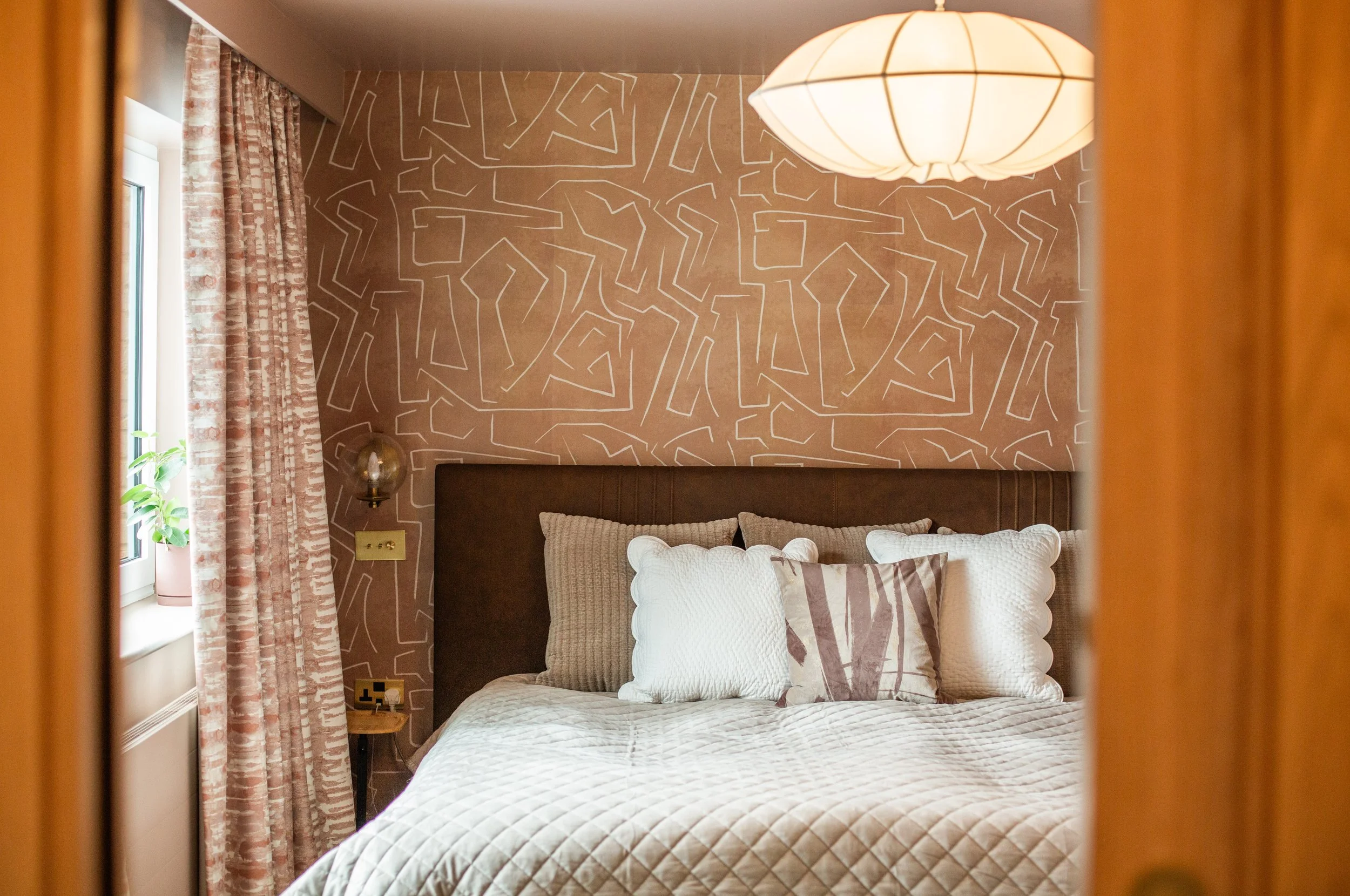
This master bedroom from the Shelford Cambridge house renovation, designed by Pinterior.space, embraces a calm modern aesthetic through plaster‑tone wallpaper, soft neutral bedding, and gentle layered textures. The abstract feature wall introduces quiet movement, while the dome pendant and warm bedside lighting create a serene, restful atmosphere. Patterned curtains and curated accessories complete the space, reflecting a contemporary design approach rooted in comfort, subtlety, and refined material choices
4. Creative Lighting: Tailoring Light for Every Moment
Lighting plays a huge role in shaping the mood and functionality of a bedroom, and a Lighting Designer in Cambridge can help tailor solutions to fit different needs throughout the day.
1. Morning Light: Energizing and Refreshing
Natural Light Maximization – Positioning mirrors strategically can help bounce daylight around the room.
Soft Ceiling Lights – A dimmable overhead fixture with a daylight-mimicking bulb helps ease into the day.
2. Functional Lighting: Practicality Meets Style
Task Lighting for Daily Activities – Adjustable bedside lamps or wall-mounted reading lights ensure focused illumination.
Dressing Area Spotlights – A well-lit wardrobe with integrated LED strips makes outfit selection effortless.
3. Evening Ambiance: Winding Down in Comfort
Warm Ambient Lighting – Soft, indirect lighting from recessed fixtures or pendant lights creates a cozy atmosphere.
Accent Lighting for Depth – LED strips behind headboards or under furniture add a subtle glow.
4. Nighttime Relaxation: Creating a Sleep-Friendly Environment
Low-Level Night Lights – Motion-sensor floor lighting provides gentle illumination.
Blue-Light-Free Bulbs – Warm-toned bulbs reduce exposure to stimulating light.
Need lighting ideas? Read our guide on How to Use Lighting to Transform Your Space.

Lighting in the bedroom. This snapshot brings together several bedroom schemes designed by Pinterior.space, each showcasing a different approach to wall‑mounted lighting. From sculptural black sconces to soft adjustable lamps and warm mid‑century silhouettes, the selection highlights how lighting can be tailored to mood, function, and layout. The variations demonstrate the role of bedside lighting in shaping atmosphere, enhancing comfort, and supporting the layered design approach used across Pinterior.space’s bedroom projects.
5. Smart Storage for a Clutter-Free Space
A peaceful bedroom starts with organisation, and smart storage can help keep things tidy.
Built-in wardrobes—custom solutions from a Bespoke Furniture Designer in Cambridge maximise vertical space.
Multi-purpose furniture—bed frames with storage, floating nightstands, and ottomans help keep essentials within reach.
Hidden storage—drawers under the bed, slim shelving behind doors, or fold-out desks save space without compromising design.
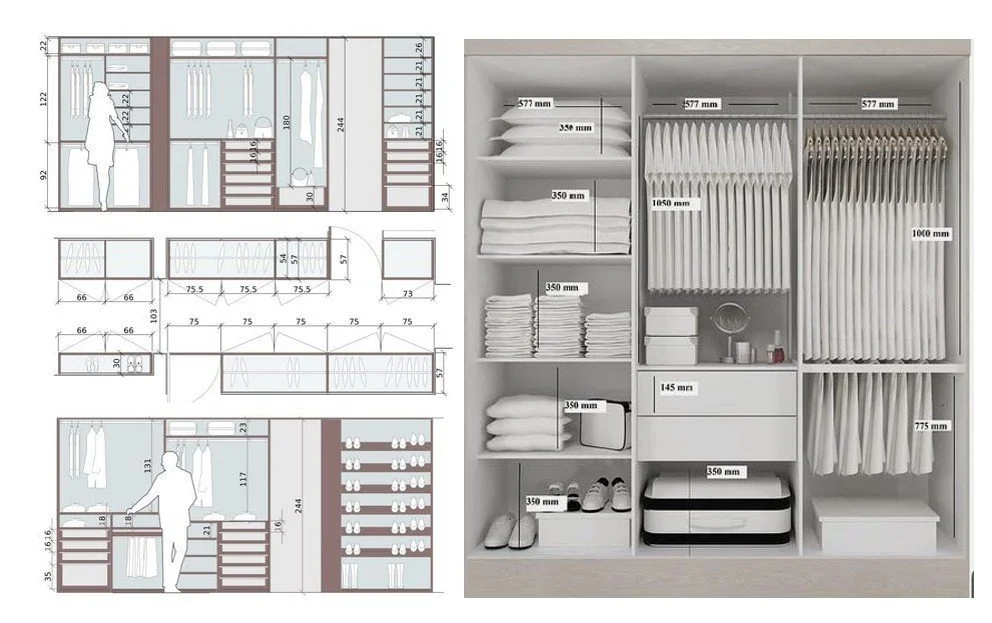
Built-in Wardrobes . This image showcases an example of smart built‑in wardrobe planning used to illustrate good practice in creating a clutter‑free bedroom. Detailed compartments, hanging zones, shelves, and drawers demonstrate how thoughtful layout and measurement can maximise storage efficiency. It supports the article’s message that well‑planned joinery transforms everyday living, even when the design is not bespoke to a specific project.
Frequently Asked Questions About Bedroom Design
1. How do I optimise a small bedroom layout?
Maximising a small bedroom starts with smart furniture placement and multi-functional storage solutions. A Bedroom Interior Designer in Cambridge can create a layout that enhances both comfort and efficiency.
2. How do I choose the right lighting for my bedroom?
Use layered lighting to cater to different moods and activities. ALighting Designer in Cambridge can recommend smart dimmable solutions for effortless control.
3. How can a bespoke headboard enhance my bedroom design?
A custom headboard adds personality and functionality to a bedroom. A Bespoke Furniture Designer in Cambridge can craft a headboard tailored to your style.
4. What are the latest bedroom design trends?
Current trends include biophilic design, smart lighting integration, and sustainable materials that enhance functionality and personal style.
Conclusion
Whether you're working with a Bedroom Interior Designer in Cambridge, seeking advice from a Lighting Designer in Cambridge, or collaborating with a Bespoke Furniture Designer in Cambridge, the right choices will turn your bedroom into the perfect retreat.
Continue Your Journey
A well-designed bedroom is more than a place to sleep. It should encourage relaxation, support wellbeing and provide a sense of retreat from everyday life. By carefully considering layout, lighting, materials and bespoke furniture, you can create a bedroom that feels calm, comfortable and beautifully connected to the way you live.
Read Next
How Lighting Affects Mood in Interior Design
Discover how thoughtful lighting influences relaxation, comfort and the emotional atmosphere of your bedroom.
Best Interior Design Materials for Every Room in Your Home
Explore how natural materials, texture and durable finishes help create bedrooms that are timeless, tactile and comfortable.
How to Create a Calm and Organised Home with Interior Design
Learn how thoughtful planning and integrated storage create peaceful bedrooms that remain easy to live in every day.
Return to the Chapter
Interior Design Styles & Ideas
Explore timeless interior design styles, inspiring ideas and thoughtful design approaches that help you create contemporary homes with character, balance and lasting appeal.