
How to Modernise Period Homes in Cambridge
Modernising period homes in Cambridge requires a careful balance between preserving architectural character and improving the way a home functions for modern living. Through thoughtful interior design, updated layouts, natural materials, and refined contemporary detailing, period properties can feel calmer, brighter, and better connected to everyday life while still respecting their original features.
How to refresh a home with history — without losing its soul.
Introduction — How do you modernise a period home without losing its character?
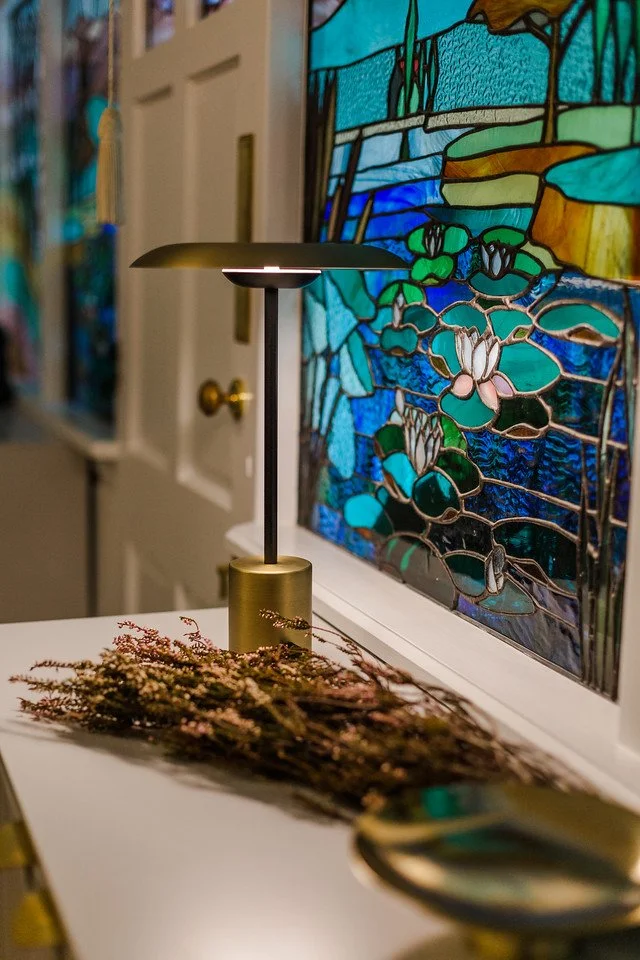
A thoughtfully modernised entry hall in Gamlingay, Cambridgeshire, where the original stained glass was preserved as a central feature. The design was built around its character — balancing period charm with contemporary clarity through natural materials, soft lighting, and subtle architectural framing. A quiet example of how modernisation can honour the soul of a space.
It’s a question I hear often — especially at this time of year, when homes across Cambridge and the surrounding Cambridgeshire villages feel ready for a gentle reset.
From the Victorian terraces of Cambridge and the Edwardian homes of Shelford, to the Arts & Crafts houses in Welwyn Garden City, the characterful cottages of Gamlingay and Comberton, and the elegant family homes in Royston, Hitchin, St Neots, Sandy, Biggleswade, Wyboston, and Newmarket — the desire is the same:
How do you bring a period home into the present, without erasing what makes it special?
Modernisation is not about replacing everything.
It’s about elevating what’s already there.
It’s about choosing materials, finishes, and furnishings that feel as though they’ve always belonged — even when they’re new.
It’s about continuity, calm, and architectural respect.
And often, it’s about introducing a Japandi, Scandinavian, or Nordic‑inspired sense of clarity — a modern softness that complements Cambridge’s historic architecture beautifully. If you’re looking for support, you can explore my approach as an
Interior designer in Cambridge
or learn more about my
Cambridgeshire interior design studio.
1. What to Keep — The Soul of a Cambridge Period Home
Every period home carries its own architectural poetry. The key is to protect the elements that hold the rhythm of the house:
• Original floors — oak, pine, parquet, or quarry tiles
• Fireplaces and mantels — even if modernised, they anchor the room
• Cornices, ceiling roses, architraves — the home’s architectural handwriting
• Sash windows and shutters — irreplaceable proportions
• Room symmetry and flow — the quiet geometry of Victorian and Edwardian design
In Cambridge, Comberton, and Royston, these details often define the entire home.
In Welwyn Garden City, they speak to the Arts & Crafts heritage.
In Gamlingay and Caldecote, they bring warmth to cottage layouts.
These are the elements that deserve to stay.
These elements often define the entire home — and you can see how I’ve approached this in projects such as: Cambridge Period Home Project, Welwyn Garden City Project, Gamlingay Family Home.
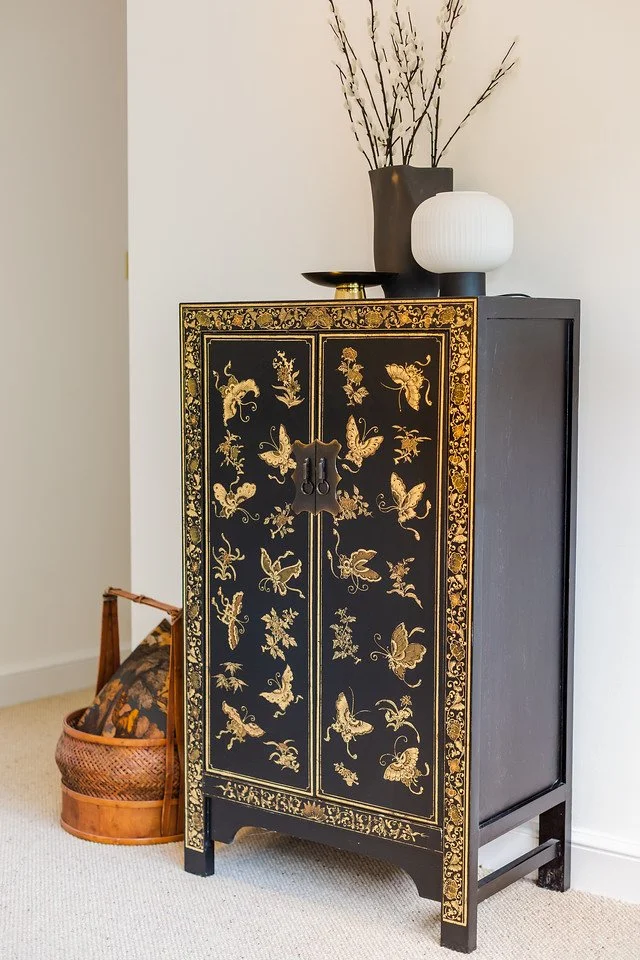
A decorative black cabinet with gold butterfly and floral detailing, originally hidden in the Gamlingay home, now thoughtfully placed in the landing where its artistry can be fully appreciated. Styled with a ribbed ceramic lamp, black vase, and woven basket, the vignette reflects the designer’s belief in placing the right element in the right space — revealing beauty through context, not excess. A quiet celebration of reclaimed character and poetic placement.
2. What to Change — Modern Comfort Without Compromise
Modernisation should feel inevitable, not abrupt.
The right updates bring comfort, clarity, and calm:
• Lighting — layered, warm, Scandinavian‑inspired
• Storage — built‑in, flush, minimal, architectural
• Materials — natural, tactile, timeless
• Flow — gentle reconfiguration without structural upheaval
In St Neots, Sandy, and Biggleswade — where layouts are often more open — lighting and storage make the biggest difference.
In many Cambridge and Cambridgeshire homes, a modern interior designer or contemporary designer will often introduce Nordic simplicity to soften Victorian formality.
For more on this approach, you might enjoy: Japandi for Period Homes Insight
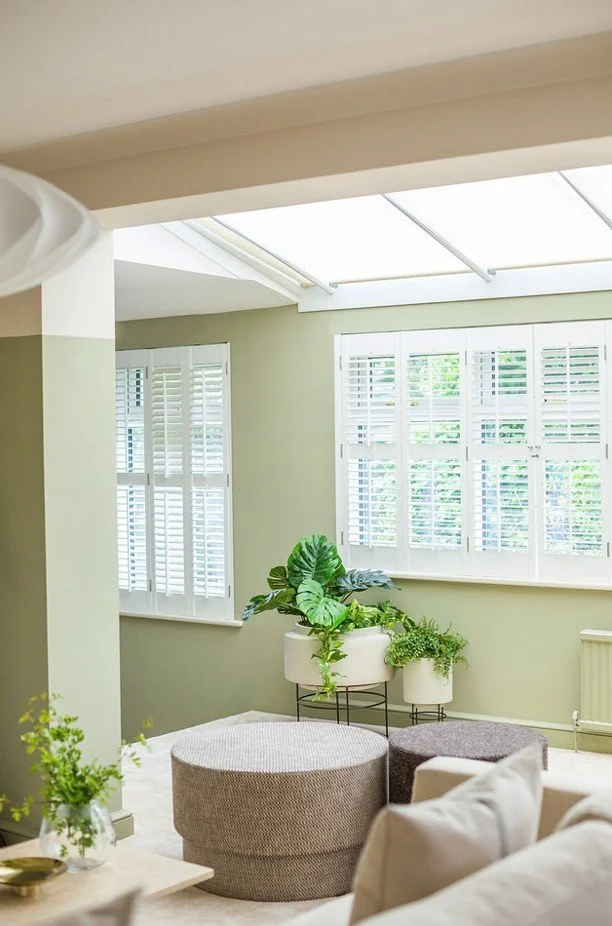
A bright, modernised living space in Gamlingay featuring large sash windows with white shutters, a skylight, and soft green tones. The room blends Scandinavian clarity with natural textures — upholstered ottomans, a linen sofa, and leafy houseplants — creating a calm, contemporary atmosphere that respects the home’s original proportions.
3. Kitchens — What You Can Transform Without a Full Redesign
Professional updates that feel architectural, not DIY.
A kitchen doesn’t always need a full redesign to feel renewed. Thoughtful, professional changes can shift the entire atmosphere:
• Worktops — natural stone, quartz, or composite for quiet luxury
• Hardware — solid, tactile handles and taps in brushed nickel or bronze
• Storage clarity — Japandi‑inspired simplicity
• Re‑zoning — improving flow without moving walls
• Specialist finishes — microcement, limewash, textured mineral paint
• Wallcoverings — grasscloth, Arte, Elitis, Omexco for depth without noise
This is where a modern interior designer in Cambridge can bring a Japandi‑style calm to even the busiest family kitchen.
In London and Welwyn Garden City, microcement and plaster finishes bring a contemporary softness to period layouts.
If you’re considering a kitchen update, explore my Kitchen Designer Cambridge service.
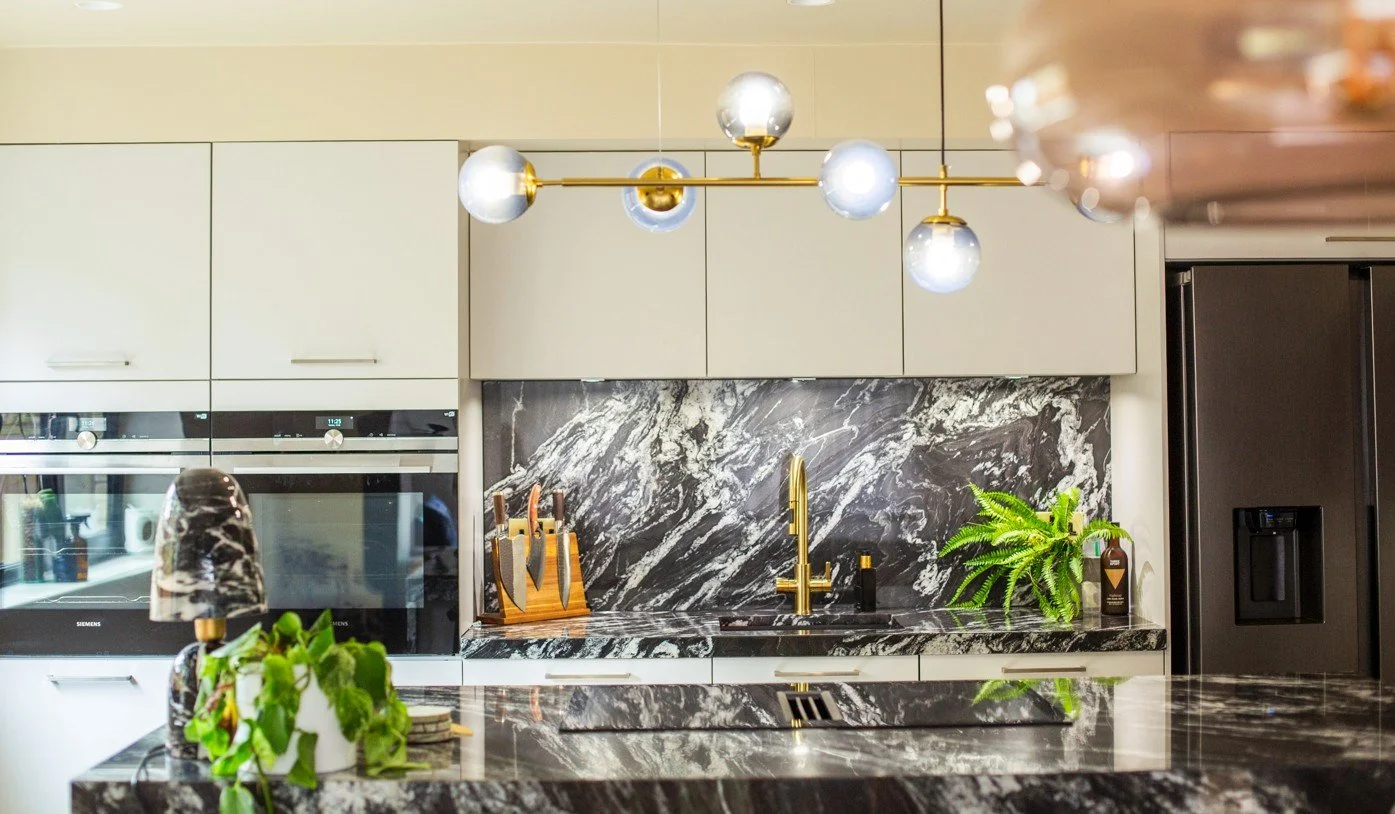
This elegant kitchen showcases the art of modernising a new home with restraint and clarity. A black and white marble countertop and backsplash anchor the space, while a sculptural gold chandelier adds warmth and drama. Integrated Siemens ovens, minimalist cabinetry, and a dark fridge with water dispenser reflect contemporary convenience. The gold faucet and potted greenery soften the palette, creating a kitchen that feels both luxurious and lived-in — a thoughtful update that respects the home’s original character while embracing modern life.
4. Bathrooms — Quiet Luxury for Period Homes
Bathrooms in period homes benefit from calm, sculptural simplicity:
• Polished plaster or microcement — seamless, warm, and timeless
• Minimal sanitaryware — sculptural forms that soften Victorian geometry
• Natural stone — grounding and elegant
• Warm lighting — essential for balance
• Brushed metals — subtle, refined, never shiny
In Royston, Hitchin, and Shelford, these finishes bring modern comfort without overwhelming the architecture.
You can learn more about my approach as a Bathroom Designer in Cambridge.
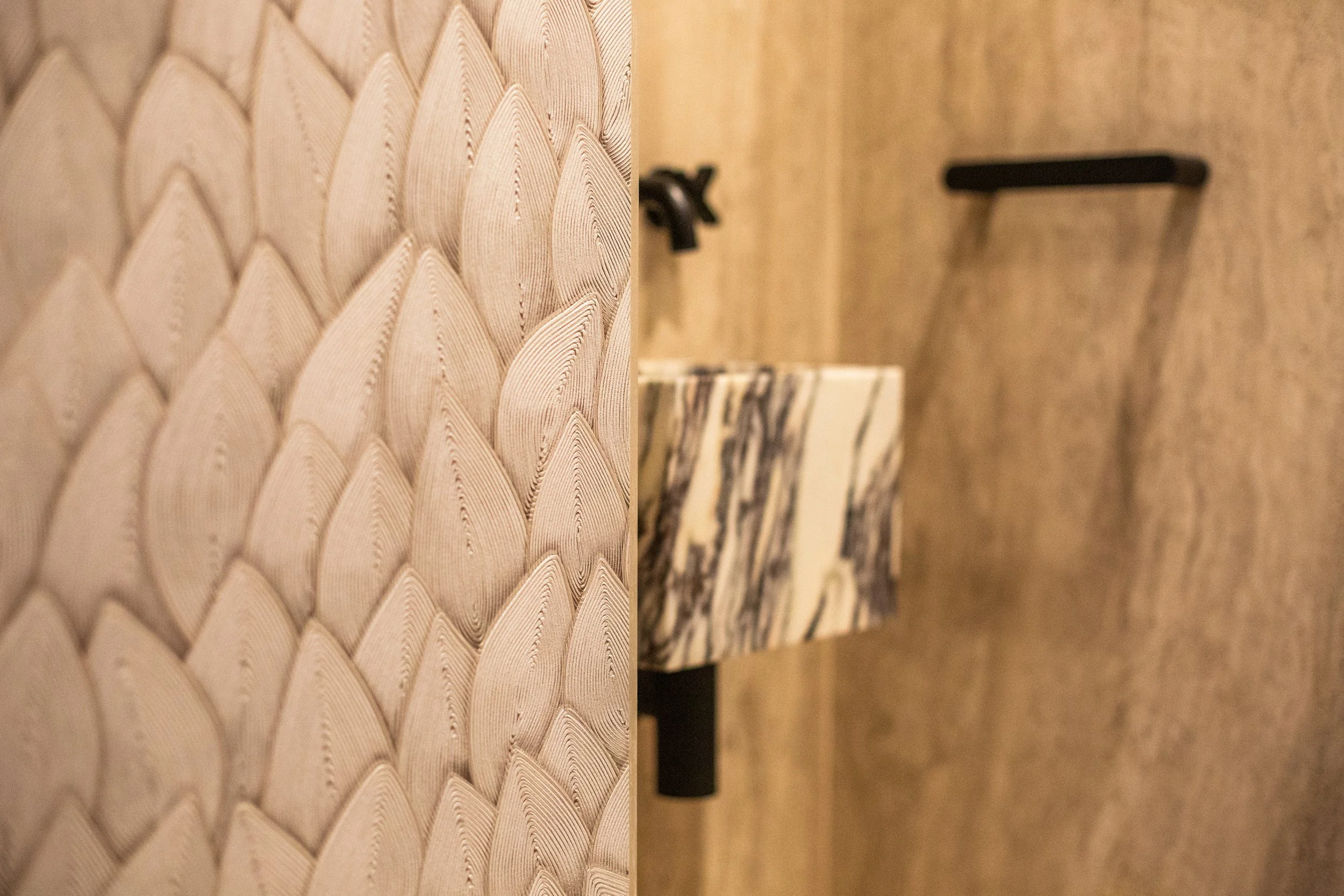
A close-up of the Shelford bathroom reveals a masterful interplay of texture and tone. The leaf-patterned Elitis vinyl wallpaper adds depth and movement, its wipeable surface marrying beauty with everyday ease. A marble sink floats against a wood-toned wall, paired with matte black fixtures that ground the composition. This vignette captures the essence of thoughtful modernisation — tactile, timeless, and quietly luxurious.
5. Living Spaces — Light, Flow, and Architectural Calm
Living rooms are where period character and modern clarity meet:
• Keep fireplaces, floors, cornices
• Update lighting to Nordic warmth
• Introduce natural textures — linen, wool, oak
• Consider wall panelling — Shaker, slatted, or full‑height
• Use wallpaper with intention — Elitis, Arte, Omexco for quiet depth
A Scandinavian or Japandi‑influenced palette works beautifully in Cambridge’s Victorian and Edwardian living rooms, creating a sense of quiet luxury without overwhelming the architecture. In Cambridge and Comberton, panelling often enhances tall ceilings. In Gamlingay and Biggleswade, textured wallcoverings add warmth to cottage proportions.
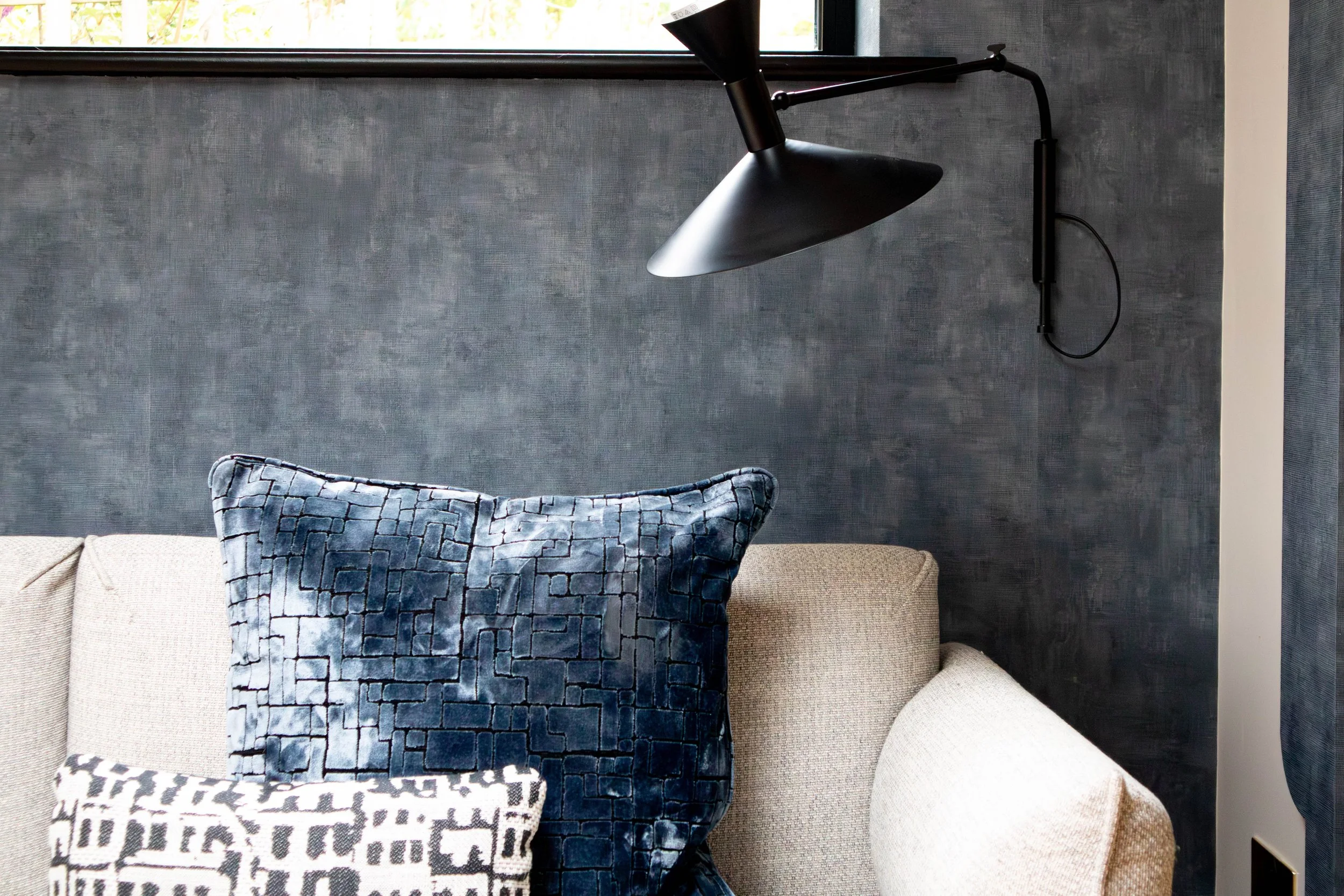
This intimate corner from the Shelford project captures the poetry of restraint. A Courbusier wall light arcs elegantly over a beige armchair, its adjustable arm offering sculptural clarity. The textured blue wallpaper adds depth and mood, anchoring the space with quiet confidence. Layered cushions — one geometric, one abstract — invite softness and contrast. A narrow window filters natural light, completing a composition that feels both contemplative and contemporary.
6. Bedrooms — Softness, Rest, and Quiet Continuity
Bedrooms benefit from a Nordic‑inspired approach:
• Limewash or clay paint — soft, cloud‑like movement
• Minimal wardrobes — flush, calm, architectural
• Layered lighting — warm, indirect
• Natural textiles — linen, wool, cotton
This is where Scandinavian minimalism and Japandi calm create restful, timeless spaces.
For more on this aesthetic, see: Quiet Luxury Interiors Insight, Scandinavian Minimalism Insight
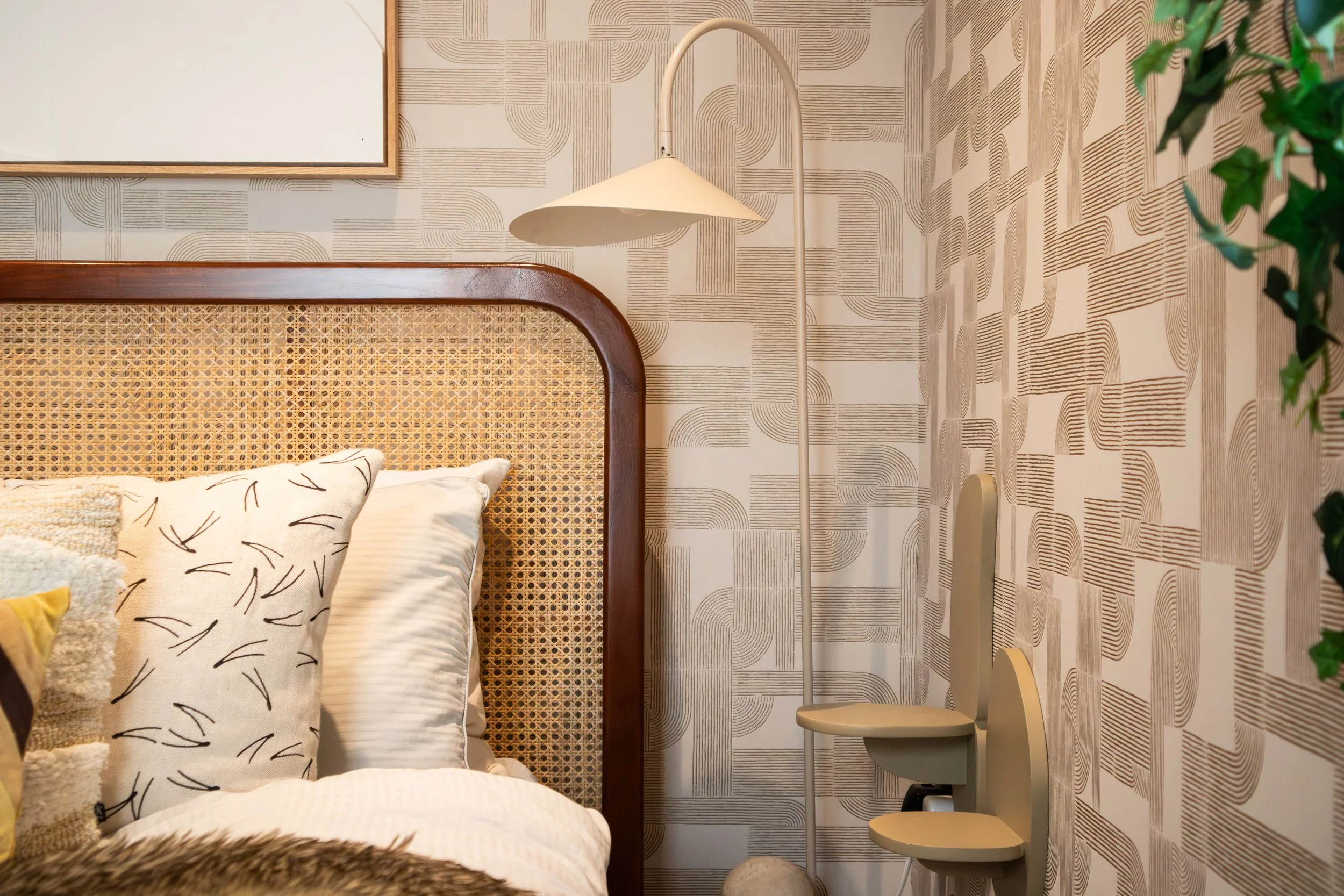
This bedroom corner from the Water Lane renovation blends natural materials with sculptural clarity. A Ferm Living floor lamp arcs gracefully beside a rattan headboard, its conical shade casting soft light across layered cushions. The geometric wallpaper introduces rhythm and depth, while the organic wall shelf — a pair of circular platforms — adds playful asymmetry. A trailing plant softens the composition, grounding the space in quiet elegance. This is modernisation with soul: tactile, thoughtful, and unmistakably personal.
7. Children’s Rooms — Playful, Practical, and Calm
Children’s rooms should grow with the child:
• Built‑in storage
• Calm base palette
• Natural materials
• Flexible layouts
In St Neots, Sandy, and Royston, these spaces often benefit from clever zoning and soft, durable finishes. A modern, Nordic‑influenced palette keeps the room calm while still allowing for playful accents.
You can explore more family‑focused design in my Cambridge Project
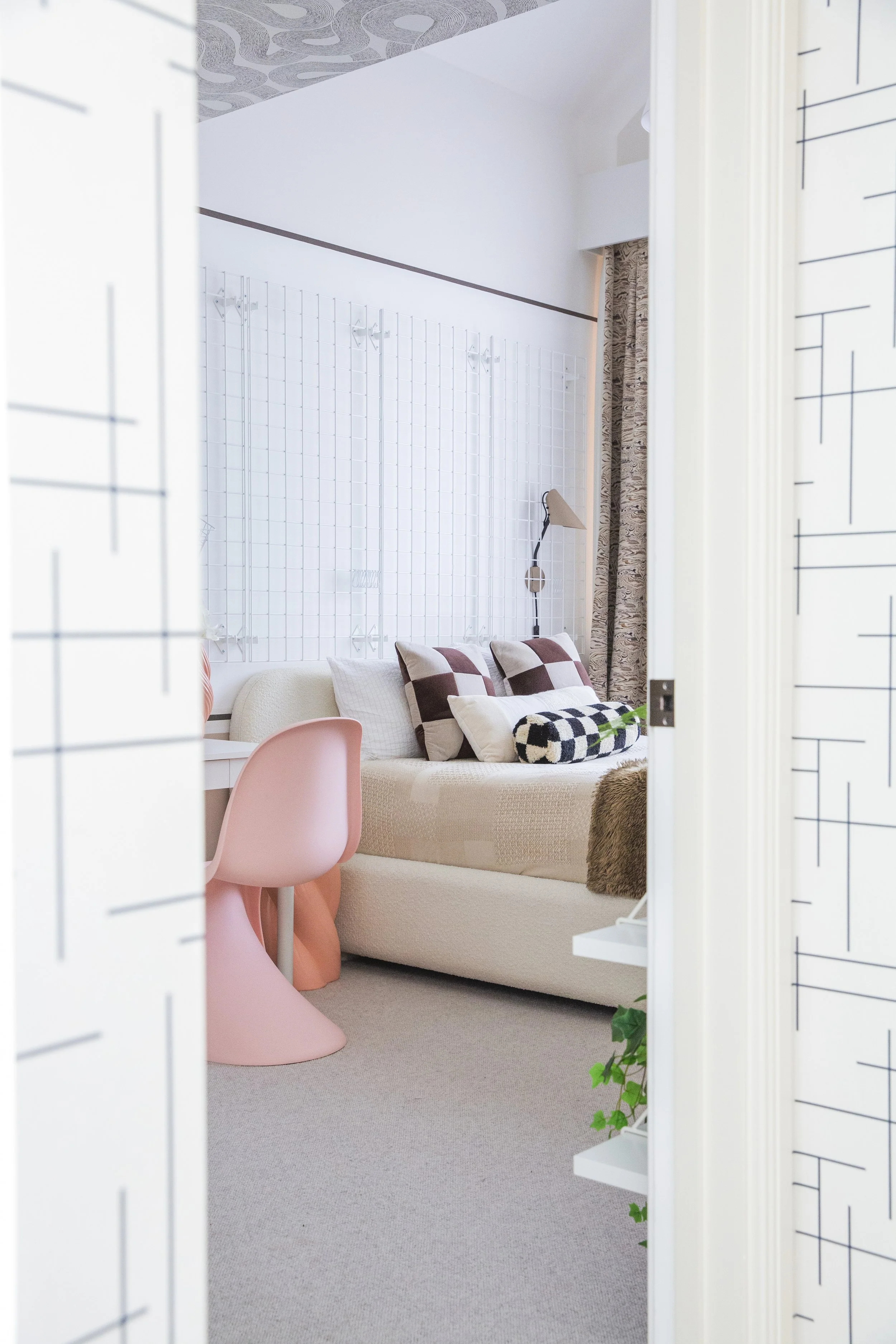
A glimpse into the Water Lane teen bedroom reveals a space that’s both expressive and serene. Seen from the hallway, the room unfolds with a textured cream bedspread, layered cushions, and a sculptural pink chair beside a crisp white desk. A grid panel behind the bed adds structure, while the mounted lamp and circular mirror introduce playful geometry. The curtain’s soft texture and the hallway’s black grid wall frame the scene with quiet rhythm. This is modernisation with personality — tactile, youthful, and thoughtfully composed.
8. Home Offices — Quiet Focus for Cambridge Living
A home office should support clarity and concentration:
• Simplified visual field
• Warm, indirect lighting
• Natural textures
• Minimal, functional furniture
In Cambridge, London, and the Cambridgeshire villages, these spaces often become the quiet heart of the home. A contemporary interior designer will often use Scandinavian principles here — clarity, warmth, and quiet focus.
9. Wallcoverings, Panelling, and Specialist Finishes
The transformative power of texture.
This is where modernisation becomes truly architectural:
Wallcoverings
• Elitis — sculptural, textural, artistic
• Arte — refined, architectural
• Omexco — natural fibres, grasscloth, mineral textures
Panelling
• Shaker — calm, timeless
• Slatted — warm, Japandi‑inspired
• Full‑height — contemporary, grounding
• Dado‑height — perfect for Victorian and Edwardian homes
Specialist Paints & Finishes
• Limewash — soft movement, breathable
• Clay paint — depth and calm
• Mineral paint — ideal for period walls
• Polished plaster — quiet luxury
• Microcement — seamless, modern, warm
If you’d like to explore materials further, you may enjoy: Materials & Finishes Insight
These choices modernise without overwhelming — especially in Cambridge, Royston, Hitchin, and Welwyn Garden City. These finishes align beautifully with Scandinavian, Nordic, and Japandi interiors — styles that pair effortlessly with Cambridge’s period architecture
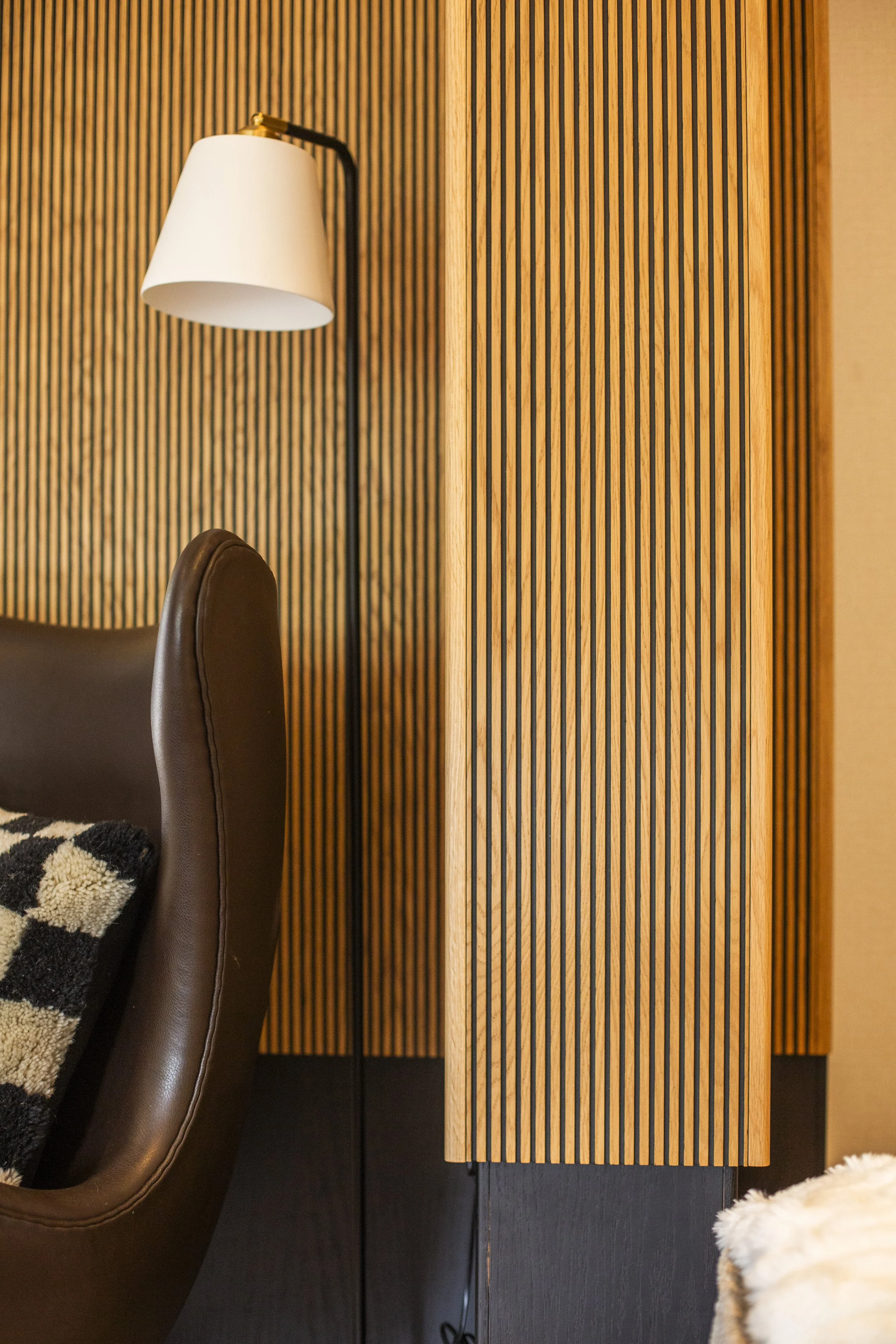
This corner of the Shelford living space celebrates material honesty and quiet rhythm. Ridged timber wall panels alternate in tone, creating a tactile backdrop that anchors the room with architectural depth. A curved leather chair and checkered blanket introduce softness and contrast, while the slender floor lamp adds sculptural clarity. The palette is warm, the textures layered — a modernisation that honours craftsmanship and invites stillness.
10. Why the Right Designer Matters
Modernising a period home is not about trends.
It’s about sensitivity, clarity, and architectural intuition.
The right designer: Modernising a period home is never just about new furnishings or a fresh palette. It’s about choosing a designer who can read a space with sensitivity and imagination — someone who:
• Thinks beyond furniture
• Sees opportunities that aren’t obvious
• Understands how to modernise without erasing character
• Chooses materials that enhance rather than dominate
• Ensures new elements feel rooted, not random
• Creates balance, continuity, and calm
• Protects the soul of the home — unless the purpose is full transformation
This is where clever, innovative thinking makes all the difference. A designer with a Japandi,Scandinavian, or contemporary Cambridge sensibility will always prioritise harmony over novelty — ensuring the home feels renewed, not redesigned.
A Home That Feels Both Timeless and Renewed
Modernising a period home in Cambridge or the surrounding Cambridgeshire villages is a quiet, thoughtful process.
Learn more about my approach:
Interior Design Cambridge
It’s about respecting what exists, elevating what matters, and introducing new elements that feel as though they’ve always belonged.
Explore Related Guides
Modernising a period home is rarely about removing character. The most successful transformations respect the original architecture while improving layout, functionality and the way a home supports modern living.
If you're planning a renovation, extension or reconfiguration project, these related guides explore how thoughtful design can help period properties evolve without losing their identity.
If you're considering modernising your home in Cambridge, Cambridgeshire, Hertfordshire or London, I'd be delighted to help you explore what's possible.
Explore Similar Projects
Every home presents its own challenges and opportunities. Explore interior design projects across Cambridge and Cambridgeshire to discover how thoughtful design, space planning and carefully considered renovations can transform the way people live.
Shelford Refined — A Poetic Transformation in South Cambridgeshire
Interior Designer Cambridgeshire – Full Home Renovation in Gamlingay
Return to the Chapter
Renovation & Home Transformation
Explore expert guidance on renovating, restoring and transforming homes with confidence. From period properties and listed buildings to contemporary renovations, discover how thoughtful interior design creates homes that honour their character while supporting modern living.
Explore the Renovation Knowledge Library
Every renovation is shaped by a series of connected decisions. Explore our Renovation & Home Transformation knowledge hub for more practical guides, professional insights and real project stories designed to help you plan a thoughtful, well-considered home.
Explore the Renovation & Home Transformation Knowledge Hub →
Planning Your Own Project?