
Modern vs Contemporary Interior Design Explained
Modern and contemporary interior design are often used interchangeably, but they describe two distinct design approaches. While modern interiors are rooted in a specific design movement focused on simplicity and functionality, contemporary interior design reflects evolving styles, materials, and ways of living. Understanding the difference can help create interiors that feel more cohesive, balanced, and suited to modern everyday life.
Modern and contemporary interiors are often spoken about as if they are the same. In reality, they come from different histories, different rhythms, and different ways of living. As a modern and contemporary interior designer in Cambridge, I see these two styles play out beautifully across the city’s period homes, new‑builds, and quiet Cambridgeshire villages — each offering its own way of creating calm, intentional spaces.
This guide unpacks the difference with clarity and warmth, helping homeowners choose the style that feels most like home.
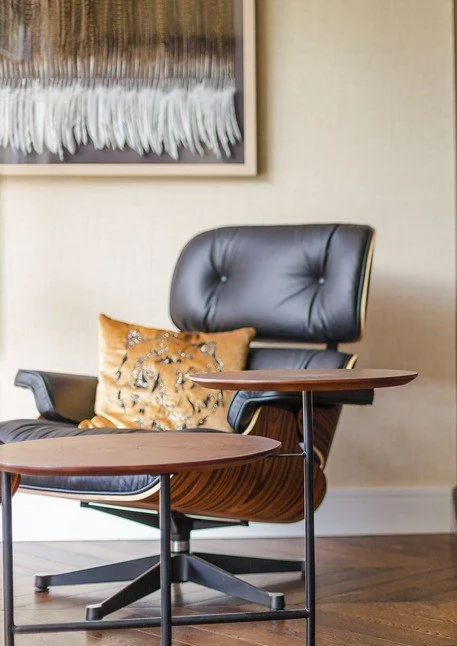
Eames lounge chair and ottoman
A modern Cambridge interior featuring the iconic Eames lounge chair and ottoman, styled with warm wood, black leather, and a golden embroidered cushion. Paired with round wooden side tables and feather artwork, this space reflects the timeless elegance of mid‑century design — a perfect example of how modern interiors remain relevant and refined in contemporary homes
What Is Modern Interior Design?
Modern design is rooted in the early–mid 20th century — a moment shaped by clean lines, honest materials, and a belief that beauty lies in simplicity. It’s structured, balanced, and quietly confident.
The Bauhaus Influence: “Less, but Better”
The modern movement was shaped profoundly by the Bauhaus school, where designers believed that form should follow function and that beauty emerges from clarity.
This era gave us iconic pieces — chairs, tables, lighting — crafted with such precision and intention that we still celebrate them today. Their silhouettes remain timeless, their craftsmanship unmatched, their presence quietly powerful in both period homes and contemporary spaces.
These pieces continue to anchor Cambridge homes with a sense of history and refinement, proving that good design never dates.
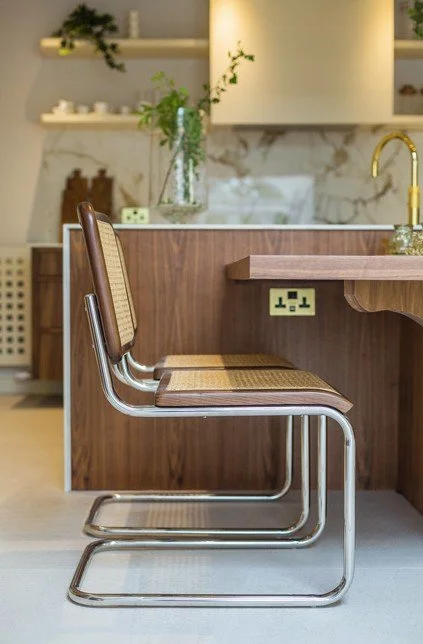
A Bauhaus-inspired breakfast area in Gamlingay featuring a Marcel Breuer cantilever chair — a timeless design by the Bauhaus student and teacher. The woven cane seat and tubular chrome frame reflect the movement’s belief in functional beauty and honest materials. Paired with natural wood, curved surfaces, and soft foliage, this space celebrates the enduring relevance of Bauhaus principles in modern Cambridgeshire homes.
The Scandinavian & Nordic Connection
Scandinavian and Nordic design grew from the same modernist roots:
• clean lines
• natural materials
• craftsmanship
• a deep respect for light
• a belief that homes should feel calm and human
This is where the lineage becomes important for Pinterior.space.
Modern → Scandinavian/Nordic → Japandi
These styles are not separate islands — they are a continuum.
• Modern design introduced simplicity, clarity, and honest materials.
• Scandinavian and Nordic design softened it with warmth, tactility, and a deep connection to nature.
• Japandi blends Nordic warmth with Japanese restraint, creating a calm, grounded aesthetic that feels both timeless and contemporary.
This is why our work resonates so naturally across Cambridge, Cambridgeshire villages, Hertfordshire, and London:
Our aesthetic is rooted in this entire lineage — not just one style.
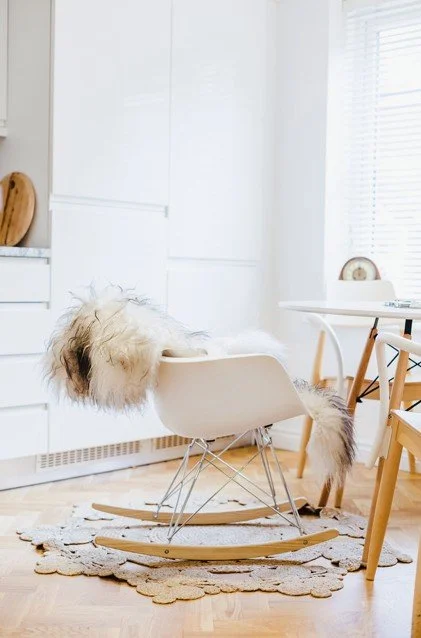
A Scandinavian-inspired kitchen dining space in Biggleswade featuring the iconic Eames dining chair, softened with a layered fur throw. The light wood furniture, natural textures, and gentle palette reflect the Nordic design principles of warmth, simplicity, and functionality. This space blends modern clarity with everyday comfort — a quiet celebration of thoughtful living.
Pinterior.space is not “just Japandi” or “just Scandinavian.”
It is a modern design refined through Nordic warmth and Japanese calm, expressed with contemporary sensitivity.
Key Characteristics of Modern Interiors
• Clean, linear forms
• Warm, natural materials (wood, stone, linen)
• A muted, earthy palette
• Functional layouts with minimal ornament
• A sense of calm order
• Iconic mid‑century pieces that still feel relevant today
Modern interiors work beautifully in Cambridge’s Edwardian and Victorian homes, where the architecture already carries strong lines and generous proportions. A modern approach brings clarity without erasing character.
What Is Contemporary Interior Design?
Contemporary design is ever‑evolving — it reflects the present moment. It’s lighter, more fluid, and more experimental than modern design, often blending influences from Scandinavian, Japanese, minimalist, and even luxury styles.
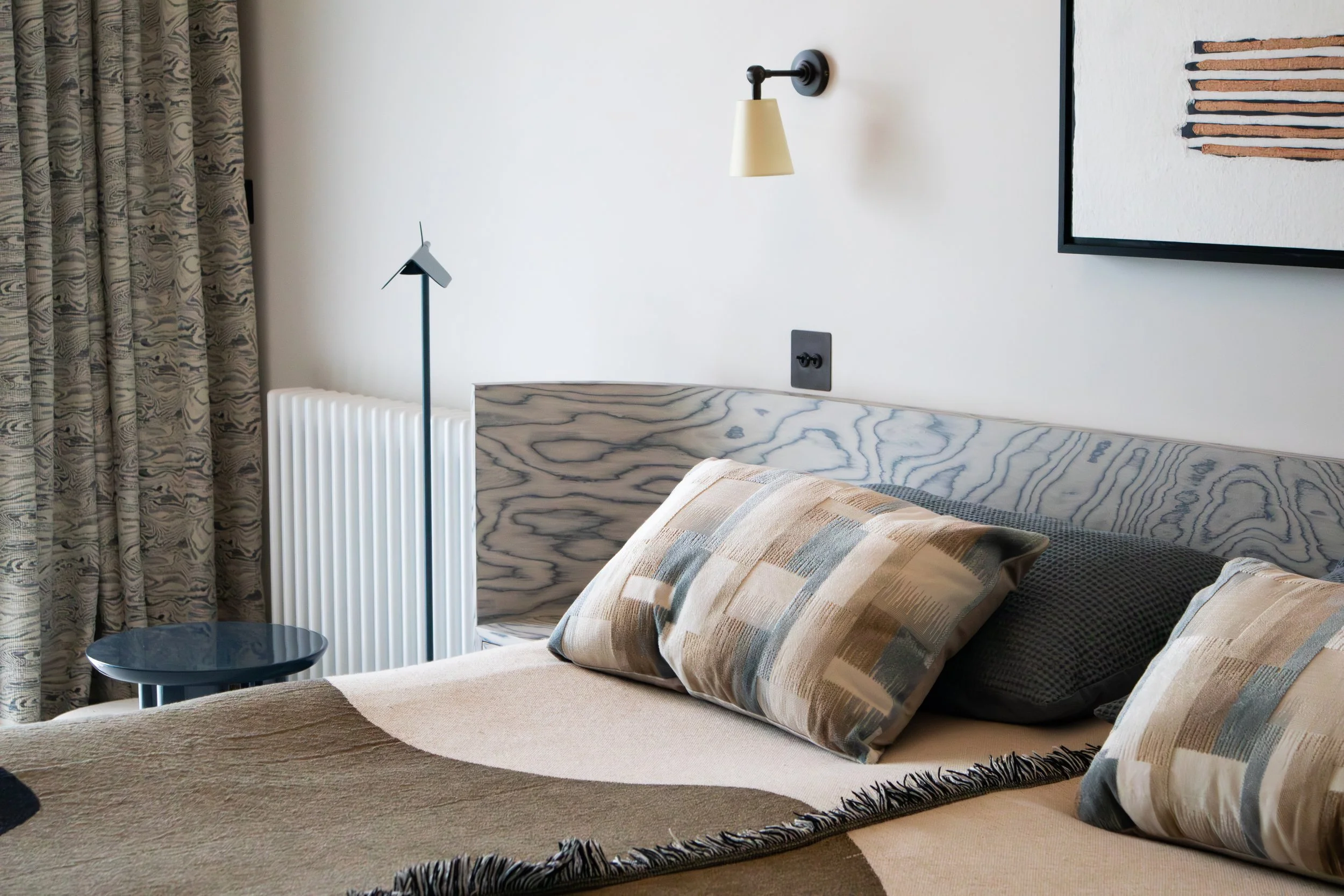
A contemporary bedroom interior showcasing soft curves, layered textiles, and warm wood veneer — key elements of refined contemporary design. The curved headboard, geometric cushions, and sculptural lighting create a space that feels intentional, current, and quietly luxurious. Selected for a Cambridge home, this room reflects Pinterior.space’s curated approach to contemporary interiors: fresh, timeless, and beautifully crafted.
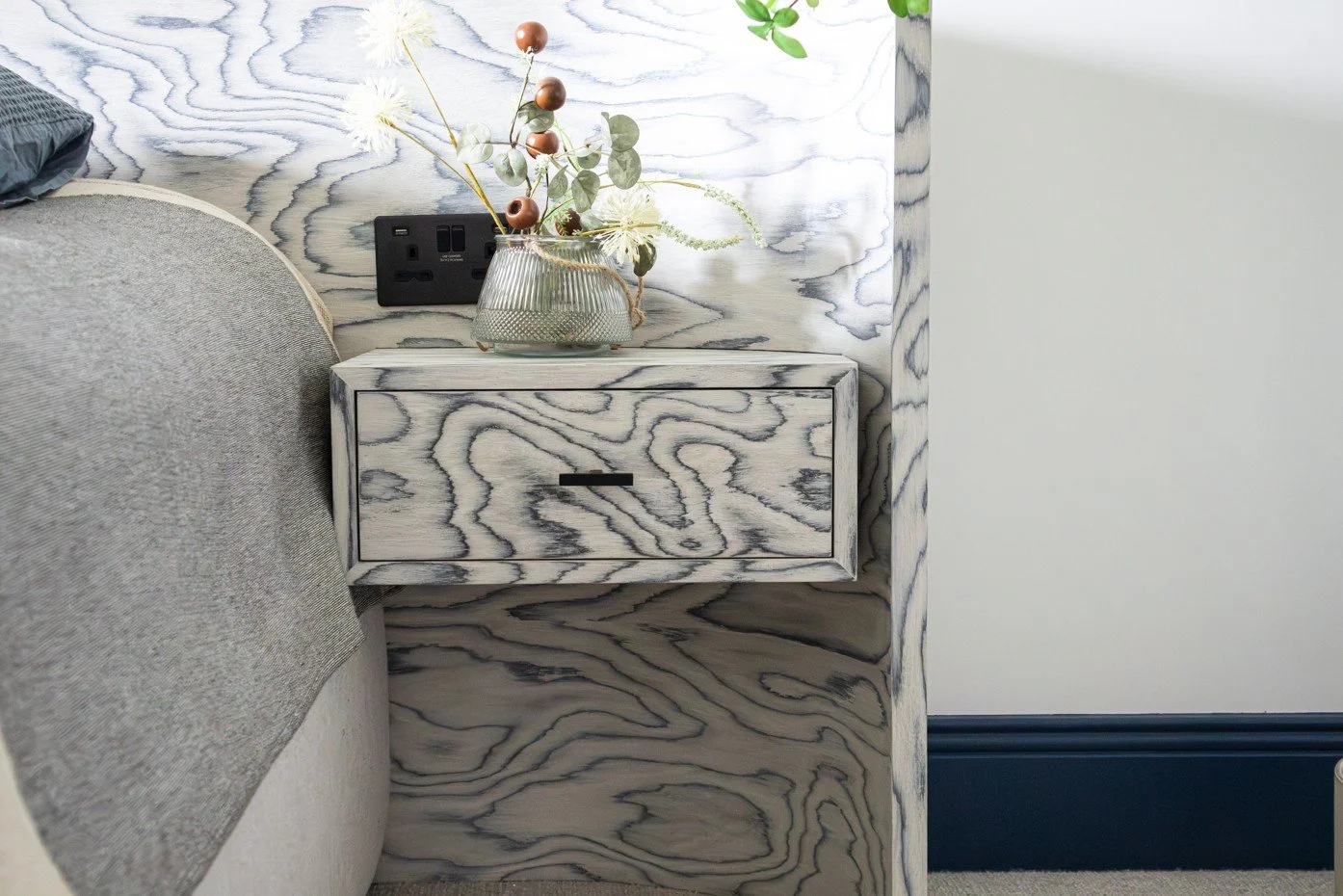
A close-up of a bespoke headboard and integrated drawer in a contemporary Cambridge bedroom, showcasing bold woodgrain textures and minimalist detailing. The black handle, ribbed glass vase, and layered foliage add depth and softness to the clean lines. This detail reflects Pinterior.space’s commitment to intentional design — where every element is crafted to feel timeless, tactile, and quietly luxurious.
The Pinterior.space Approach to Contemporary
Contemporary design shifts every year.
This year, it’s curves, post‑modern silhouettes, and a soft 70s influence.
Next year, it may be something entirely different — sharper lines, new materials, a different rhythm of colour and form.
But the heart of contemporary design is not the trend itself.
It’s the curation.
Our approach is to select the right elements — not all of them — so a space feels:
• fresh
• timeless
• functional
• inventive
• intentional
• beautifully crafted
This is why your contemporary interiors never feel dated or trend‑driven.
They feel considered — a refined blend of what is current and what will endure.
Key Characteristics of Contemporary Interiors
• Soft, curved forms and sculptural silhouettes
• Light, airy palettes that evolve with the moment
• A mix of materials — glass, metal, textured fabrics, natural fibres
• A willingness to embrace new influences (post‑modern, 70s, minimalist, organic)
• Open, flexible layouts that support modern living
• A curated approach that keeps spaces feeling fresh yet timeless
• Design choices that evolve without losing intention or clarity
Contemporary interiors suit Cambridge’s new‑builds, extensions, and open‑plan renovations — spaces where light and movement shape the experience.
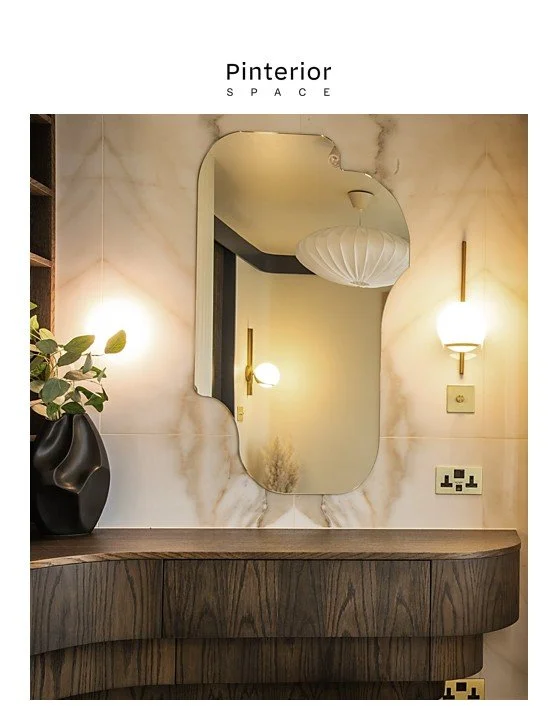
A contemporary dressing area from the Shelford project featuring a bespoke mirror and layered dressing unit, both designed to echo the room’s soft architectural curves. The sculptural forms, rich wood textures, and thoughtful composition reflect Pinterior.space’s unique approach to contemporary interiors — where function meets artistry in quiet, intentional ways.
Modern vs Contemporary: The Differences at a Glance
Both styles can be beautifully calm — but they create different kinds of calm.
Which Style Suits Cambridge Homes?
Cambridge interior design services are shaped by a city of contrasts: historic colleges, Victorian terraces, quiet villages, and contemporary extensions.
Modern interiors suit:
• Period homes in Cambridge and Cambridgeshire villages
• Properties with strong architectural bones
• Homeowners who love warmth, structure, and timelessness
Contemporary interiors suit:
• New‑builds and open‑plan homes
• Extensions in Cambridge and Hertfordshire
• Homeowners who prefer lightness, softness, and flexibility
Many of my clients choose a hybrid — a modern foundation softened with contemporary curves, textiles, and natural light.
How I Blend Modern and Contemporary Design
As a Cambridge interior designer specialising in modern and contemporary styles, my interior design services are always rooted in calm, natural materials and thoughtful storytelling.
I often combine:
• Modern lines with contemporary softness
• Warm woods with light, airy textiles
• Structured layouts with gentle, organic forms
• Period character with present‑day comfort
The result is a home that feels grounded yet current — a space that evolves with you.
“Timeless design isn’t about following trends — it’s about choosing with care, layering with intention, and creating spaces that feel quietly right for years to come.”
A Cambridge Designer’s Final Thought
Whether you’re renovating a Victorian terrace in Cambridge, refreshing a family home in Hertfordshire, or designing a calm retreat in a Cambridgeshire village, both modern and contemporary styles offer beautiful ways to live with intention.
“If you’d like help shaping your home with either style — or a thoughtful blend of both — my design and styling services can guide you.”
Ready to design with intention? Book your free consultation today.
You can explore more here:
• my [Bathroom Concept Boards → /concept-boards]
• my [Recent Articles → /articles]
• my [Home page ]
Continue Your Journey
Understanding the difference between modern and contemporary design is the first step towards creating a home that truly reflects your lifestyle and personal taste. Once you understand the principles behind each approach, it becomes much easier to explore other design styles and confidently combine ideas that feel authentic, balanced and timeless.
Read Next
Interior Design Styles Explained for Contemporary Homes
Explore the defining characteristics of today's most popular interior design styles and discover which approach best suits your home and the way you live.
Modern Interior Design Ideas for Contemporary Homes
Discover how modern interior design combines clean lines, natural materials and thoughtful layouts to create calm, functional living spaces.
Minimalist Interior Design Ideas for Calm Cambridge Homes
Learn how minimalist principles create interiors that feel spacious, purposeful and beautifully balanced without sacrificing warmth or character.
Return to the Chapter
Interior Design Styles & Ideas
Explore timeless interior design styles, inspiring ideas and thoughtful design approaches that help you create contemporary homes with character, balance and lasting appeal.