
Japandi Interior Design Ideas for Period Homes in Cambridge and Hertfordshire
Japandi interior design brings a calm, balanced approach to period homes in Cambridge and Hertfordshire by combining Japanese minimalism with Nordic warmth and natural materials. Through thoughtful spatial planning, soft textures, muted palettes, and architectural sensitivity, period properties can feel contemporary, functional, and deeply connected to their original character while supporting modern everyday living.
A Cambridge designer’s guide to calm, crafted living in heritage spaces
Japandi design draws together Japanese simplicity and Scandinavian warmth to create calm, functional interiors. If you're interested in how Japanese, Nordic and contemporary design influences can work together more broadly, explore our guide to mixing Scandinavian, Nordic and Japanese interior design styles.
How to Mix Scandinavian, Nordic and Japanese Interior Design Styles
Period homes acrossCambridge, Cambridgeshire villages, and Hertfordshire have a quiet poetry of their own — high ceilings, generous windows, original fireplaces, and the kind of architectural character that tells a story before you even step inside.
Japandi design, with its calm minimalism and natural warmth, seamlessly integrates into these homes. It doesn’t compete with the architecture. It listens to it.
As a Cambridge interior designer specialising inModern, Contemporary, Scandinavian, Nordic, and Japandi styles, I’ve seen how beautifully this aesthetic transforms Victorian terraces, Edwardian houses, 1930s homes, and evenGrade II listed properties.
Japandi is not a trend. It’s a way of living — intentional, grounded, and deeply connected to materiality.
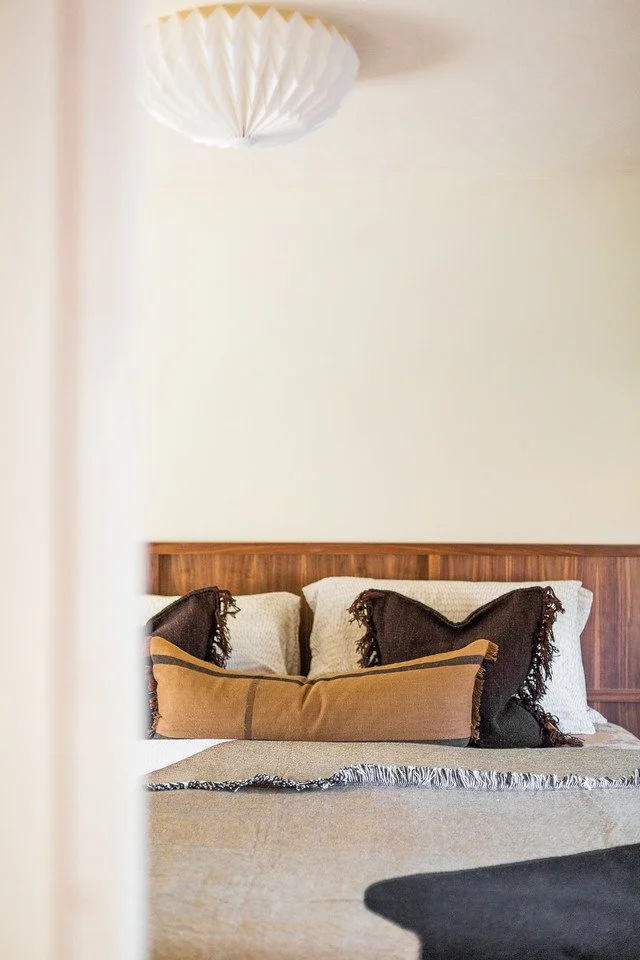
Hero image from a completed bedroom in a Grade II listed South Cambridgeshire home. The layered textiles, sculptural pendant light, limestone plaster and warm wood headboard reflect a calm, curated approach to heritage interiors. Designed with sensitivity to original architecture, this space embodies Pinterior.space’s 360‑degree material selection and quiet luxury — where every detail feels intentional and timeless.
Why Japandi Works So Well in Period Homes
Period architecture carries weight and history. Japandi brings clarity and calm.
Together, they create balance.
• Natural materials soften ornate or linear features
• Warm wood tones complement original floors and joinery
• Soft curves ease the formality of Victorian and Edwardian proportions
• Functional simplicity supports modern living without erasing heritage
• A muted palette allows architectural details to breathe
Japandi doesn’t overwrite the past.
It elevates it.
The Lineage: Modern → Scandinavian → Japandi → Contemporary
Japandi is not an isolated style — it’s the meeting point of several design philosophies.
• Modern design introduced clarity, structure, and honest materials
• Scandinavian and Nordic design added warmth, tactility, and light
• Japanese design contributed restraint, craftsmanship, and ritual
• Contemporary design brings fluidity and relevance to the present moment
This lineage is the foundation of Pinterior.space. It’s why your work feels calm yet current, warm yet refined, minimal yet deeply human.
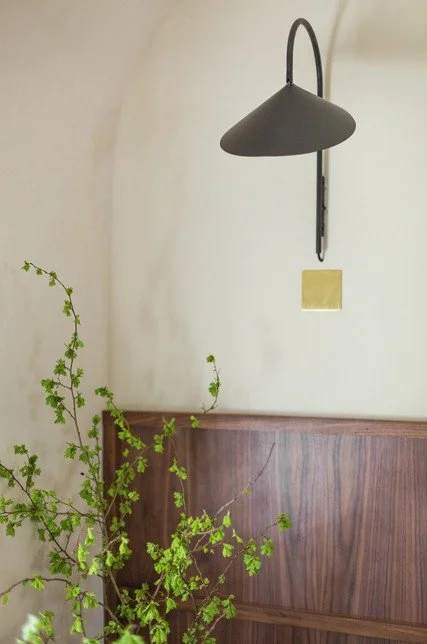
A quiet corner from a South Cambridgeshire home, featuring a sculptural wall light, rich wood panelling, and delicate foliage. This Japandi-inspired detail reflects Pinterior.space’s signature approach to material selection — where every surface, curve, and texture is chosen with care. The interplay of natural grain, soft lighting, and minimalist form creates a space that feels calm, intentional, and quietly luxurious.
Japandi in Cambridge & Cambridgeshire Villages
Cambridge homes — from Newnham to Chesterton, from Victorian terraces to quiet Cambridgeshire villages like Gamlingay, St Neots, and Royston — respond beautifully to Japandi’s gentle aesthetic.
• Bay windows become soft frames for natural light
• High ceilings welcome warm wood and layered textures
• Original fireplaces pair effortlessly with clean-lined furniture
• Neutral palettes highlight period mouldings and architectural rhythm
Japandi brings a sense of stillness to homes that were built in a different era of living.
It creates breathing space.
Japandi in Hertfordshire Homes
Hertfordshire — with its mix of 1930s houses, mid‑century builds, and leafy family homes in places like Welwyn Garden City, Hitchin, and St Albans — is perfectly suited to Japandi’s blend of comfort and clarity.
Here, Japandi becomes a bridge between suburban warmth and contemporary refinement.
It supports family life while maintaining a sense of calm, curated order.
Japandi in Grade II Listed Homes
This is where Japandi truly shines.
Grade II listed homes require sensitivity, respect, and a deep understanding of materials.
Japandi’s natural palette and restrained detailing allow original features to remain the focus.
• Limewashed walls complement historic textures
• Soft timber tones sit gently against preserved joinery
• Minimalist lighting highlights, rather than hides, heritage details
• Natural fabrics soften the formality of protected architecture
With 360‑degree material selection, every element — from flooring to textiles to joinery — is chosen with intention.
Japandi becomes a respectful dialogue between past and present.
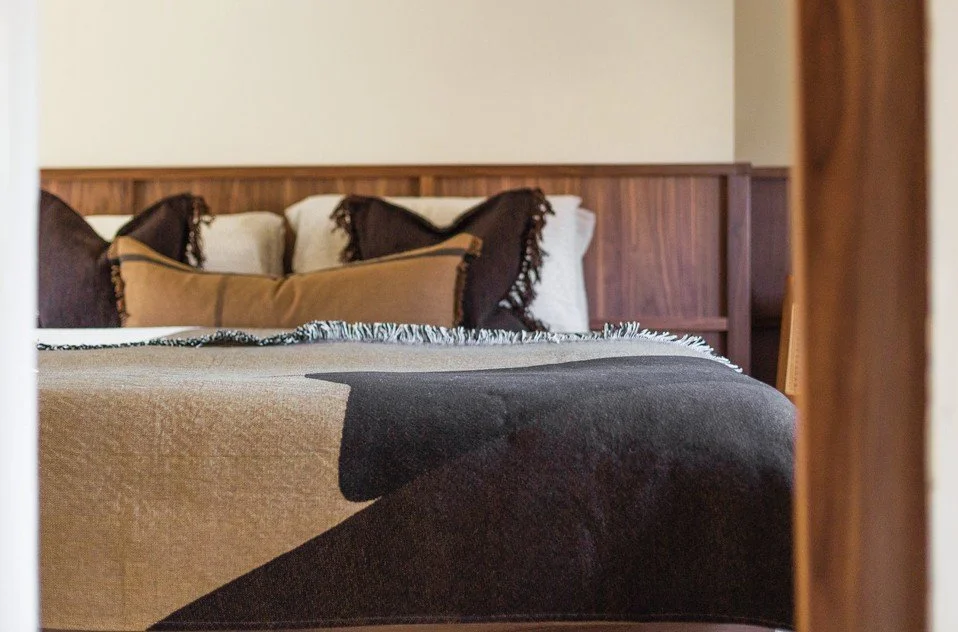
A Japandi bedroom detail from a Grade II listed home in South Cambridgeshire, featuring layered textiles, a warm wood headboard, and a geometric bedspread. The tactile palette — from fringed cushions to sculptural lighting — reflects Pinterior.space’s 360-degree material sensitivity and calm, curated approach to heritage interiors. Designed to honour original architecture while introducing quiet luxury, this space embodies the essence of Japandi living.
The Luxury of Simplicity
Japandi is often described as minimal, but in reality, it is quite luxurious.
Luxury here is not about excess.
It’s about:
• craftsmanship
• natural materials
• bespoke joinery
• thoughtful lighting
• tactile fabrics
• curated objects
• intentional space
This is the kind of luxury that feels lived‑in, not displayed.
It’s the kind that ages beautifully.
The Role of Concept Design
Every Japandi project begins long before furniture arrives.
It begins with concept design — the foundation of your process.
This includes:
• material palettes
• moodboards
• spatial flow
• lighting concepts
• joinery sketches
• texture studies
• colour harmonies
Concept design ensures that every decision supports the same feeling:
calm, grounded, intentional.
This is where our Design Concept Hub becomes essential — a place where clients can see how their home will evolve before a single item is purchased.
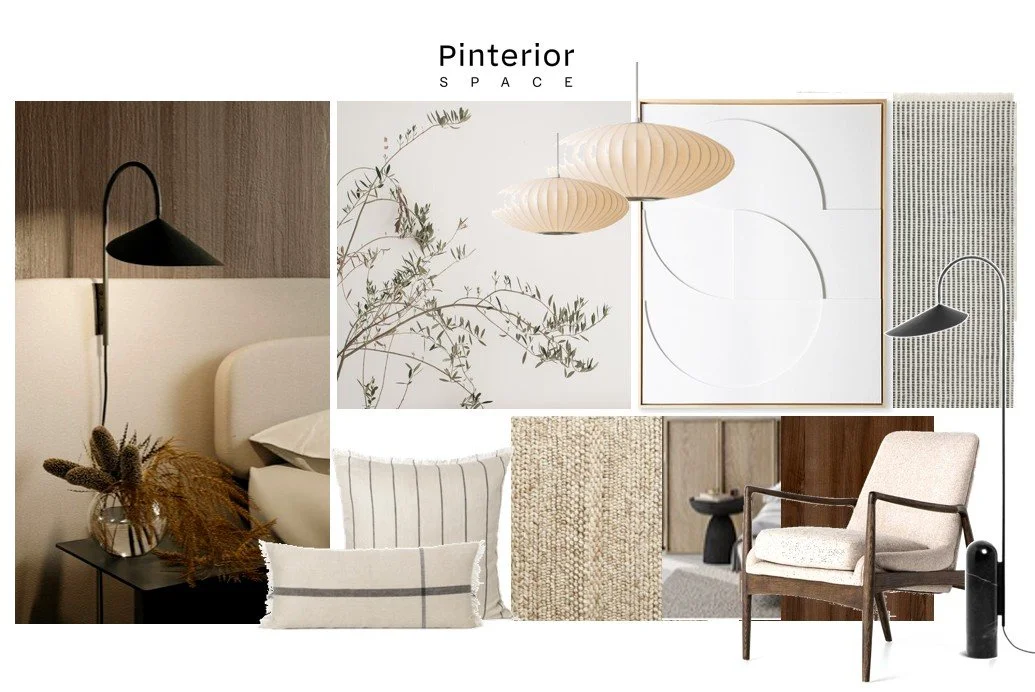
Concept design board for a Japandi-inspired guest bedroom in Gamlingay, curated by Pinterior.space. The palette blends warm neutrals, sculptural lighting, and tactile materials — from ribbed glass and soft textiles to natural wood and abstract forms. This board reflects the project’s calm, intentional aesthetic and the 360-degree design thinking behind every detail.
How Japandi Enhances Period Architecture
Japandi doesn’t flatten character.
It frames it.
• Wood tones echo original floors
• Curves soften sharp Victorian lines
• Linen and wool add warmth to high ceilings
• Sculptural lighting highlights heritage details
• Minimal furniture allows architecture to take centre stage
The result is a home that feels both rooted and renewed.
A Cambridge Designer’s Approach
Our approach is not formulaic.
It’s deeply personal, quietly poetic, and grounded in place.
We design with:
• respect for architecture
• sensitivity to materials
• a calm, curated aesthetic
• a blend of modern, Scandinavian, Nordic, Japandi, and contemporary influences
• a commitment to privacy and authenticity
• a belief that homes should feel intentional, not styled
This is why our work resonates across Cambridge, Cambridgeshire villages, Hertfordshire, and beyond.
A Final Thought
Japandi is not a style you apply. It’s a feeling you create.
And in period homes — especially those with history, character, and soul — it becomes something truly special.
Ready to design with intention? Book your free consultation today.
You can explore more here:
• my [Bathroom Concept Boards → /concept-boards]
• my [Recent Articles → /articles]
• my [Home page ]
Continue Your Journey
Japandi design is more than a visual style. Its emphasis on craftsmanship, natural materials and thoughtful simplicity makes it particularly well suited to period homes, where contemporary living can be introduced while preserving architectural character. By understanding the principles behind the style, you can create interiors that feel timeless, balanced and deeply connected to their surroundings.
Read Next
Japanese Interior Design Ideas for Contemporary Homes
Explore the principles of Japanese interior design, from simplicity and natural materials to space, light and intentional living.
How to Mix Scandinavian, Nordic and Japanese Interior Design Styles
Learn how to combine these complementary design philosophies into a cohesive home that feels authentic, balanced and personal.
How to Modernise Period Homes in Cambridge
Discover how thoughtful interior design can preserve the character of a period home while introducing contemporary comfort, functionality and everyday living.
Return to the Chapter
Interior Design Styles & Ideas
Explore timeless interior design styles, inspiring ideas and thoughtful design approaches that help you create contemporary homes with character, balance and lasting appeal.