
Kitchen Interior Design Ideas for Beautiful and Functional Homes
Kitchen interior design is about creating spaces that feel both beautiful and highly functional for everyday living. Through smart layouts, natural materials, bespoke storage, layered lighting, and thoughtful contemporary design, kitchens can become calmer, more organised, and better connected to cooking, gathering, and modern family life within the home.
How to Plan a Kitchen That’s Both Functional & Beautiful
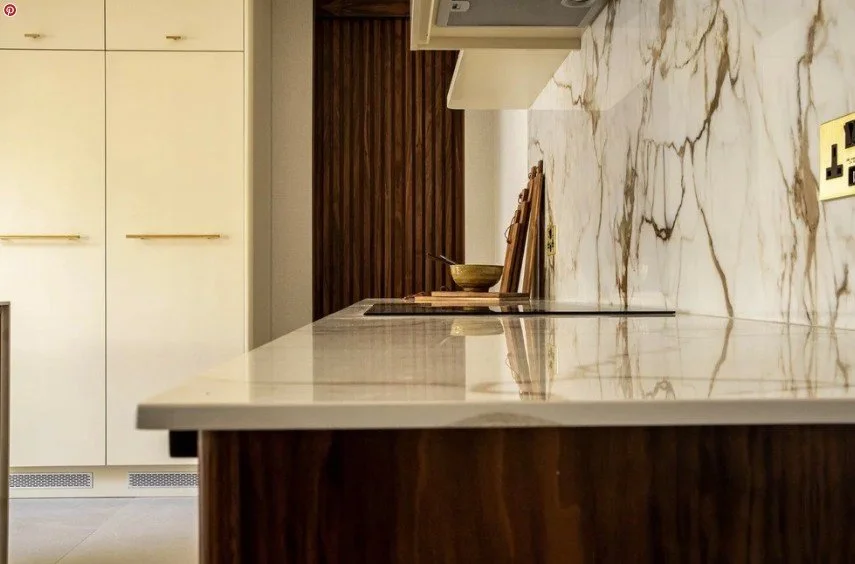
A warm, contemporary kitchen where natural textures take centre stage. The marble-veined backsplash flows in soft browns and beiges, echoing the polished stone countertop. Light cabinetry with gold handles adds elegance, while a wood-panelled wall introduces depth and tactility. Brass accents — from the outlet to the bowl — offer quiet luxury, and stacked cutting boards beside the hob suggest a space ready for culinary ritual.
A Cambridge designer’s guide to creating a kitchen that truly works.
The kitchen is the heart of the home — a place where cooking, conversation, and everyday living naturally overlap. A well‑designed kitchen balances beauty with practicality, creating a space that feels inviting while supporting the rhythm of daily life. Whether you’re planning a modern redesign or a bespoke renovation, thoughtful layout and intentional choices are what transform a kitchen from simply attractive to genuinely functional.
Designing a kitchen is one of the most complex spatial challenges in any home. It’s not just about choosing finishes or creating a visually pleasing room — it’s about shaping a space that works effortlessly, with storage, flow, and usability at its core.
If you’d like to see this in practice, explore our Cambridge kitchen renovation at Henslow Mews (CB2), where strategic planning shaped a refined, highly functional family space.
Step 1: Define Your Kitchen’s Purpose
Before you think about layouts, cabinetry, or finishes, start with how you truly live in the space. Every kitchen has a different rhythm, and understanding yours is the foundation of good design.
Questions to guide your planning
• Who uses the kitchen — a busy family, a couple, or a single cook
• How often is it used — daily cooking, occasional meals, or serious culinary work
• How many people are typically in the kitchen at once
• Do you have specific cooking habits — baking, batch cooking, hosting, or specialist appliances
• How do you shop — weekly top‑ups, monthly bulk shops, or a mix
• What technology do you rely on — gadgets, smart appliances, charging zones
• What is your budget and timeline
• What styles are you drawn to — modern, classic, minimalist, Scandinavian, shaker, Japandi, Nordic
• What functional needs matter most — wine storage, spice drawers, hidden appliances, pantry space
• What lighting and ambience do you prefer — bright and energising, soft and warm, or layered lighting
Understanding these details shapes every decision that follows — from the layout and storage to the materials, lighting, and overall feel of your kitchen.
Step 2: Plan the Kitchen Layout
A well‑planned layout is the foundation of every successful kitchen. Before choosing colours or cabinetry, focus on how the space will function day to day. The most efficient kitchens are designed around the work triangle — the relationship between the sink, cooktop, and refrigerator.
The work triangle is a long‑established design principle that helps create a kitchen that feels intuitive, efficient, and comfortable to use. These three key points should be close enough to minimise unnecessary steps, yet spaced well enough to avoid crowding. When the triangle is balanced, the kitchen naturally supports smoother cooking, better flow, and a more enjoyable daily rhythm.
If you’re planning a full renovation, our Kitchen Design Cambridge guide offers a deeper look at how layout decisions shape both function and atmosphere.

A simple kitchen layout diagram illustrating the work triangle. The sink, fridge, and cooking area are marked as three key points connected by lines to show the ideal workflow between them
Popular Kitchen Layouts
• U‑shaped kitchens — ideal for maximising storage and creating a defined cooking zone
• L‑shaped kitchens — perfect for open‑plan living and family homes
• Galley kitchens — efficient for smaller Cambridge terraces and compact spaces
• Island kitchens — great for entertaining, prep space, and modern family living
• Peninsula layouts — a smart alternative when space doesn’t allow for a full island
Choosing the right layout depends on your home’s architecture, how you cook, and how many people use the kitchen at once. A thoughtful layout is what transforms a kitchen from simply beautiful to genuinely functional.
Step 3: Prioritize Storage & Organization
A clutter‑free kitchen isn’t just visually calming — it’s essential for creating a space that works effortlessly. Smart storage allows your kitchen to feel open, functional, and beautifully streamlined, even during the busiest moments of daily life.
If you’re planning a full renovation, our Bespoke Joinery & Storage guide explores how tailored solutions can transform both the look and usability of your kitchen.
Consider these thoughtful storage solutions
• Deep drawers for pots, pans, and everyday cookware
• Pull‑out pantry systems for easy access to dry goods and ingredients
• Overhead cabinets with internal dividers for efficient compartmentalisation
• Hidden appliance storage to maintain a clean, uninterrupted aesthetic
• Integrated recycling and waste solutions to keep the space organised
• Slimline pull‑outs for spices, oils, and frequently used items
• Built‑in shelves or niches for cookbooks, display pieces, or small appliances
When storage is planned with intention, the kitchen becomes a place where everything has a home — reducing visual noise and supporting a calmer, more functional environment.
Know the Essential Kitchen Rules:
Every kitchen design must balance creativity with practical, technical considerations. These guidelines ensure your space is safe, functional, and aligned with standard UK measurements — an essential foundation before choosing finishes or styling.
If you’re planning a full renovation, our Renovation & Project Coordination guide explains how technical compliance and design decisions work together during a kitchen upgrade.
Safety & Compliance
• Maintain at least 750mm clearance above a gas hob to any combustible material
• Avoid placing electrical sockets near the sink or water sources
• Position the extractor fan at the correct height to ensure effective ventilation
• Ensure all appliances meet current UK safety standards and manufacturer requirements
Standard Kitchen Dimensions
Most UK kitchens are designed using modular units, which helps streamline planning and installation.
• Base units typically have a depth of 600mm
• The standard height of a base unit, including the worktop, is 900mm
• Wall unit depth and height vary depending on style and storage needs
• Integrated appliances are usually designed to fit a 600mm‑wide, 600mm‑deep space
• Freestanding appliances often require around 700mm — always check manufacturer specifications
• Freezers vary significantly in size and weight, so confirm dimensions before finalising your layout
Understanding these measurements early on helps you design a kitchen that not only looks beautiful but also fits seamlessly into the architecture of your home.
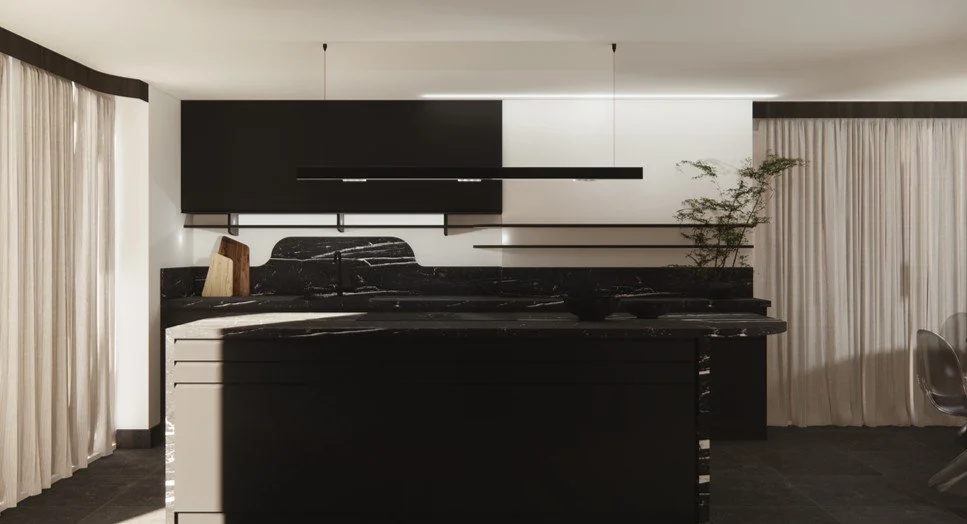
A sculptural, monochrome kitchen where black marble veining meets soft architectural curves. The central island anchors the space with its fluid form and integrated cooktop, while slender pendant lights and floor-to-ceiling curtains soften the minimalist palette. Subtle natural accents — a wooden board and potted greenery — add warmth to the sleek, gallery-like composition.
Step 4: Select Materials & Finishes
The materials you choose define both the durability and the character of your kitchen. Each surface carries its own mood — from warm and tactile to sleek and contemporary — and together they shape the atmosphere of the space.
If you’re exploring options for a renovation, our Kitchen Design Cambridge guide offers a deeper look at how materials influence both function and long‑term usability.
Countertops
• Quartz — durable, low‑maintenance, and ideal for busy family kitchens
• Marble — luxurious and timeless, perfect for creating a refined focal point
• Butcher block — warm, natural, and beautifully tactile
Cabinet Finishes
• Matte — soft, modern, and forgiving of fingerprints
• Glossy — sleek, reflective, and ideal for smaller kitchens needing more light
• Natural wood — warm, grounding, and perfect for adding texture
Flooring
• Tiles — practical, easy to clean, and available in endless styles
• Hardwood — elegant and warm, ideal for open‑plan living
• Stone — timeless, durable, and beautifully tactile underfoot
Choosing the right combination of materials ensures your kitchen feels cohesive, functional, and aligned with the way you live.
Step 5: Optimise your Kitchen Lighting
Lighting is one of the most transformative elements in any kitchen. It shapes mood, enhances functionality, and brings depth to the materials and finishes you’ve chosen. A well‑lit kitchen layers different types of lighting to create a space that feels both practical and atmospheric.
If you’re exploring how lighting influences the feel of a space, our Interior Design Cambridge guide offers a deeper look at creating warm, human‑centred homes.
Task Lighting
• Under‑cabinet lighting to illuminate worktops and prep areas
• Focused lighting above the hob or sink for clarity and safety
Ambient Lighting
• Pendant lights over an island or dining area to add elegance and visual balance
• Ceiling lights that provide soft, even illumination throughout the room
Natural Lighting
• Maximise daylight wherever possible to enhance warmth, reduce energy use, and create a more uplifting environment
• Consider reflective surfaces or lighter finishes to help bounce natural light deeper into the space
Thoughtful lighting design ensures your kitchen feels inviting during the day and beautifully atmospheric in the evening — a space that adapts to cooking, hosting, and everyday living.
Need lighting ideas? Read our guide on How to Use Lighting to Transform Your Space.
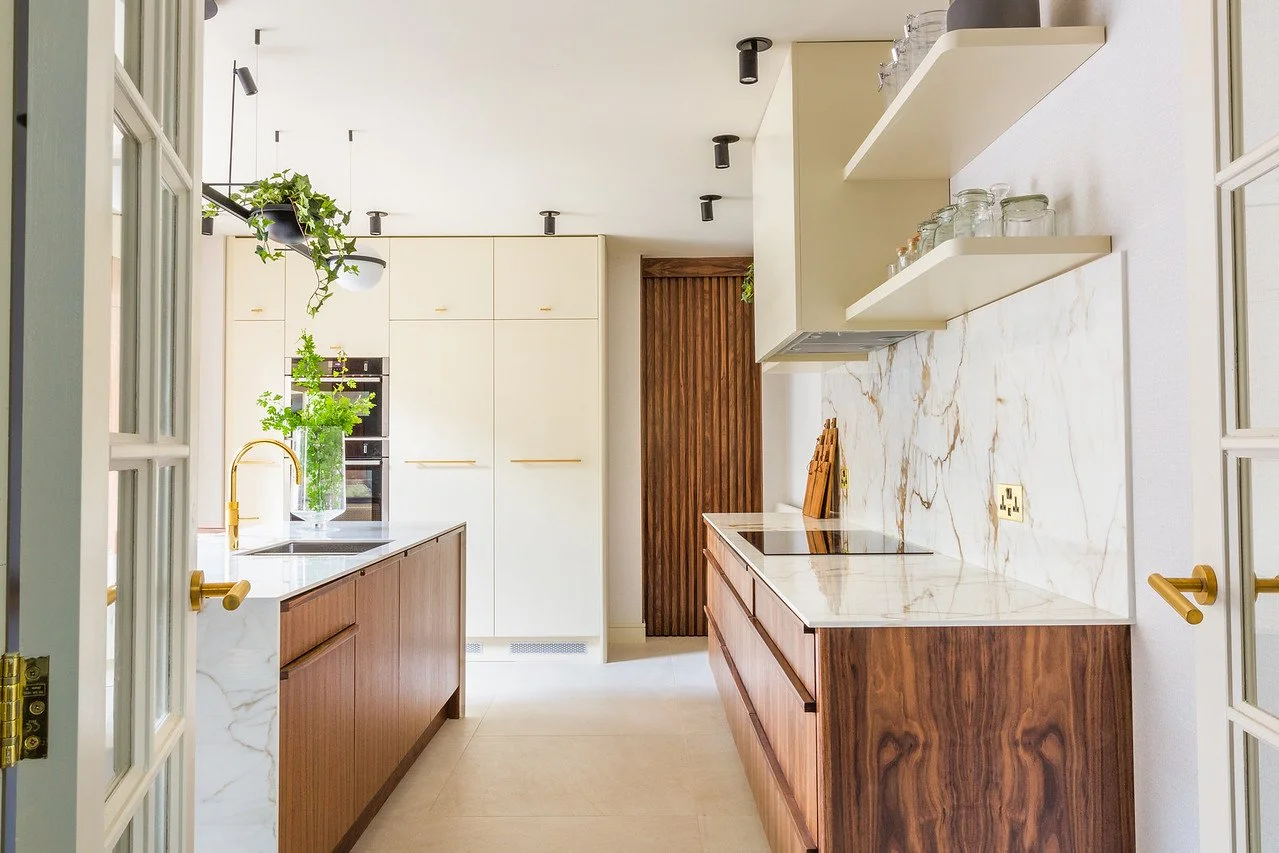
A softly lit kitchen from a Gamlingay renovation, showing layered lighting that combines under‑cabinet task illumination with warm ambient fixtures to create a balanced, inviting atmosphere
Step 6: Incorporate Smart & Sustainable Features
Modern kitchens are evolving, and the most successful designs now blend technology with sustainability. Thoughtful choices can reduce energy use, improve convenience, and create a kitchen that feels both future‑ready and environmentally responsible.
Smart Technology
• Energy‑efficient appliances that reduce consumption and lower running costs
• Automated or app‑controlled lighting for convenience and improved ambience
• Smart taps, sensors, and integrated charging zones to support modern living
Sustainable Choices
• Eco‑friendly materials such as FSC‑certified wood, recycled composites, or low‑VOC finishes
• Durable surfaces that stand the test of time and reduce the need for replacement
• Efficient ventilation and insulation to improve comfort and reduce energy waste
Integrating smart and sustainable features ensures your kitchen not only looks beautiful today but continues to perform well for years to come — a space that supports both your lifestyle and the environment.
Want more design ideas? Explore our articles on how to furnish, plan and other design advice.
You can also read ourCambridge kitchen renovation at Henslow Mews (CB2), where strategic planning shaped a refined, functional family space.
Ready to design with intention? Book your consultation today.
Continue Your Journey
The kitchen is one of the hardest-working rooms in the home. Great kitchen design balances functionality with beauty, creating spaces that support cooking, gathering and everyday family life. By carefully considering layout, lighting, storage and materials together, kitchens become timeless spaces that continue to work beautifully for years to come.
Read Next
Contemporary Kitchen Design Ideas for Cambridge Homes
Explore how contemporary kitchen design combines elegant materials, thoughtful layouts and timeless ideas to create kitchens that feel calm and functional.
Bespoke Kitchen Design Ideas for Cambridge Homes
Discover how bespoke kitchen design creates tailored solutions that maximise storage, improve functionality and respond to the unique character of your home.
Modern Kitchen Design Mistakes to Avoid in 2026 (And What to Do Instead)
Learn how to avoid common design mistakes and create a kitchen that remains practical, beautiful and enjoyable for everyday life.
Return to the Chapter
Interior Design Styles & Ideas
Explore timeless interior design styles, inspiring ideas and thoughtful design approaches that help you create contemporary homes with character, balance and lasting appeal.